



How long a furnace lasts in Chardon, OH

New system or replacementFurnace or heatingGeauga County, OH
Step 1 of 2

What ZIP code is the job in?

A furnace in Chardon lasts about 15 to 20 years. Gas furnaces are the common setup here, and most make it through that range if they've been serviced and nothing major has failed. What wears them down is how hard they run. Geauga County winters ask a lot of a furnace, with months of steady use from November through March, and that steady demand is what pushes a unit toward the end of its life faster than mild weather would. Past 15 years, parts like the heat exchanger and igniter start failing more often, and repairs get harder to justify against a new unit. If your furnace came with the house and you don't know its age, the data plate inside the cabinet or front panel will have the manufacture date on it. That number tells you more about what to expect than how the furnace is running today, since furnaces can fail suddenly even after running fine the week before.

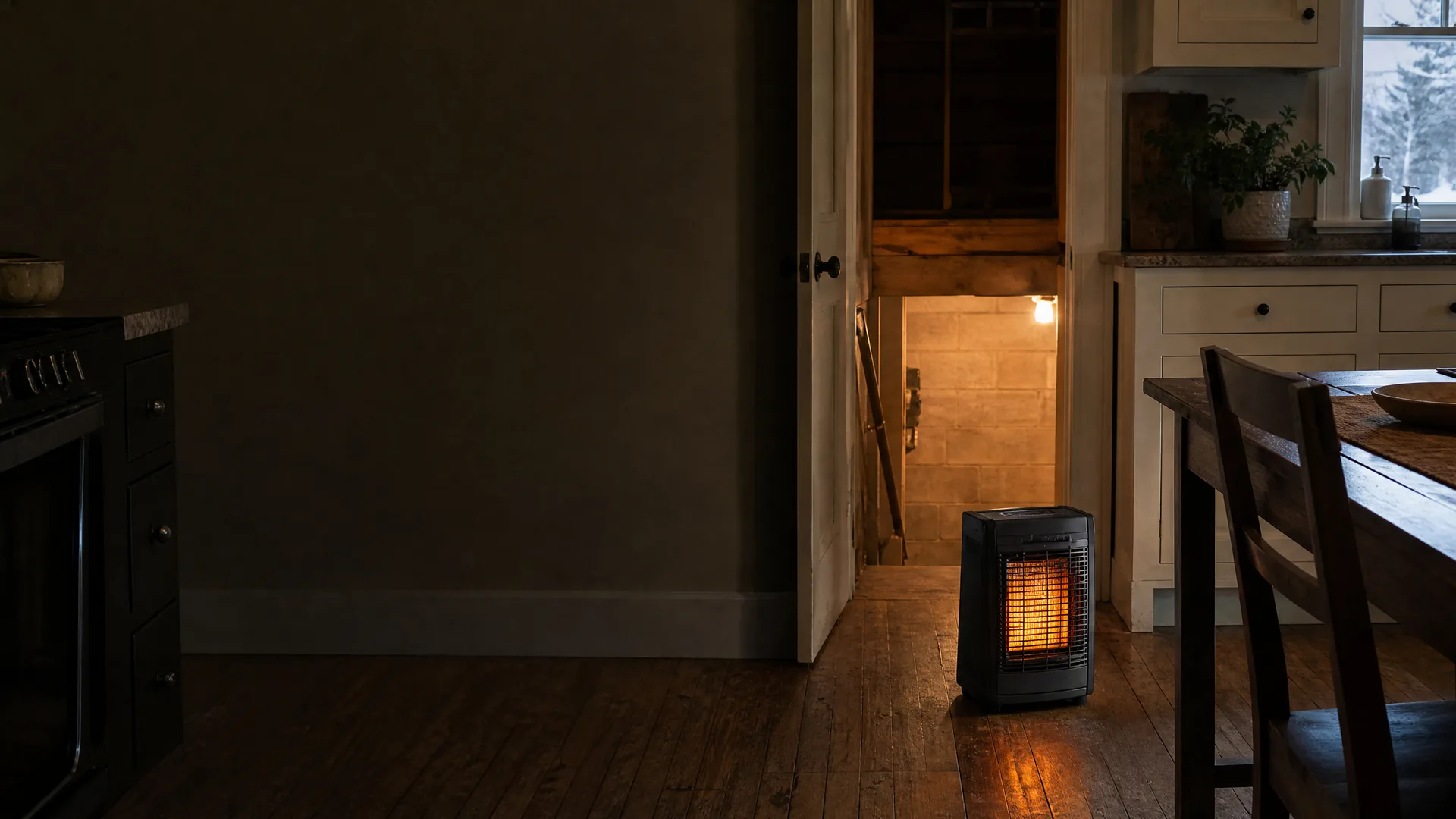
A dimly lit interior with wood plank flooring where a small portable heater with a glowing orange element sits near an open doorway, with a stove at left, kitchen cabinets and a potted plant at right, and a wooden table and chair in the foreground.

You're up before the rest of the house, and the kitchen is cold enough that you can see your breath near the window. The space heater is running by the table, its coil glowing orange, because the furnace stopped keeping up a few days ago and this is what's filling in. The basement door stands open behind it. You went down last night to check the furnace again, and you left it open out of habit, like it might help you hear it kick on. It hasn't. Outside it's still dark, still deep into a Geauga County winter, and the furnace is eighteen years old. You've been meaning to call someone about it since Tuesday.

What does a Chardon winter actually ask of your furnace?

  • Winter nights average 21°F

    Overnight temperatures averaging 21°F mean the furnace runs long cycles to hold the house steady, not quick bursts.

  • Heat runs October through May

    October through May is eight months of the year your furnace is expected to work. That's most of its life spent earning its keep.

  • 60.5% of homes heat with gas

    60.5% of homes in Geauga County heat with gas, so most furnaces here run on the same fuel yours probably does.

NOAA nClimDiv 1991-2020 · ACS 2020-2024

A furnace that gets a filter change every few months and a yearly checkup can run the full 15 to 20 years without a breakdown in the middle of January.

A furnace left alone, filter clogged and burners never looked at, tends to fail early, and it usually picks the coldest week of the year to do it.

A gray-haired man in a dark coat dusted with snow stands in a warmly lit home entryway, with a lamp, sofa, window and white staircase banister behind him.
An older man with gray hair and a beard, wearing a dark coat dusted with snow and a blue plaid scarf, stands smiling in a dimly lit entryway with a window, framed picture, table lamp and staircase behind him.
A gray-haired, bearded man in a dark winter coat with snow on the shoulders stands in a doorway of a home interior with a lit lamp, framed pictures, a potted plant and a staircase behind him, and an evergreen wreath at the left edge.
A gray-haired man in a dark coat with snow on the shoulders and collar stands smiling in a dimly lit entryway with a paneled front door, lamps, and a framed picture in an adjoining room.

The age range comes with conditions

Fifteen to twenty years assumes a furnace that's been serviced and installed correctly in the first place. A unit sized wrong for the house, or one that's been short-cycling for years on a dirty filter, can fall short of that window even with gas as forgiving as it is. The number on the nameplate matters less than how the furnace has been run. Two furnaces installed the same year in two houses on the same street can end up years apart in how long they last, and the difference usually traces back to maintenance, not the equipment itself.


What a failing furnace looks like first

It rarely just stops. The burners cycle more to hold the same temperature, the heat exchanger works harder, and the gas bill creeps up before anything visibly breaks. Short cycling is often the earliest sign, the furnace kicking on and off more than it used to because it can't sustain a steady burn. By the time it won't light at all, usually on a morning when it's well below freezing outside, the wear has been building for a while. Catching the early signs gives you more say in when you replace it, instead of the furnace deciding for you.

An older gas furnace with two white PVC vent pipes stands on a concrete basement floor beside galvanized sheet-metal ductwork, flexible conduit, and piping along a wall.
Before you get your furnace installation
A gray high-efficiency furnace with white PVC venting pipes stands on blocks in a basement next to sheet-metal ductwork, with exposed wood framing on the left and a concrete wall and floor.
After you get your furnace installation

Get matched with a furnace pro in Geauga County

A furnace that's past 15 years and starting to act up in a Chardon winter isn't a thing to sit on. When overnight temperatures sit around 21°F for weeks at a stretch, a furnace on its way out doesn't fail quietly. It fails when you need it most, and a space heater by the kitchen table isn't a plan for January. If yours has been short-cycling, running longer than it used to, or you've had a repair tech out more than once this year, that's the furnace telling you where it stands. Getting a replacement lined up before the cold settles in for good means you're choosing the timing instead of the furnace choosing it for you. A contractor who works on homes in Geauga County can look at what you have, tell you what it needs, and size the next one to your house instead of guessing.

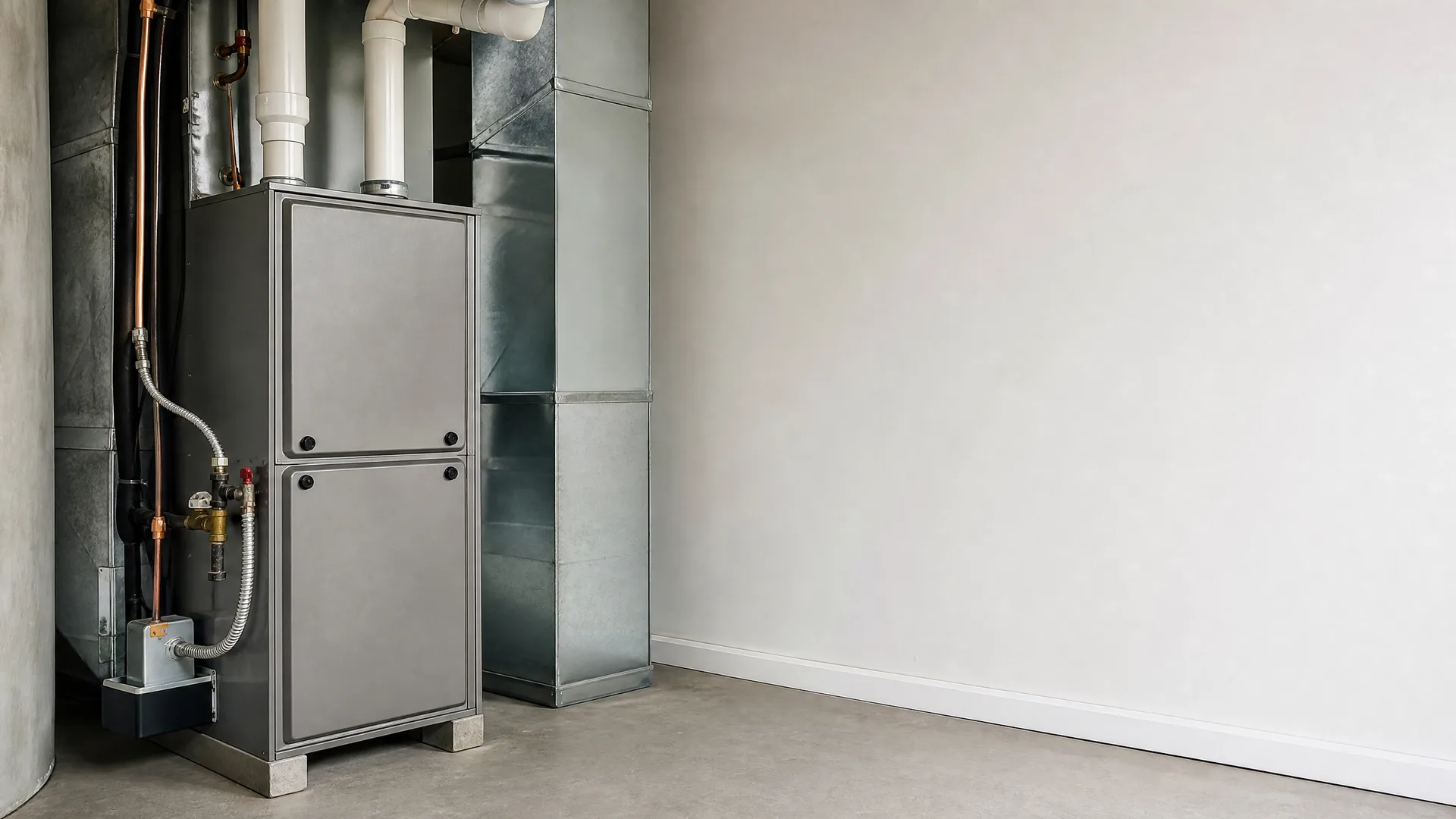
A gray high-efficiency furnace with white PVC vent pipes, copper and flexible piping, and galvanized sheet-metal ductwork stands against a wall in a room with a bare concrete floor and plain light-colored wall.

An old furnace still running

It turns on when you set the thermostat. It gets the house to temperature, eventually. But the burners cycle longer than they used to, and the air coming out of the vents isn't as hot as it was a few winters back. Nothing's failed yet, so it's easy to leave alone. A furnace in this shape is usually the one that quits on the coldest night of the year, not a mild one.

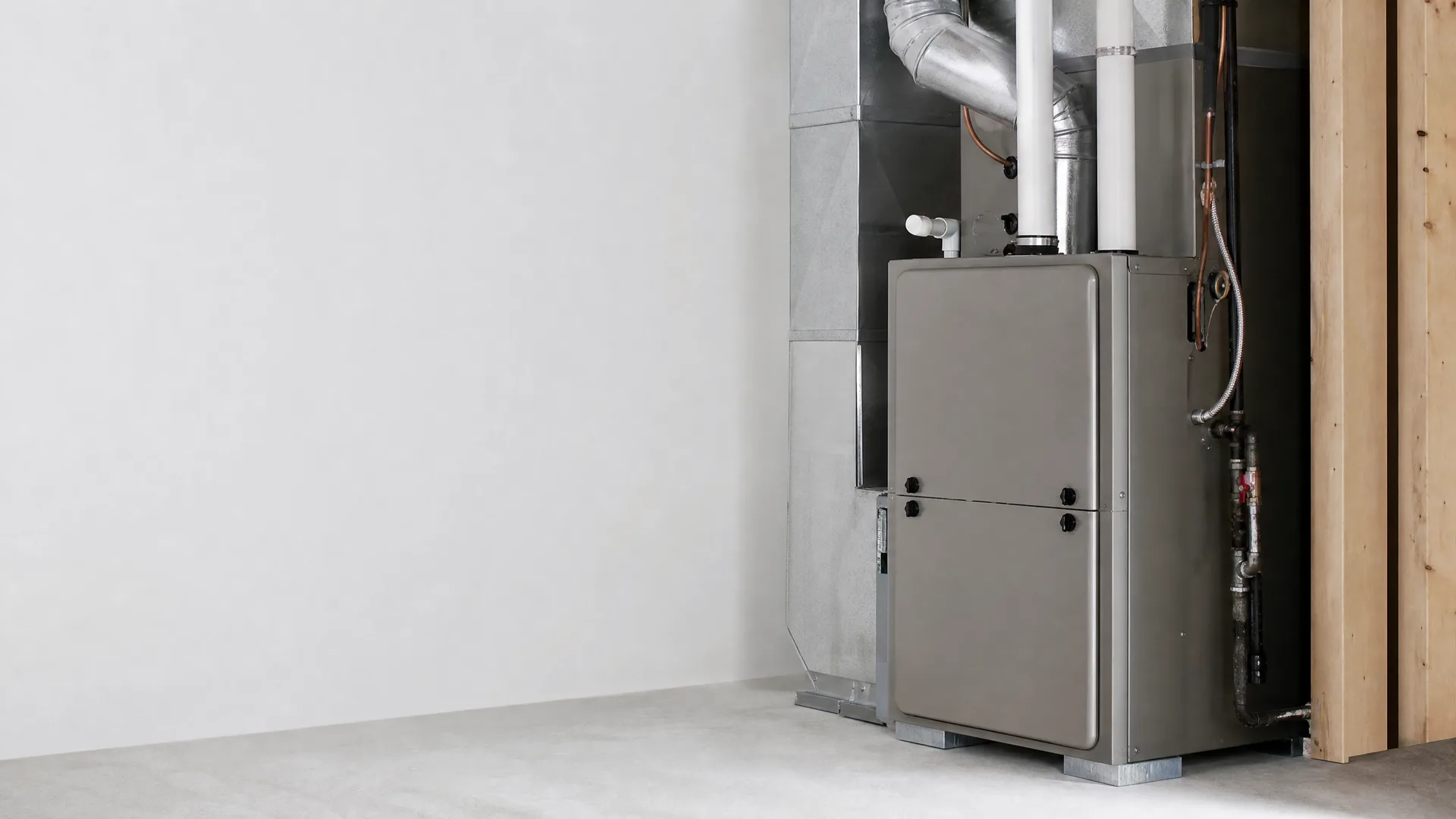
A gray residential furnace with attached sheet-metal ductwork, white PVC vent pipes and copper lines stands against a plain white wall on a concrete floor, beside exposed wooden framing.

A furnace sized for your house

It reads the thermostat and shuts off well before the burners have to strain. Rooms on the far end of the house hold their temperature instead of lagging behind the one with the thermostat. The gas bill reflects a unit that isn't fighting to keep up with a Geauga County winter. A contractor sizes the replacement to the house itself, not just to whatever was there before, so it isn't working harder than it needs to from day one.

Is your furnace telling you something right now

Walk past a vent and hold your hand near it. If the air feels lukewarm instead of hot, or the furnace runs longer than it used to just to hold the thermostat setting, that's worth noting. Listen for a boom at startup, or a rattle that wasn't there last winter. Check if one room stays cold while the rest of the house is fine. A furnace doing this in a Chardon January isn't resting, it's struggling, and the ones that struggle through December tend to quit outright before March. None of this means it's done. It means it's worth a look before overnight temperatures make the decision for you.

A beige high-efficiency furnace stands on a concrete basement floor beside sheet-metal ductwork, with white PVC vent pipes, flexible conduit and copper and steel piping running up a concrete wall to an electrical box.

Running right

A furnace like this is holding its own against a Chardon winter. The flue and condensate lines run clean, the gas connections are tight, and the burners fire on the first try. Vents put out air that's actually hot. This is what 15 to 20 years of regular service looks like from the basement floor.

An older gas furnace with a louvered front panel stands on a concrete basement floor beside large sheet-metal ductwork, a metal flue pipe, copper piping and wood framing.

On its way out

Dust collects around the base because the filter hasn't been doing its job. The flue pipe and gas lines are older, and so is everything behind the panel. A furnace in this shape is the one that quits on the coldest night of January instead of giving you warning on a mild one.

A woman with dark shoulder-length hair sits wrapped in a gray fleece blanket on a sofa with an open book on her lap, beside a lit lamp and a dark window.
A bearded man in a plaid flannel shirt stands indoors looking out a window at snow-covered conifers, with a ceramic mug on the wooden sill and wooden cabinets behind him.

15 to 20 years

A furnace serviced along the way and sized right for the house tends to reach this range in Chardon, carrying you through winters without a January breakdown.

Get a local pro

Replacing now

A new furnace installed before the next cold stretch means you're not gambling on a unit already past its years holding through another Geauga County winter.

Get a local pro

Winter nights average 21°F

At 21°F overnight, your furnace isn't cycling on and off, it's running long stretches just to hold the thermostat where you set it. That's the kind of steady demand that wears out a burner or a heat exchanger years before a milder climate would.

NOAA nClimDiv 1991-2020

What a Chardon furnace's lifespan comes down to

  • In Chardon, a gas furnace that's been serviced along the way typically reaches 15 to 20 years before it needs replacing.
  • Long overnight cycles at 21°F wear a furnace down faster than mild weather ever would, so the climate here shortens the margin for neglect.
  • A clean filter and a yearly checkup are what separate a furnace that makes it to 20 years from one that fails at 10.
  • Lukewarm air, longer run times, or a boom at startup are signs a furnace is heading toward the end of that range, not the start of it.
  • A furnace past 15 years that's already acting up is worth replacing before the next cold stretch rather than during it.
  • Once you request a match, finding a contractor to handle the installation is off your plate.

Fifteen to twenty years is what a gas furnace gives you in Chardon, and the number holds up as long as the maintenance does. Geauga County winters don't let a furnace coast. Overnight temperatures sitting around 21°F for weeks mean long, steady burns instead of short cycles, and that kind of demand finds every weak point a furnace has. A filter changed on schedule and a checkup once a year are what keep a furnace on track for the full range. Skip that, and the same furnace that could have made it to 20 years struggles past 10. The signs show up before the failure does. Air that's gone lukewarm, burners that run longer than they used to, a boom when the furnace starts up. None of that means stop what you're doing, but it means pay attention, especially once a furnace has passed 15 years. A furnace already acting up in a Chardon winter is better replaced ahead of the next cold stretch than in the middle of it. Once you've decided it's time, the rest doesn't have to sit on your shoulders. Requesting a match hands the job of finding a licensed contractor to someone else, and from there it's a matter of them reaching out to you about the furnace itself, sized and installed for the house you actually have.

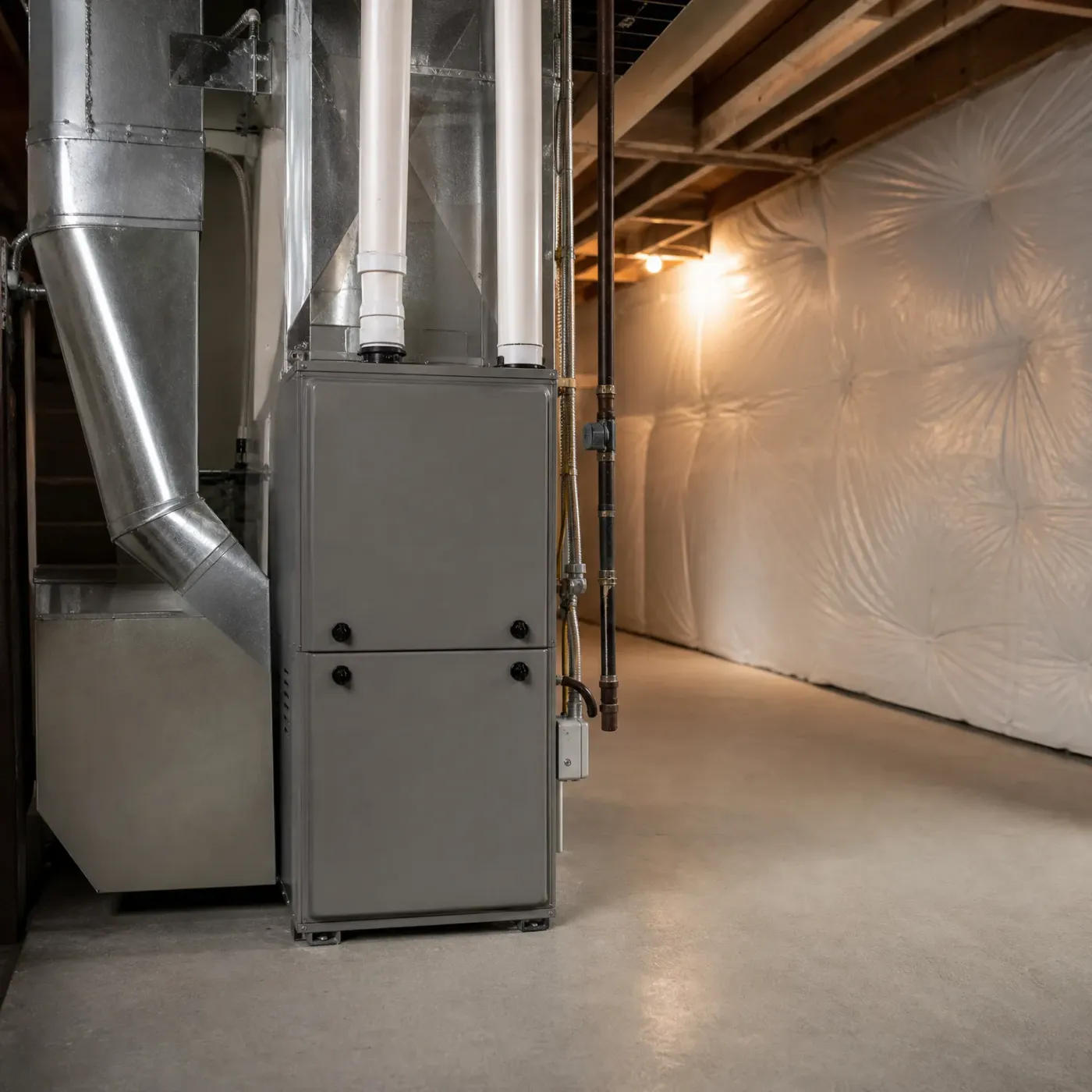
A gray high-efficiency furnace with white PVC vent pipes stands on a concrete basement floor beside sheet-metal ductwork, with copper and black pipes, exposed wood joists, a lit bulb, and a plastic-covered wall in the background.

A furnace pro near you

Match me with a pro

Send the form and the search for an installer is over.

Sending the form costs nothing.