When it's running right
A working furnace cycles on, runs quiet, and the air coming out of the vents feels warm within a few minutes. The flue pipe stays clear and the burner lights the same way every time it fires.
Your request goes to a Medina County pro who takes furnace jobs.
Find a furnace proFirst, check the simple things. Make sure the thermostat is set to heat and a few degrees above room temperature, and check the breaker for the furnace in your electrical panel. If it's gas, see whether the pilot light or igniter has power and whether the gas valve is open. A lot of no-heat calls in Brunswick come down to a dead thermostat battery or a tripped breaker, especially after a cold snap puts extra strain on the system. If those check out and you still have no heat, something inside the furnace needs a trained eye: a failed igniter, a dirty flame sensor, a bad control board, or a blower motor that won't start. Winters here get cold enough that a furnace down for more than a few hours is a real problem, not just an inconvenience, so this isn't something to leave for later. A licensed technician can tell you quickly whether it's a simple part or something bigger.

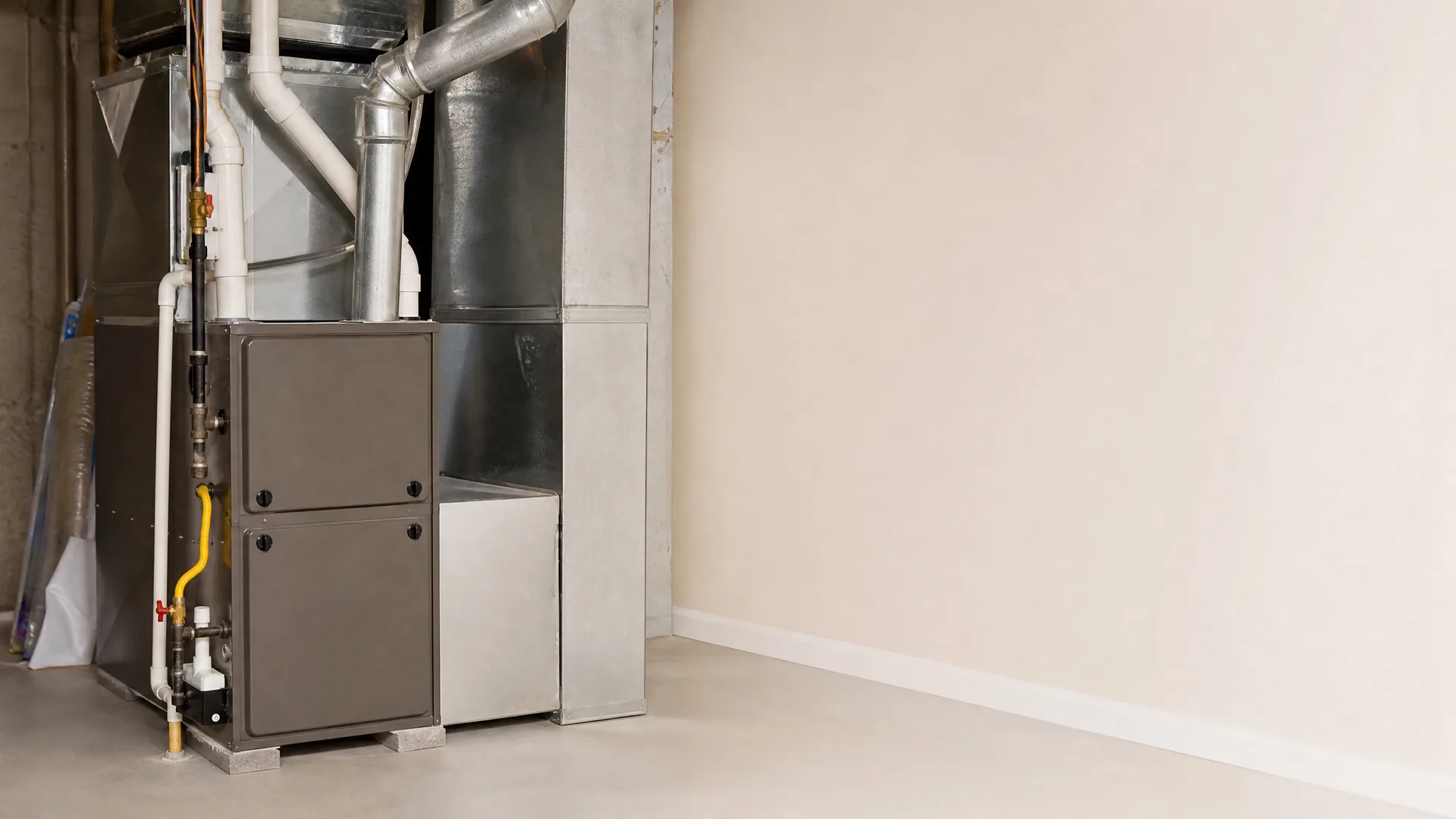
A working furnace cycles on, runs quiet, and the air coming out of the vents feels warm within a few minutes. The flue pipe stays clear and the burner lights the same way every time it fires.

The furnace short cycles, blows cold air, or won't fire at all. You might hear clicking from the igniter trying and failing, or notice the blower running without any heat behind it. That's when it needs a technician, not a thermostat adjustment.
Most furnaces built in the last couple decades use a hot surface igniter instead of a standing pilot. It is a thin strip that glows to light the burners every time the furnace calls for heat. That strip heats and cools dozens of times a week all winter, and the repeated swing is what cracks it. When it goes, the furnace will run but never light, so you get airflow with no warmth.
The flue pipe carries exhaust out of the house, and it has to draft correctly for the burner to stay lit. Wind, a bird's nest, or ice buildup at the outside vent can block that draft. Medina County winters bring enough snow and ice that outside vents get covered more than once a season. If your furnace shuts off on its own partway through a cycle, a blocked vent is worth ruling out before anything inside the unit.
Winter nights average 22°F
Winter nights average 22°F here, so a furnace that quits doesn't give you much grace before the house gets cold fast.
Heat runs October through May
Heat runs October through May in Medina County, about eight months of the year, which is most of the time your furnace has to work right.
72.7% of homes heat with gas
72.7% of homes in Medina County heat with gas, so a licensed contractor who knows gas furnaces is who most of your neighbors call too.
NOAA nClimDiv 1991-2020 · ACS 2020-2024
A furnace that's down in January doesn't just mean a chilly living room. Pipes along outside walls or in the basement can get cold enough to freeze if the house sits much below 50°F for more than a day. Wood floors and trim can start to pull apart as the air dries out and cools. If you've got a finished basement, that's usually the first part of the house to feel it, since cold air settles low and heat rises away from it.
Space heaters can get you through a night or two, but they run up the electric bill fast and can't heat a whole house the way a furnace does. Running several at once trips breakers if your wiring isn't built for it. Pets and anyone older or very young feel a cold house sooner than the rest of the household. The longer a furnace sits broken, the more likely a small problem, a cracked igniter or a stuck valve, turns into a bigger repair.




A licensed pro who repairs furnaces in Medina County gets your request.
Get matched with someone who does this kind of work in Medina County.
Asking costs nothing, and the choice to hire stays yours.


A furnace does not just dump gas on a flame when the thermostat calls. It runs through a sequence, and each step has to check out before the next one happens. The inducer motor starts first, and its job is to pull air through the heat exchanger and clear the exhaust path before any gas shows up. A pressure switch is watching that motor the whole time, and it will not let the sequence go any further until it senses the airflow it expects. Once that switch closes, the igniter gets power and starts heating up, usually taking under a minute to reach the temperature it needs. The gas valve only opens after the igniter is hot enough to light the burners off that glowing surface, rather than from a spark. As soon as the burners catch, the flame sensor is checking for a real, steady flame, and it only gets a few seconds to confirm one. If it doesn't see a flame in that window, the gas valve shuts again and the whole thing can retry or lock out. The blower motor, the one actually pushing warm air into the house, is the last thing to turn on, and only once the burners have proven they're burning clean and steady. A furnace with a problem almost always stops at one specific point in that order, which is exactly why a contractor who knows this sequence can often narrow down the failure before ever opening the cabinet.


Fix it yourself first
A reset breaker or a bumped thermostat is a five-minute fix anyone can do. A cracked heat exchanger or a failed control board needs a licensed contractor, and running the furnace with either one is not worth the risk.



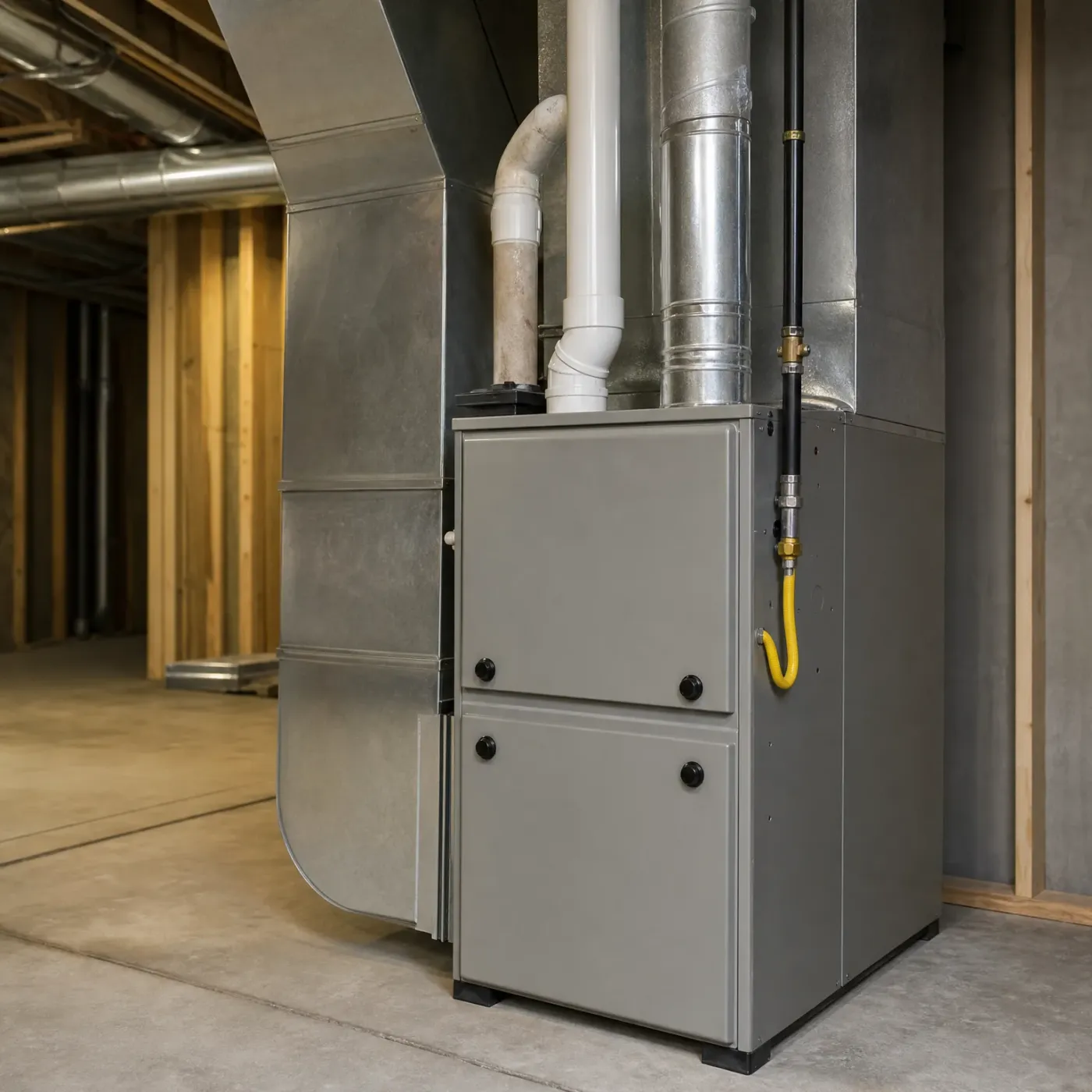
A high-efficiency furnace like this vents through PVC pipe instead of a metal flue, and the exhaust runs cool enough to do it. Clean sheet-metal ductwork overhead means air moves where it should, and the space around it stays clear enough to spot a problem early.

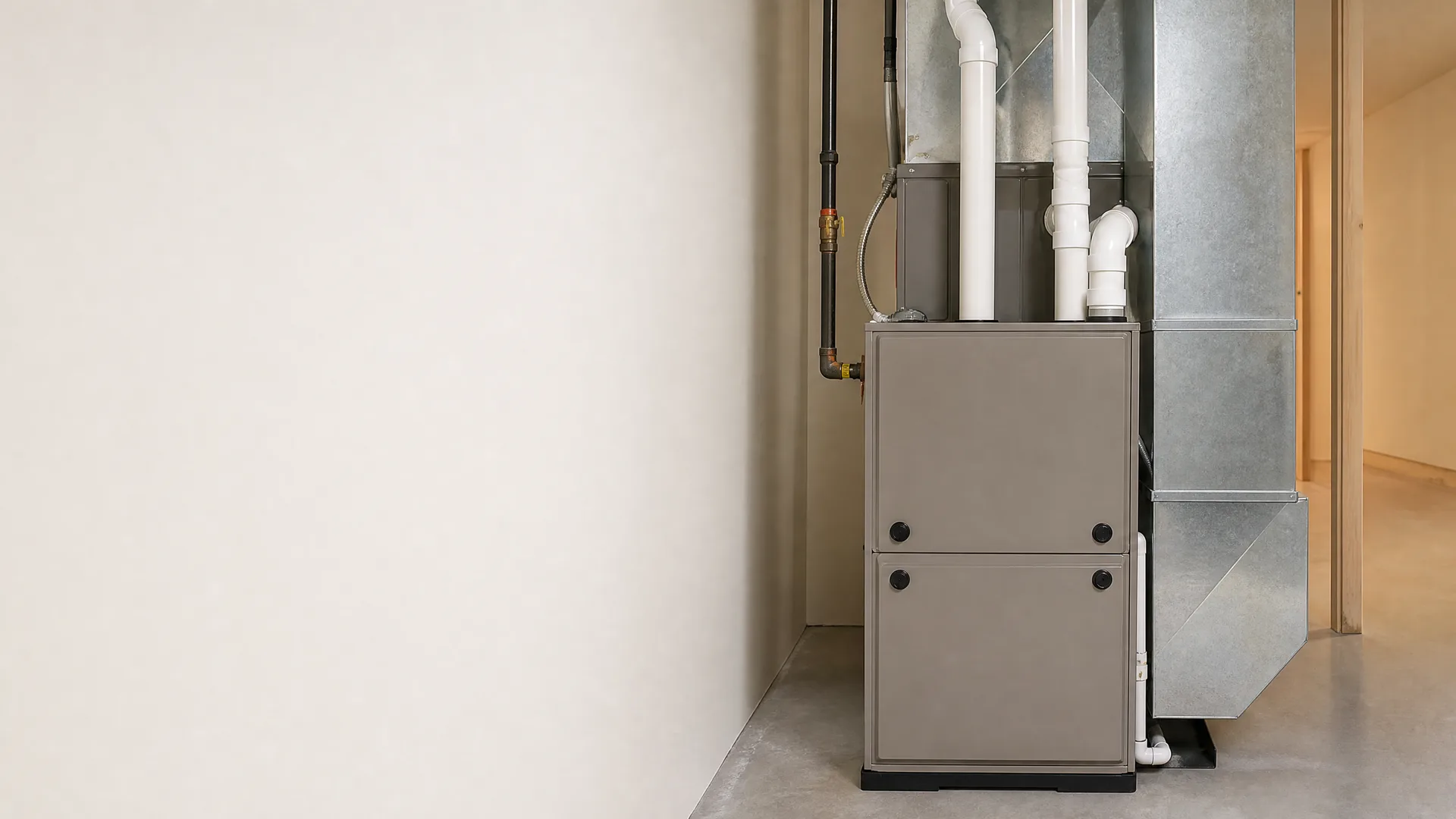
Galvanized duct and a heavier return plenum mark an older setup, and the furnace sitting below it has more years on every part. Copper gas line and a block foundation wall are normal for the era, but a furnace this old is closer to needing a part replaced than a new one is.
At 22°F, a house loses heat fast once the furnace stops. That's the average overnight low across Medina County in December, January and February, so a breakdown at night means the cold sets in well before morning.
NOAA nClimDiv 1991-2020
Most of what sends a furnace down in Brunswick comes back to one part: an igniter, a pressure switch, a control board. Finding which one it is takes someone who knows this equipment, not a guess.
A local contractor who works on furnaces all winter has likely seen your exact problem before, maybe in a house down the street. You'll be matched with one contractor who takes on your situation directly, not a handful of companies competing for the callback. They'll reach out and look at what your furnace is actually doing before they tell you what it needs.


Get the right pro for your furnace