






A lit brick residential street at dusk showing a row of two-story homes with covered porches and mature trees.

Furnace Repair in Beavercreek, OH

Tell us about the job

Takes about a minute. No obligation.

RepairFurnace or heatingGreene County, OH
Step 1 of 2

What ZIP code is the job in?

The furnace sits unused most of the summer. Then the first cold snap in October asks it to run flat out. That's when a weak igniter or a tired blower motor finally gives out. Furnaces here run October through May, eight months straight. September is the last quiet month before the load hits. If a part was already marginal, that first cold snap is what exposes it. A problem that shows up in the first weeks of the season was usually there all along.

8 months
October through May, your furnace is on duty
24°F
the average winter night it heats against
60%
of homes here heat with gas, so most furnaces here burn gas
7 winter storms
in ten years, the nights a failure hurts most
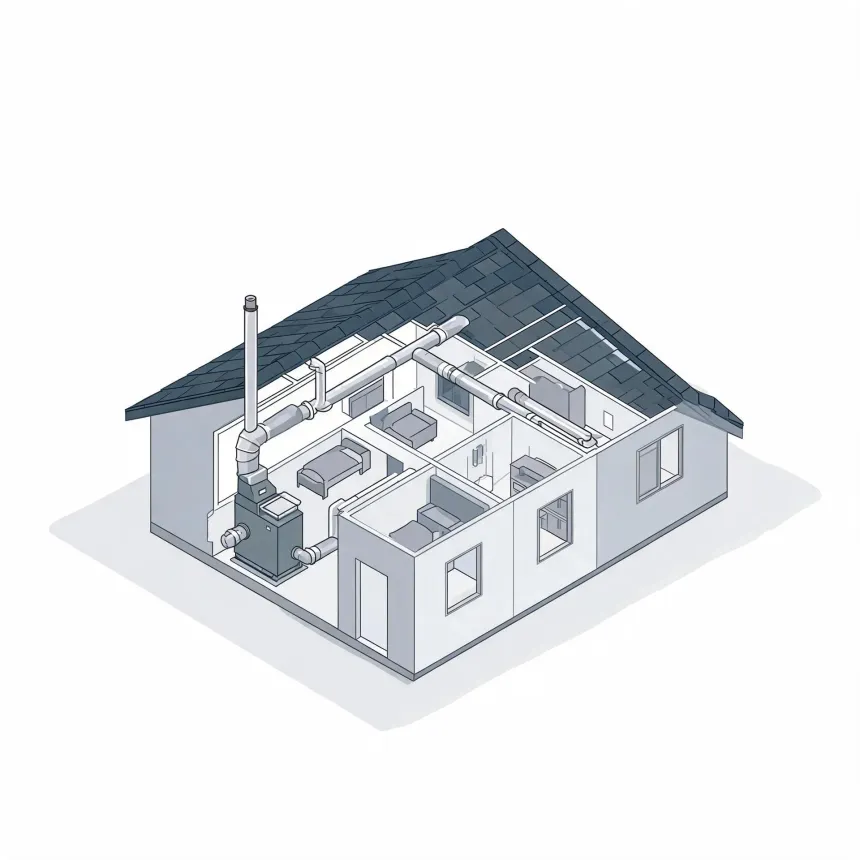
Isometric cutaway illustration of a single-story house showing interior rooms with furniture, ceiling ductwork, a furnace unit with a tall flue pipe, and a dark shingled roof.
Your furnace works hardest from November through March.

NOAA nClimDiv, 1991–2020 normals

Sometimes a furnace that won't start at all just needs the switch checked.

The furnace has a power switch that looks like a regular light switch. The filter has a slot showing which way the air should flow. Check both of those before calling anyone out.

Greene County gets wind, hail, and winter storms like the rest of Ohio. None of that picks on your furnace special.

158 severe weather events from 2015 to 2024
18% of homes statewide lost power a day or more in 2024
105 damaging wind events from 2015 to 2024
Nothing unusual here, just a furnace earning its keepGas in Ohio ran $12.89 per million Btu last year. That's reason enough to get the fix right the first time.

Half the homes in Greene County were built in 1976 or earlier, half after. That split doesn't tell you much about the furnace itself. A furnace works on its own schedule, not the house's. An older home can have a furnace that's brand new, and a newer home can have one that's on its last leg. What matters to the technician is the unit in front of them, its age, what's failed before, what's failing now. The fix follows the equipment, not the year the walls went up.

Get it looked at early

Problems tend to show up in the first weeks of the season, when the load hits a part that was already weak.

Find a contractor
A man in a cap, dark shirt and tan work pants, seen from behind, carries a worn canvas tool bag up steps toward a dark blue front door beside a tall planter of flowers.
A gas furnace with attached ductwork, gas piping, and condensate lines installed in a concrete-block basement.

Running it doesn't buy you time

A cracked heat exchanger stays small if the furnace gets shut down. Keep running it, and the crack spreads. Every cycle flexes that metal with heat, and a hairline crack opens a little more each time, until it's venting exhaust where it shouldn't. A blower motor losing its bearings will run hot for a while, then seize up. Sometimes it takes the control board with it. Even something as plain as a clogged filter makes the furnace pull harder on every part downstream. The hours keep climbing against gear that's already struggling. Shutting it off doesn't fix anything. But it stops the clock on whatever's already going wrong.

Short cycling means something's cutting it off early

A furnace that fires up, runs a few minutes, then quits before the house warms up is shutting itself off on purpose. A dirty flame sensor, a cracked heat exchanger, or a blocked vent can all trip the limit switch the same way. The furnace isn't dead. It's protecting itself. Still call for a repair. Don't wait it out.

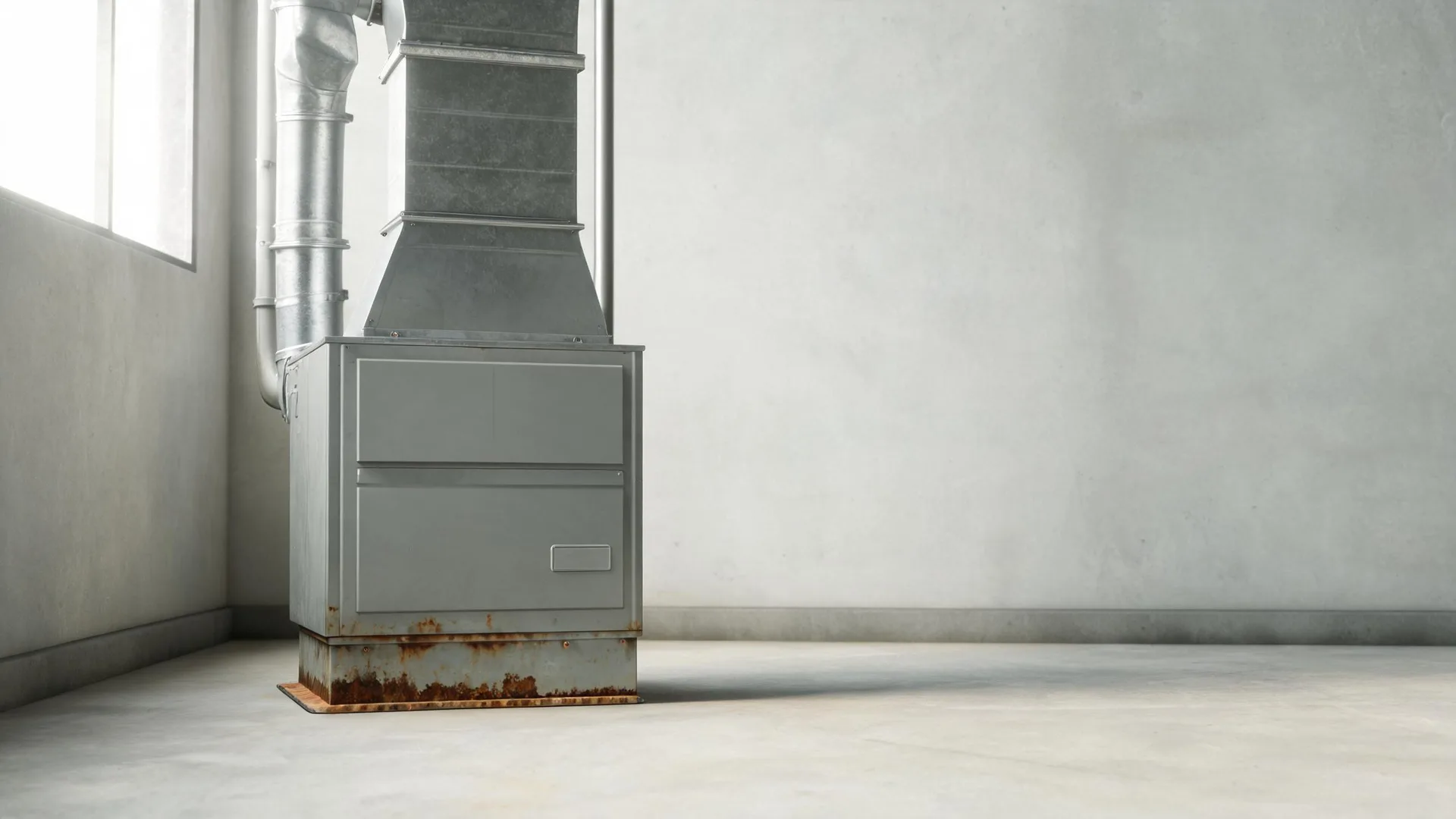
A new noise means the furnace is telling you something specific

A screech at startup usually means the blower motor bearings are going. A rattle that comes and goes can be a loose panel, or something loose inside the cabinet. Banging in the ductwork right after ignition is often delayed burner ignition, gas lighting all at once instead of smooth. None of these go away on their own. Each one points to a different part before the panel even comes off.

An unfinished basement interior featuring a large metal furnace unit, exposed ceiling joists, concrete walls, and scattered boxes and cables on the floor.

A new furnace would cut about $150 a year off heating for a typical Greene County home.

  • A new high-efficiency furnace$620 a year
  • An older furnace$770 a year

Estimates for a typical Greene County home, compared with an older unit built to the previous federal minimum, from EIA household energy data, Ohio fuel prices and NOAA climate normals. Your home will differ.

Repair makes sense when one part has failed and the heat exchanger is sound.

Replacement makes sense when the heat exchanger is cracked or the furnace keeps needing parts.

First thing a tech does is ask what the furnace is doing, when it does it, and how often. That narrows things down before the panel even comes off. Then the cover comes off and the burners and the flame get a look, the color and the shape, before a meter touches anything. Readings come next. Static pressure across the filter, temperature rise through the plenum, amp draw on the blower motor, voltage at the control board. Each one either matches what the furnace is rated for or it doesn't, and the ones that don't are where the problem is. The flame sensor gets pulled and checked for residue too, since a weak signal there can look like other problems until it's ruled out. Last step is explaining what's failing and why, in plain terms, before any repair starts.