Furnaces in Muskingum County run from October through May. That's eight months of work, but it only takes one visit a year to stay ahead of it. Get it checked before fall, before overnight lows drop to an average of 23 degrees in December, January and February. A furnace checked before that cold hits has less reason to quit when it's needed most. One visit, timed right, covers the season.
Your furnace starts working for real in October.
Have it checked in September, before it's running every day.
Most of this county burns gas to stay warm
55.2% of homes heat with gasHeat runs October through MayWinter nights average 23°F
A quick visit gets the furnace running and the tech out the door. A thorough one means pulling the burner assembly to clean it, not just glancing at it. It means checking the flame sensor for that thin coating that builds up and makes a furnace shut off on its own. It means checking static pressure in the ductwork, not just the filter. A clogged duct system strains the blower motor the same way a clogged filter does. The tech should pull the cover and check the flue for cracks or blockage. That's what carries exhaust out of the house. And the tech should check amp draw on the blower motor against what the nameplate calls for, not just listen for odd noises. If no gauges or meters come out of the truck, something got skipped.
An older house means more for that yearly check to catch
Half the homes in Muskingum County were built in 1972 or earlier. A furnace doesn't know how old the house around it is, but the yearly check still matters more in an older one, since parts wear at the same rate whether the house is old or new. The check is what catches a worn part on your schedule instead of the furnace's.
A cracked heat exchanger doesn't announce itself
A heat exchanger can crack without the furnace sounding any different or the house feeling any different. The flame still lights. The air still comes out warm. A crack lets combustion gases mix into the air moving through the house, and the only way to catch it is to look at the metal directly and watch how the flame behaves when the blower kicks on.
A weak igniter still lights the furnace in a quick test
An igniter that's cracked or worn thin can still glow and light the burner during a short check. It fails under load, after doing that same job morning after morning. Checking its resistance against the manufacturer's spec catches the ones a quick look and a single test cycle would miss.
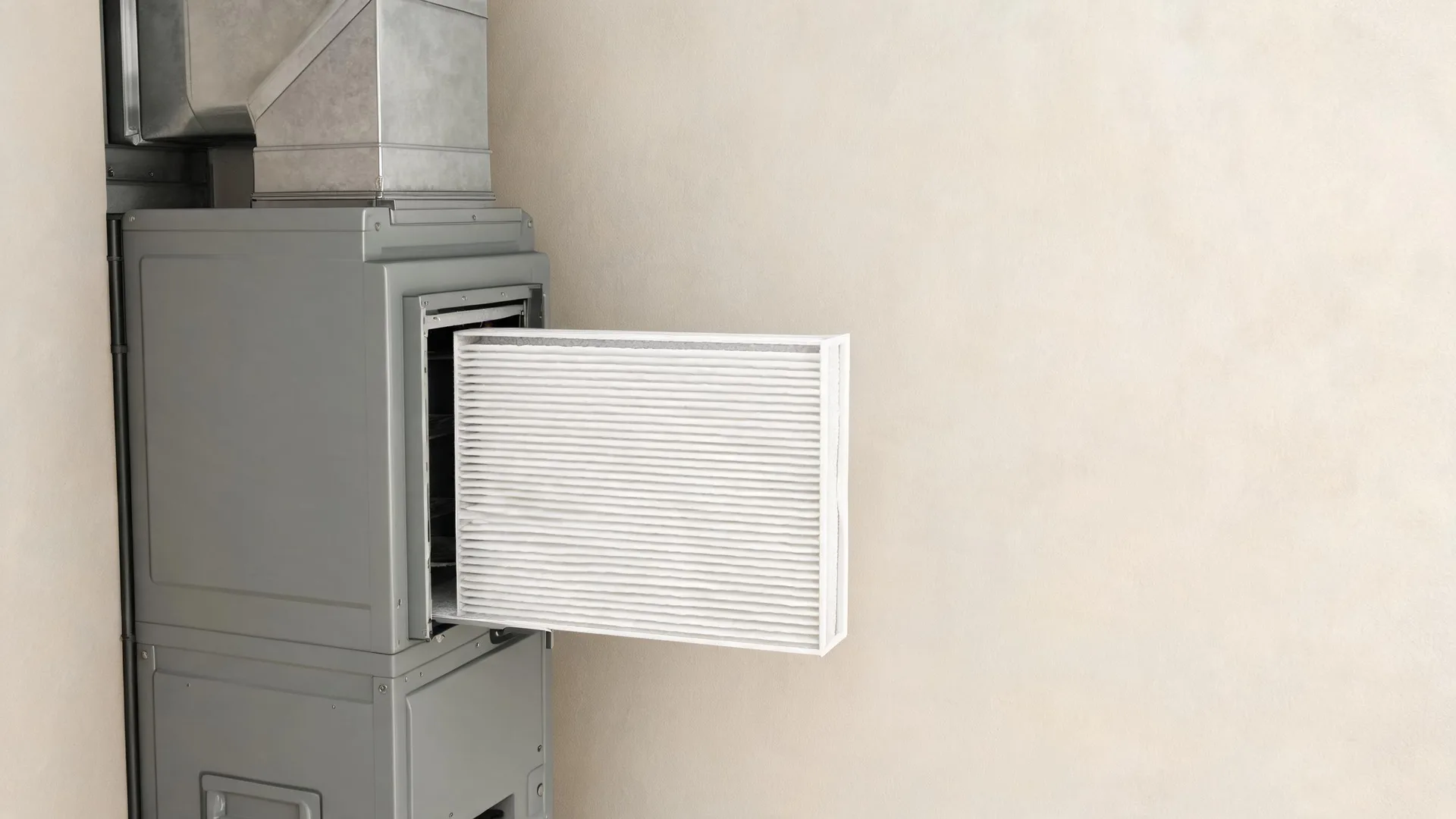
The filter is the one thing worth checking between visits. Check it monthly and change it when it's gray and matted. Don't just go by a schedule. A house with pets loads a filter up faster than one without. Keep the area around the furnace clear, nothing stacked against the cabinet, nothing blocking the return grille. The blower needs open air on both sides to move air right. If there's a smell like formaldehyde near the furnace, or soot around the burner door, that's not a wait-and-see thing. That's a call now. Past that, leave the cabinet closed. The burner, the flame sensor, the heat exchanger, those get checked with the panel off and the gas off. That's a job for the tech, not the homeowner.
A tune-up also covers the parts that don't fail often but cause real trouble when they do. The pressure switch gets tested to make sure it's reading right. A bad reading can keep a furnace from starting at all, or shut it down mid-cycle. The inducer motor gets checked for play in the bearings and for drawing the right amount of current. That motor is what pulls exhaust through the heat exchanger before the burners even fire. Gas pressure gets measured at the manifold and adjusted if it's drifted off spec. Too much or too little changes how clean the burners actually burn. The condensate line, if the furnace has one, gets cleared out. A clogged line backs up and can shut the furnace down on a safety switch. None of this shows up by looking at the furnace from across the room. It shows up when someone opens it up and tests it.