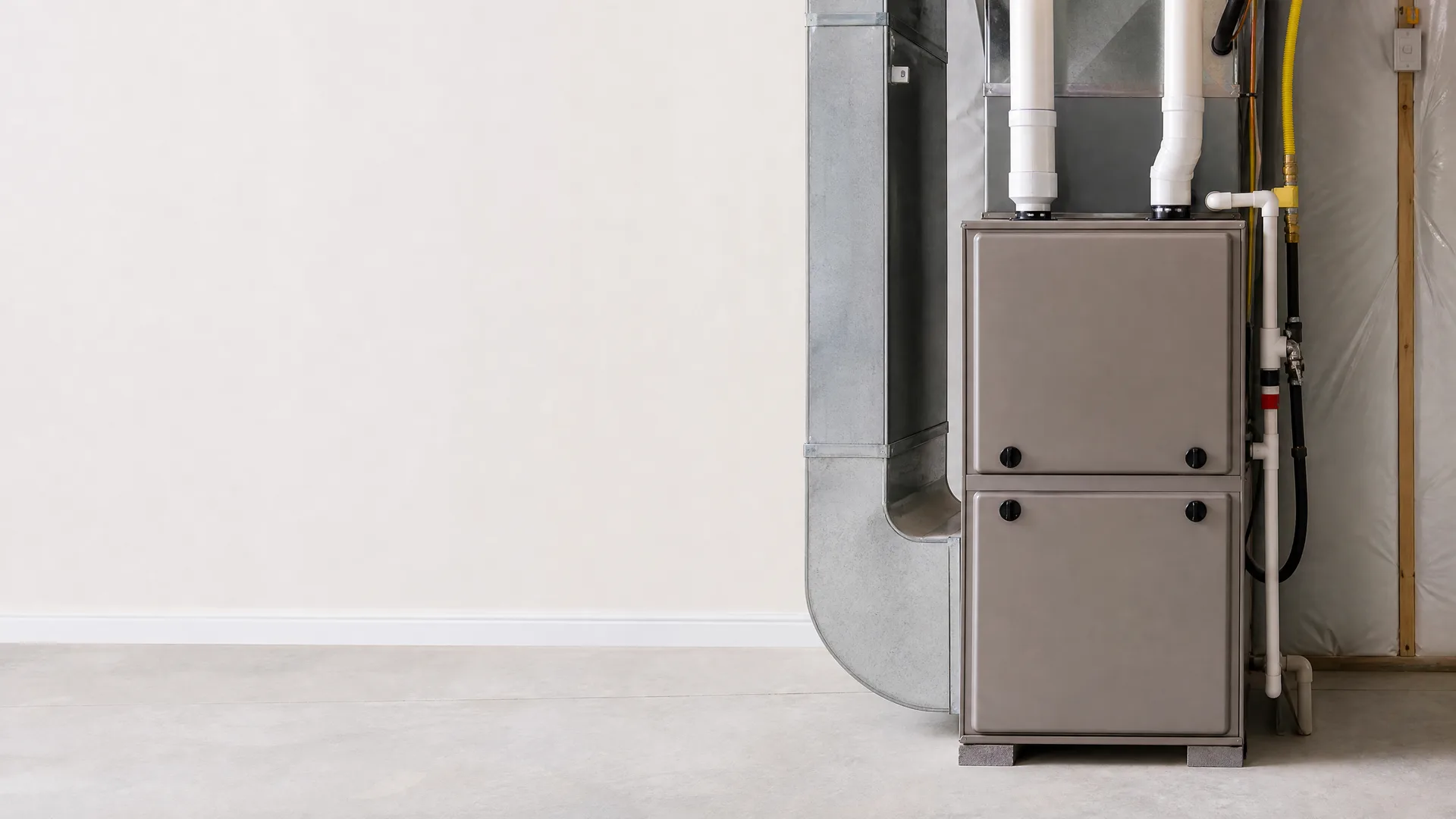








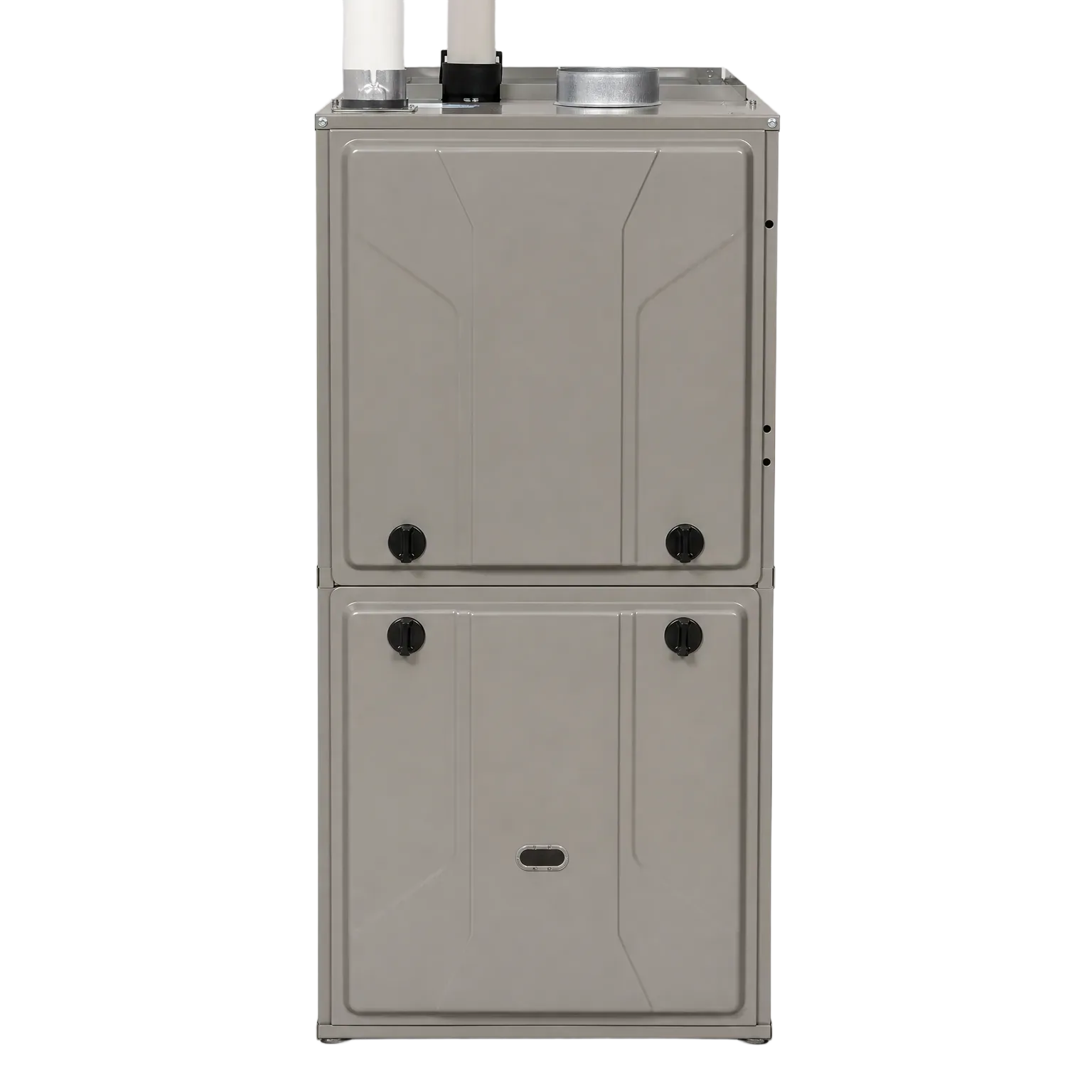

A gas furnace with two gray access panels stands on a concrete pad in a basement, with white PVC vent pipes above, sheet-metal ductwork to the right, and gas and water piping along the wall at left.

Done looking for a furnace pro

Furnace won't turn on in Zanesville, OH

A furnace that won't start on a cold Zanesville night means something specific stopped it, the thermostat, the igniter, the gas valve, a safety switch tripped shut. This page walks through what usually causes it and what you can check first. When you're ready to stop guessing, send the form and let someone else track down the right contractor for you.

Hand off my repair

A furnace that won't turn on is almost always one part refusing to do its job, not the whole system failing at once. Start with the thermostat: if the display is blank or the setting doesn't match what you expect, that's worth ruling out before anything else. If the thermostat looks fine, most gas furnaces stop for one of a few reasons. The igniter can wear out and fail to glow hot enough to light the burners. A safety switch, often tied to a dirty filter or a blocked vent, can sense a problem and shut the whole system down before it tries to run. The gas valve itself can fail to open. In Zanesville, where winters get cold enough that a dead furnace matters fast, these failures tend to show up on the coldest nights, when the system runs longest and hardest. None of this means a new furnace. It usually means one part needs to be found and replaced.

Why does a furnace matter this much in Zanesville?

  • Winter nights average 23°F

    Overnight lows average 23°F here in December and January. A furnace that won't start at that temperature isn't a problem that waits until morning.

  • Heat runs October through May

    Heat runs here from October clear through May. Eight months of the year, a dead furnace means no backup plan sitting nearby.

  • 55.2% of homes heat with gas

    55.2% of homes in Muskingum County heat with gas. If yours is one of them, a tripped gas valve or igniter is a common place to start looking.

NOAA nClimDiv 1991-2020 · ACS 2020-2024

You can check the thermostat, the breaker, and the switch on the furnace itself. What you can't always check is why the igniter won't glow or why the gas valve won't open, and guessing wrong on a gas furnace isn't where you want to start.

Send the details once and a licensed contractor takes it from there. No calling around Zanesville looking for someone free tonight, no explaining the problem a second and third time to whoever finally picks up.

A smiling man in a green long-sleeve shirt stands at a dark kitchen counter with a ceramic mug, with wood cabinets, white tile backsplash, and a window and dining table behind him.
A smiling man with wavy dark hair and a beard, wearing a navy sweater, sits at a kitchen counter with a gray mug, with a dining table, potted plant and windows behind him.
A bearded man in a dark green sweater smiles and looks to his right while seated at a white kitchen counter with a gray mug, with windows and greenery behind him.
A smiling man in a dark navy sweater stands in a home interior beside a counter with a white mug, with a kitchen, hallway and potted plant in the background.

A gas furnace doesn't just light on command. It runs through steps, in order, and a problem anywhere in that order stops everything after it. The inducer motor spins up first to pull air through the heat exchanger and vent any leftover gas. A pressure switch has to confirm that's happening before the furnace moves on. Next the igniter heats up, and it has to get hot enough to glow before the gas valve will open at all. A cracked igniter can draw power and still never reach that point. Once gas does flow, the flame sensor checks for an actual flame within a few seconds. No flame, and it shuts the valve back down as a safety step, not a malfunction. So a furnace that clicks, hums, or starts up and then quits is usually failing at one of these points, the inducer, the igniter, or the flame sensor, rather than running out of gas. A dirty filter can trigger a different shutdown through the limit switch, by letting the air inside the cabinet run too hot.

How the ignition sequence works

  • A safety switch called the flame sensor shuts the gas valve if it doesn't detect a flame within seconds of ignition.
  • The igniter has to reach full heat and glow before the gas valve opens, and a cracked igniter won't get there.
  • Most gas furnaces fire through a sequence: the inducer motor runs first to clear the heat exchanger, then the igniter heats, then gas opens.
  • If the inducer motor doesn't spin up, a pressure switch inside the furnace stops the rest of the sequence before gas is ever released.
  • A furnace that clicks but doesn't light is often stopping at the igniter or the flame sensor, not the gas supply itself.
  • Limit switches shut the furnace down if the air inside the cabinet runs too hot, which can point to a blocked filter instead of a broken part.
A gray high-efficiency furnace with white PVC vent pipes stands against a concrete basement wall beside sheet-metal ductwork, a small condensate pump on the floor, and exposed wood framing at left.
A furnace like this fires without a fight: PVC intake and exhaust pipes feed a sealed combustion chamber, and the condensate pump clears the water as it drains.
A gray sheet-metal furnace with flue pipe and adjacent ductwork stands against a stone basement wall on a concrete floor, with white PVC and metal pipes running nearby.
An older setup like this has more that can go wrong: a stone foundation, a gas line, and flex tubing all meeting at a furnace with no backup if one part fails.
A furnace with sheet-metal ductwork and copper piping stands against a concrete block wall in a dim basement with a bare concrete floor.

You go down after dinner to check on the basement, and the cold hits you before anything else does. The furnace sits dark against the wall, no hum, no blower, nothing. A thin haze of dust still hangs in the air near the cabinet, stirred up from when you knelt down to look at the switch. It's November, and outside the temperature is already dropping toward the 20s. You flip the switch off and on. You wait. Nothing lights. The house is quiet in the way a house gets quiet when the one thing that's supposed to be running isn't.

What To Check, What To Hand Off

Try yourself

  • Check that the thermostat display is lit and set below room temperature, since a dead battery or a setting left on cool will stop the furnace cold.
  • Look at the breaker panel for the furnace circuit, since a tripped breaker cuts power to the control board and blower both.
  • Check the switch that looks like a light switch near the furnace or at the top of the basement stairs, since it's an off switch and gets bumped more than people expect.
  • Replace the air filter if it's visibly packed with dust, since a blocked filter can make a furnace shut itself down on airflow.
  • Make sure the furnace door is seated flush, since most furnaces have a safety switch in the door frame that won't let the unit run if it's ajar.

Needs a contractor

  • A furnace that clicks but never ignites points to the igniter or the flame sensor, and testing either one means opening the cabinet and reading the control board.
  • A gas valve that won't open has to be diagnosed with a meter, not a guess, since forcing it or replacing the wrong part leaves you with a furnace that still won't run.
  • If the blower runs but no heat follows, something between the gas valve and the burners isn't working, and that's several parts to rule out one at a time.
  • A furnace that shuts off mid-cycle on a pressure switch or limit switch needs the venting and heat exchanger checked before it's safe to keep running.
  • Once you've ruled out the thermostat, breaker, and switch and it still won't fire, the cause is inside the cabinet where a licensed contractor's meter and gauges do the work your eyes can't.
  1. Thermostat calls for heat and sends power to the control board.

  2. Control board checks the pressure switch and door safety switch.

  3. Inducer motor starts and pulls air through the heat exchanger.

  4. Igniter heats up until it glows hot enough to light gas.

A metal furnace with louvered panels stands against a concrete basement wall, connected to sheet-metal ductwork and a round flue pipe, with wooden framing posts and a pipe nearby.
Before you get your furnace repair
A gray gas furnace stands on a concrete basement floor, connected to sheet-metal ductwork, white PVC vent pipes, and a yellow gas line, with plastic sheeting covering the walls.
After you get your furnace repair

It's off your list after this

Describe what your furnace is doing once, in one form.

There's no charge for the request.

A gray high-efficiency furnace in a basement with sheet-metal ductwork, white PVC vent pipes, metal plumbing lines, a condensate pump on the floor, and a window showing green trees outside.

Running the way it should

A newer furnace like this fires through sealed PVC intake and exhaust pipes, with a condensate pump clearing the water the flue produces. The gas pipe, the ductwork above, and the water heater nearby all sit in a basement that stays dry and finished.

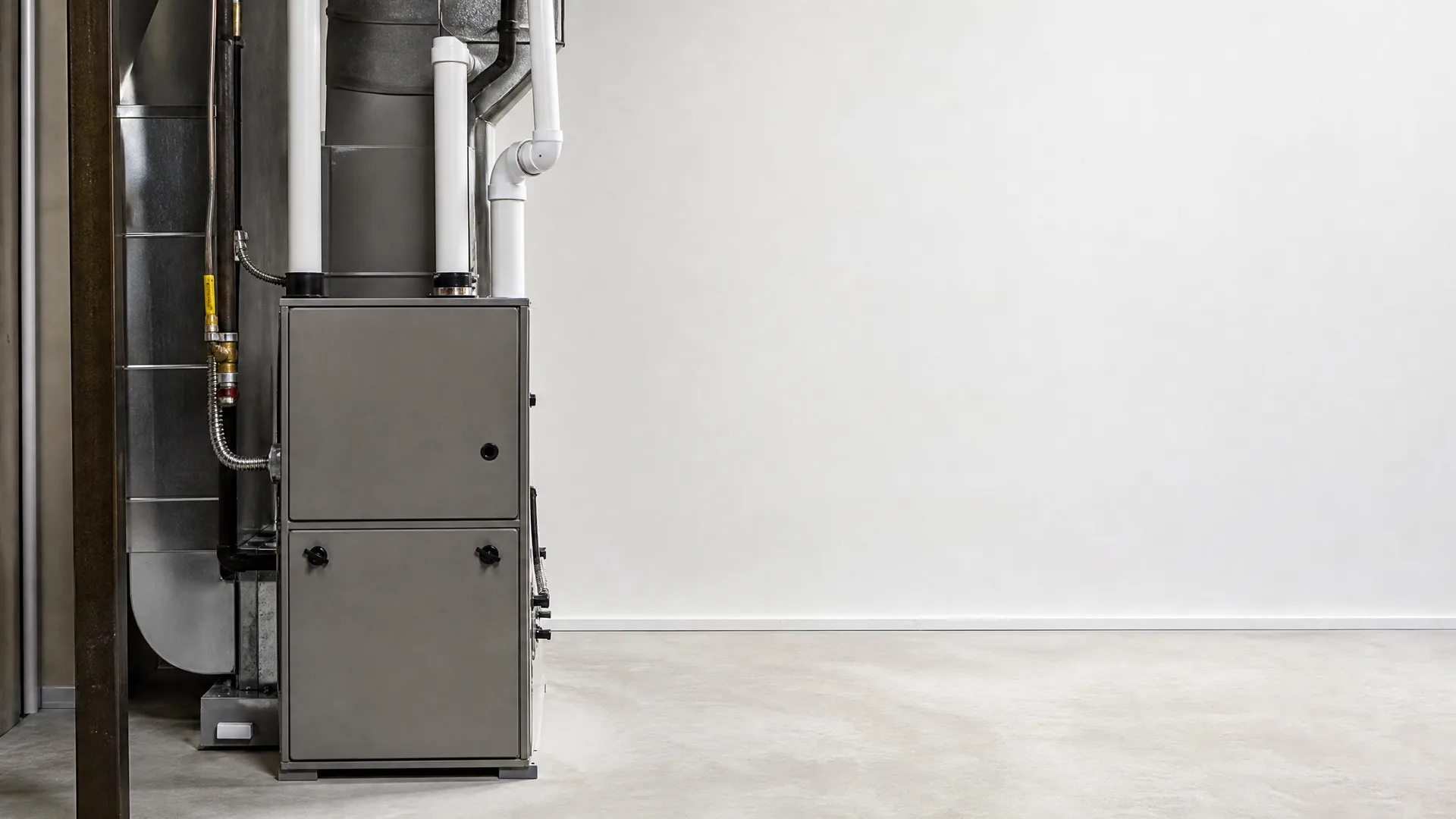
An older metal furnace with PVC and metal pipes stands on a concrete basement floor beside galvanized ductwork, with wooden stairs and a water tank in the background.

Old, dusty, and stalled

This furnace sits unfinished, with flexible gas lines and PVC condensate pipe run along bare wood framing. Dust has built up across the cabinet. When a furnace this old refuses to start, the flame sensor, the igniter, or the gas valve has usually already failed once before.

Winter nights average 23°F

At 23°F, a house loses heat fast once the furnace stops. A blower that won't kick on turns a basement cold within the hour and the rooms above it not long after. That's the kind of night a stuck igniter or a tripped switch actually costs you something.

NOAA nClimDiv 1991-2020

A gray residential furnace with attached PVC vent pipes, ductwork and a gas line stands against a plain white basement wall on a concrete floor.

Waiting it out overnight

Some homeowners leave it until morning, figuring the furnace will sort itself out or a repair can wait for daylight. The house keeps losing heat the whole time. Pipes along outside walls are the first thing to worry about once the basement drops near freezing. By the time anyone calls, the house has spent hours getting colder for no reason, and the part that failed hasn't changed.

A gray high-efficiency furnace with white PVC vent pipes stands against a wall beside sheet-metal ductwork, flexible gas and electrical lines, in a room with a plain light wall and concrete floor.

Calling it in tonight

Sending the details tonight means a contractor can look at the thermostat setting, the breaker, and what the furnace was doing right before it quit, and go straight to the part that's actually wrong. You skip the part where you'd normally search around, call a few places, and explain the same thing twice. The furnace still needs the same repair either way, but you're not the one tracking down who can do it.

What's actually happening in your house right now

The thermostat might click when you turn it up, or it might not. Either way, nothing answers back. No rush of air from the vents. No hum from the basement. If you go down and put a hand on the ductwork near the furnace, it's cold, not just cool. Some furnaces will try and fail, you'll hear a click, a brief whir, then quiet, which usually means the igniter or gas valve is giving up partway through. Others give you nothing at all, which points more toward the thermostat or the breaker. Either way, the house doesn't know the difference. It just keeps losing the heat it already made, and every hour that passes is an hour colder than the one before it.

A basement utility area with a gray furnace, sheet-metal ductwork, pipes, plastic-covered walls, a concrete floor, and a black shelving unit holding storage bins.

Working condition

This is what a furnace looks like when nothing's wrong. The sealed PVC pipes vent on their own, the gas line feeds a clean cabinet, and the condensate line drains without a fuss. Nothing here is fighting rust or age, so when the thermostat calls for heat, it answers.

A gray metal furnace with louvered vent panels stands on a concrete basement floor beside galvanized ductwork, gas and plastic pipes, and foil-faced insulation along the ceiling and wall.

Stopped working

This furnace has surface rust on the cabinet and a flexible yellow gas line feeding it in an unfinished basement. More parts here have had years to wear down. A furnace like this that won't start could mean a cracked igniter, a stuck gas valve, or a switch that's finally given out.

A closed silver laptop and a light ceramic mug of dark coffee sit on a wooden table, with a window showing a sunset at left and a kitchen counter with a cutting board and potted plant in the background.

So the furnace isn't starting. Here's where that leaves you.

One part is stopping the whole system: the thermostat, a tripped breaker, a safety switch, the igniter, the gas valve. Which one it is decides what happens next, and that's not always something you can tell from standing in the basement looking at a dark furnace. At 23°F outside, the house doesn't wait for you to figure it out.

What usually eats the time isn't the repair itself, it's getting to someone who can do it. Calling around to find a contractor who answers, explaining the same thing to three different people, waiting on quotes to come back so you can compare them. That part you can skip. Send the details once and a licensed contractor near Zanesville gets them, and from there finding help is off your plate.

Interior corner of a living room with a beige upholstered sofa and dark cushion in the foreground, a ceramic vase of leafy branches on a dark side table by a curtained window, a framed picture on the wall, and a wood-surround fireplace at right.
A smiling bearded man in a green t-shirt sits on a gray sofa, looking down toward a device at the bottom of the frame, with a bookshelf and a green plant blurred behind him.
A bearded man in a plaid flannel shirt looks out a window at snow-covered conifer trees, with a steaming ceramic mug on the sill and wooden shelves holding dishes and a plant behind him.

Furnace Repair

Hand off the search today

Skip calling shops to ask who repairs furnaces in Muskingum County.

A black-framed smartphone standing upright against a plain light gray background, its screen filled with solid green.
RepairFurnace or heatingMuskingum County, OH
Step 1 of 2

What ZIP code is the job in?