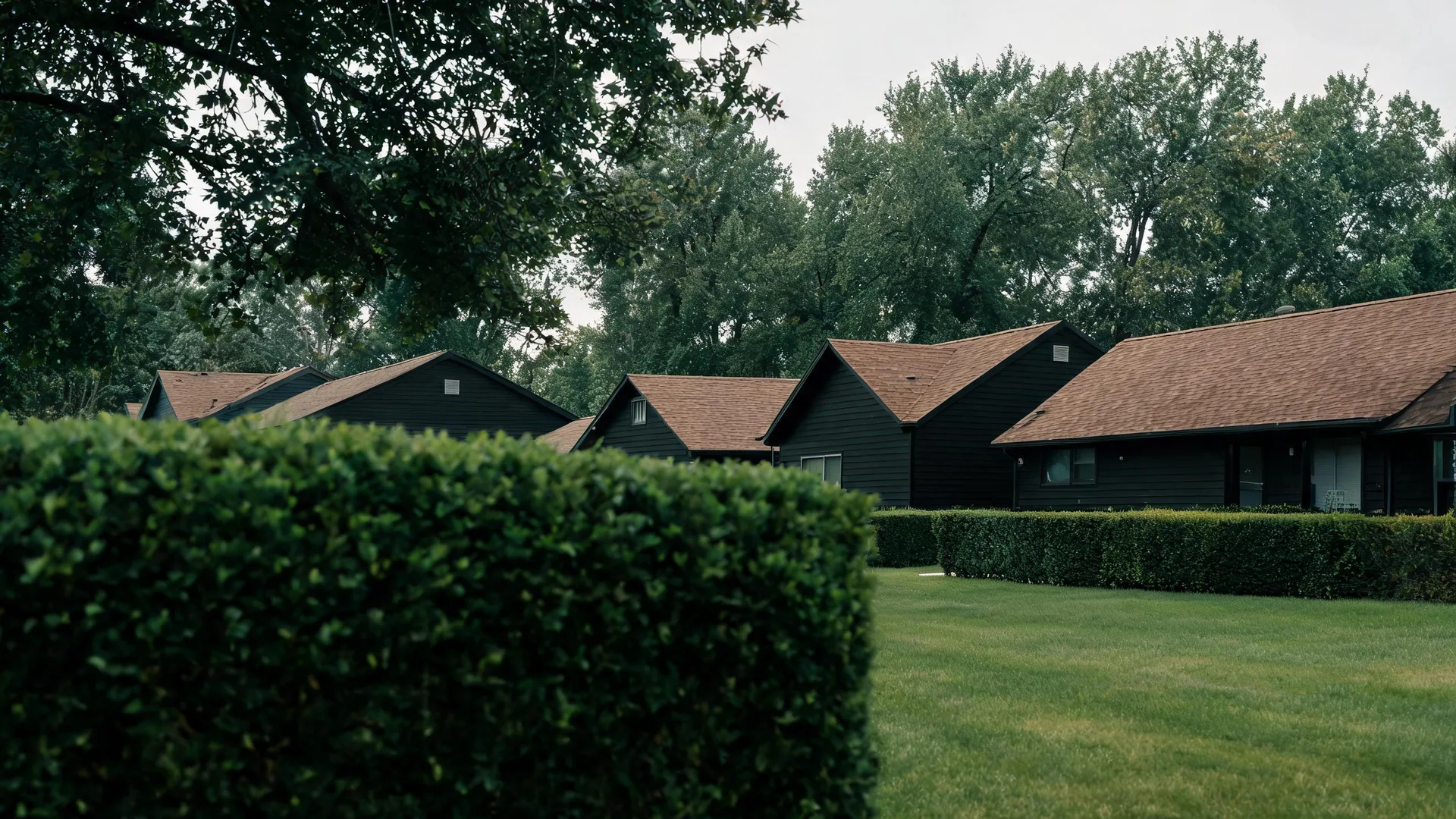




A row of dark-sided buildings with brown shingled gable roofs behind trimmed hedges, with a mown lawn in the foreground and leafy trees under an overcast sky.

Furnace Maintenance in Marietta, OH

Tell us about the job

Takes about a minute. No obligation.

Tune-up, service, or cleaningFurnace or heatingWashington County, OH
Step 1 of 2

What ZIP code is the job in?

The furnace starts working in October and runs clear through May. That's eight months with no days off. September is the month to get it checked, before it has to carry that load. Get it looked at while the house is still warm enough to wait on a repair, if one turns up. Wait until October and the problem shows up on the first cold morning, right when the heat is needed most.

Furnaces in Marietta run October through May. That's eight months straight.

One maintenance visit a year handles it. Just get it done before October.

Half the homes in Marietta were built by 1973

Half the homes here were built by 1973
Climate zone 4A
Heat runs October through May

Skip the yearly check and the furnace doesn't quit right away. It fails slow, in ways that don't show at first. Dust builds up on the flame sensor until it can't read the flame right, and the furnace shuts itself off to be safe. The filter clogs and starves the blower, so the heat exchanger runs hotter than it should, and that shortens its life. A cracked heat exchanger can't be patched. That's a furnace replaced years early, just because nobody caught the problem while it was still small.

Most furnaces here run on gas, and that means a flame to check

About seven in ten homes in Washington County heat with utility gas. Most of the rest run on electricity or LP gas. A gas furnace has a burner, a vent, and safety controls, and a filter change doesn't touch any of that. Maintenance means someone checks that the flame burns right and the vent is doing its job, before the season that asks the most of it.

Find a contractor
A gray residential gas furnace installed in an unfinished basement, connected to sheet-metal ductwork and PVC pipes.

The furnace tells you before it fails

A furnace gives warnings before it quits, if someone knows where to look. The burner flame should burn blue and steady. If it's yellow, or it flickers and dances, something's off in the combustion. That's not a wait-and-see problem. Listen for a boom at startup, a delay between when the burner should light and when it does. That delay means gas is building up before it catches, and it stresses the heat exchanger every time it happens. A short cycle, where the furnace fires up and shuts off before the house warms, often means a sensor is reading wrong, not that the furnace is actually satisfied. Soot near the burner or the flame sensor means something's already building up in there. None of this shows up on the thermostat. It shows up in the furnace itself. The only way to catch it is to look before the cold sets in.

The filter is yours to change

A dirty filter is the one part of a furnace a homeowner can handle. Slide the old one out. Hold it to the light. If light doesn't get through, swap it. A clogged filter starves the blower and makes the heat exchanger run hotter than it should.

The burner and the exchanger are not

Anything past the filter door needs a trained eye. The burner, the flame sensor, the heat exchanger, those need tools and training to check safely. Open that part of the furnace without knowing what to look for, and a gas connection or a cracked exchanger can go unnoticed.

A tune-up gets inside the furnace further than a homeowner ever will. The burner comes off its mount so the flame pattern can be checked from the side, not just through the viewing window. The flue connection gets checked for a solid seal, because a loose joint lets combustion gas drift somewhere other than outside. Amp draw on the blower motor gets measured against what that motor is rated for. That catches a motor working harder than it should, long before it quits. Gas pressure gets tested at the manifold, since too high or too low changes how clean the burner fires. None of this shows up by looking at the furnace from across the room. And none of it waits until there's an obvious problem.

The heat exchanger gets checked with a light and a mirror. A crack can sit on the back side where no one would spot it from the front. The igniter gets tested for a steady glow and the right resistance, not just whether it lights the burner that one day. Every electrical connection in the control box gets snugged down. A loose wire under a vibrating blower works itself looser every month until it arcs or drops out. The condensate line, if the furnace has one, gets cleared out before it backs up and trips the safety switch. The blower wheel gets pulled and cleaned if it's caked with dust. A dirty wheel moves less air no matter how strong the motor is. And a tune-up isn't done until the furnace runs through a full cycle with someone watching, not just taken apart and put back together.