Eight months of work a year
A furnace in Lorain County runs from October through May. That's most of the calendar, not just a few cold snaps.
Takes about a minute. No obligation.
A furnace in Lorain County runs from October through May. That's most of the calendar, not just a few cold snaps.
Even running eight months straight, a furnace only needs a look once a year. Get it scheduled before October, and it's ready before the overnight lows settle in for winter.
A gas furnace doesn't have coils. It doesn't have a drain either. So neither one needs checking.
The filter is the one part that depends on the homeowner. Check it every month the furnace is running.



Most of Lorain County, 76.6 percent, heats with gas. That changes what a yearly check needs to cover. A gas furnace has a burner and a flue, not just a blower and a filter. The tech checks the flame itself, how it burns, and the venting that carries exhaust out of the house. A cracked heat exchanger or a blocked vent doesn't make the furnace run weak. It puts carbon monoxide in the house. Either one is hard to notice on your own before the furnace is running hard every day. That's a different job than topping off refrigerant or clearing a drain line. And it's the one worth doing before the cold sets in.
A tune-up starts in the places you can't see. The technician pulls the burner assembly and checks the heat exchanger with a light, looking for hairline cracks that don't show from the blower compartment. The flame sensor gets checked too. That's the small rod that tells the control board the burner lit. If soot's built up on it enough to cause false shutoffs, it gets cleaned. The inducer motor gets checked for bearing wear, the kind you wouldn't notice until it turns into a new sound months from now. The limit switch gets tested. That's the safety that shuts the furnace down if it overheats. A switch that fails open just leaves the house cold. One that fails closed can let the furnace keep running when it shouldn't. None of this shows up as a symptom before it fails. It shows up after, as a repair, or as something worse.
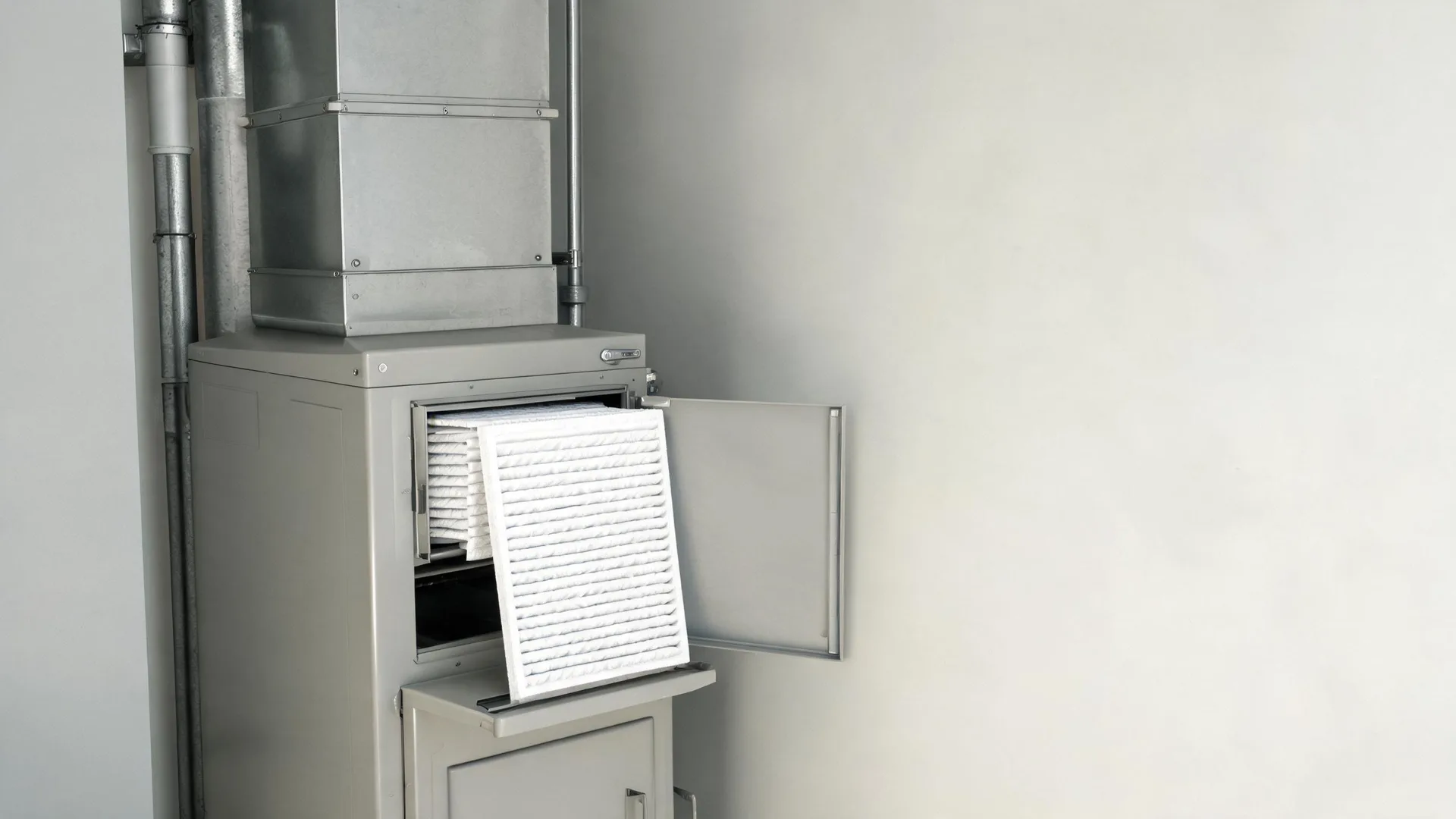
A furnace filter blocks airflow as it loads up with dust. A blocked filter makes the furnace work harder to push air through the house. Check it once a month while the furnace is running. Replace it when it looks gray or matted. That's the one part of the furnace a homeowner handles without a technician.
A furnace needs open space to pull in air and to vent safely. Don't stack boxes or store anything against the cabinet. Keep vents and return grilles in the house uncovered by furniture or rugs. The burner, the heat exchanger, and the flue aren't something to open up or inspect between visits.
Skip the yearly check and the furnace won't fail right away. It fails slow, with parts drifting out of spec a little more each month. A flame sensor coated in soot makes the burner shut off and relight over and over, so the furnace short-cycles long before anyone spots the sensor as the cause. A cracked heat exchanger gives no warning. It just keeps running until the crack gets bad enough to matter. An inducer motor with worn bearings doesn't quit either. It just gets louder, and by the time it's loud enough to notice, the bearings are already shot. None of this shows up as one clear problem. It shows up as a furnace that trips its limit switch at random times, or worse, sends exhaust somewhere other than the flue. A once-a-year check is what catches these while they're still small.
A tune-up covers more than just the parts that burn gas. It covers what makes the furnace start and stop when it's supposed to. The technician checks the igniter. A weak one lights the burner slow, or not at all. The gas valve gets tested too, to make sure it opens all the way and shuts tight when the thermostat's satisfied. The blower motor and wheel get checked for dust buildup. Dust throws the wheel off balance, and then the motor has to work harder to move the same air. The thermostat gets checked as well. Not just whether it reads the right temperature, but whether it's telling the furnace to run long enough to actually heat the house. Each of these is small on its own. Together they decide whether the furnace starts clean on a cold morning or hesitates and trips its own safeties.