October starts the work
Furnaces in Hamilton start working in October and stay on through April. That's seven months. Something wrong in there won't wait to show up, so better to catch it early than find out the hard way.
Takes about a minute. No obligation.
Furnaces in Hamilton start working in October and stay on through April. That's seven months. Something wrong in there won't wait to show up, so better to catch it early than find out the hard way.
A furnace sits all summer doing nothing. Get it checked in September, before it has to carry the house through winter. That gives time to catch a problem before that first cold morning asks it for everything at once.
Butler County mornings sit around 24°F through December, January and February.
A furnace that gets checked once a year can handle that, as long as nothing's quietly going wrong inside it.



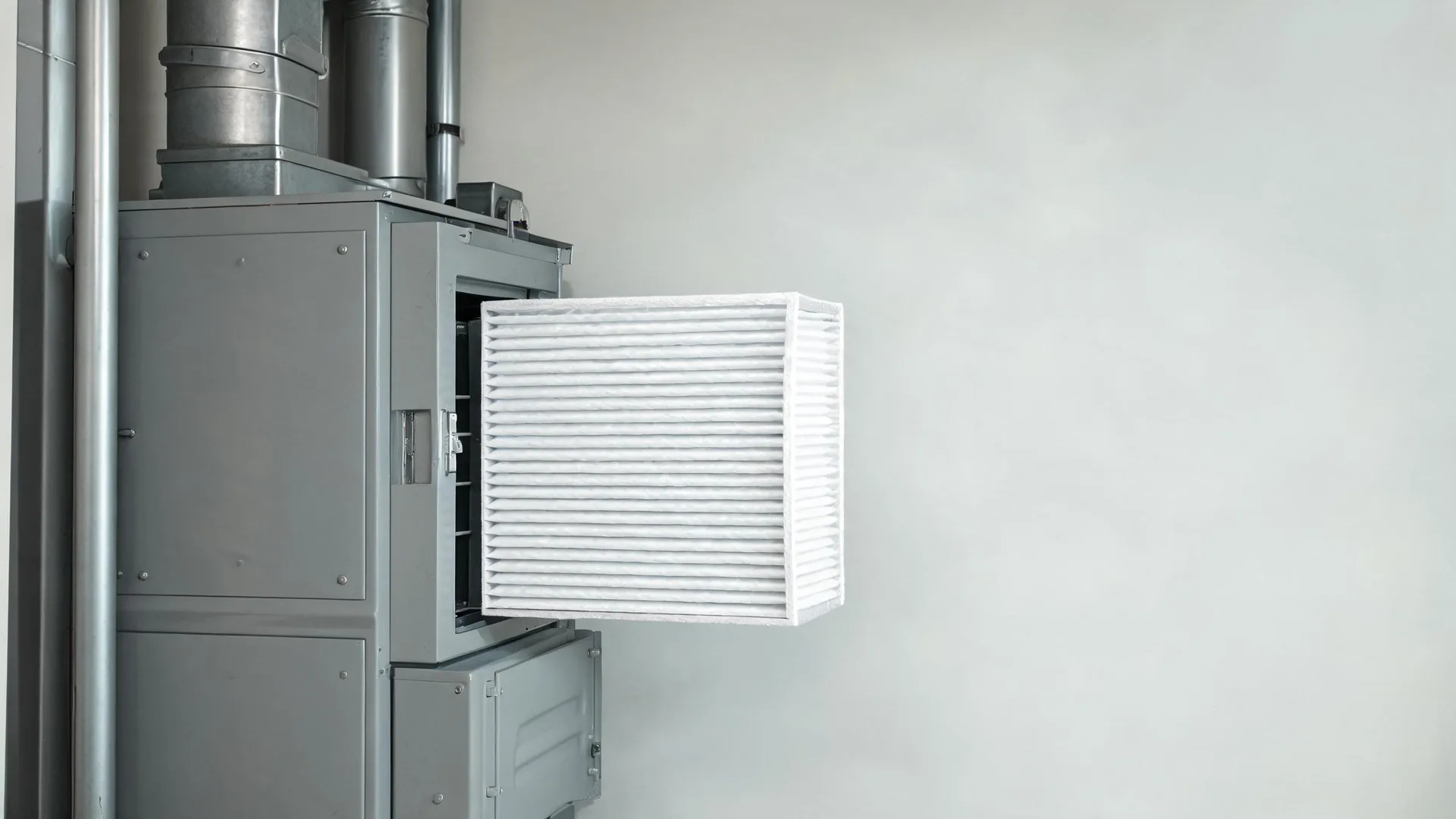
Between visits, the filter is the one thing worth checking. A dirty filter chokes airflow across the heat exchanger, and the furnace has to run longer to hit the same temperature on the thermostat. Check it every month. Swap it when it looks gray instead of white. While at it, walk the house and make sure nothing's stacked against a supply vent or return grille. Blocked air has nowhere to go but back against the furnace. Past the filter and the vents, leave the cabinet closed. Anything inside it is a job for the contractor, not for between visits.
It starts running hard in the first month of the season here. Book the check the month before.
Find a contractorA tech pulls the burner assembly and looks at the flame itself. It should burn steady blue. If it's leaning orange, or lifting off the burner port, combustion isn't clean. That's not something you can smell or see from the living room. The flame sensor gets checked too. That's a thin metal rod that tells the control board the burner lit. A season of dust and soot can coat it. The coating is thin enough you can't see it, but thick enough to shut the furnace down a few seconds after startup. The heat exchanger gets checked for hairline cracks. Once a crack starts, it widens with every heating cycle, and it can let exhaust mix into the air moving through the house. None of this shows up when you bump the thermostat and feel warm air coming out of the vent.
A thorough check puts a meter on the gas pressure. A probe goes in the flue to read carbon monoxide. The temperature rise across the furnace gets checked against the range the manufacturer set for it. A quick visit skips straight to lighting the burner, watching it run a minute, and closing the cabinet back up.
On a thorough visit, the blower wheel gets pulled out and checked for a coating of dust. The motor amp draw gets checked against what the nameplate says it should be. A quick visit just listens for a bad bearing through the cabinet. If nothing sounds wrong, that's called done.
Skip the yearly check and the furnace won't fail right away. It keeps lighting, keeps blowing warm air, gives no sign anything's different. But a few things are building up underneath. Dust packs onto the blower wheel and the motor has to work harder to move the same air. The flame sensor picks up a coating, thin enough to miss, thick enough to make the furnace shut down seconds after it starts. That usually gets blamed on the furnace being broken, when it's really just a dirty sensor doing what a dirty sensor does. A hairline crack in the heat exchanger gets a little wider with every cycle it runs through unnoticed. None of this shows up from the living room. The furnace runs fine, right up until one of these parts isn't fine anymore.
A tune-up follows a sequence, and skipping steps is how problems get missed. It starts with the furnace running and the cabinet open, not closed back up after a minute of watching the burner. The igniter gets checked for a steady glow and a quick light-off. A weak one can still start the furnace most days and fail on the cold ones. The draft inducer gets watched to confirm it's pulling exhaust through the flue before the burner ever lights. A weak pull sends exhaust somewhere it shouldn't go. Electrical connections at the control board get snugged down. A loose one causes the kind of intermittent fault that looks like something else entirely. The condensate line, if the furnace has one, gets checked for a clear path. A clogged line backs up into the furnace and shuts it down on a safety switch. Every step either confirms something is right or catches it while it's still easy to fix.