A quiet suburban street at twilight featuring two-story brick homes with illuminated windows and large trees lining the sidewalk.

Furnace Maintenance in Cincinnati, OH

Tell us about the job

Takes about a minute. No obligation.

Tune-up, service, or cleaningFurnace or heatingHamilton County, OH
Step 1 of 2

What ZIP code is the job in?

Storms hit this county hard

Hamilton County logged 271 severe weather events between 2015 and 2024. That included 169 damaging wind events, 79 hail events and 4 tornadoes. Winter storms, heavy snow, ice and blizzards, added 16 more. Outdoor equipment sits out in all of it.


The power doesn't always come back fast

18% of Ohio households went at least 24 hours without power in 2024. A furnace that depends on the grid to light and run does nothing for you during that stretch. Having it checked before a storm rolls through catches a damaged part while there's still time to deal with it.

Six in ten homes in Hamilton County heat with gas.

A gas furnace runs on a burner and a venting system, and a tune-up has to check both, not just swap the filter.

Half these furnaces are older too

Half the homes here were built by 1963
Heat runs October through April
Winter nights average 25°F
October starts the workFurnaces here run October through April. Have it checked in September.

Half the homes in this county went up in 1963 or earlier. A furnace doesn't last as long as the house, so if yours came with it, or came from the last time someone replaced it years back, it's had a lot of winters to work through. Old igniters crack. Heat exchangers develop cracks too, and that one isn't a part you can wait on. A yearly check is how a contractor catches a cracked exchanger or a worn igniter before it leaves you without heat on the coldest night of the year, or worse, running unsafe.

Get the furnace checked before storm season gets to it

A tune-up before fall catches a part the wind or the ice already weakened, while there's still time to fix it instead of finding out when the power's been out a day and the heat won't come back on.

Find a contractor
A gas furnace with attached ductwork, gas piping, and condensate lines installed in a concrete-block basement.

A quick check and a real one don't look the same inside the cabinet

A quick visit gets the furnace lit and moving warm air, then calls it done. That tells you the burner fires. It doesn't tell you much else. A thorough tune-up starts with the flame itself: a tech pulls the burner and looks at it, checking the color and shape of the flame instead of just confirming there is one. The heat exchanger gets inspected for cracks, which usually means pulling it partway out or using a camera to see the parts a flashlight can't reach. The flue and vent get checked for a solid connection and a clear path out of the house, since a blocked or loose vent can push exhaust where it shouldn't go. The igniter gets tested under load, not just glanced at. Electrical connections get tightened, because a loose wire causes nuisance shutdowns long before it causes a fire. The blower wheel gets pulled and cleaned if it's caked with dust, since a dirty wheel moves less air no matter how strong the motor is. Belts, if the furnace has one, get checked for wear and tension. A short visit skips most of this and leaves the cabinet closed. A real one takes longer because half the job is inside the furnace, not in front of it.

A dirty filter chokes the whole system

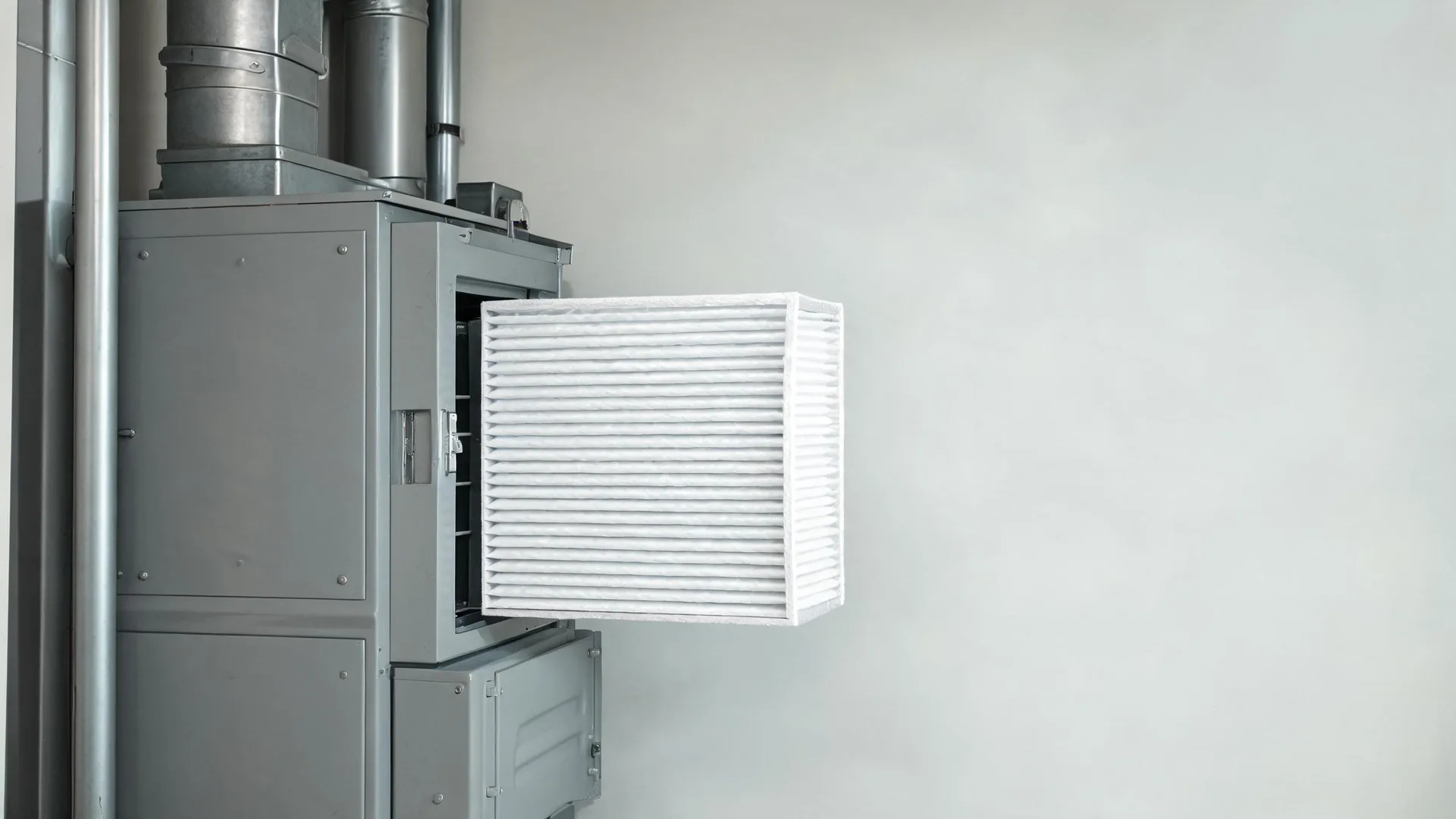
Furnace air has to pass through the filter before it ever reaches the heat exchanger. A filter clogged with dust forces the blower to work harder to push the same amount of air. Airflow drops, the exchanger can run hotter than it should, and in bad cases the furnace shuts itself off on a high limit switch to keep from overheating. A clean filter is the cheapest insurance the furnace has.

The drain and coil still matter in winter

A high-efficiency furnace produces condensation and gets rid of it through a drain line and trap. If that line clogs, the furnace can lock out and refuse to run until it's cleared. The evaporator coil overhead, shared with the air conditioner, can collect dust too, and a dirty coil restricts airflow the same way a dirty filter does. Checking both during a tune-up catches a slow leak or a clogged trap before it stops the furnace cold.

Between visits, the filter is the one thing worth checking yourself. Pull it out, hold it up to a light, and if you can't see light through it, swap it. A furnace with a gas valve stuck open or a cracked exchanger isn't something to poke at, so leave the burner and the flue alone. Outside, keep the area around the furnace clear so air can get to it the way it's supposed to. If the furnace short-cycles, won't stay lit, or you smell something off near it, that's not a between-visits fix. Shut it down and get a contractor out rather than waiting for the next scheduled check.

A tune-up also covers the parts that only cause trouble once a season, the kind nobody thinks about until the furnace won't start. The pressure switch gets tested, since that's what confirms the inducer motor is actually pulling exhaust before the gas valve is allowed to open. The inducer motor itself gets checked for noise and wear, because a failing one can still spin just enough to pass a quick look while barely moving the exhaust it needs to move. Safety controls like the flame sensor and limit switches get cleaned and tested, not just confirmed present. A flame sensor coated in a thin layer of residue will still sense a flame some of the time, then fail at random, and that looks like a mystery shutdown until someone actually pulls and cleans it. None of this shows from outside the cabinet. It's found by someone who opens the furnace up and checks each part on purpose, not by someone who waits to see if it runs.