





An unfinished basement containing a metal furnace with ductwork, exposed wooden joists on the ceiling, cardboard boxes, a coiled cable, and a single hanging incandescent bulb.

Furnace Maintenance in Akron, OH

Tell us about the job

Takes about a minute. No obligation.

Tune-up, service, or cleaningFurnace or heatingSummit County, OH
Step 1 of 2

What ZIP code is the job in?

Summit County saw 188 severe weather events between 2015 and 2024. Damaging wind caused most of them, 133 times in that span, with 38 hail events and 5 tornadoes mixed in. Wind and hail are hard on an outdoor unit sitting exposed in a side yard or behind the house. A furnace tune-up is a chance to have that unit checked for bent fins, loose panels or debris before the next storm comes through. Statewide, 18% of Ohio households lost power for a day or more in 2024, and a furnace that's been inspected is one less thing to worry about when the power finally comes back on.

Utility gas heats 82.8% of homes in Summit County.

A gas furnace needs its burner, venting and safety controls checked every year, not just a new filter.

Half these homes were built by 1966, and a furnace that old needs eyes on it every year

Half the homes here were built by 1966
Heat runs October through May
Winter nights average 22°F
Get it checked before OctoberFurnace season runs October through May here, so book the tune-up in September.

A furnace that came with a house built decades back has had years to develop small problems that an annual check can still catch early. That means eyes on the heat exchanger, the ignition system and the wiring before any of them give out on a cold morning. It also means a technician has seen the unit before, not just after something's already gone wrong. If your furnace came with the house, don't wait for a rattle or a burning smell to find out something's cracked or loose. A cracked heat exchanger found in the fall is a different problem than one found after it's failed.

Have the furnace checked before the next storm gets here

That outdoor unit has already been looked at for storm damage. Pair it with a furnace check and the whole system has been seen before winter asks something of it.

Find a contractor
A gas furnace with attached ductwork, gas piping, and condensate lines installed in a concrete-block basement.

A furnace that's never checked doesn't break less. It just breaks without warning.

A furnace that never gets opened up still runs, for a while. Dust builds on the burners and the flame goes from a steady blue to a lazy yellow, and that's combustion that isn't finished doing its job. The flame sensor picks up a coating of its own over time and starts telling the control board the flame went out when it didn't, so the unit shuts itself down out of caution. The blower motor's bearings dry out from running without anyone checking them, and a motor working harder than it should runs hotter than it should. None of this announces itself. A furnace with a dirty flame sensor doesn't fail once, it fails every few days, short-cycling until someone finally looks at it. A cracked heat exchanger doesn't make noise or smell like anything most of the time, it just sits there until a technician runs the test that finds it. Skipping the yearly check doesn't mean nothing happens. It means the furnace keeps working until the one part that was quietly wearing out finally gives, usually on the night it's needed most.

The filter is doing more than cleaning air

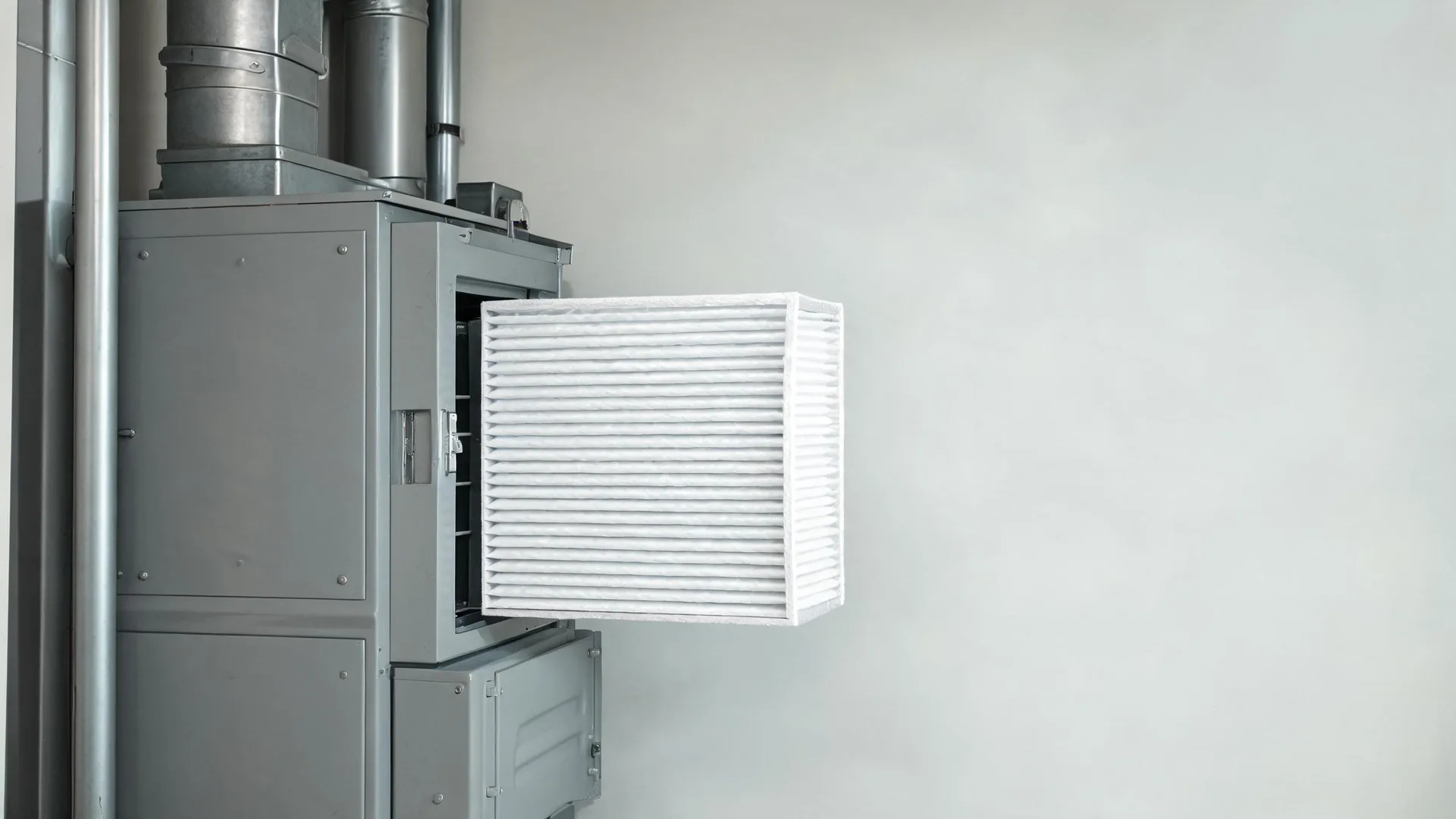
A clogged filter chokes off airflow across the heat exchanger. The blower has to push harder to move the same amount of air, and the exchanger runs hotter than it was built to. That heat has nowhere to go, so it stresses the metal every time the furnace cycles. A filter changed on schedule protects the one part that's expensive to replace and dangerous when it cracks.
The drain line matters even though it's not the furnace's job

A high-efficiency furnace pulls extra heat out of the exhaust and that process makes condensate, which has to drain away. If the drain line clogs or the trap freezes, the furnace locks out rather than let water back up into the cabinet. A technician checking that line during a tune-up catches the blockage before it shuts the system down on its own.

A quick tune-up means someone swaps the filter, glances at the flame and leaves. A thorough one means the panels come off. The burners get pulled and cleaned, not just looked at, because a burner can look fine and still be coated with the film that turns a blue flame yellow. The flame sensor gets cleaned or tested, not assumed to be working because the furnace ran last week. The heat exchanger gets inspected with a camera or a mirror, since a crack in it won't show from where you're standing. Amp draw on the blower motor gets checked against what it should be, not just whether the blower spins. A technician who's done the job right can tell you the numbers they found, not just that everything looked okay.

A tune-up starts with the gas valve and the pressure coming out of it, checked against what the furnace is built to run on. Too high and the heat exchanger takes more heat than it should, too low and the flame burns weak and sooty. The igniter gets looked at next, since a hot surface igniter develops hairline cracks and still glows when tested, right up until the day it doesn't. Every electrical connection in the control cabinet gets snugged down, because a loose wire under load heats up, and a connection that's heated once is weaker than it was. The inducer motor gets checked for the draw that pulls exhaust out through the vent, since a weak draw lets combustion gases linger where they shouldn't. Belts aren't part of this, most furnaces run the blower direct off the motor, but the capacitor that gets that motor started is, and a capacitor can test weak long before the motor refuses to turn.