

Heat pump vs furnace in Summit County, Ohio

Get an Install Quote

Pros who work in Summit County

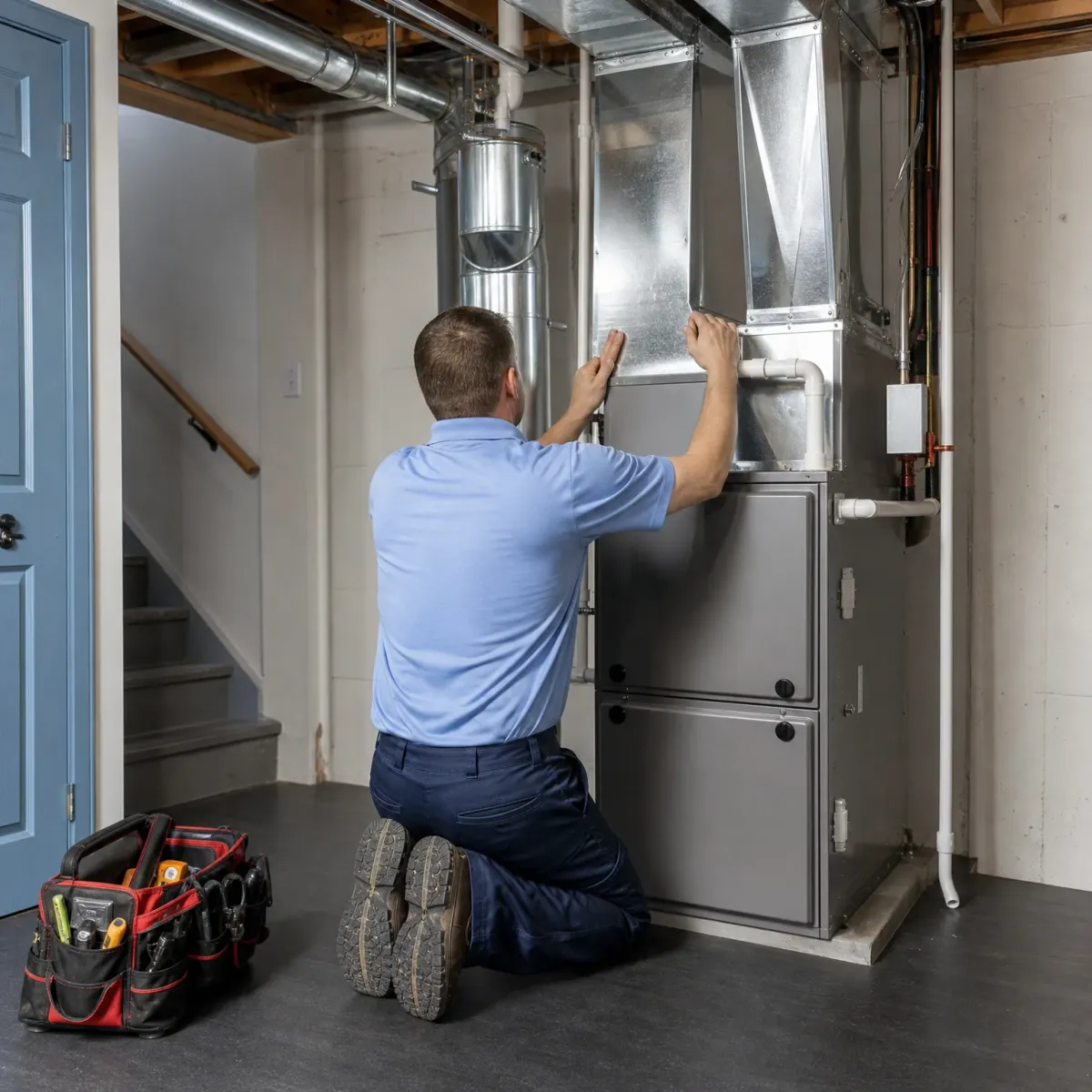
A man in a light blue polo shirt and dark jeans kneels in a basement, holding a panel on a gray furnace connected to sheet-metal ductwork, with an open tool bag on the floor nearby.

Tell us about the job

Takes about a minute. No obligation.

New system or replacementSummit County, OH
Step 1 of 3

What kind of equipment?

Which costs less to run in Summit County?

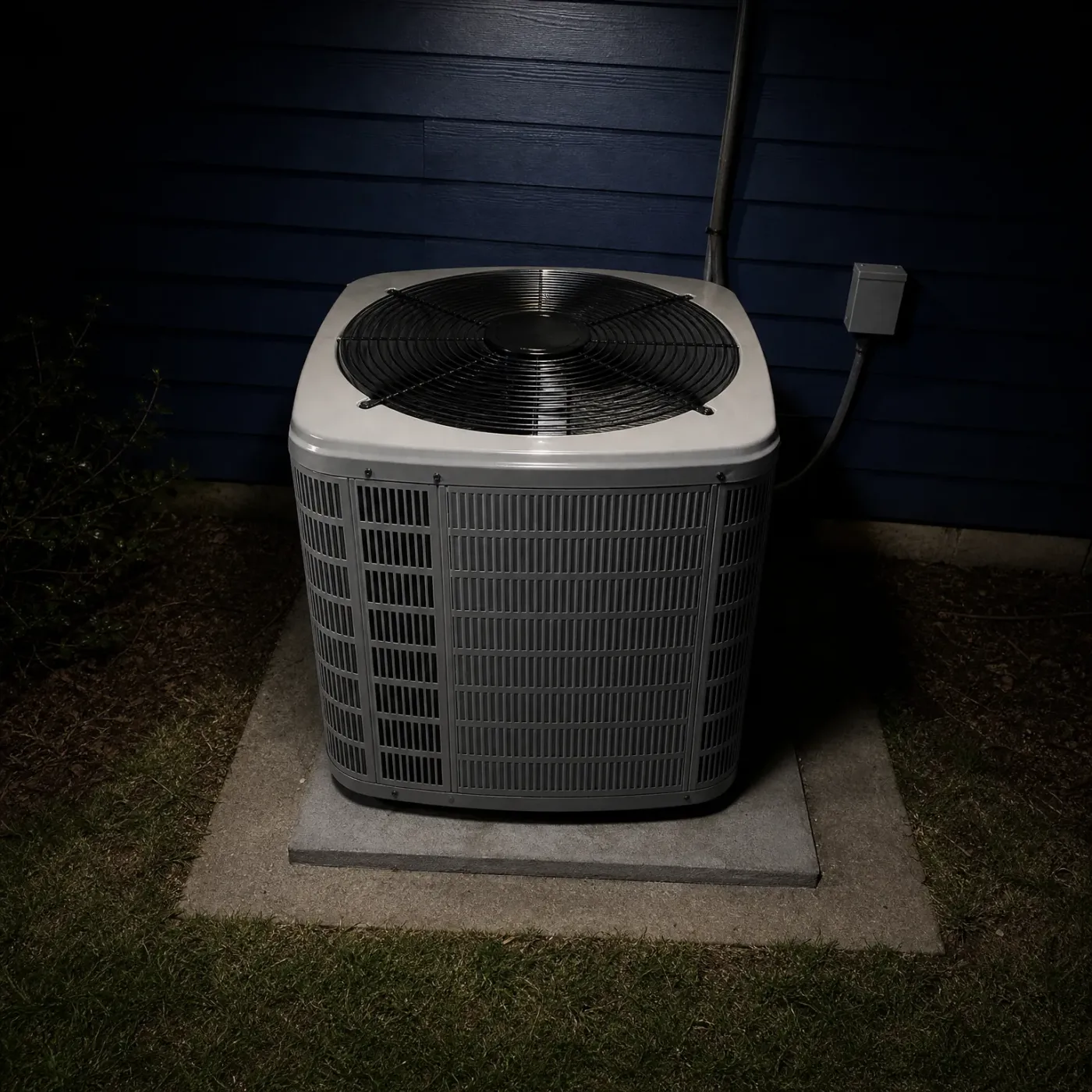
An outdoor air conditioner condenser unit on a concrete pad beside a dark blue horizontal-siding wall at night, with conduit and a small electrical box on the wall and grass surrounding the pad.

Heat pump

To heat your home here$2.13per 100,000 Btu

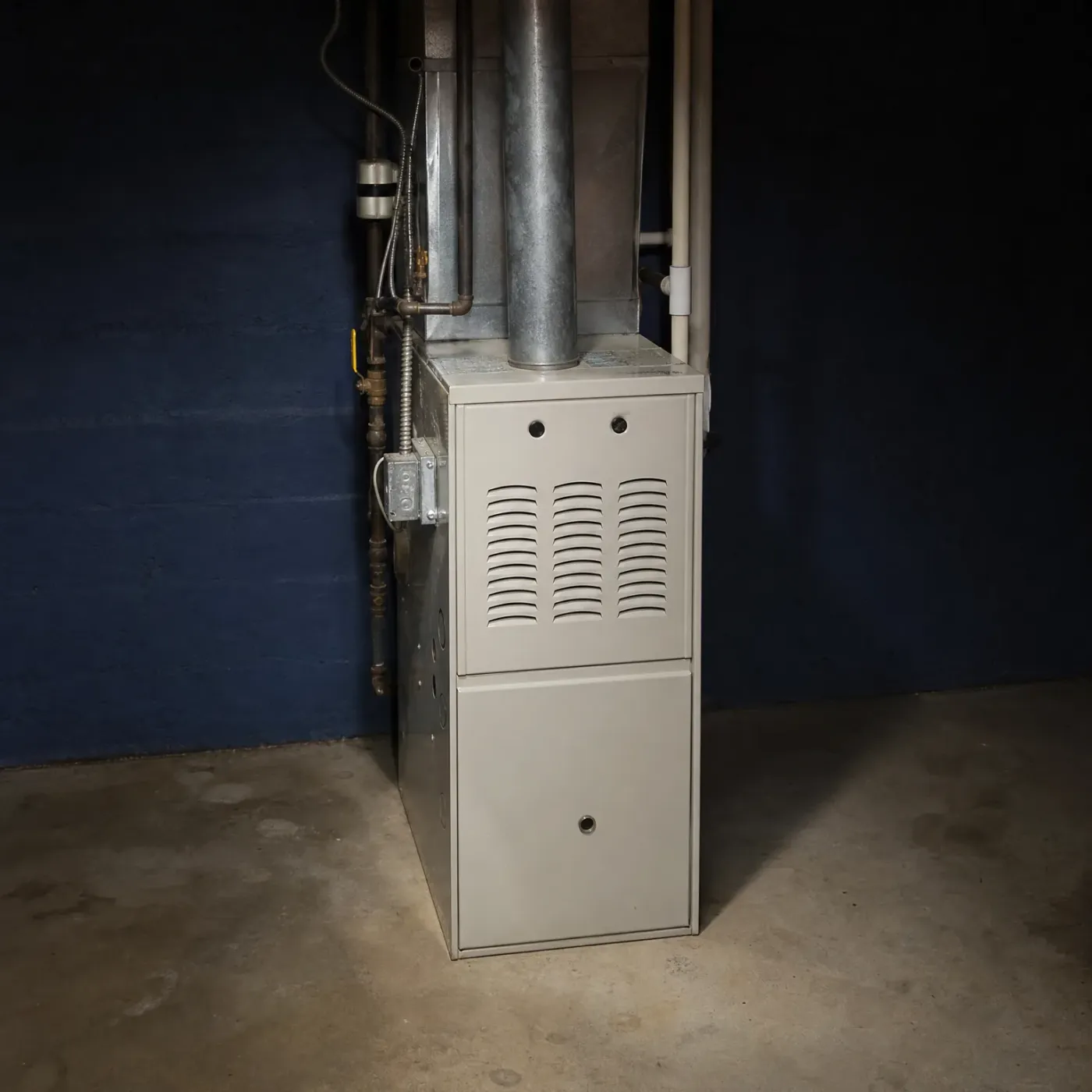
A beige gas furnace with a louvered upper panel stands on a concrete floor against a dark blue wall, with a metal flue pipe and gas and electrical lines running up beside it.

Furnace

To heat your home here$1.61per 100,000 Btu

At Ohio's gas and electricity prices, a gas furnace makes the same heat as a heat pump for at least 24% less.

Btu stands for British thermal unit, the standard measure of heat energy.

Where does a heat pump shine?

  • Heats and cools in one system

    A heat pump runs the same way all year. It pulls heat into the house in winter and pushes it out in summer.

    A living room with a beige sofa holding navy and light blue cushions and a blue throw, a wooden coffee table with a mug, bowl, books and white hydrangeas, flanked by table lamps and a bookshelf, in front of a large window overlooking a green garden.
  • No gas line, nothing burning in the house

    A heat pump runs on electricity alone. Nothing burns inside the house.

    A kitchen with navy cabinets, white marble-look counters and backsplash, a stainless range hood over an induction cooktop with a kettle, a wall oven with a striped towel, utensils, cutting boards, potted plants, a bowl of green apples and blue hydrangeas in the foreground.
  • Steady, even comfort

    Instead of short bursts of heat, it keeps a gentle, steady output going. The house stays at one comfortable temperature.

    A light-colored dog sleeps on a woven rug in a dimly lit living room with a navy armchair holding an open book and a knit blanket, a lit floor lamp, built-in shelves, and a window showing snow-covered trees at dusk.

Where does a furnace shine?

  • Runs on the gas most homes here already use

    Most homes in Summit County already have a gas line run for heat. A furnace uses that same gas service, so there's no new fuel hookup to figure out.

    Front porch steps with light blue painted railings on a clapboard house, beside a cleared sidewalk bordered by snow, with a dark blue porch on a neighboring house and bare trees in the background.
  • Proven, simple, easy to get serviced

    Gas furnaces have heated homes for generations. Almost every HVAC tech knows them inside and out.

    A gloved hand holds a white pleated air filter in front of a furnace and ductwork, with shelving holding a storage bin, watering can, mug, folded towels and a basket in the background.
  • Pairs with any central AC

    The ductwork that delivers heat in winter delivers cool air in summer once an AC coil is added.

    A metal floor vent set into a wood floor near a window with sheer white curtains, a white baseboard, a dark blue cabinet at right, and a patterned rug in the foreground.

Can a heat pump keep up on the cold nights here

Your winter low here averages 22°F, and that matters because 40°F and 35°F are the two marks that count for a heat pump. Below 40°F a standard heat pump puts out less heat than its rating says. Below about 35°F it often needs backup heat to make up the difference. At 22°F you are under both marks, and so is every one of the roughly 120 nights a year here that drop to freezing or below.

Those freezing nights are not rare. They are about half the nights across the eight months your heat runs, October through May. On most of them a standard heat pump is working harder than its rating suggests and may be leaning on backup heat to finish the job.

The nights that go further, down to 0°F, are few. About 4 a year. A field test of cold-climate heat pumps in occupied homes found backup heat covered only a small share of the heat needed between 0°F and 35°F, and running on backup alone was rare even above 0°F. So the deep cold is not where the real demand sits here. The demand sits in that wide band of ordinary freezing nights, 120 of them, where a standard heat pump is already working past its rated capacity.

A heat pump built to the ENERGY STAR Cold Climate spec is tested to hold at least 70 percent of its 47°F capacity at 5°F, and to still produce 1.75 units of heat per unit of electricity at that temperature. That is a different machine than the federal-minimum unit priced in the running-cost comparison above. If a heat pump is the direction you are leaning, this is the spec that decides whether it holds up on your coldest nights, not just your average one.
A row of two-story houses with brick and blue siding facades, covered porches and icicles along the eaves, beside a plowed street with snowbanks under a clear blue sky.

What the fuel choice around you says

Gas heats 82.8% of homes in Summit County, a little over four in five. Electric heat covers 13.9%, close to one in ten. That split is not an accident of taste. It is cheaper to run here: $1.61 per 100,000 Btu for a gas furnace against $2.13 for a heat pump, using Ohio's own fuel prices. A furnace at the federal minimum makes the same heat for at least 24% less than a heat pump at its federal minimum.

Heating is also the long season here, eight months against three for cooling. A furnace does nothing for those three summer months. A heat pump runs both, which is the trade worth weighing against the running-cost gap: one system that heats and cools, or a furnace paired with its own central air.

If your house already has a gas line and a furnace, the case for staying put is straightforward: lower cost to run, a system Summit County is set up to service, and no compromise on cold nights to think about. If you are choosing for a new system or a house without gas, the heat pump's case rests on buying the Cold Climate spec, not the standard one, and on weighing its higher running cost against having one system instead of two.

Sources: NOAA nClimDiv · NOAA 1991–2020 seasonal normals · PNNL Building America guide · PNNL-37127 field study · ENERGY STAR product criteria · EIA SEDS 2024 · 10 CFR 430.32 · Census ACS 2020–2024

Snow-covered concrete steps and white railings lead to a dark blue front door on a blue clapboard house, with a snow shovel leaning beside the door.

Common questions about heat pumps and furnaces

  • Can a heat pump heat a house through an Ohio winter?

    It can, but a standard heat pump struggles once it gets cold here. Below 40°F its output falls short of what it's rated for, and below about 35°F it often needs backup heat to keep the house warm. The average overnight low across December, January and February here is 22°F, so that's most winter nights, not just the occasional cold snap.

  • Do I need backup heat with a heat pump here?

    Most likely, yes. A standard heat pump's heating efficiency drops below about 35°F outside, and the overnight low here falls to freezing or below on about 120 nights a year, roughly half the nights the heat runs. A cold-climate model holds up better in the cold, but check what backup heat source comes with whichever system you're looking at.

  • Can I keep my furnace and add a heat pump?

    Yes, that pairing is called a dual fuel system. The heat pump handles the milder nights and the furnace takes over when it gets cold enough that the heat pump can't keep up or runs short of its rated output, which here is anytime it drops below about 40°F.

  • Is a heat pump cheaper to run than a furnace in Summit County?

    No, a furnace costs less to run here. A furnace runs $1.61 per 100,000 Btu of heat against $2.13 for a heat pump, both at the federal minimum efficiency and Ohio's average fuel prices. That gap doesn't include any backup heat the heat pump would need on the colder nights, so the real difference in a Summit County winter runs higher.