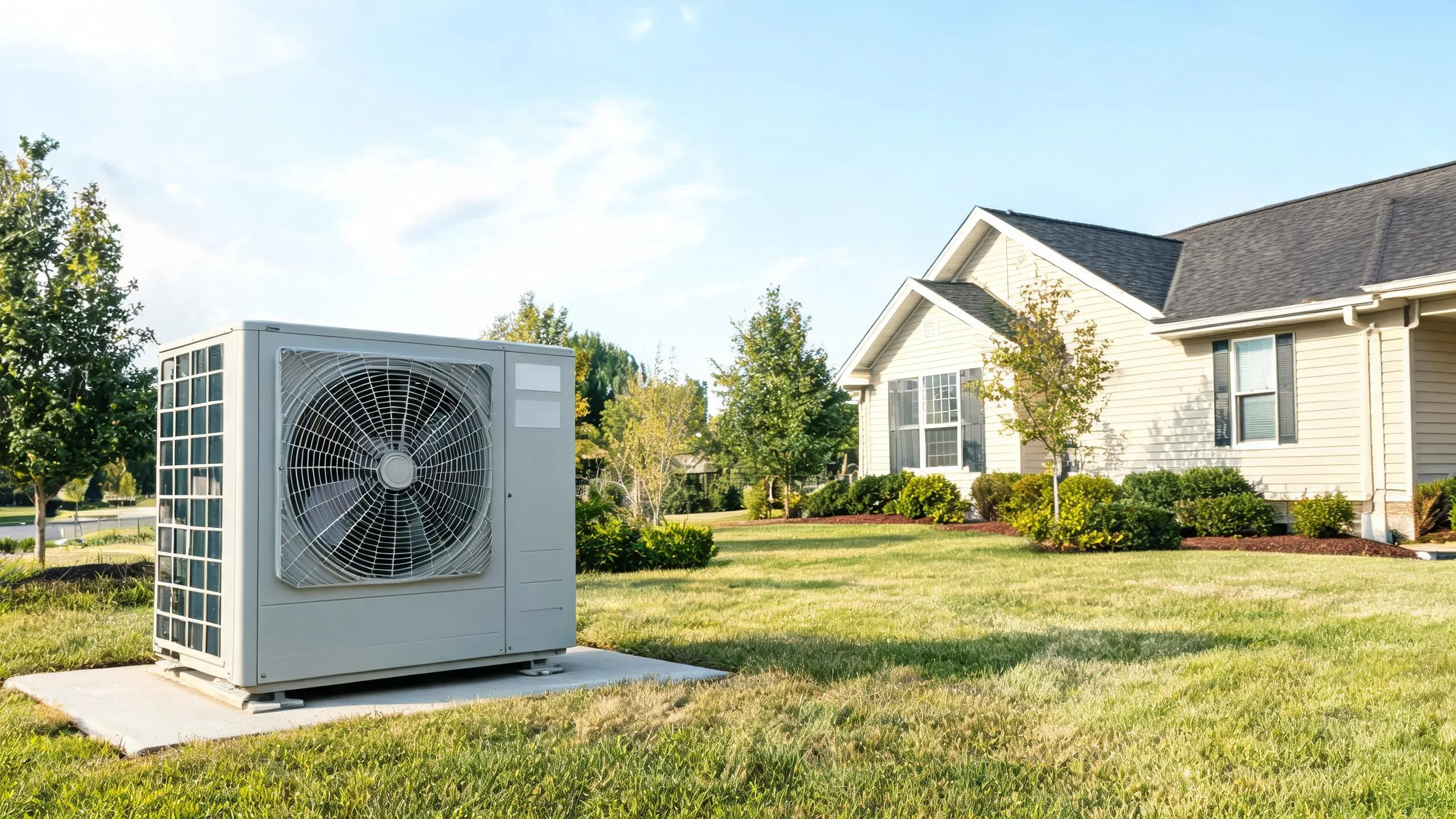






A grey heat pump outdoor unit mounted on a concrete pad in a suburban backyard, with a single-storey house visible behind it.

Heat Pump Repair in Toledo, OH

Tell us about the job

Takes about a minute. No obligation.

RepairHeat PumpLucas County, OH
Step 1 of 2

What ZIP code is the job in?

September is a good time to get a heat pump looked at in Toledo. Heat season runs October to May, eight months of asking the same unit to carry the load. If something's already marginal, the first real cold snap finds it. Mild days won't. A part limping along in September can fail outright once the system runs daily instead of a few hours here and there. Get the repair done before that first cold week. Then it happens on your schedule, not on a cold morning with no heat.

8 months
October through May, your system heats
3 months
June through August, it cools
22°F
the average winter night it heats against
83°F
the average summer afternoon it cools against
Isometric grayscale illustration of a cutaway single-story house showing interior rooms, ductwork and an air handler, an exterior condenser unit connected by lines, and dark solar panels on the roof.
Your system heats October through May and cools June through August.

NOAA nClimDiv, 1991–2020 normals

Toledo winter nights average 22°F. Cold, but nothing a heat pump can't handle.

A heat pump working hard all winter in Lucas County is just normal wear. It doesn't mean the unit is undersized or failing early.

A heat pump running badly costs more here, at 15.99 cents a kilowatt-hour

Power costs 15.99 cents a kWh statewide
91 damaging wind events from 2015 to 2024
26 hail events from 2015 to 2024

Lucas County gets wind, hail, even the occasional tornado. That doesn't mean a heat pump here has a harder life than anywhere else. A storm can knock the power out. When it comes back, the heat pump should start up on its own, no switch to flip. If it doesn't restart, that's the thing worth looking at, not the outage itself. Most of the time the problem has nothing to do with weather. A refrigerant leak, a failing capacitor, a dirty coil, a control board that quit working. Same handful of things that go wrong with this equipment in any county, in any weather.

Get it looked at early

Problems tend to show up in the first weeks of the season, when the load hits a part that was already weak.

Find a contractor
A man in a dark shirt, tan pants and cap walks up porch steps toward a navy blue front door, carrying a canvas tool bag filled with hand tools, beside a potted shrub in a blue planter.
A residential heat pump outdoor unit mounted on a concrete pad next to a house with gray vinyl siding.

How long this one has been at it

Half the homes in Lucas County were built in 1963 or earlier. A heat pump doesn't care how old the house is. But it helps to know how old the unit is before paying for a repair. If nobody knows when the current system went in, that's worth finding out first. An old heat pump can still be fixed. The real question is whether this repair is a good bet, or just the first of several.

A struggling compressor keeps drawing on itself

A compressor low on refrigerant or fighting a bad capacitor runs hotter than it should. Heat builds up in the windings every time it starts. Enough of that, and the compressor shorts out for good. What should've been a part swap turns into a full replacement.
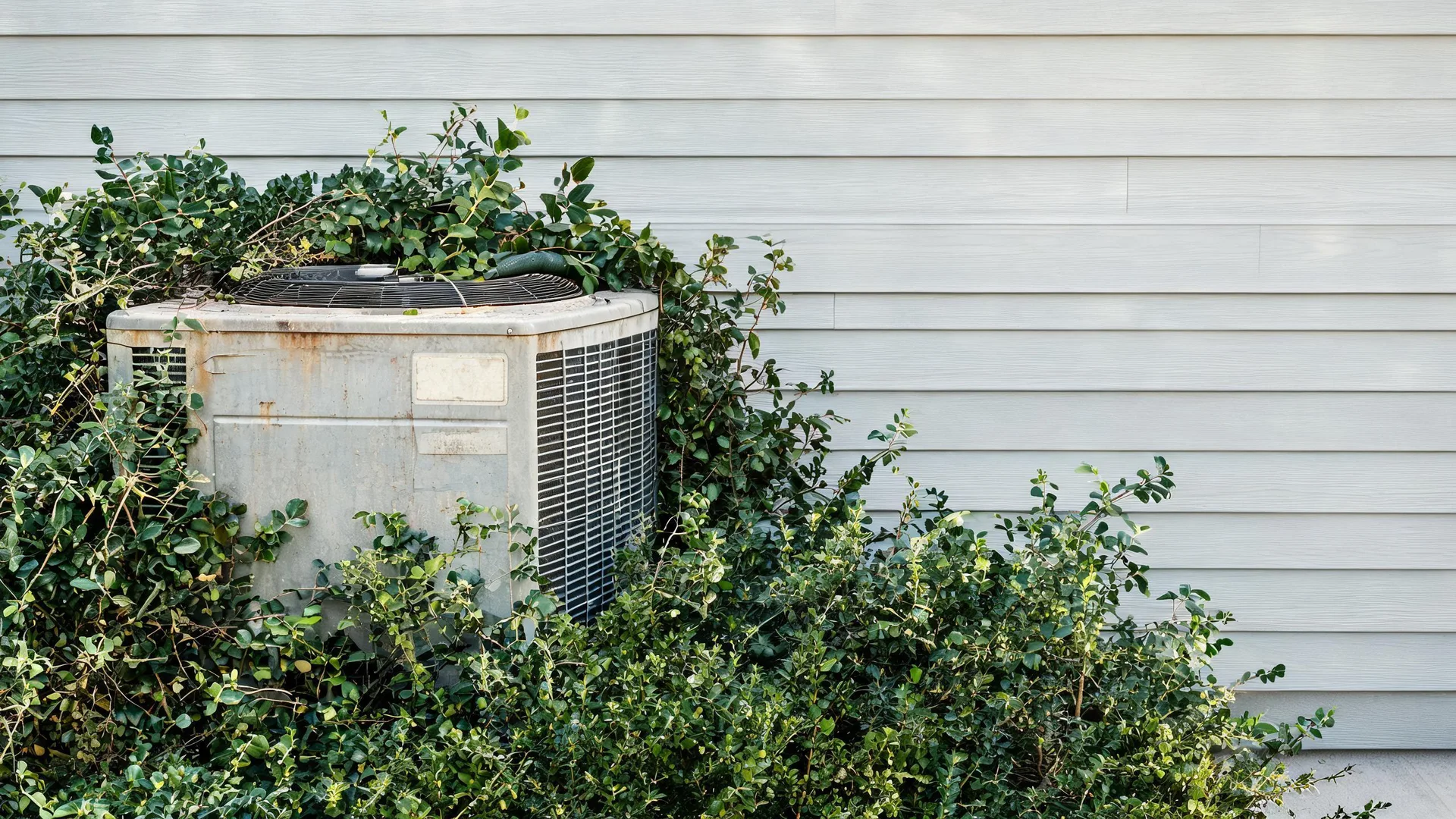
Ice spreads once it gets a foothold

A heat pump low on charge or short on airflow can't shed the frost that builds on the outdoor coil during a defrost cycle. Left alone, that frost turns to ice and blocks the coil even more. The unit runs less efficiently and ices up faster next time. Caught early, it's a coil cleaning. Caught late, the ice can crack the coil.

Most heat pump failures come down to one of a handful of parts not pulling its weight anymore. A capacitor weakens over time. It stops giving the compressor and fan motors the jolt they need to start, so the unit hums for a second and quits. A contactor's contacts pit and burn from months of opening and closing, until one day they just won't close. Refrigerant doesn't get used up. If the charge is low, it's leaking out somewhere, usually at a fitting or a coil, and the system can't move heat either direction anymore. A reversing valve can stick, leaving the unit stuck in one mode when the thermostat wants the other. None of these give a warning first. They just work until they don't.

Every heat pump owner ends up staring at a repair bill at some point, trying to decide if it's worth it. The age of the unit matters less than what's actually broken. A capacitor or contactor is a small, contained fix. That part fails on its own and doesn't take anything else down with it. A compressor or a coil is a different story. Those are expensive by themselves, and when one of them fails, it usually means other parts have been running stressed for a while too. The other thing to look at is whether this is the first repair or the third. One fixed problem is just a fixed problem. But different parts failing every season is a pattern, and that pattern means the unit is wearing out, even if each repair looks reasonable on its own.