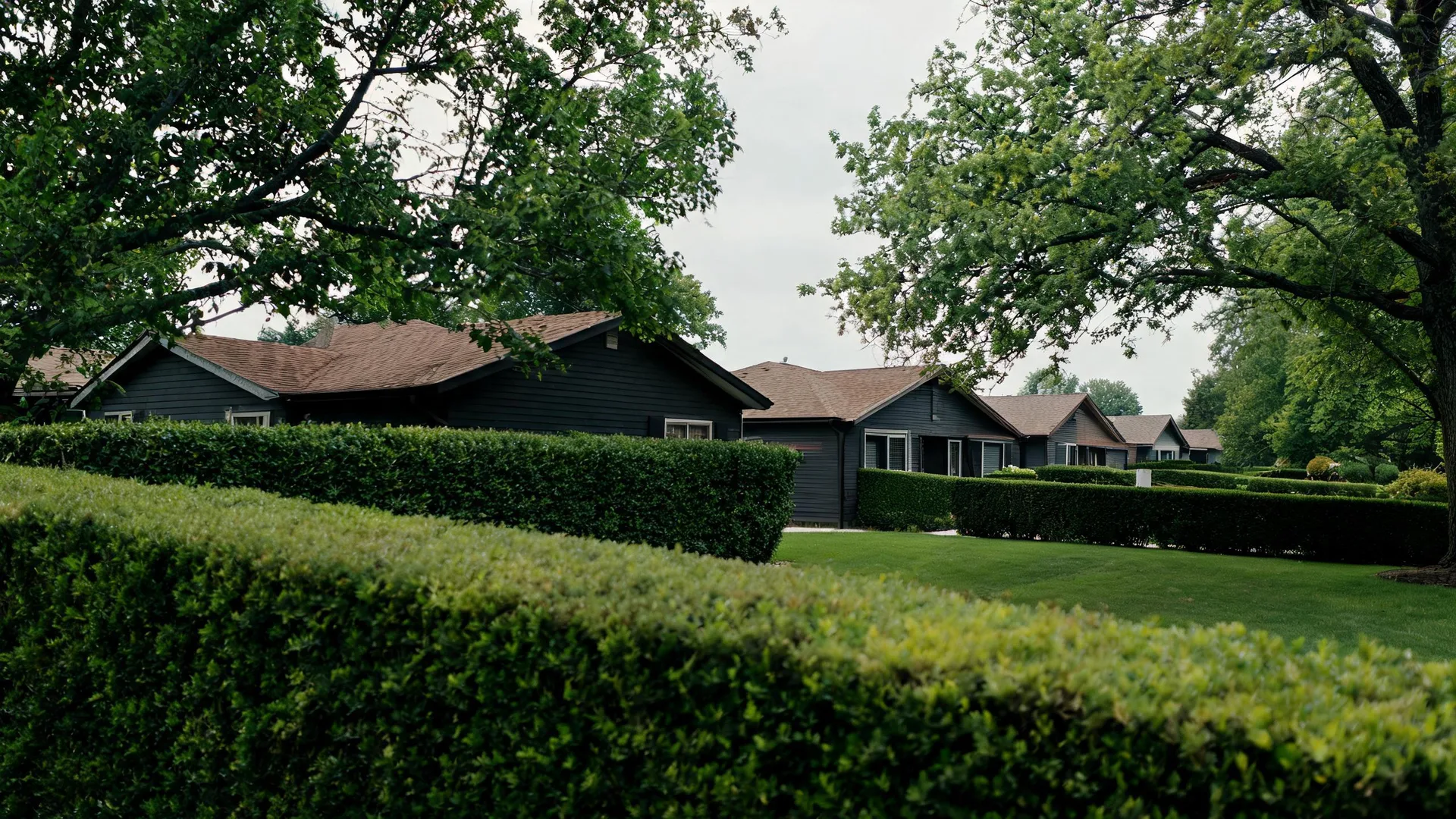




A row of dark-sided single-story houses with shingled roofs behind trimmed hedges and mown lawn, framed by large leafy trees under an overcast sky.

Furnace Repair in Toledo, OH

Tell us about the job

Takes about a minute. No obligation.

RepairFurnace or heatingLucas County, OH
Step 1 of 2

What ZIP code is the job in?

September is worth a look before heat goes on in October. A furnace that sat quiet all summer tends to show its weak points once it starts running every day, and the first cold stretch often finds whatever was already wearing thin, a cracked igniter, a failing flame sensor, a blower motor that was straining last spring. Furnaces here run about eight months a year, October through May, so a problem that shows up early in the season is not going to fix itself as the months go on. Catching it in September usually means a simpler repair than waiting until the part fails outright once the cold sets in.

8 months
October through May, your furnace is on duty
22°F
the average winter night it heats against
75%
of homes here heat with gas, so most furnaces here burn gas
8 winter storms
in ten years, the nights a failure hurts most
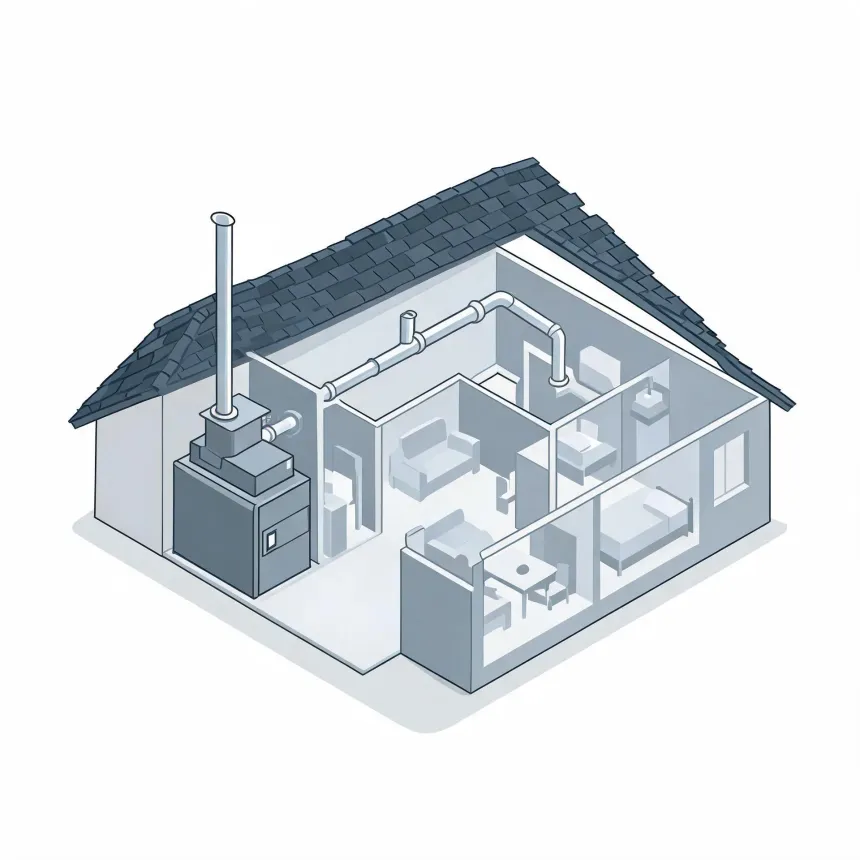
Isometric cutaway illustration of a single-story house showing interior rooms with furniture, ceiling ductwork, and a large furnace unit with a tall flue pipe in a corner room.
Your furnace works hardest from November through March.

NOAA nClimDiv, 1991–2020 normals

Furnaces in Toledo run eight months a year, October through May.

A weak igniter or a failing blower motor won't make it through all eight.

Toledo winters don't break furnaces. Worn parts do.

Climate zone 5A
Heat runs October through May
Winter nights average 22°F

Half the homes in Lucas County were built in 1963 or earlier. If your furnace came with the house, or came with whatever furnace replaced the original, it's worth finding out how old it actually is before you decide what to fix. A furnace that old is closer to the end of its life than the middle of it, kept up or not. That doesn't mean every repair call ends with a new furnace. It means the question is worth asking first, because what you do with a cracked heat exchanger or a failing blower motor depends a lot on how many winters the furnace has left in it.

The weather isn't the problem. The worn part is.

Lucas County sees its share of wind, hail and the odd winter storm, but none of that singles out a furnace the way a cracked igniter or a failing blower motor does. Weather is not what's wrong with it. Get the actual part diagnosed and you'll know whether this is a simple fix or something bigger.

Find a contractor
A man in a navy T-shirt, tan work pants and cap, seen from behind, carries a worn canvas tool bag up wooden porch steps toward a dark blue front door.
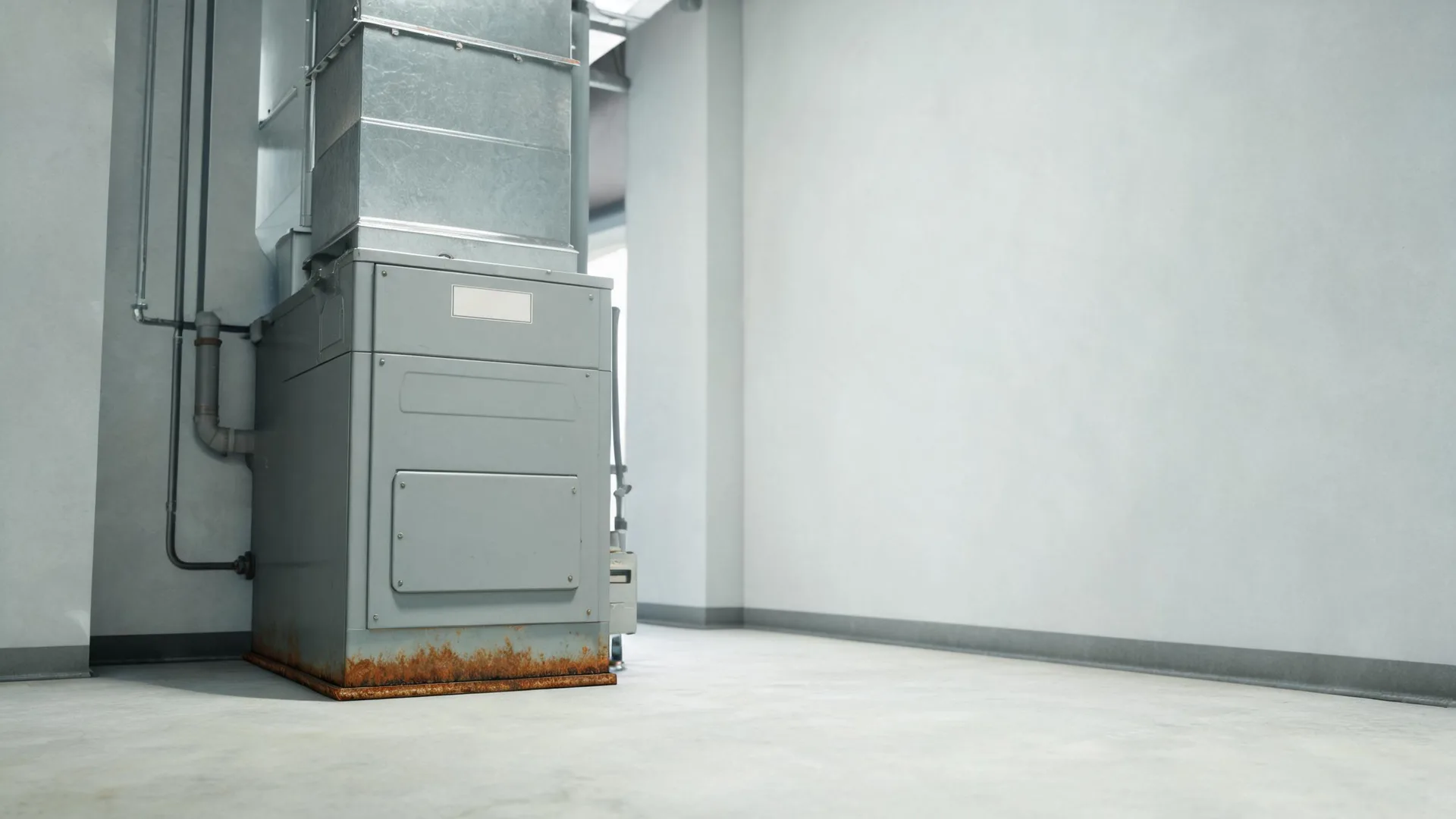
A gray gas furnace with attached ductwork and piping installed in an unfinished concrete basement.

What actually happens when the panel comes off

A diagnostic visit starts with questions before any panel comes off. What did you notice first, a smell on startup, a clicking that won't catch, heat that cuts out partway through a cycle. That tells the technician where to look first. With the cabinet open, they check things in order. Does the igniter glow or spark the way it should. Does the flame sensor hold a steady reading or lose it after a few seconds. Is the blower wheel spinning free or straining against something. A meter comes out for the electrical side, checking voltage at the igniter and continuity through the flame sensor, because a part can look fine and still be the problem. None of this is guesswork. Each test rules something in or out. By the time the panel goes back on, the technician already knows what's wrong and what it takes to fix it.

It's rarely the furnace itself

A furnace fails one part at a time, not all at once. The igniter cracks, the flame sensor coats over with a film that stops it reading the flame, the blower motor bearings wear down until the motor strains to spin. Each of those is its own repair. Very few calls turn out to be the whole unit at fault.

What that means for a repair call

A technician is chasing one bad part, not inspecting the whole furnace for general wear. Tell them exactly what you noticed, a smell, a sound, short cycling, a pilot that won't stay lit. That detail points to which part is failing and where to start looking.

An unfinished basement featuring exposed ceiling joists, a metal HVAC unit with round ductwork, a hanging light bulb, and scattered boxes and debris along the left wall.

A new furnace would cut about $160 a year off heating for a typical Lucas County home.

  • A new high-efficiency furnace$680 a year
  • An older furnace$840 a year

Estimates for a typical Lucas County home, compared with an older unit built to the previous federal minimum, from EIA household energy data, Ohio fuel prices and NOAA climate normals. Your home will differ.

Repair makes sense when one part has failed and the heat exchanger is sound.

Replacement makes sense when the heat exchanger is cracked or the furnace keeps needing parts.

A repair makes sense when the furnace is otherwise sound and the failure is one part doing what parts eventually do. An igniter or a flame sensor is a small job on its own, and fixing it doesn't say anything bad about the rest of the unit. Replacement starts to make more sense once repairs stop being isolated, when the heat exchanger is cracked, or when the technician finds the kind of wear that shows up everywhere at once rather than in one part. A cracked heat exchanger especially is worth taking seriously, since it's a safety issue and not just a performance one. Age matters here too, not because an old furnace is automatically bad, but because a unit near the end of its expected life is more likely to have a second failure waiting behind the first one. Ask the technician what they found and whether it looked like an isolated failure or a sign of broader wear before you decide.