





An unfinished basement containing a metal furnace with ductwork, exposed wooden joists on the ceiling, cardboard boxes, a coiled cable, and a single hanging incandescent bulb.

Furnace Installation in Salem, OH

Tell us about the job

Takes about a minute. No obligation.

New system or replacementFurnace or heatingColumbiana County, OH
Step 1 of 2

What ZIP code is the job in?

Just over half the homes in Columbiana County heat with gas. That's more than any other fuel. So if the furnace already runs on gas, putting in another gas furnace is the simplest path. Electric is a distant second at 28.3%. Oil and propane make up the rest. Switching fuels means new venting, and maybe a new gas line or electrical circuit. That's work beyond just swapping the unit. For most homes here, sticking with what's already heating the house is the easier call.

8 months
October through May, your furnace is on duty
22°F
the average winter night it heats against
52%
of homes here heat with gas, so most furnaces here burn gas
80% AFUE
the federal minimum any new unit must meet
Isometric cutaway illustration of a single-story house showing interior rooms, furniture, a dark furnace unit with a tall vertical flue pipe, and ductwork running under the pitched shingle roof.
Your furnace works hardest from November through March.

NOAA nClimDiv, 1991–2020 normals

September is the last quiet month before Salem furnaces switch on for October.

Install before October and the new furnace is already broken in when the first cold night asks something of it.

A standard furnace, sized the right way, handles Salem winters just fine

Heat runs October through May
Winter nights average 22°F
Climate zone 5A

The old furnace gets disconnected from the gas line and the vent first, then freed from the ductwork and the electrical whip that runs the blower. Once it's loose, it has to be carried out, and furnaces are heavier than they look, built around a steel heat exchanger that adds real weight. If the vent connector or flue was sized for the old unit, it gets inspected before the new furnace ties into it, since a flue that fit one furnace doesn't always suit another. Whoever installs the new system typically hauls the old one away rather than leaving it for the homeowner to deal with. What's underneath often tells its own story, scorch marks on the floor, a rusted-through heat exchanger, signs of why it was time.

Replace it before the season

Replace it before the season starts, so it happens on your schedule, not in a hurry.

Find a contractor
A gray high-efficiency gas furnace installed in an unfinished basement, surrounded by gas lines, a condensate drain, and sheet-metal ductwork.

An older house asks the new furnace to fit around decisions made decades ago

Half the houses in Columbiana County were built in 1964 or earlier. A furnace going into one of those has to tie into a duct system and a gas line that were laid out for whatever heated the house decades ago, not necessarily for the unit going in now. That doesn't rule anything out, but it's worth having the ducts and venting checked against the new furnace rather than assumed, since what worked for the original setup doesn't always carry over cleanly to a replacement.

The load calculation sets the size, and size sets the price

A furnace has to match the house. The only way to know the right size is a room by room heat loss calculation. It looks at square footage, insulation, window area, ceiling height. Guessing high costs more up front and still runs worse. It cycles on and off instead of warming the house evenly. The calculation itself doesn't cost much. But it decides which furnace gets priced.

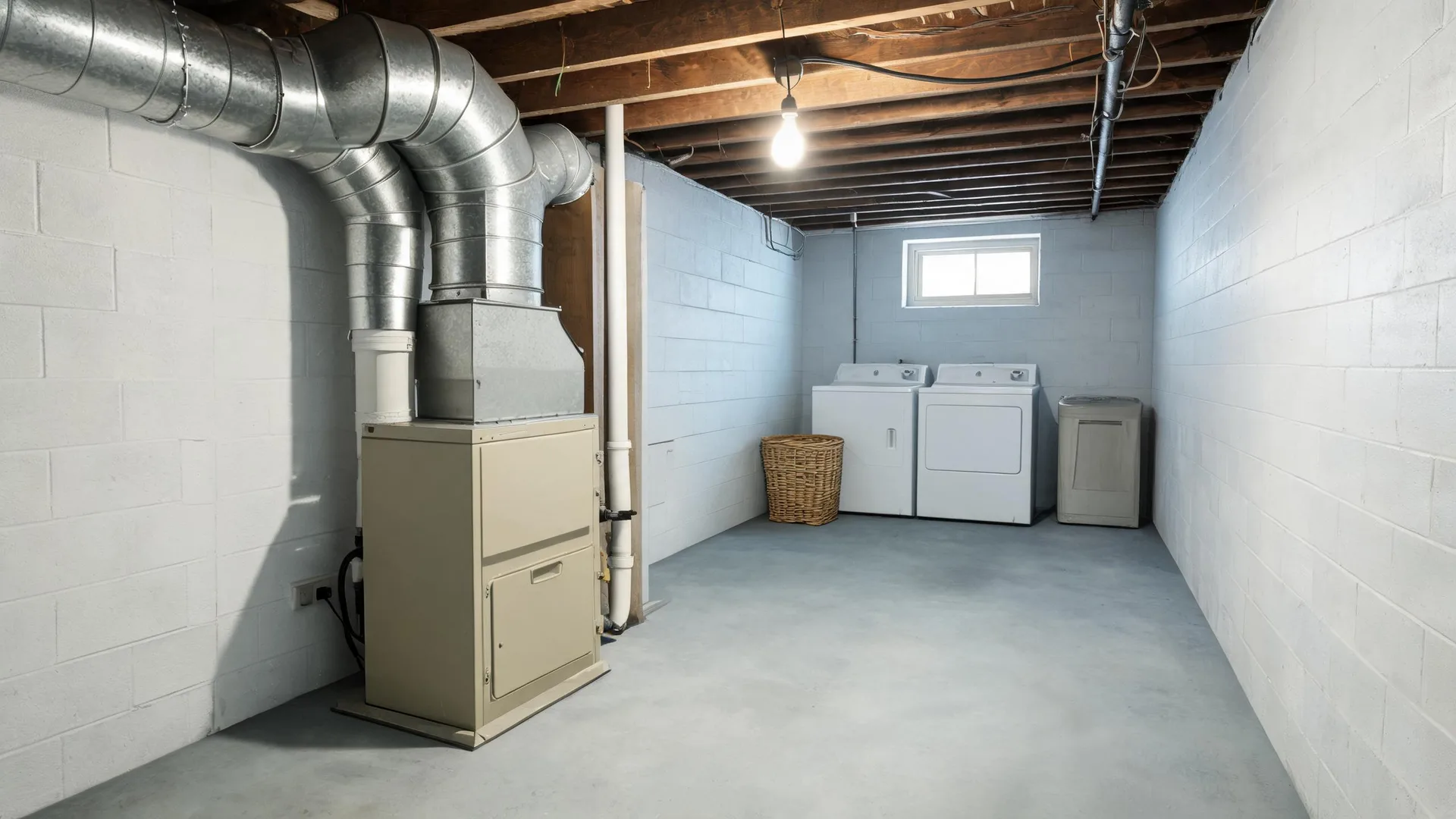
What's hardest to see is often what costs the most

A furnace that bolts in where the old one sat, ties into the same duct trunk, and vents through the same flue is a different job than one that needs new ductwork, a relined chimney, or a gas line run to a different spot. Nothing about the furnace itself changes between those jobs. What changes is everything around it. That's where the real spread in price comes from.

An unfinished concrete basement containing a metal HVAC air handler, exposed wooden ceiling joists with sheet-metal ducts, a hanging bare bulb, copper pipes, and stacked cardboard boxes.

A high-efficiency gas furnace would save about $140 a year to run in Columbiana County compared with a gas furnace.

  • A high-efficiency gas furnace$680 a year
  • A gas furnace$820 a year

Estimates for a typical Columbiana County home, from EIA household energy data, Ohio fuel prices and NOAA climate normals. Your home will differ.

Install day starts with the equipment already staged in the driveway or garage. First couple hours are teardown. Once the old furnace is out, the house has no heat until the new one is running, so there's a bit of a clock on it. Setting the new furnace means leveling it on its base, connecting the plenum, running new gas piping to the valve, and wiring the control board to the thermostat and blower. Every joint in the vent pipe and gas line gets checked for leaks before anything is fired up. Not a step worth rushing. Once it's running, it gets cycled through a few heating calls while someone checks the temperature rise against what the manufacturer specifies for that model. A furnace that fits where the old one sat is usually done in a day. One that needs new ductwork or a relocated flue can run into a second.