A row of single-story houses with dark siding and gray shingled roofs behind large deciduous trees, with a trimmed hedge in the left foreground and a mown lawn under an overcast sky.

Heat Pump Repair in Salem, OH

Tell us about the job

Takes about a minute. No obligation.

RepairHeat PumpColumbiana County, OH
Step 1 of 2

What ZIP code is the job in?

October is when weak units show themselves

Heat pumps in Salem switch over to heat in October, after months of sitting idle or running light. A contactor, a capacitor, or a refrigerant charge that was already low tends to fail right when the system first has to carry a full heating load. Not during the easy months before.


September is worth a look before the switch

A heat pump in Salem has been running cooling steadily since June. Any strain on the system by September usually shows up as a noise, a short cycle, or weak airflow. Get that checked before October, and the weak part gets found before it has to carry the winter load.

8 months
October through May, your system heats
3 months
June through August, it cools
22°F
the average winter night it heats against
81°F
the average summer afternoon it cools against
Isometric cutaway illustration of a single-story house showing interior ductwork, an indoor air handler and furnace unit, and an outdoor condenser connected by a line, on a white background.
Your system heats October through May and cools June through August.

NOAA nClimDiv, 1991–2020 normals

Salem nights average 22°F in winter. That's not far below freezing. A heat pump here isn't straining against extreme cold most of the season.

When a heat pump breaks down in Salem, it's usually age or a part that was already going bad. It's not from being pushed past what it can handle.

Columbiana County sees its share of rough weather, 128 damaging wind events and 9 winter storms over the past decade, and none of it is unusual for this part of Ohio. None of it is what typically takes down a heat pump either. The outdoor unit is built to sit outside through wind and snow year after year. What actually fails is almost always smaller than that. A capacitor worn from years of starting the compressor, a contactor with pitted contacts, a sensor reading wrong. A tree limb can dent a cabinet, but the breakdown you're dealing with right now most likely has nothing to do with the weather at all.

A struggling heat pump costs more to run in Ohio

Ohio homes paid 15.99 cents per kilowatthour for electricity in 2024. A heat pump working around a worn capacitor or a low charge draws more of that every time the compressor starts, and it keeps drawing it for as long as the part stays bad. Fixing the real cause stops that extra draw instead of paying for it all winter.

Find a contractor
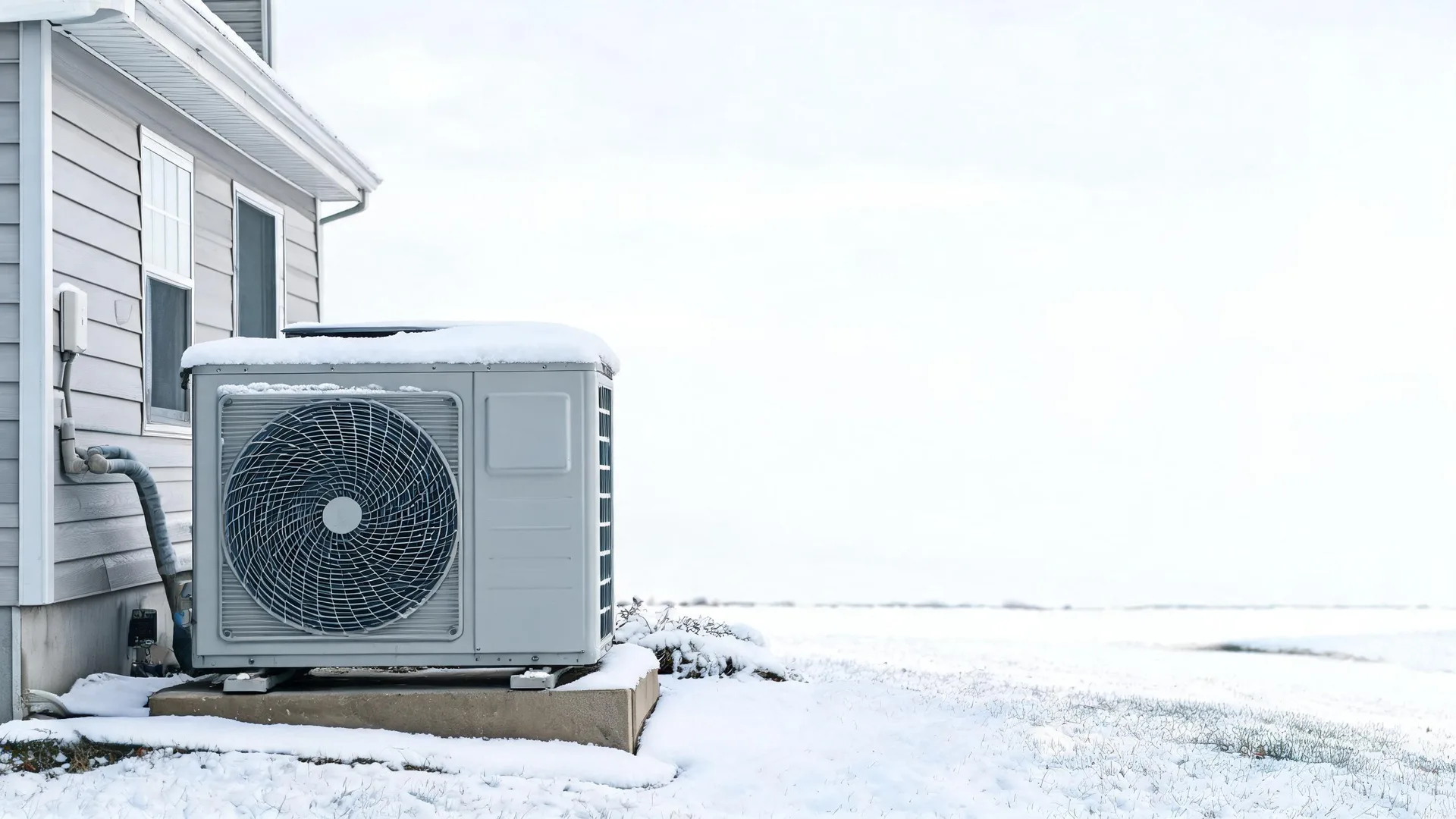
A gray heat pump outdoor unit mounted on a concrete pad next to the stone-accented exterior wall of a house.

A light enough job that repair usually makes sense

A heat pump like this one doesn't work that hard most of the year. It cools in summer, coasts in spring and fall, and only carries a real heating load in the coldest months. That kind of schedule doesn't wear out a compressor fast. So if it's having trouble now, the repair is almost always worth it. This isn't a machine that's been run into the ground. It's more likely one worn part on a unit that still has plenty of life left.

Ice building up on the outdoor unit

A heat pump sheds frost on its own. It runs a short defrost cycle every so often and clears itself. If the coil stays caked in ice, or frost keeps coming back faster than the unit can clear it, the defrost control or a sensor isn't doing its job. Left alone, that ice blocks airflow across the coil, and the system stops pulling heat from the outside air altogether.

The sound it makes when it starts

Listen for a hard clunk, a buzz that hangs on, or a hum with no compressor kicking in after it. That points to a failing capacitor or a contactor with pitted contacts. Those parts wear out after years of starting the compressor, and eventually they stop doing it reliably. Catch that sound early and it's one small part to replace. Wait, and it can take the compressor down with it.

A struggling heat pump doesn't fail clean. It fails by making the next part work harder. A compressor starting against a bad capacitor draws more current every cycle. That extra draw heats the windings a little more each time. A reversing valve that's not fully switching makes the compressor push against pressure it's not built for. Run it a week like that and nothing got saved. Likely another repair just got added. The part that was fine at the start may not be fine by the time someone gets out to look at it.

A diagnostic visit starts outside, at the unit itself. Check the refrigerant pressures. Check that the reversing valve actually switches when it's told to. Check the capacitor and contactor, since those usually fail first. Inside, check the temperature coming off the vent against what it should be, and check that the thermostat is actually calling for heat the way it thinks it is. Most of this gets done with gauges and a meter, not guesswork. Once the bad part is found, the problem is known, and so is the fix. No more just knowing something is off.