





A row of dark-sided single-story houses with shingled roofs behind trimmed hedges and mown lawn, framed by large leafy trees under an overcast sky.

Heat Pump Repair in Beavercreek, OH

Tell us about the job

Takes about a minute. No obligation.

RepairHeat PumpGreene County, OH
Step 1 of 2

What ZIP code is the job in?

A heat pump that's struggling will usually just keep trying anyway. That's the problem. If the compressor is low on refrigerant, it still runs. It just works harder and longer, chasing a temperature it can't reach. That extra strain heats up the compressor windings and shortens the life of the compressor. A failing capacitor causes similar damage. The compressor or fan motor pulls more current trying to start, and every hard start wears the motor down a little more until it seizes. Ice on the outdoor coil is another one. A little frost is normal. But if the defrost cycle isn't clearing it, the ice builds up, blocks airflow, and forces the system to fight itself. None of this gets better by waiting.

8 months
October through May, your system heats
3 months
June through August, it cools
24°F
the average winter night it heats against
83°F
the average summer afternoon it cools against
Isometric cutaway illustration of a single-story house showing interior rooms with furniture, an attic duct network connected to a furnace or air handler, and an outdoor condenser unit linked by lines outside the wall.
Your system heats October through May and cools June through August.

NOAA nClimDiv, 1991–2020 normals

Beavercreek winters average 24°F overnight. That's not far below freezing, so the heat pump isn't fighting extreme cold for long stretches.

A heat pump that hasn't been pushed hard for years is usually sound underneath. A repair is often the right call here.

Power here runs 15.99 cents a kilowatt-hour. A heat pump working hard adds to the bill every day it's ignored.

Power costs 15.99 cents a kWh statewide
105 damaging wind events from 2015 to 2024
37 hail events from 2015 to 2024

Greene County gets rough weather, damaging wind and hail, even tornadoes. None of that points to the heat pump specifically. Wind and hail hit roofs, siding and trees, not refrigerant levels or capacitors. If the power went out during a storm and the unit hasn't run right since, mention that to whoever comes out. A hard shutoff can stress a capacitor that was already weak. Most of the time, though, a heat pump acting up after a storm was already heading that way. The storm just happened to be what got remembered.

Your heat pump's problem is probably an ordinary one

Half the homes in Greene County were built in 1976 or earlier, half in 1976 or later, and neither age points to a different problem than the other. Older system or newer one, the same short list of likely causes applies, and the same repair fixes it. Getting the actual cause confirmed beats guessing from the symptoms.

Find a contractor
A man in a cap, gray shirt and brown work pants, seen from behind, carries a canvas tool bag up steps toward a dark navy front door beside a potted shrub.
A white mini-split heat pump outdoor unit mounted on a concrete pad beside a gray-sided house, surrounded by gravel and green shrubs.

A light workload means the rest of the unit is probably fine

Get the part fixed instead of swapping the whole system. A heat pump that sits idle most of the year, or runs light, doesn't put hours on the compressor the way one would in a harsher climate. So the compressor and the coil underneath are probably still sound. That's why a repair is worth doing instead of a replacement. Just have whoever comes out confirm the actual part at fault before deciding on anything bigger.

The reversing valve gets stuck

A heat pump switches between heating and cooling by shifting a valve that redirects refrigerant flow. That valve moves every time the system changes modes. Over years the seals inside wear out, and the valve starts sticking halfway, or it won't shift at all. When that happens, cool air blows during a heating cycle. Or the outdoor unit won't defrost right. The system is stuck in the wrong mode for what it's trying to do.
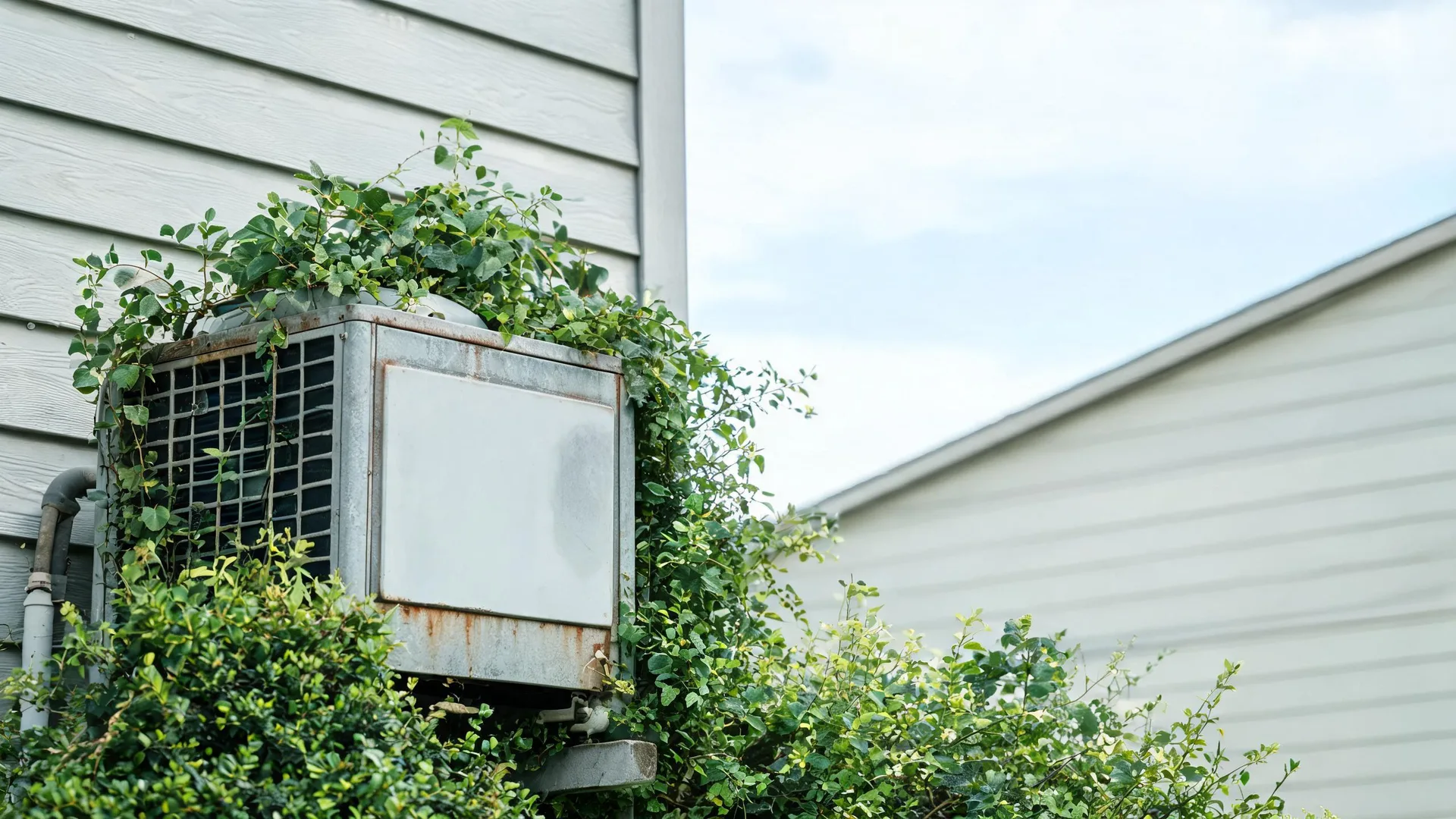
A stuck valve still means a working compressor

A failing reversing valve doesn't take the compressor down with it. The compressor can still pump refrigerant fine, even while the valve sends it the wrong direction. That's why this kind of failure is usually just a parts job, not a system replacement. Whoever's diagnosing it has to catch the valve itself, not just treat the symptom. Chasing refrigerant levels or airflow won't fix a valve that's stuck.

Before anyone comes out, check a few things first. Go outside and look at the unit. If the outdoor coil is caked in ice instead of lightly frosted, that's worth noting, but don't chip at it or hose it off. That can bend the fins. Check nothing is blocking airflow around the unit. No leaves packed against the side, no shrubs grown in close. Inside, pull the air filter and hold it up to a light. If light doesn't come through, it's restricting airflow and making the system work harder than it should. Check the thermostat is set to heat and the batteries aren't dead. A thermostat stuck on the wrong mode looks exactly like a broken unit. Last, check the breaker for the outdoor unit hasn't tripped. None of this fixes a bad capacitor or a stuck reversing valve, but it rules out the simple stuff first.

A repair makes sense when just one part failed and everything else was running fine before that. A bad capacitor, a stuck reversing valve, a failed fan motor. None of that says anything about the compressor's condition, so swapping the one piece gets things back to normal. Replacement starts to make sense when the compressor itself is the problem. That's the most expensive part in the system, and it's hard to justify replacing on its own. Replacement also makes sense when the same unit keeps failing in different ways, one repair after another. That pattern usually means the whole system is wearing out, not just bad luck on one part. Age matters less than what's actually broken. An older heat pump with a bad capacitor just needs a capacitor.