










Why your furnace smells like burning in Ohio

Tell a local repair pro what your furnace is doing.

Get my match

A burning smell from your furnace usually means dust burning off the heat exchanger or burners, and that's normal for the first hour or so when you fire it up for the season. If it keeps smelling after that, something else is going on. A dirty filter can make the system run hotter than it should, and that heat can scorch dust inside the cabinet or even start to affect the wiring. A cracked heat exchanger can also cause a burning or metallic smell, and that one isn't something to wait on. If the smell is sharper, more like plastic or electrical, it could be a motor bearing wearing out or wiring insulation overheating. Either way, once that first-run smell has had a day or two to clear and it hasn't, it's worth having someone who works on furnaces in Ohio every winter take a look before the coldest stretch hits and you're relying on it every day.

  1. Dust sitting on the burners and heat exchanger starts to burn off

  2. Hot air carries that smell through your ducts into every room

  3. A clogged filter restricts airflow and makes the furnace run hotter

  4. Heat builds up inside the cabinet and bakes nearby dust and wiring

Burn-Off Smell or Something Worse

Normal burn-off smell

  • Shows up the first time you run the furnace after months of sitting idle, usually when the weather turns in October or November.
  • Smells like dust or hot metal, not plastic or anything chemical.
  • Fades on its own within an hour as the dust on the burners and heat exchanger finishes burning off.
  • Doesn't come back once that first cycle is done, even if you run the furnace again the next day.
  • Isn't paired with soot, smoke, or a headache while you're in the room.

Smell that needs a look

  • Still there after an hour of running, or it comes back on later cycles instead of fading.
  • Smells like burning plastic or rubber, which points to a wire or a part overheating, not dust.
  • Shows up alongside a furnace that's short-cycling, louder than usual, or blowing weaker air than it used to.
  • Comes with a dirty filter that's been restricting airflow and making the furnace run hotter than it should.
  • Worth having a licensed Ohio contractor check before the next cold stretch, since a furnace that's already straining can fail on the night you need it most.
A man with gray hair and a beard wearing a dark green shirt jacket over a navy top sits on a gray sofa in a living room, looking to the side, with a window, potted plant and shelving in the background.
A gray-haired man in a navy button-up shirt over a white tee sits on a light gray sofa in a living room, looking off to the side, with a window, houseplant, framed picture and shelving behind him.
A man with gray hair, a beard and glasses, wearing a dark green sweater, sits on a gray sofa in a sunlit living room with a potted plant, table lamp and wooden sideboard behind him.
A man with grey hair and stubble in a dark sweater sits on a grey sofa indoors, looking off to the side, with a potted plant and a sunlit window behind him.

Is the smell gone yet, or still there?

Walk through the house an hour after you turned the furnace on. If every room still carries that burning smell, or if it's sharper near one vent than the others, that's not burn-off anymore. Check the filter while you're at it. If you can't remember the last time you changed it, or it looks gray and packed with dust, that's likely choking the airflow and making the furnace run hotter than it should. You might also notice the furnace cycling more than usual, or the air coming out of the vents feeling weaker. Left alone, a furnace running hot like this can crack a heat exchanger, and that's a repair you don't want to put off with Ohio winters ahead.

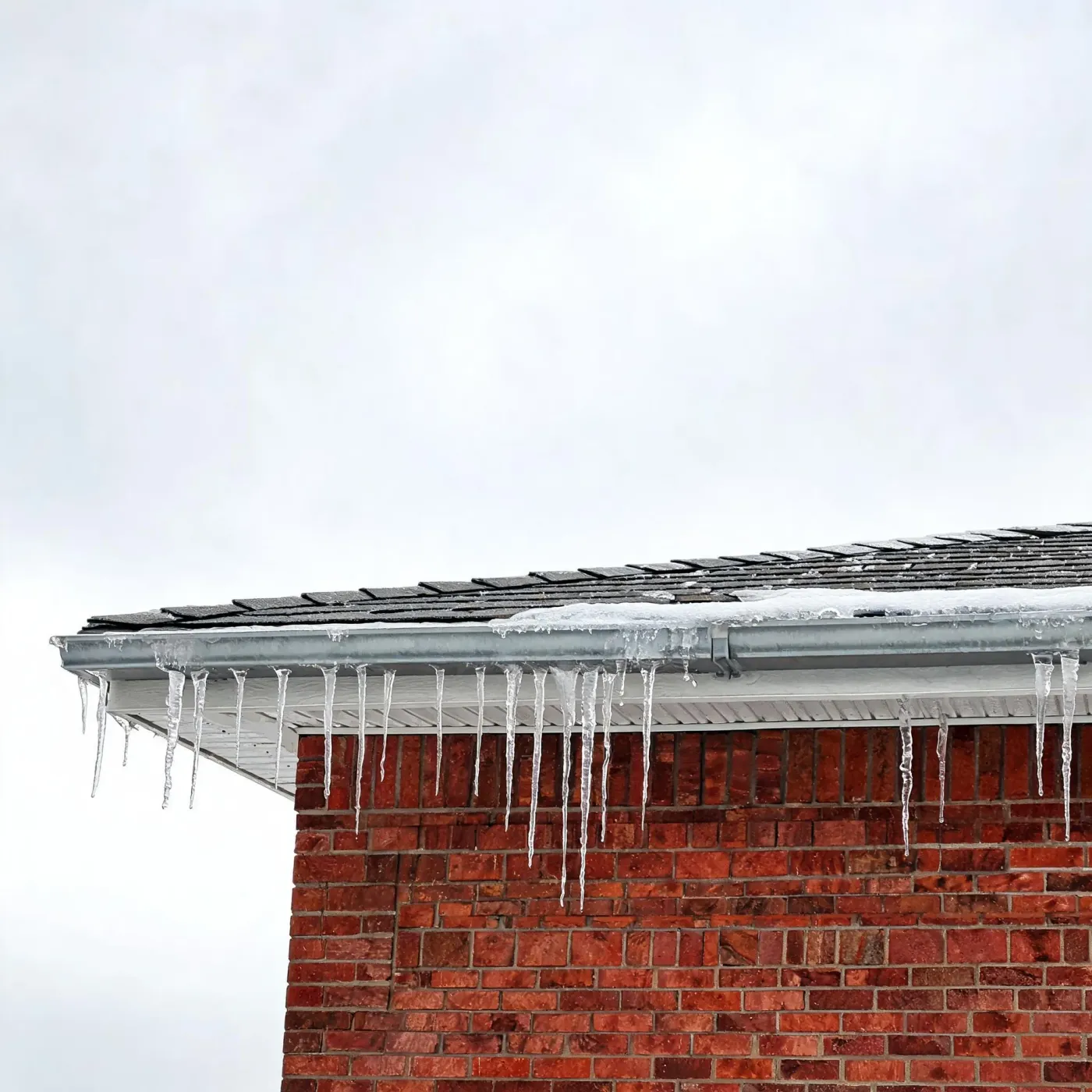
Corner of a red brick building with a shingled roof edge, snow on the roof, and rows of icicles hanging from the metal gutter against an overcast white sky.

Statewide, winter nights average 23°F, according to NOAA. That kind of cold keeps your furnace running long stretches, not just quick bursts to take the edge off. The longer it runs, the longer dust and anything else sitting on the burners has to keep cooking off, and the longer a strained blower or a clogged filter has to overheat the cabinet. If a burning smell shows up on one of these colder nights and doesn't fade after an hour, that's your furnace working harder than it should, not just settling in for the season.

NOAA nClimDiv 1991-2020 county normals weighted by homes

A woman with shoulder-length graying brown hair in a cream knit cardigan sits in a dark armchair indoors, looking off to the side with a slight smile, with a shelf, window and houseplant blurred behind her.
A woman with dark hair in a bun sits on a sofa with a child resting his head on her shoulder, both wrapped in a cream knit blanket, with a lit lamp and bookshelf in the dim background.
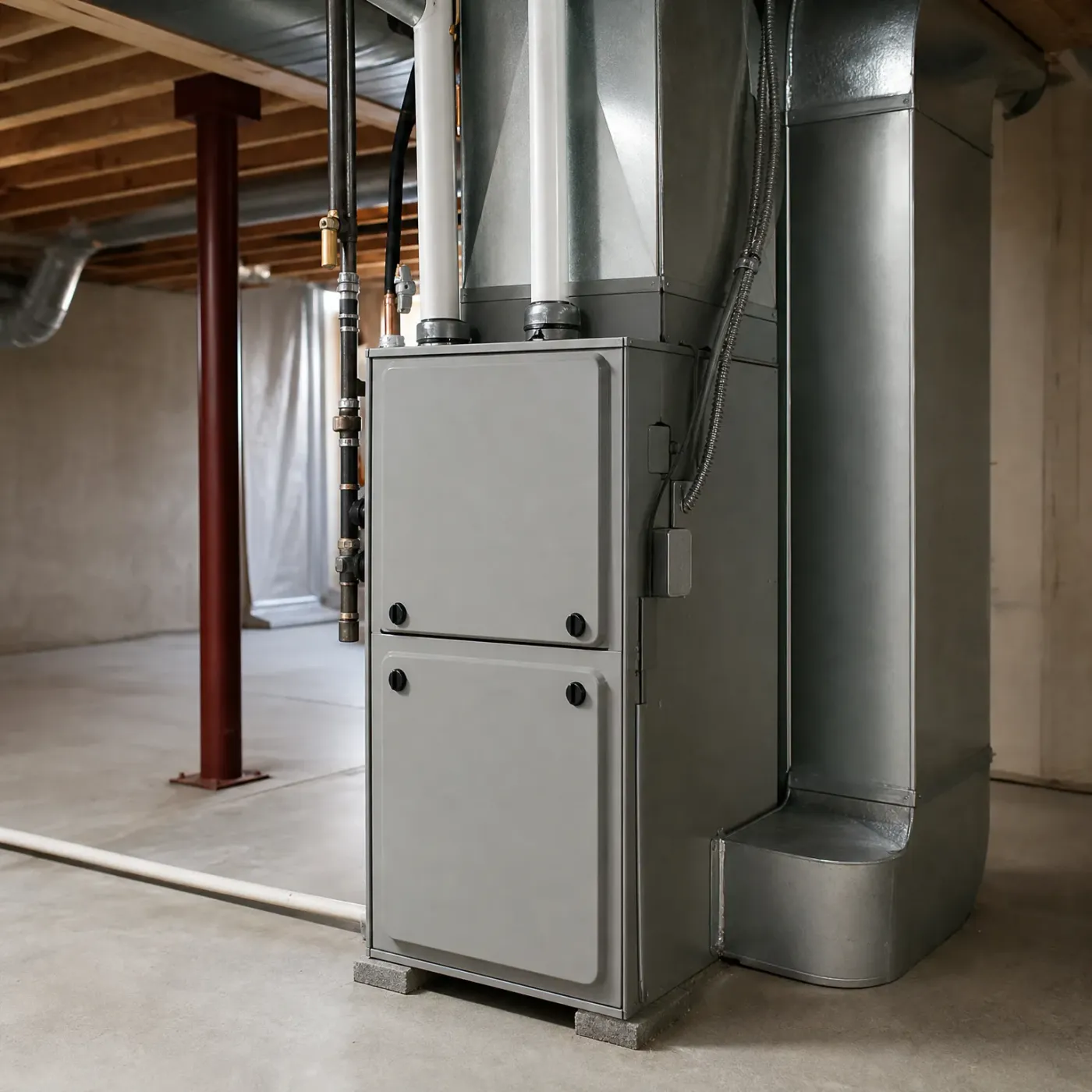
A gray high-efficiency furnace with two access panels stands on blocks in a basement, connected to sheet-metal ductwork, PVC vent pipes, flexible conduit, and gas and water piping, beside a red support column and exposed wood joists.

Get the right pro for your furnace

Your request goes to one pro, not a list of companies.

Say what's going on with your furnace, and a pro who works on them reaches out.

Request a pro

No fee to send it, and nothing to sign.

A gas furnace with a louvered upper panel stands on a concrete pad in a basement, flanked by sheet-metal ductwork, white PVC and metal pipes, and insulated columns.
Before you get your furnace repair
A dark high-efficiency furnace on a concrete pad in a basement, connected to galvanized ductwork, white PVC vent pipes, and copper and black gas piping, with concrete walls and wood framing nearby.
After you get your furnace repair

What a heat exchanger does

Your furnace burns gas inside a heat exchanger, a metal chamber that warms the air moving through your ducts without letting combustion gases mix into it. That barrier is what keeps carbon monoxide out of your house. Years of heating and cooling cause that metal to expand and contract, and a crack can open up. Dust burning off on the metal smells one way. Gas finding a path through a crack and reaching the burner flame smells different, sharper, and it won't fade the way burn-off does. A contractor checks this with a combustion analyzer, not by looking.

Why the filter matters here

A furnace pulls return air through a filter before it reaches the blower and the heat exchanger. When that filter is packed with dust, less air gets through, and the furnace works harder to push heat into your ducts. That extra strain raises the temperature inside the cabinet past what the burners were built to run at. Metal parts nearby, wiring, even the dust still sitting in corners, get hotter than they should. A filter swap takes a few minutes and costs far less than the repair bill that comes from months of restricted airflow.

Winter nights average 23°F statewide

At 23°F, your furnace isn't cycling off much once it gets going. Long runs like that give a burning smell more time to show up, and more time to mean something other than dust.

NOAA nClimDiv 1991-2020 county normals weighted by homes

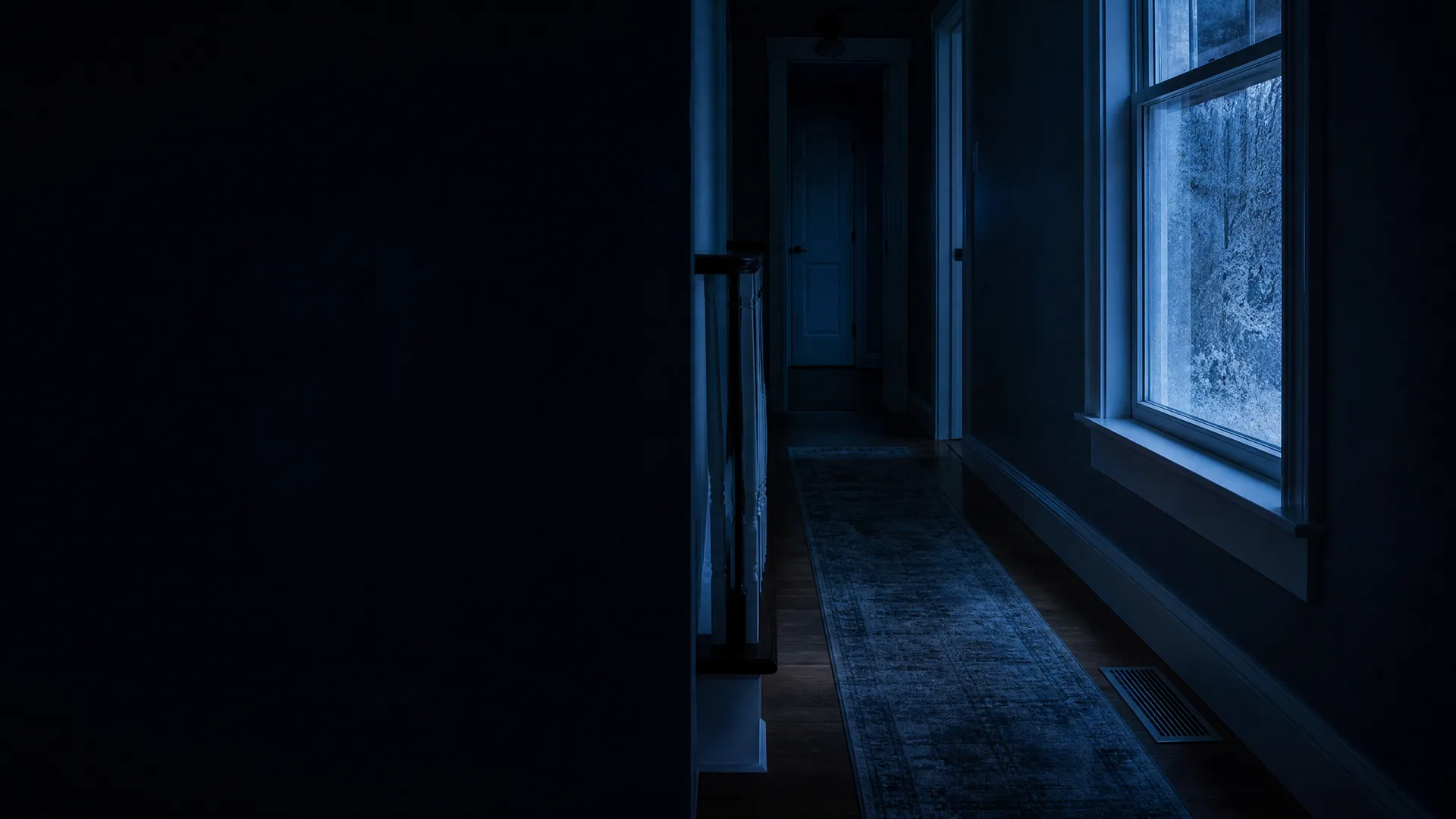
A dark interior hallway lit only by blue light from a window on the right, with a runner rug on a wood floor, a floor vent, a closed door at the far end, and a stair railing at left.

You're awake before you know why. The hallway is cold in a way that tells you before you check anything. You crouch at the vent and feel nothing, not even a thread of warm air. Down the hall the window has frost crawling up the inside of the glass. The house is quiet except for the tick of the baseboards cooling off. You already noticed the burning smell before you got up, sharper than it should be this many hours after the furnace kicked on. Now there's no smell at all, because there's no air moving. It's 2 a.m. and 23 degrees outside, and the vents have gone silent.

Why does my furnace smell like burning plastic?

A plastic smell is different from the dusty, slightly metallic smell of normal burn-off, and it's worth treating differently from the start. You're not waiting an hour to see if this one fades. You're trying to figure out what in the furnace could even produce that smell, since nothing about burning gas or dust accounts for it.

A burning plastic smell usually means a part is overheating, not dust

Burning plastic almost always points to something electrical. The blower motor has wire insulation around its windings, and if the motor is failing or straining against a bad capacitor, that insulation can overheat and give off a sharp plastic smell. Same with the circuit board or any wiring near the furnace that's gotten too hot. None of that fades the way dust does. If the smell holds steady or gets stronger, and especially if you notice the blower running rough or the furnace short-cycling, turn the furnace off at the switch. Running it longer risks more damage to the motor or board, and in rare cases a wiring fault like that is a fire risk, not just a repair one.

A beige high-efficiency furnace with white PVC vent pipes stands beside galvanized sheet-metal ductwork in a basement with a concrete floor, exposed wood studs, and metal piping along the wall.

Furnace running clean

This is a high-efficiency furnace venting through PVC pipe instead of a metal flue. Air moves out through the plenum into the ductwork above it without any smell riding along. A furnace set up like this and maintained on schedule shouldn't put any odor into your rooms once the first hour of the season passes.

An older beige furnace with a louvered vent panel stands on a concrete basement floor beside galvanized sheet-metal ductwork, a metal flue pipe and vertical pipes along a concrete wall.

Furnace worth a second look

This older furnace vents through a metal flue into a block wall, a setup you'll find in plenty of Ohio basements. Age alone doesn't mean trouble, but a cabinet like this has had more winters to collect dust and more parts that can wear. If the smell lingers past that first hour, a furnace like this is worth having checked.

A smiling man in an olive T-shirt and jeans stands in an open front doorway holding the door, facing a person in a navy polo and cap seen from behind in the foreground, with horizontal wood-look siding and a potted white flowering plant nearby.

A burning smell is information, not just an inconvenience

An hour of dusty smell when you first fire up the furnace is normal. Anything past that, or any smell that's sharp or chemical instead of dusty, is your furnace telling you something about the heat exchanger, the burners, or a motor that's working harder than it should. In a winter where Ohio nights sit in the low 20s and your furnace runs long stretches to keep up, that's not something to sit on until spring.

A local contractor who works on furnaces all winter has seen this smell mean a dozen different things in a dozen different houses, and knows which ones to rule out first. Getting matched with one means someone licensed to work in Ohio looks at your furnace specifically, not a general description of what might be wrong. You'll hear from that one contractor directly, so you're explaining your situation once, to someone who can actually do something about it.

A dark ceramic vase holding a leafy green branch sits on a round wooden table, with a blurred cushioned wooden armchair, woven basket, window and shelving with pottery in the background.
A dark gray high-efficiency furnace with two white vent pipes and connected sheet-metal ductwork stands in an unfinished basement with concrete walls, a support pole, and a small window.

A pro who works on furnaces

RepairFurnace or heatingOhio
Step 1 of 2

What ZIP code is the job in?