
Side profile of a bearded man wearing a faded dark blue baseball cap and a matching dark T-shirt against a plain light gray background.

How often to change your furnace filter in Ohio

Tune-up, service, or cleaningFurnace or heatingOhio
Step 1 of 2

What ZIP code is the job in?

How often should I change my furnace filter in Ohio?

Your furnace runs for months straight once the weather turns, and that filter is working the whole time. You want a number, not a vague rule, so you know whether you're letting it go too long or changing it more than you need to.

Every 1 to 3 months while the furnace is running

A 1-inch filter needs changing every 1 to 3 months, and with a gas furnace running from October through April, that usually means three or four changes a season. The furnace pulls air through it every time it cycles on, and a filter clogged with dust makes the blower work harder to push air through the ducts. That extra strain shows up on the electric bill, and power in Ohio isn't cheap. A dirty filter also cuts down the airflow the furnace needs to heat the house evenly, so rooms start running colder even with the thermostat set the same. Check it monthly and you'll know by sight when it needs swapping rather than guessing.

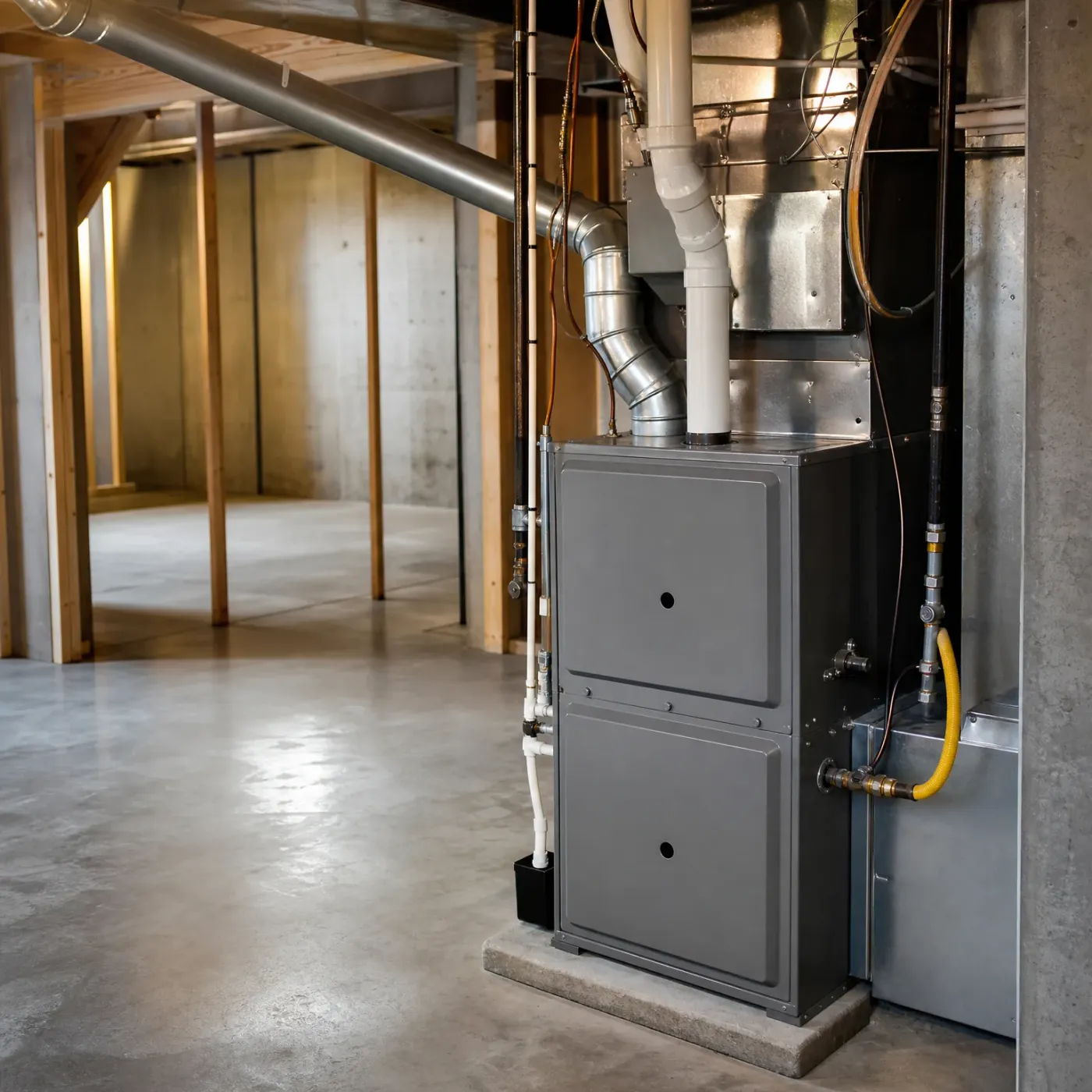
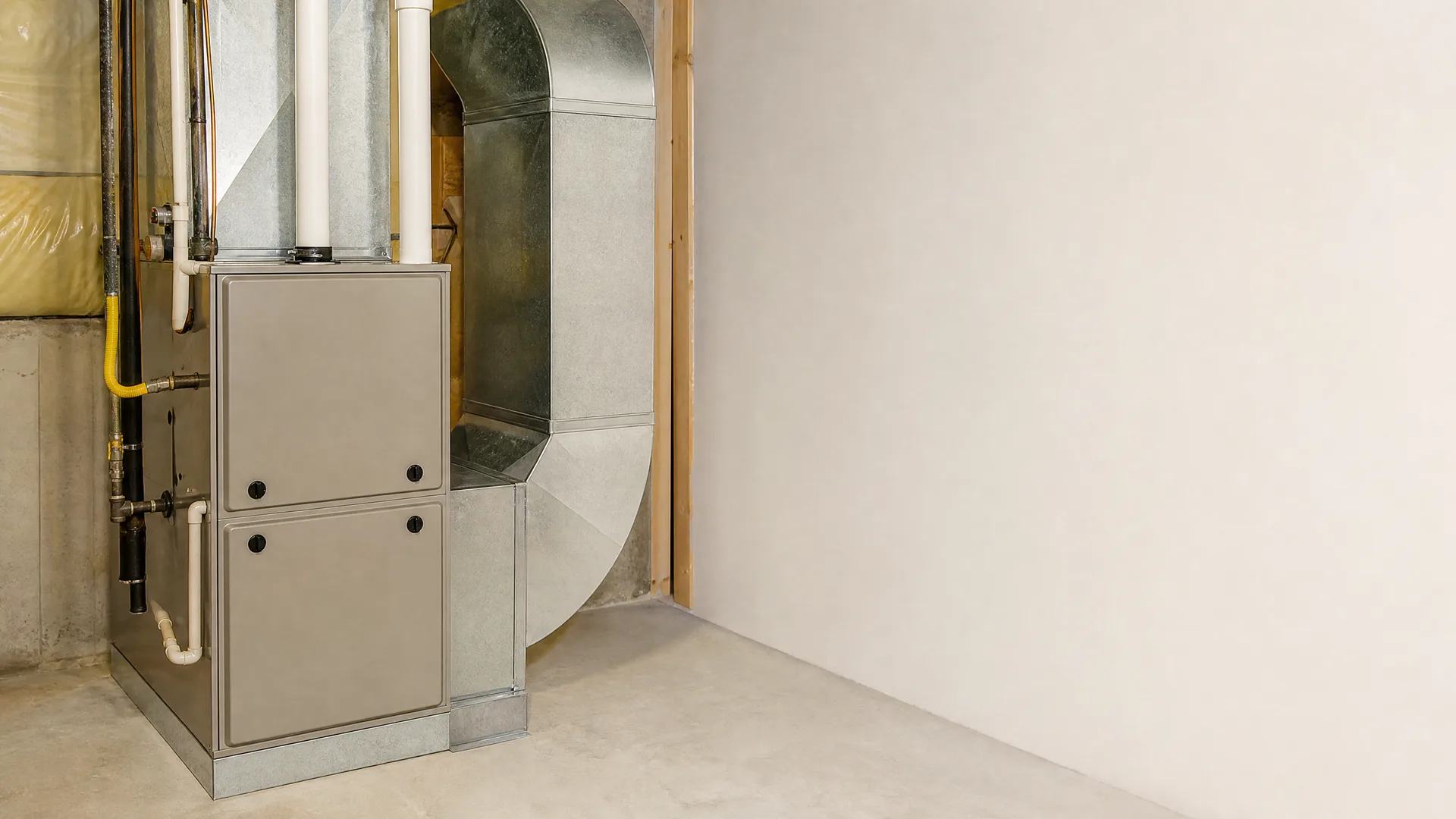
A gas furnace with sheet-metal ductwork, PVC vent pipes and copper and black piping stands against a wall in a basement with a bare light-colored wall and concrete floor.

Why it clogs faster here

Gas furnaces push a steady stream of air across that filter every time they run, and in Ohio that means October through April without much of a break. A clogged filter forces the blower motor to work harder to pull air through it. That motor is pulling more power to do the same job, and with electric rates here, a dirty filter is money spent moving less air.

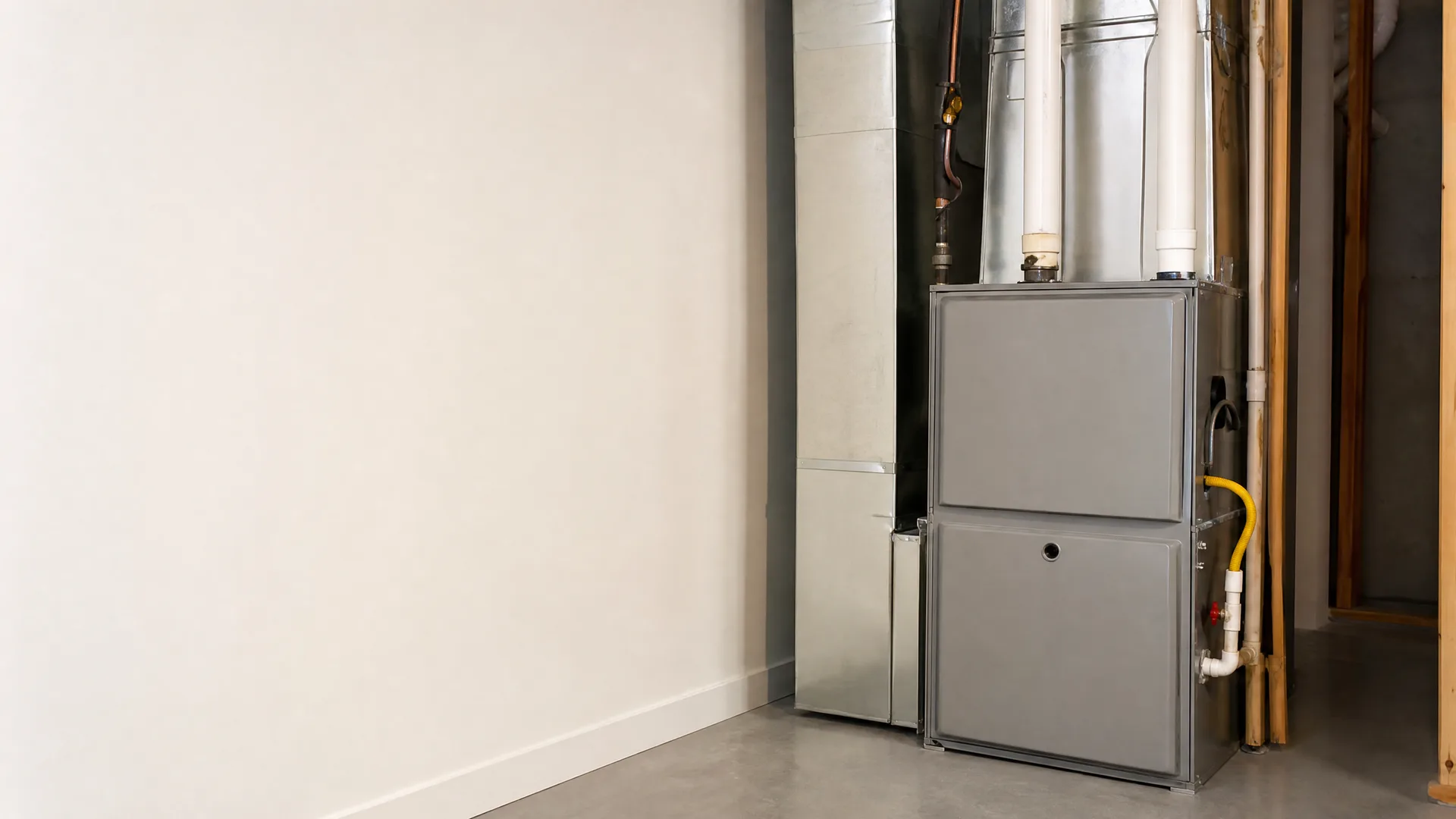
A gray furnace with attached sheet-metal ductwork, white PVC vent pipes, copper and yellow gas lines stands against a wall in a room with a plain white wall and concrete floor.

What a dirty filter does to the furnace

Once the filter loads up with dust, airflow across the heat exchanger drops. A gas furnace needs that airflow to shed heat properly, and when it can't, the exchanger can overheat and shut the furnace down on its own safety switch. That's not the furnace failing. It's the furnace protecting itself from a filter that should have been swapped weeks earlier.

Why does the house feel dusty even though the furnace is running fine?

You might notice a fine layer of dust settling back on furniture a day or two after you clean. Registers blow warm air but it feels thinner than it should. Some rooms stay cooler than others. The furnace itself sounds like it's working harder, a longer run before it shuts off, maybe a slight burning smell the first time it kicks on after sitting. None of that means the furnace is failing. It usually means the filter behind it is past its job and the blower is pulling air through a mat of dust instead of a clean screen. Left long enough, that strain on the blower motor is what turns a filter change into a repair call.

A gray high-efficiency furnace with white PVC vent pipes stands beside galvanized sheet-metal ductwork in a basement with a concrete floor, with a wooden staircase and railing at left.

Filter changed on schedule

Air moves through the furnace and the plenum the way it's supposed to. The blower pulls a steady draw and the burners cycle normally. Gas lines, condensate lines, everything downstream just does its job without the motor straining to make up for a clogged filter.


An older gas furnace with louvered panels sits on a concrete pad in a basement, connected to sheet-metal ductwork and PVC and metal pipes, with a water heater and wooden stair framing in the background.

Filter left too long

The blower has to work harder to pull air past a filter packed with dust, and that strain reaches the motor and the burners above it. Ductwork connected at the top carries less air than it should, and the furnace runs longer to get the house to temperature.

An older man with gray hair and a beard, wearing a dark coat dusted with snow, stands smiling in a doorway of a warmly lit home with a sofa, lamp and window visible behind him.
An older man with grey hair and a beard, wearing a dark coat dusted with snow, stands in a dimly lit entryway with a ceiling lamp, a side table with two shaded lamps, and a lit fireplace visible in a room beyond.
A bearded older man in a dark snow-dusted coat and scarf stands just inside a home's front door, with a lamp-lit room and snowy window visible behind him.
An older man with gray hair and a beard stands in a doorway of a home, wearing a dark coat dusted with snow, with a lit fireplace and lamp visible in the blurred room behind him.
A gray gas furnace on a concrete pad in an unfinished basement, connected to sheet-metal ductwork, white PVC venting, and a yellow gas line, with concrete walls and wood framing in the background.

A pro who works on furnaces

Send the form, and lining up the furnace tune-up stops being yours to chase.

Describe your furnace job, and a local pro who handles it gets in touch.

Get my match

Asking costs nothing, and the choice to hire stays yours.

A gray furnace with sheet-metal ductwork, PVC vent pipes and a yellow gas line stands on a concrete basement floor beside wooden stair framing.
A clean filter lets the furnace pull air the way it was built to, so the blower and burners cycle on their normal schedule.
An older gas furnace with a louvered front panel stands on a concrete basement floor beside galvanized sheet-metal ductwork, a metal flue pipe, gas piping and a flexible conduit along a concrete wall.
A clogged filter chokes that same airflow, and the blower strains to pull air through it every time the furnace runs.

The filter sits in a slot before the blower, usually behind a metal panel on the return side of the furnace. Every bit of air the blower moves has to pass through it first. That's the point. Whatever the filter catches stays out of the blower wheel, the flame sensor, and the heat exchanger, all of which depend on steady airflow to run the way they're built to run.

A blower motor can only push against so much resistance before it starts pulling more current to keep the same air moving. That's what a clogged filter does to it. Not all filters clog at the same pace either. A pleated filter has a lot more surface area than a flat fiberglass one, so it holds more before it chokes airflow.

None of this happens all at once. Once a filter gets more than half blocked, you won't see the furnace quit. You'll see longer cycle times first, the furnace running more to put out the same heat.

Where the filter sits and why it matters

  • A furnace filter sits in a slot between the return duct and the blower compartment, usually behind a metal panel.
  • Air gets pulled through the filter before it reaches the blower wheel, so anything the filter traps never touches the moving parts.
  • The blower motor has a set amount of static pressure it can work against before it starts drawing more current to keep the same airflow.
  • A pleated filter has far more surface area than a flat fiberglass one, which is why the two don't clog at the same rate.
  • The flame sensor and heat exchanger depend on steady airflow to stay within their normal temperature range during a burn cycle.
  • Once a filter is more than half blocked, the pressure drop across it starts showing up as longer cycle times rather than a sudden failure.
A beige furnace with a louvered front panel and metal ductwork stands on a concrete basement floor beside pipes and a white cylindrical water heater.
Before you get your furnace maintenance
A gray high-efficiency furnace in a basement with PVC venting pipes, a yellow gas line, metal ductwork, concrete walls and floor, and a wood-framed stairway at left.
After you get your furnace maintenance

A thin filter a month

Some Ohio furnaces take a one-inch pleated filter, the kind sold in stacks at any hardware store. That size is thin enough that it loads up fast once the furnace is running every day. Most manufacturers that make this size want it changed every thirty to sixty days during a stretch of steady use. Go longer and you're not saving anything, you're just letting the blower strain against a filter that's already done its job. If you're not sure which size is in your furnace now, the frame edge usually has the dimensions printed on it.

A thick filter once a season

Some furnaces are built for a four or five inch media filter, deeper and with more surface area to catch what passes through. That extra depth means it takes longer to clog, so these are usually rated for six months to a year before they need swapping. In Ohio that can mean one change gets a house through the whole winter, and a second one covers it again once the weather turns muggy and the air conditioner is doing the work instead. Check which kind is installed before you guess at a schedule, because using the one-inch number on a media filter means changing it far more than it needs.

A woman wrapped in a thick cream knit blanket sits in an armchair beside a lit table lamp, with an open book in the foreground and a frost-covered window behind her.
An older woman with short gray hair in a cream cable-knit turtleneck sweater smiles while looking to the side in a wooden kitchen, with a round loaf of bread on a board in the foreground and a lit candle by a dark window.

Winter nights average 23°F statewide

A 23°F night means the furnace is running long stretches, not just kicking on now and then. More runtime pushes more air through that filter, so it loads up faster than it would on a milder night.

NOAA nClimDiv 1991-2020 county normals weighted by homes

A one-inch filter wants changing monthly once the furnace runs every day, and a thicker four or five-inch filter can go longer, but the furnace tells you which one you have by how fast the house gets dusty again after cleaning. Ohio winters don't give the blower much of a break, so skipping a check costs more here than it would somewhere milder. If you're not sure when yours was last changed, or the furnace has been straining and you'd rather have someone look at the whole system than guess at the filter alone, that's a reasonable point to stop guessing. Send the form and the job of finding someone who services furnaces in your area stops being yours to carry. A contractor who covers your part of Ohio gets your information and reaches out from there. You don't have to track down a name or sort through reviews first. The furnace still needs a filter either way, but you don't have to be the one who figures out all of it alone.

Corner of a house with cream horizontal lap siding and tree shadows, beside a covered porch with a square column, wooden deck, steps, white balusters, and a shrub at right.
Corner of a white clapboard house with a multi-pane wood window in warm low-angle sunlight, with hydrangea shrubs and other green foliage growing along the base and dark trees behind.
A wooden front door with divided-light glass panes set under an arched entry on a white shingled house, with a black wall lantern, a tall gray planter, flowering shrubs, and a flagstone walkway.
Exterior corner of a house with cream horizontal siding, a dark-framed three-section window, and a stone veneer foundation, with white hydrangeas and clipped shrubs along a paved walkway and tree branches overhead.
Corner of a white-clad house with a dark-framed grid window, dark downspout and eaves, surrounded by trimmed hedges, shrubs, white hydrangeas and a leafy tree in sunlight.

Get your furnace to the right pro

Send the form and the furnace tune-up stops being something to remember.

Request a pro

No fee to send it, and nothing to sign.