Why your furnace makes a banging noise in Ohio

Send it once and finding someone is no longer on you.

Send it today

Why does my furnace make a banging noise when it starts up?

You hear it right when the burners light, a bang or a thud from somewhere inside the cabinet, and it's loud enough that you stopped what you were doing to pay attention to it. It's not subtle, and it's not every furnace that does this. With gas heat running most of the day once the cold sets in here, a noise like that at startup is worth understanding before it happens again tonight.

It's usually delayed ignition, gas building up before it lights

The bang happens when gas leaves the burner for a second or two before the igniter actually lights it. That small delay lets gas collect in the burner chamber, and when it finally catches, it catches all at once instead of lighting smoothly. The usual cause is a dirty burner or a weak igniter that's slow to do its job. A furnace running every day through an Ohio winter puts a lot of cycles on those parts, and dirt or wear catches up with them. The noise itself doesn't mean the furnace is unsafe to run for now, but it won't fix itself, and it tends to get louder as the delay grows. A contractor can clean the burners or replace the igniter and settle it.

A gray high-efficiency furnace with two PVC vent pipes stands in an unfinished basement beside sheet-metal ductwork, a framed and plastic-covered wall, and a bare concrete wall with vertical pipes.

A quiet start

The burners light and you hear a soft whoosh, maybe a click from the igniter, then nothing but the blower picking up. No bang, no thud. Gas is reaching every burner at the same moment, so it lights clean across instead of catching late in one spot.

A gray furnace cabinet in a basement, connected to galvanized sheet-metal ductwork and white PVC pipes, against a concrete wall with exposed metal piping and insulation overhead.

A bang on startup

One bang when the burners fire, sometimes a second one a few minutes later. That sound means gas built up before it caught, then lit all at once instead of spreading evenly. Left alone, that small delay tends to get longer and the bang gets louder.

A woman in a dark knit turtleneck sweater reclines on a couch under a cream knit blanket, looking down at an open book, with a lit table lamp and framed pictures behind her.
A smiling middle-aged man in a dark green sweater sits at a candlelit table with wine glasses and a plate of greens in a dimly lit interior.

Gas builds in the burner compartment for a second or two before it catches, and that delay is what turns an ordinary ignition into a bang you can hear from another room.

The longer that delay runs, the more gas collects before it lights, and the harder the bang gets. A furnace that's banged on every startup for a while is telling you the delay is getting worse, not fixing itself.

A smiling bearded man in a dark blue henley shirt sits leaning back on a light grey sofa in a living room, with a bowl of popcorn on a wooden coffee table and a large window behind him.
A bearded man in a dark quarter-zip sweater sits smiling on a brown sofa in a dimly lit living room, with a bowl of popcorn and a mug on a table in the foreground and a potted plant near a window behind him.
A smiling man with graying dark hair and a beard, wearing an olive sweater, sits on a sofa in a living room beside a bowl of popcorn on a wooden table.
A smiling man in a dark green henley shirt sits on a gray sofa in a living room with a lit table lamp, wooden shelving unit, and a bowl of popcorn in the foreground.

What a technician checks first

  • A dirty or partly blocked burner can delay ignition by a second or two, long enough for gas to pool before it catches.
  • The flame sensor and igniter sit right next to the burners, and the same soot that slows ignition can coat them too.
  • A cracked heat exchanger expands and contracts as it heats, and that movement can produce a bang separate from delayed ignition.
  • Furnaces installed with Ohio's harder winters in mind often run longer cycles, which means more chances each night for a delayed light to happen.
  • A technician checks burner flame color and shape first, since yellow or uneven flames point straight to a fuel or airflow problem.
  • Cleaning the burners and adjusting gas pressure is routine work that usually stops the banging without replacing any parts.

The burners are the starting point. A technician pulls them and looks for rust, dust, or a buildup of soot along the ports where the flame comes out. Even a thin layer changes how evenly gas spreads across the burner, and that unevenness is what causes one side to catch late. The flame sensor and igniter get checked at the same time, since they sit close enough to pick up the same residue. A sensor coated in soot can misread the flame and cause the burner to shut off and relight, which adds another bang to the cycle instead of fixing it. If the flames themselves burn yellow or lean to one side instead of standing even and blue, that points to a fuel or airflow problem rather than just dirt, and it changes what gets adjusted. Gas pressure gets checked too low pressure can cause the same delayed catch as a dirty burner, even on a unit that's otherwise clean. None of this usually calls for new parts. Cleaning the burners, clearing the sensor, and resetting gas pressure to spec is standard work, and it's often enough on its own to stop the noise for good. The heat exchanger only becomes the concern if the banging keeps happening after the burners and pressure check out clean, since that's a different problem with a different fix.

A gray metal furnace with two white PVC vent pipes stands on a concrete floor beside galvanized sheet-metal ductwork in a basement or utility space with wood framing.
Before you get your furnace repair
A gray furnace cabinet in a basement with sheet-metal ductwork, white PVC vent pipes, and black gas piping against a concrete wall and wood-framed partition on a bare concrete floor.
After you get your furnace repair

One request and it's handed off

A bang at startup gets worse with repeating, not better. Every cold morning that burner delays and catches late, it stresses the same seam in the heat exchanger, and in a gas furnace that part failing is not something to wait out. Ohio winters run long enough that a furnace doing this in November is still doing it in February, and each startup between now and then is another one you didn't need. The part behind it, whether it's a dirty burner, a cracked exchanger, or something else, is not something to guess at from the sound alone. A contractor who works on furnaces around here all winter has heard this bang before and knows what to check first. One local, licensed contractor takes your request, so you're not fielding calls from five companies while you're trying to figure out why your house keeps thudding at 6 a.m. Send it in and let someone who does this for a living sort out what yours needs.

What that bang costs the exchanger

Every time ignition delays and the gas catches late, the bang is metal flexing under a jolt it wasn't built for. It happens at the same seam each time, because that's wherever the delay is worst. One bang won't crack anything. A furnace banging every cold morning from November through March is a different question, because that seam never gets a chance to settle before it's stressed again. You won't see the crack. You'll see the bill creep up first, because a furnace working around a damaged exchanger runs longer to put out the same heat, and in a state where power costs what it does here, that difference shows up fast.

What it sounds like through the house

If your vents run near bedrooms or a living room, you'll hear this one from across the house, not just standing next to the furnace. It's loud enough to wake someone or stop a conversation, and it happens at the start of nearly every cycle, which on a cold Ohio morning can mean several times before anyone's had coffee. Some homeowners get used to it and stop mentioning it, which is its own problem, because the noise isn't the thing that's failing. It's just the only part of the failure you can hear. The burner or sensor causing the delay keeps working that seam whether you've tuned out the bang or not.

Winter nights average 23°F statewide

At 23°F overnight, your furnace is cycling on and off most of the night to hold the house steady, and that's more startups, not fewer. A delayed ignition that bangs once a night in milder weather can end up banging five or six times before morning.

NOAA nClimDiv 1991-2020 county normals weighted by homes

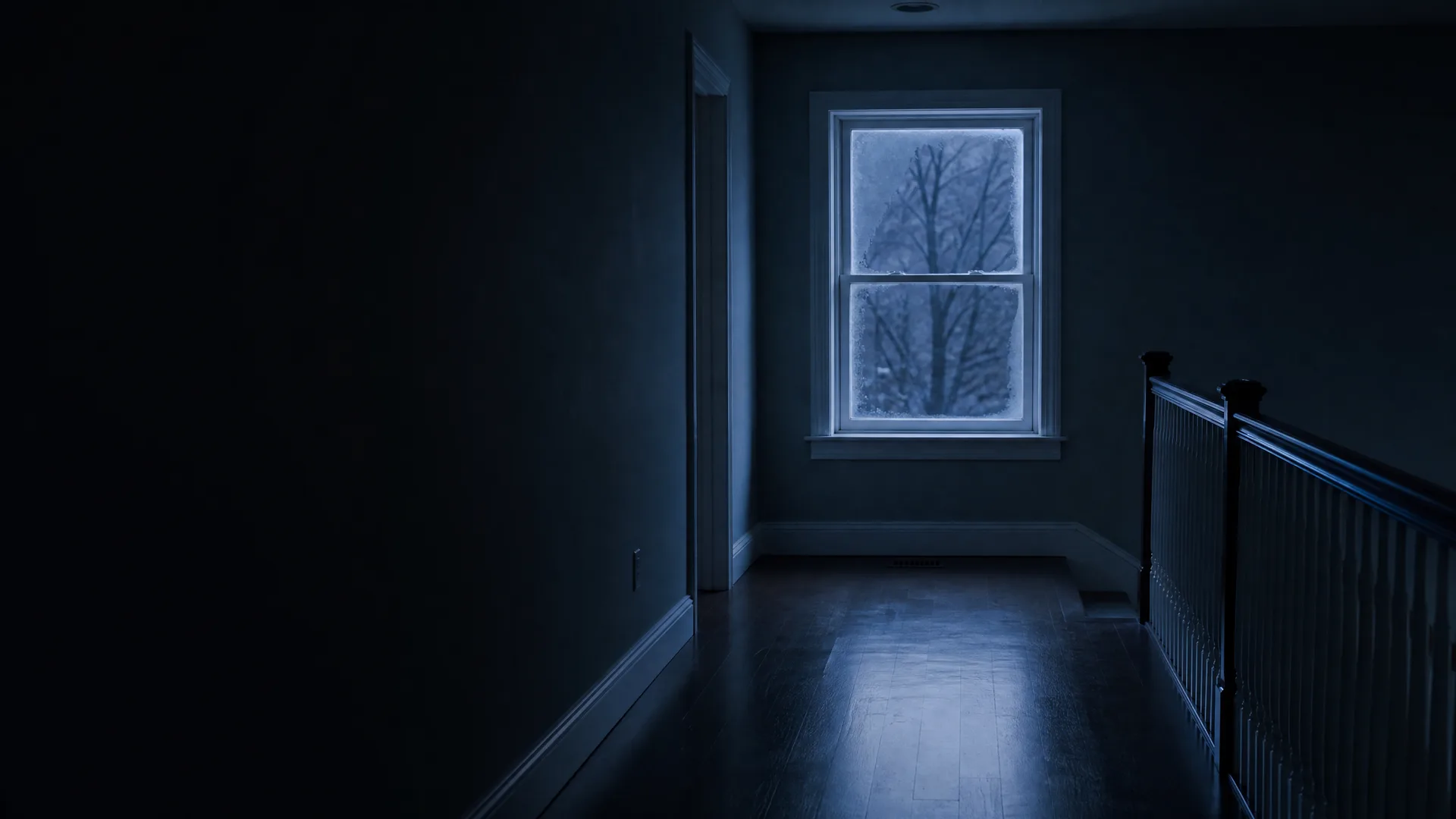
A dark interior hallway with a dark wood floor, a floor vent, a doorway on the left, and a stair railing on the right, lit only by a tall double-hung window showing bare tree branches outside.

You wake up without knowing why. The hallway is dark, the vents under your feet silent. Through the window at the end of the hall the glass has frosted at the edges, and the clock reads a little after 2 a.m. You wait for the rush of warm air that usually comes a few seconds after the burners catch. It doesn't come. Somewhere below you there should have been that bang, the one you've been hearing every cold start for weeks, but tonight there's nothing at all, no bang and no whoosh after it. Just the cold settling into the floor under your feet while outside it holds in the twenties.


What should I actually be hearing from the basement?

Go stand by the furnace when it kicks on. You'll hear the bang, but listen for what comes after it too. A rattle in the ductwork overhead for a second or two is the house absorbing that jolt, not just the cabinet. Some homeowners also notice a faint burnt smell for the first minute after startup, which points to dust or soot burning off a dirty burner. If the bang has gotten louder over the past few weeks, or started happening on the second cycle of the night too, that's the delay getting worse, not staying the same. Left alone through an Ohio winter, that's more cold starts on a stressed heat exchanger, and a cracked exchanger can leak exhaust into the air your house breathes.

A snow-covered wooden mailbox post stands in a deep snowy front yard before a single-story brick house with a snow-laden roof, flanked by snow-covered evergreen trees during falling snow.

Statewide, winter nights average 23°F, according to NOAA. At that temperature your furnace isn't just running, it's starting up over and over, since the house loses heat fast enough to call for another cycle most of the night. Each startup is another chance for gas to pool before it catches, and that's where the bang comes from. A furnace that bangs once an evening in October can bang five or six times a night once temperatures settle in near freezing. You'll notice it most around 2 or 3 a.m., when the house is coldest and quiet enough to hear it clearly.

NOAA nClimDiv 1991-2020 county normals weighted by homes

A bang at startup means the burners are catching late, and that delay almost always traces back to something a furnace tech can find in one visit, dirty burners, a soot-coated flame sensor, a failing igniter. It doesn't fix itself, and each cold morning it keeps happening is another jolt to the same seam in the heat exchanger. A local contractor who works on furnaces all winter has seen this exact bang before and knows where to look first. You'll get matched to one licensed contractor, not a handful of companies competing for your callback, so there's no round of calls to sort through, just someone local who shows up knowing what usually causes it. Send the request and that search becomes someone else's job instead of yours. The noise has an answer. Getting it looked at is what makes the house quiet again.

A gray high-efficiency furnace with two access panels stands on a concrete basement floor, connected to sheet-metal ductwork and white PVC vent pipes, with wood framing and a gas line nearby.

Done looking for a furnace pro

RepairFurnace or heatingOhio
Step 1 of 2

What ZIP code is the job in?