Why one room stays cold in an Ohio winter

RepairFurnace or heatingOhio
Step 1 of 2

What ZIP code is the job in?

A room that stays cold while the rest of the house is fine usually isn't getting the air it needs. In a forced-air system that means a duct run that's closed, crushed, or disconnected somewhere behind a wall or under a floor, or a supply vent that's partly blocked by furniture or a rug. It can also mean that room is just far from the furnace, at the end of the duct line, so it gets whatever heat is left after closer rooms take theirs. Sometimes the problem isn't the ducts at all but the room itself, a window or door that leaks cold air faster than the furnace can keep up with it. A thermostat in a different part of the house won't catch any of this, since it's only reading the temperature where it sits. None of these are things a filter change fixes, and none of them go away on their own once the cold sets in for the winter.

A woman in a cream cowl-neck sweater stands in a lamp-lit room looking out a window at a snow-covered yard with shrubs and bare trees at dusk.
A woman in a gray turtleneck sweater stands near a large window in a lamp-lit living room, looking out at falling snow and snow-covered conifers.
A woman in a chunky knit sweater stands by a large window looking out at snow-covered ground, with a dimly lit living room containing a gray sofa, framed artwork, shelves and table lamps behind her.
A woman in a gray turtleneck sweater stands in a dimly lit living room with a lamp and bookshelves, looking out a multi-pane window at falling snow.

One Cold Room: Duct Issue or Furnace Issue

A vent or duct problem

  • Closing off the vent in a room you don't use sends that air somewhere else in the house, not back to the furnace.
  • A duct that's come loose at a joint under the floor or in the attic is dumping heated air where nobody lives.
  • A crushed or kinked flex duct cuts the airflow to one room without affecting any other room on the system.
  • Furniture or rugs pushed over a floor vent block the air before it ever reaches the room.
  • A damper in the trunk line, if your system has one, can be set wrong and starving one branch of the ductwork.
  • This kind of problem shows up in one room because the rest of the duct system never sees it.

A furnace problem

  • A furnace that's struggling to keep up usually falls short everywhere, not just in one room.
  • A weak blower motor lowers airflow across every vent in the house at the same time.
  • A thermostat reading your main living area accurately will still let a far bedroom run cold if the air can't get there.
  • A dirty filter restricts airflow furnace-wide, so you'd notice it in more than a single room.
  • Low gas pressure or an aging heat exchanger changes how warm the air feels everywhere it's delivered.
  • If every room runs cold together, the cause is upstream of the ducts, at the furnace itself.
A gray high-efficiency furnace stands on a concrete basement floor beside sheet-metal ductwork, with white PVC vent pipes and a black flexible line running up to exposed wood floor joists, next to a wood-framed post against a concrete wall.

Furnace keeping up

If the rest of the house heats evenly and only one room falls short, the furnace itself is probably fine. It's pushing out the air it's supposed to. The problem is what happens to that air between the furnace and the room, somewhere in the ductwork or at the vent.

A beige metal furnace with a louvered front panel stands on a concrete floor against a concrete wall, connected to galvanized sheet-metal ductwork and a metal pipe.

Furnace struggling

If every room runs cold, or the furnace cycles on and off more than it used to, that's a different problem. An older unit working harder to keep up can point to a failing part, not a blocked duct. That's worth having someone look at before it quits on a January night.

A man in a dark jacket and khaki pants walks through an open gate in a stone wall toward a woman standing in the open front doorway of a single-story white house with a dark shingled roof and river-rock accents.

That one cold room still costs you

You've probably already tried a space heater in there, or just shut the door and stopped using the room. Neither one fixes what's wrong, and with gas heat and expensive electricity in Ohio, the space heater is doing that room's work twice. The furnace runs its full cycle trying to satisfy a thermostat that's reading warm air from the rest of the house, while the cold room never gets what it needs.

Left alone, a crushed or disconnected duct run doesn't heal itself, and a damper that's stuck closed usually gets found by accident months later. You already deal with small problems before they turn into big ones, so this is worth a look now rather than next winter. A local contractor who works on Ohio furnaces all season knows where ducts typically separate in this kind of house and can trace it to the actual spot. You'd be matched with one contractor, not several, and that's who reaches out to you.

A living room with a cream sofa and knit throw beside a window, with a wooden coffee table in the foreground holding a round woven tray, a small bowl, and a speckled vase of green leafy branches.
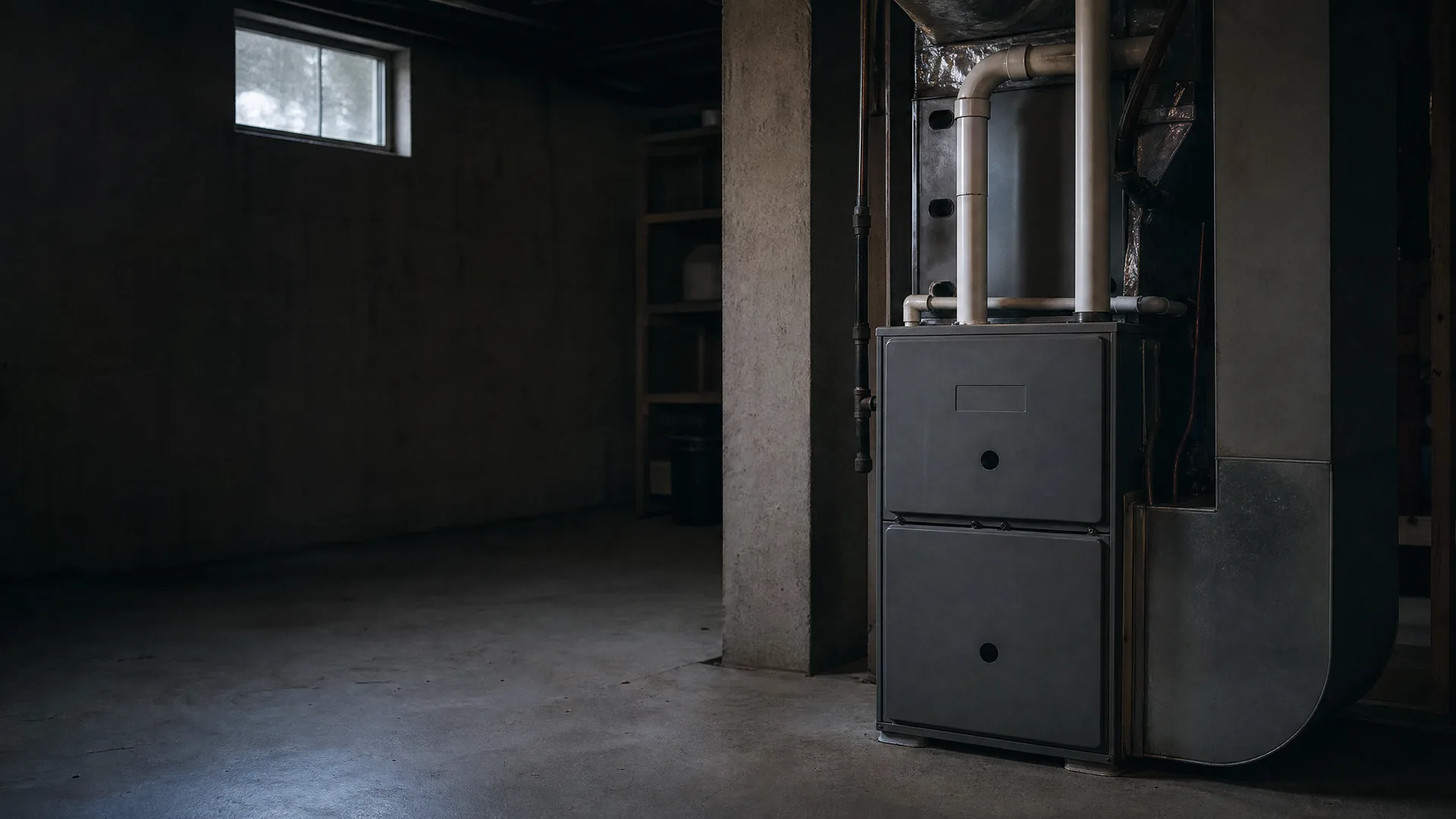
A gray high-efficiency furnace with white PVC vent pipes and attached ductwork stands beside a concrete support column in a dim, empty basement with bare concrete walls and floor and a small window.

You go down for something else and stop at the bottom of the stairs. It's dark down here, past six already, and the furnace sits quiet against the wall, not even ticking. A thin layer of dust hangs in the beam of your phone light, stirred up from somewhere. You crouch by the cabinet door and listen for the blower, but there's nothing, just the cold coming up through your socks. Upstairs that one room has been off for weeks now and you've been living with it. Down here, looking at the thing itself, you figure it's time someone who knows this furnace takes a look before the rest of the house catches up to it.


A local pro for your furnace repair

Finding the blockage means getting into the duct run or crawling under the floor to see where the air is actually going, and that's not something you can do from the thermostat. It takes someone who can trace the line from the furnace to that one register and tell a crushed flex duct from a loose joint from a closed damper. A local contractor who works on Ohio furnaces all winter has seen this exact complaint enough times to know where to look first, and they're the one who'll show up, not a call center reading from a script. You get matched with one contractor who takes on the job, not a handful of companies competing for your number. That cold room has gone another winter waiting on this. Once someone's traced the duct and found where the air is actually escaping, that's the last winter you deal with it.

  1. Furnace pushes heated air into the main trunk line

  2. Air splits off into branch ducts toward each room

  3. A closed damper or crushed section blocks one branch

  4. Less air reaches that room's supply vent than the others

A bearded man in a plaid flannel shirt sits indoors looking out a window at snow-covered trees, with a steaming mug on the sill and wooden kitchen shelves behind him.
A bearded man in a navy T-shirt sits on a light-colored couch indoors, smiling while looking down at a laptop screen in the foreground, with a framed picture and a potted plant blurred behind him.
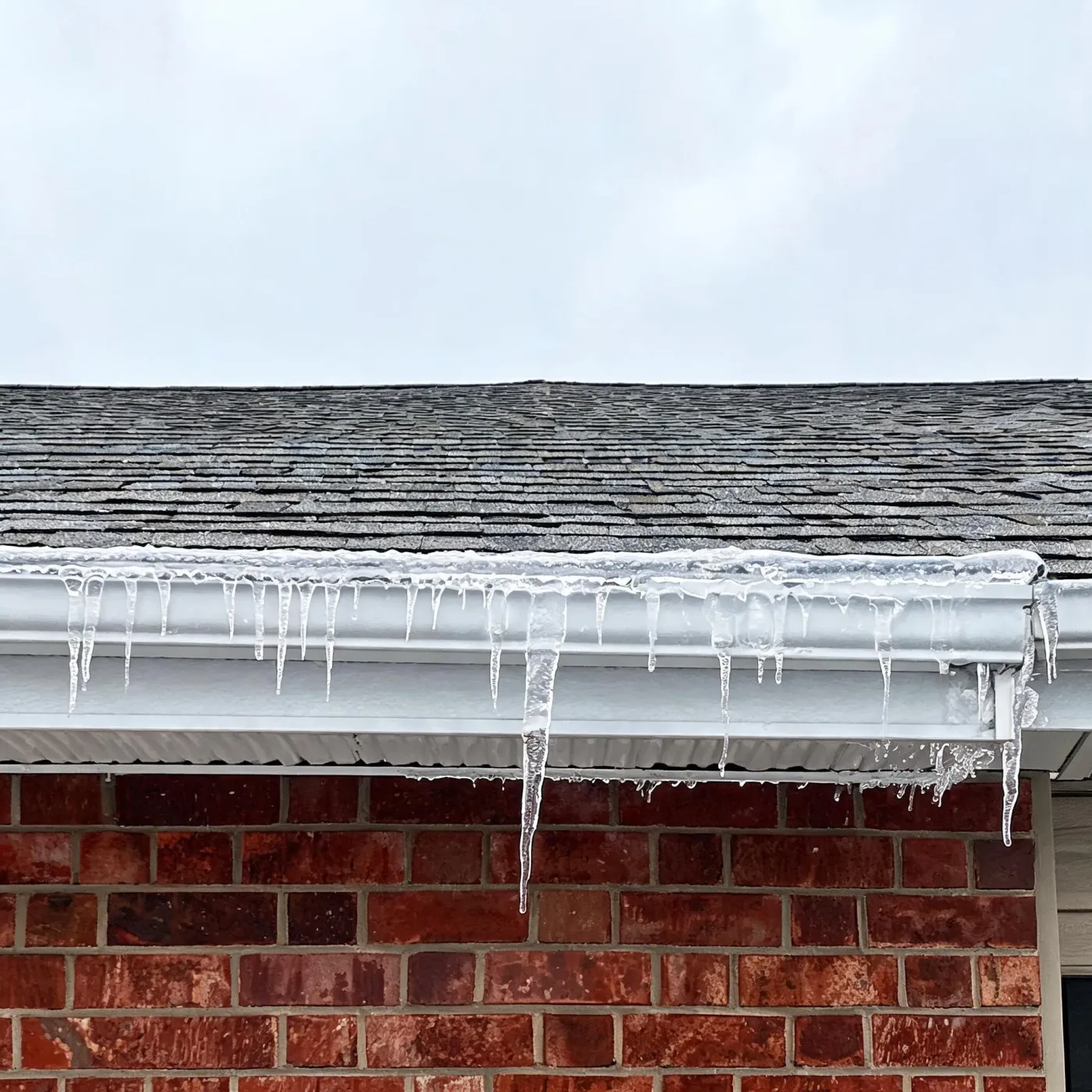
Icicles hanging from a white gutter and soffit below an asphalt-shingle roof on a red brick house, against an overcast sky.

Winter nights average 23°F across Ohio, according to NOAA climate data. At that temperature your furnace is running long stretches just to hold the thermostat setting, and every room is supposed to get its share of that heated air. When one branch duct is blocked or a damper's closed, the room it feeds falls behind fast, because there's less warm air reaching it to begin with on a night that cold. You'll notice it most after dark, when that room drops a few degrees more than the rest of the house and stays there no matter how high you push the heat.

NOAA nClimDiv 1991-2020 county normals weighted by homes

An older beige furnace with louvered front panels stands on a concrete basement floor beside galvanized ductwork, metal and plastic pipes, exposed wood framing, and a cylindrical water heater at right.
Before you get your furnace repair
A gray high-efficiency furnace in a basement with PVC vent pipes, sheet-metal ductwork, copper and insulated pipes, a water heater at left, and an unfinished wood-stud wall at right.
After you get your furnace repair

Where the cold air is going

  • A duct that's blocked, crushed, or disconnected keeps one room short on heated air even when the furnace is running fine.
  • Checking the duct run means getting into the crawlspace or attic to trace the line, not something you can see from the register.
  • A contractor who works on furnaces all winter in Ohio has traced this exact problem through plenty of other houses.
  • You get matched with one licensed local contractor, so you're dealing with a single call back instead of a handful of competing bids.
  • That contractor already knows which duct joints and dampers tend to fail in homes built around here.
  • The room stays cold until someone opens up the duct run and finds where the air is actually going.

The furnace is doing its job. Somewhere between it and that one register, the air is getting lost, through a duct that's crushed, come apart at a joint, or closed off by a damper nobody remembers setting. Nothing about that shows up at the thermostat. It only shows up as a room that never quite gets warm no matter how long the furnace runs.

Finding it means someone has to get into the crawlspace or the attic and follow the branch line from the trunk to that register, section by section, until the air stops moving the way it should. That's slow work if you don't already know what you're looking for. A contractor who's spent winters in Ohio tracing this same problem through other houses knows which joints come apart first and which dampers get bumped shut by accident, so the search doesn't start from zero.

When you request a repair through this page, you're matched with one licensed local contractor, not a handful of them bidding for the job. One call back, from someone who works on furnaces like yours all season and has already seen this exact complaint more than once. They trace the line, find where the air is actually going, and open it back up.

Until that duct run gets checked, the room stays cold. The furnace will keep running the same way it always has, and that one register will keep falling short, no matter how far you turn up the thermostat.

Interior room corner with sunlight from a window, showing peeling paint and damaged plaster on the wall above a white baseboard, a wooden cabinet with a pale bowl on top, hardwood floor and a patterned rug.
Interior corner of a room with tan walls, white profiled baseboard and window trim, a wood-plank floor in sunlight, and green foliage visible through the window.
An empty room corner with cream walls, white baseboard, two windows with deep sills showing green foliage outside, and a wood plank floor lit by sunlight.
Empty room corner with beige walls, white beadboard wainscoting, chair rail and baseboard, a window with green foliage outside, and sunlight casting leaf shadows on the wall above a wood floor.
Sunlit room corner with a multi-pane window, beige walls, white baseboard, wood floor with a woven rug, and a dark wooden cabinet holding a ceramic table lamp below a framed picture.

Get the right pro for your furnace

Your request goes to one pro, not a list of companies.

Connect with a pro

No charge to send it. You decide if you hire them.