Heat pump not heating in Brunswick, OH

RepairHeat PumpMedina County, OH
Step 1 of 2

What ZIP code is the job in?

A heat pump that runs but blows cool or lukewarm air is usually stuck in defrost or losing the fight against ice on the outdoor coil. Cold Ohio nights push frost onto that coil, and the system should switch to defrost on its own to melt it off before going back to heating. When that cycle doesn't finish, or the reversing valve that controls it sticks, you get air that never warms up, or a unit that runs nonstop without catching up. A low refrigerant charge or a failed sensor can cause the same thing even with no ice at all. Below a certain outdoor temperature, most heat pumps also lean on backup heat strips or a furnace to keep the house warm, and if that backup isn't kicking in, the house will feel the difference fast on a cold Brunswick night. Either way, this isn't something to wait out through another cold stretch.

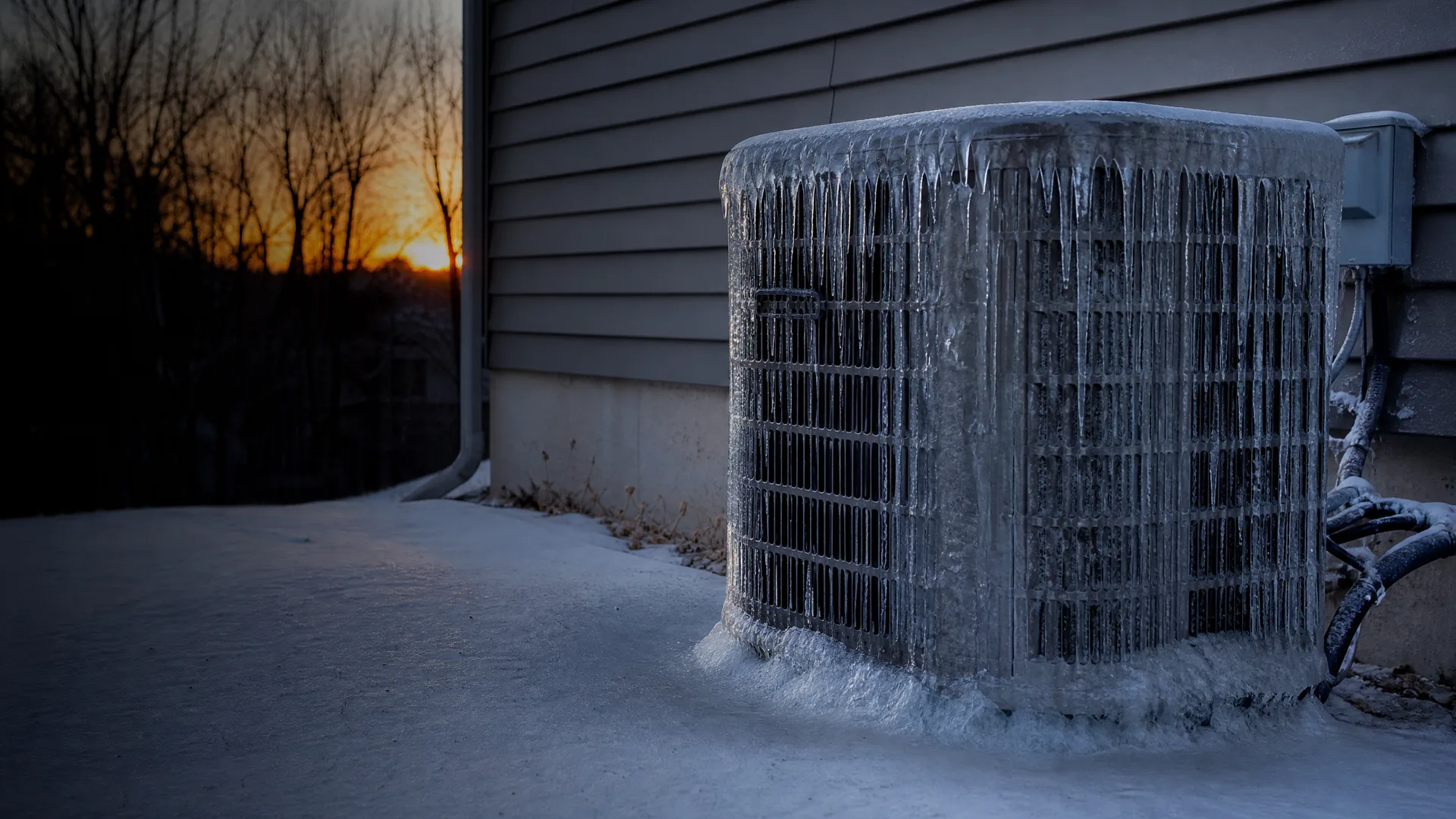
An outdoor air conditioning or heat pump unit encased in thick ice with hanging icicles, beside a house with horizontal siding and snow-covered ground, at sunrise or sunset.

You go out for the paper a little after six and see it before you feel the cold: the outdoor unit by the side yard is wrapped in ice, thick across the coil fins and down over the base pan. Inside, the air coming out of the vents has gone lukewarm. The fan is still running. Somewhere past the garage a dog is barking at the compressor's hum, the only sound on the street this early. Frost like this after a January night in Medina County isn't unusual on its own, but it should have melted off hours ago. It hasn't. The ice is still there, and so is the cold air inside.
Is your heat pump running but not keeping up?

Walk through the house and check each room. The air from the vents feels cool instead of warm, or it cycles between warm and cool every hour or so as the system tries to defrost. You might hear it running longer than it used to, or notice the outdoor unit humming while the house still feels off. Some rooms upstairs may lag behind the thermostat setting by several degrees. If this goes on through a cold stretch, the backup heat strip may end up carrying more of the load than it should, and that shows up on the power bill. Left alone on a night in the teens or single digits, a system that cannot shed ice fast enough can leave the house losing ground on temperature right when it matters most.

A gray outdoor air conditioner or heat pump unit on a concrete pad beside a house with horizontal lap siding, with conduit and refrigerant lines running up the wall and green shrubs and mulch at left.

Running the way it should

This is a heat pump keeping up: coil clean, fins clear, nothing on the ground around the pad. Air from the vents stays warm straight through a cold Medina County morning, and the unit cycles off on its own instead of running straight through.

An outdoor air conditioning condenser unit sits on a concrete pad beside a white horizontal-siding house, with a gray electrical disconnect box and insulated refrigerant lines on the wall, mulch and green shrubs to the right, and a concrete slab in the foreground.

A unit losing ground

Weather and age wear on an outdoor unit sitting against the house year after year. Conduit and lines still run in the same places, but a coil that's lost the fight with frost, or a fan that's slowed down, shows up as warm air that doesn't last or air that never gets warm at all.

A closed laptop and a speckled ceramic mug sit on a wooden table beside a stoneware vase with a leafy branch, with a wooden chair, kitchen counter with cutting board and bowl, and dark upper cabinets in the dim background.

How the reversing valve decides hot from cold

A heat pump moves heat instead of making it, and a part called the reversing valve decides which way it flows. In heating mode, it pulls warmth from the outdoor air, even cold air, and sends it inside. During defrost, that valve switches the system into cooling mode for a few minutes to send hot gas out to the coil and melt the ice off it. That's why the air at your vents can go cool for a bit, then warm again, in a cycle that repeats through a cold Brunswick night. If the valve sticks, or the sensor that tells it when to switch is bad, the system can get stuck in defrost, or never go into it at all while the coil ices over.

Figuring out which of those it is isn't something you can see from the thermostat. It takes someone who checks the valve, the defrost board, and the sensors in order, the way a tech who works heat pumps through a Medina County winter does every week. That's different from finding a name online, calling, describing the ice and the lukewarm air, then doing it again with the next company because the first one is booked out. One call here gets you to a contractor who already knows what a stuck reversing valve looks like from the vents on in.

A living room corner with a beige sofa and cushion, a round wooden coffee table holding a pale ceramic vase of eucalyptus stems and a wooden bowl, and a curtained window with a potted plant above a latticed radiator cover in the background.
  1. Outdoor temperature and coil sensors tell the control board frost is building.

  2. The reversing valve switches, sending hot gas backward through the outdoor coil.

  3. The outdoor fan shuts off so that hot gas can melt the ice.

  4. Indoor air runs cool or off until the coil clears and the system switches back.

A gray outdoor condenser unit on a concrete pad beside a light-colored lap-sided house, with a wall-mounted disconnect box and conduit, dark mulch, and a green shrub to the right.
A clean coil like this lets the outdoor unit pull in cold air and shed frost on its own, so the heat stays warm inside.
A dirty outdoor air conditioner condenser unit with debris on its coil grille, sitting on a concrete pad beside a light-colored horizontal siding wall, with bare dirt ground in front and a shrub at right.
Fins packed with leaves and grime trap the ice instead of releasing it, and the system can run all night without catching up.
A woman holds a sleeping boy wrapped in a gray knit blanket on a couch, with a lit table lamp and houseplant blurred in the background.
A woman with graying hair in a loose bun wearing a beige knit sweater sits in a dimly lit kitchen, looking off to the side, with a round loaf of bread in the foreground and lit candles near a dark window.

No phone calls to make

A licensed pro who repairs heat pumps in Medina County gets your request.

Sending the form costs nothing.

A heat pump in a normal defrost cycle runs it for a few minutes every half hour or so, then goes back to blowing warm air. If yours stays cold for much longer than that, or never comes back warm at all, defrost isn't finishing the job.

That usually means the frost built up faster than the defrost cycle could clear it, often from a coil already dirty before the cold snap hit. The system keeps trying, but it's losing ground each round.

How cold does a Brunswick heat pump have to work to keep up?

  • Winter nights average 22°F

    Overnight temperatures in the 22°F range are what push frost onto the outdoor coil in the first place, which is why defrost cycles matter so much here.

  • Heat runs October through May

    Eight months of heating means the reversing valve and defrost control are working far more than they would somewhere milder, with more chances for a part to wear out.

  • Cooling runs June through August

    Three months of cooling a year is the only stretch where the reversing valve sits idle, so most of its working life here is spent in heating mode.

NOAA nClimDiv 1991-2020

A dark gray outdoor condenser unit on a concrete pad beside a house with beige horizontal siding, with a gray electrical disconnect box and conduit on the wall, mulch beds, a hosta plant, a shrub, and mowed lawn in front.

Working the way it should

This outdoor unit sits clean on its pad, coil and fins clear, nothing melting off onto the ground around it. The disconnect box is mounted and dry. A heat pump like this cycles into defrost, clears what frost it gets, and goes back to sending warm air through the house without you noticing it happened.

An outdoor air conditioning or heat pump condenser unit on a concrete pad beside a house with horizontal vinyl siding, a gray electrical disconnect box and conduit on the wall, and a concrete walkway in the foreground.

Struggling to keep up

This one's carrying years of grime across the coil, and that buildup holds frost instead of shedding it. A unit in this shape can run through a whole Medina County night without finishing a defrost cycle, and the air inside stays cool or lukewarm while it tries.

A woman with long gray wavy hair in a knit sweater sits on a light sofa with a striped pillow, looking toward a window in a room with wooden shelving and a potted plant.
A woman in a gray cowl-neck sweater stands in a living room with built-in shelves, a lamp, a sofa with cushions, and a bright window behind her, looking to her right.
A woman with long wavy brown hair in a dark blue sweater sits on a sofa with cushions, looking off to the side, with a wooden shelving unit, houseplant and bright window behind her.
A woman with long dark hair in a gray knit sweater sits indoors smiling and looking off to the side, with a window, houseplant, framed picture, and shelving blurred behind her.

Where this leaves you

  • Warm air that cuts out, cold air at the vents, or ice that never clears all point to the same stuck defrost cycle.
  • A heat pump that can't finish defrost on its own needs a technician to find out whether the valve, the sensor, or the coil itself is the cause.
  • A contractor who services heat pumps through Medina County winters has seen this exact fault many times and knows where to look first.
  • One licensed, local contractor takes the call, so you explain the problem once instead of repeating it to several companies.
  • Matching with someone who already works on this equipment every winter beats sorting through quotes on your own.

A heat pump that won't finish warming the house is almost always stuck somewhere in that defrost cycle, held there by a reversing valve that won't switch back, a frost sensor reading wrong, or a coil too dirty to shed the ice it's collecting. You can see the symptoms yourself: cold air at the vents, warm air that cuts in and out, ice on the outdoor unit that never fully clears. What you can't do from inside the house is tell which of those three is the actual cause, and running the system while it's stuck can push a strained part toward failing outright.

That's the diagnosis a technician needs to make, and it helps that the one who shows up has done it before in this exact county, on this exact kind of cold night, more than once. Medina County winters put heat pumps through eight months of work, and the contractors who service them here see this fault often enough to know where to check first instead of guessing their way through it.

You call one contractor, licensed and local, and explain the problem once. No second call to a different company, no retelling the same story to get a second opinion, no stack of quotes to sort through on your own while the house sits cold. Someone who already knows this equipment takes it from there.

Sunlit corner of a room with a wooden sideboard holding a ceramic vase of olive branches and a dark wooden bowl, beside a white-framed window, a hardwood floor and woven rug.
A wooden cabinet holding a pale ceramic vase with leafy branches stands beside a beige wall in a sunlit room with hardwood floors, a jute rug, and a window showing green foliage outside.
Sunlit room corner with a beige upholstered sofa holding a rust-brown cushion, beside floor-length linen curtains at a window, over a wood floor with a woven rug.
Corner of a room with beige walls, a framed photograph, a floor-length linen curtain beside a window, an upholstered armchair with a knit pillow, white baseboards and trim, wood flooring and a pale rug.
Sunlit living room corner with a beige upholstered armchair with a cushion, linen curtains beside a wooden-framed window, green vertical panelled wall with a framed print, and a wooden table edge over a woven rug.

One form, no calling around

The pro who gets in touch is licensed in Ohio and works in Medina County.

Skip calling around

You're not committing to anything by asking.