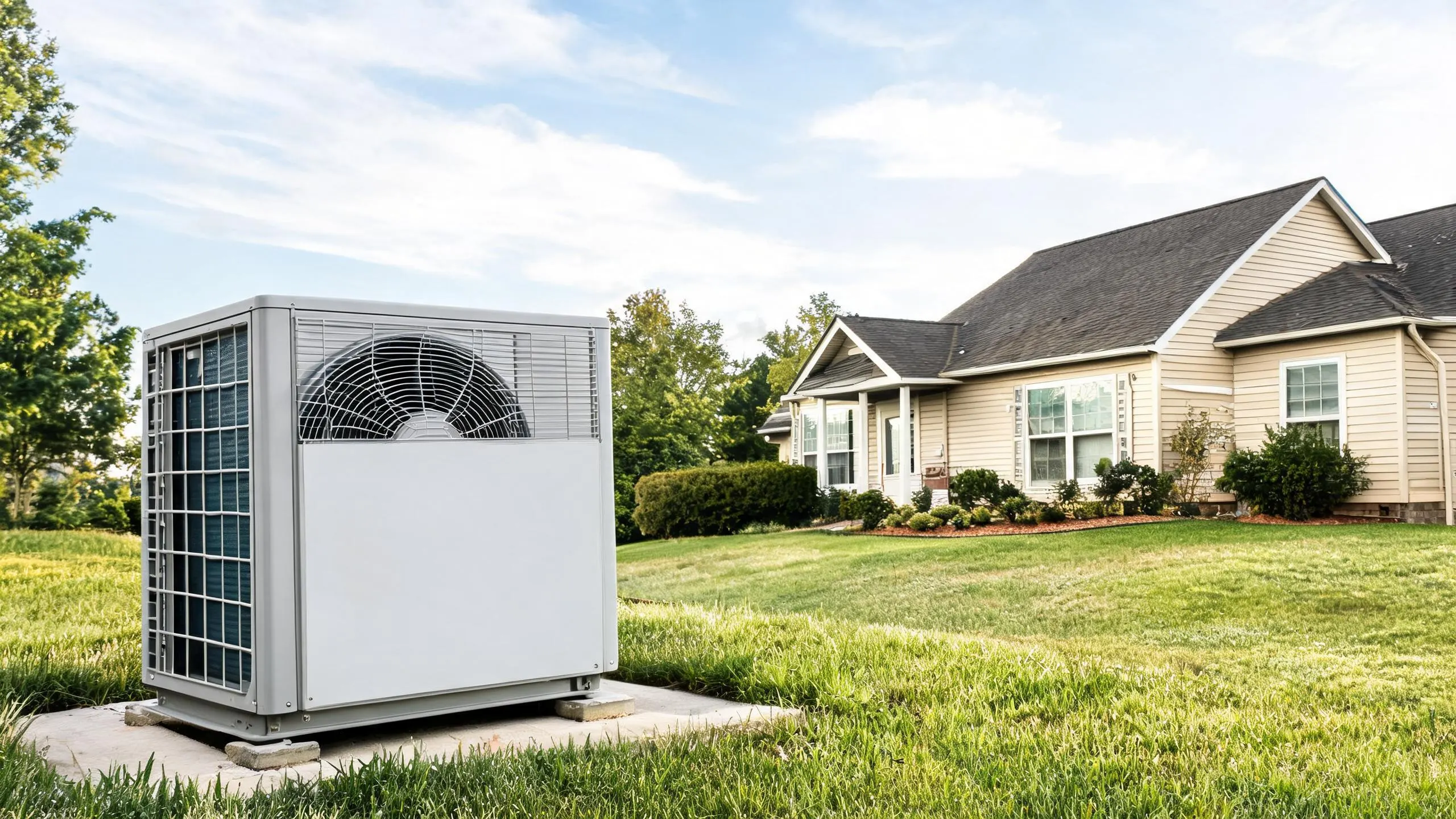
An outdoor heat pump unit mounted on a concrete pad in front of a single-story suburban house with beige siding.

Heat Pump Repair in Mason, OH

Tell us about the job

Takes about a minute. No obligation.

RepairHeat PumpWarren County, OH
Step 1 of 2

What ZIP code is the job in?

Warren County sees more than its share of storms

Warren County had 190 severe weather events between 2015 and 2024. Damaging wind was the most common by far. The outdoor unit of a heat pump sits through all of it, out in the open, with whatever hail or flying debris comes through.


A unit that still runs may still be hurt

Hail can bend the thin fins on the outdoor coil. Debris can nick the fan blade or wiring. None of that always stops the system from turning on. After a storm with hail or high wind, get the outdoor unit checked, even if the heat pump still seems to be working fine.

7 months
October through April, your system heats
4 months
June through September, it cools
25°F
the average winter night it heats against
84°F
the average summer afternoon it cools against
Isometric line illustration of a cutaway single-story house showing interior rooms with ducted air distribution, an indoor air handler, furniture, and an outdoor condenser unit connected by lines outside the wall.
Your system heats October through April and cools June through September.

NOAA nClimDiv, 1991–2020 normals

Heat pump blowing cold air in the middle of winter? Usually it's stuck in cooling mode, or the reversing valve has failed.

A stuck reversing valve won't fix itself with a reset. The house keeps losing ground until it gets replaced.

A heat pump in Mason switches jobs in June and again in October, and strain shows up right after

Cooling runs June through September
Heat runs October through April
142 damaging wind events from 2015 to 2024

Half the homes in Warren County were built in 1995 or later. A heat pump that came with a newer house hasn't had as many years of hail, wind and summer heat working against it. That matters when something goes wrong. A newer system acting up is a reason to call for a repair, not to start pricing a replacement.

A struggling heat pump costs more here every month it runs that way

Ohio homes paid 15.99 cents per kilowatthour in 2024. A heat pump with a bad reversing valve or a damaged coil draws on that rate the whole time it's struggling, not just on the day it finally quits.

Find a contractor
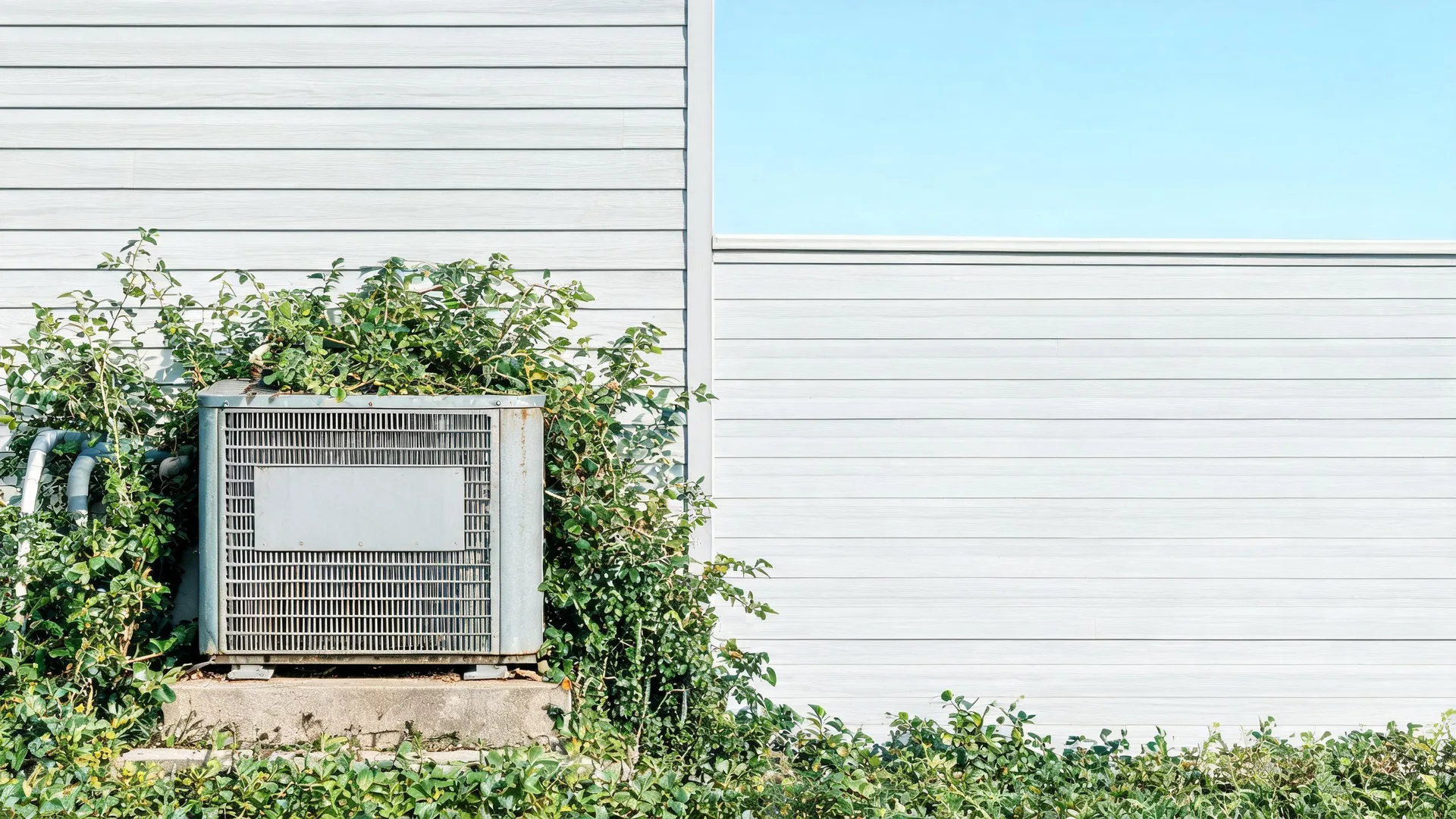
A gray air-source heat pump mounted on a concrete pad next to a house with gray vinyl siding, surrounded by gravel and flanked by green shrubs and white hydrangea flowers.

What matters is the unit's age, not just the house's

The clip beside this runs one day into the next, but a heat pump's clock is measured in years, not hours on a thermostat. Call about a repair and the contractor checking it can tell you how old the unit actually is from the nameplate, not just the house around it. If it's a handful of years in, fixing the part that failed is the straightforward move.

A compressor working against a bad valve wears out faster

When a reversing valve sticks, the compressor keeps pushing against pressure it was never built to handle. It can take that strain for a while, but every hour adds wear a working valve would never cause. Keep running the heat pump like this, and a valve problem turns into a compressor problem.

A refrigerant leak gets worse the longer the system runs

A heat pump low on refrigerant doesn't just heat poorly. It also runs the compressor hotter than it should. Keep it going in that state and the compressor can fail for good. Shut the system down and call for service. That protects the one part that's hardest to replace.

A capacitor is one of the most common parts to fail. When it goes, the outdoor fan or compressor won't start, even though the thermostat is calling for heat or cooling. Contactors wear out too. The switch pits after enough cycles, and then it stops making contact reliably. The defrost control board can fail outright. Frost builds up on the outdoor coil, airflow gets blocked, and the system can't pull heat from the air at all. Low refrigerant almost always means a leak in the line set or coil. It doesn't just run low with age. Motors wear on their bearings over years of use. A fan motor that's starting to go will often sound rough before it quits. Each of these fails on its own. Finding which one is the actual problem comes first. No guessing.

A diagnostic starts at the thermostat, checking what the system is doing against what it's being told to do. From there it moves to the outdoor unit to see where that instruction breaks down. Gauges go on the lines to read refrigerant pressure. That number says more about what's wrong than anything heard or seen from outside the cabinet. Electrical testing comes next, checking the capacitor's output and the contactor's continuity against what they should read when working right. If there's frost sitting on the outdoor coil, the defrost board gets tested first, since that one part can account for the whole problem by itself. The visit ends with an actual part named as the cause. Not a guess at one.