





A lit brick residential street at dusk showing a row of two-story homes with covered porches and mature trees.

Furnace Repair in Ashtabula, OH

Tell us about the job

Takes about a minute. No obligation.

RepairFurnace or heatingAshtabula County, OH
Step 1 of 2

What ZIP code is the job in?

Your furnace runs about eight months a year here, October through May. That's most of the year on duty, not just a few cold snaps. Between 2015 and 2024, Ashtabula County saw 26 winter storms, and each one means hours of nonstop operation to keep a home warm through heavy snow and ice. That kind of demand wears on an igniter, a blower motor, a heat exchanger faster than it would somewhere milder. When something starts acting up here, it's usually that workload catching up with the machine, not bad luck. Worth having it looked at properly so whatever's fixed actually holds.

8 months
October through May, your furnace is on duty
21°F
the average winter night it heats against
60%
of homes here heat with gas, so most furnaces here burn gas
26 winter storms
in ten years, the nights a failure hurts most
Isometric cutaway illustration of a single-story house in gray tones, showing interior rooms with furniture, ceiling ductwork, and an exterior furnace unit with a tall flue pipe.
Your furnace works hardest from November through March.

NOAA nClimDiv, 1991–2020 normals

An igniter cracks or a flame sensor coats over with oxide, and the furnace stops firing altogether.

No heat on a cold day usually traces back to one worn part, not a dying furnace.

Half the homes here were built by 1962, and no furnace lasts that long

Half the homes here were built by 1962
Heat runs October through May
Winter nights average 21°F

September is worth a look before the furnace starts up in October. A part that's been weakening all summer, a cracked igniter, a sensor going bad, usually waits for that first real call for heat before it fails outright. That's when the strain hits it. By December the overnight low here averages 21 degrees, and a furnace that's limping along in October won't hold up through a stretch like that. Getting it checked at the start, rather than after it quits on a cold night, is the difference between a repair you schedule and one you're stuck waiting on.

Before you pay for the repair, find out what you're repairing

If your furnace came with the house, ask the contractor how old it actually is before paying for the repair. A repair that makes sense on a five-year-old unit can be wasted money on one that's been running since the house was built.

Find a contractor
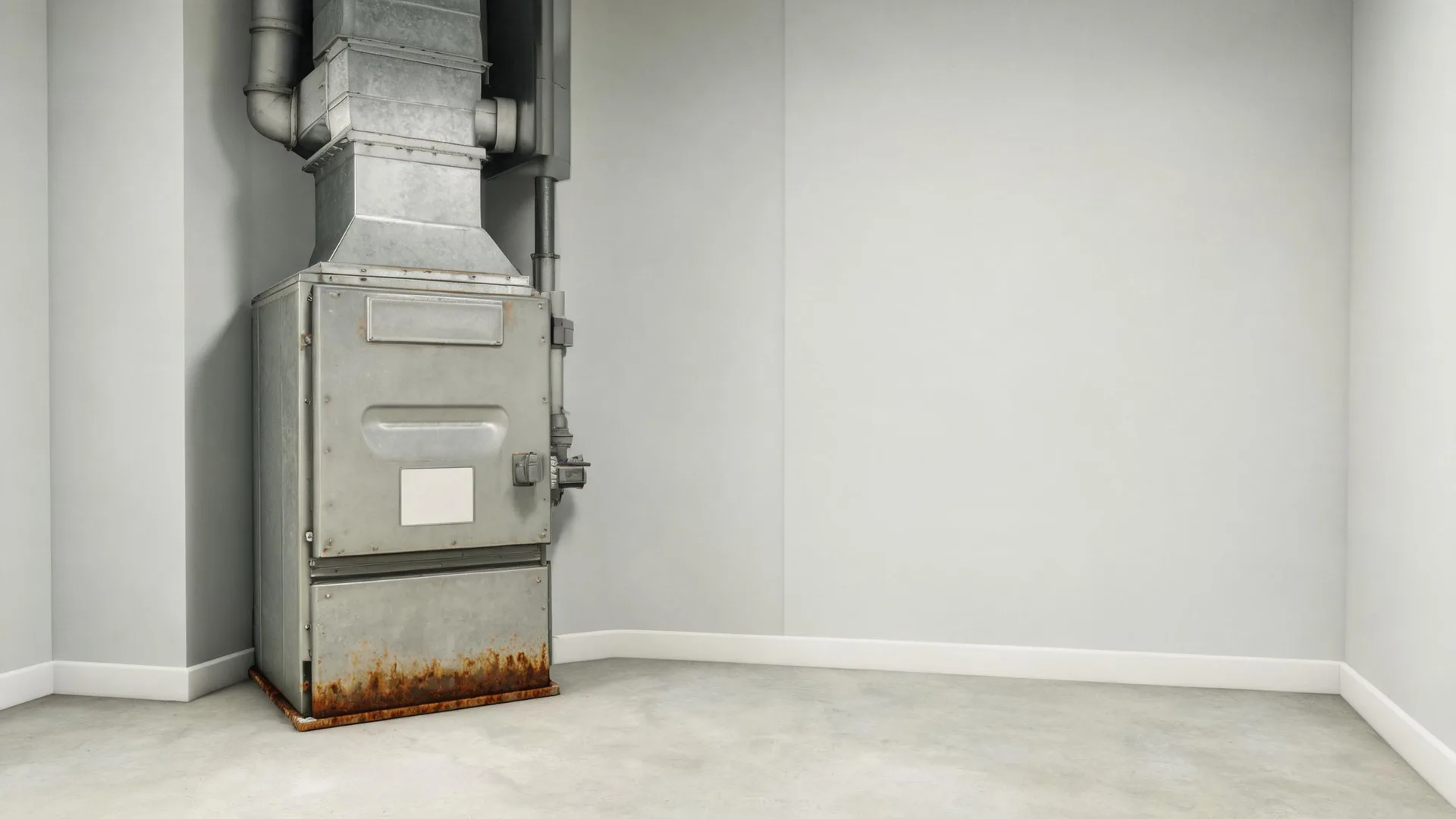
A gray gas furnace with attached ductwork and piping installed in an unfinished concrete basement.

Eight months a year, year after year

Watch the clip run through a full day and the furnace barely stops. That's what eight months a year looks like up close, not just a line on a weather chart. Ask for a real diagnosis, not a part number. A contractor who's done this knows the difference between a part that failed on its own and one that failed because the system behind it is struggling. If it's the second kind, replacing that one part just buys you a few months before the next one goes. Get that answer before you approve anything.

The signs it's asking for help

A furnace short cycles, meaning it fires up, runs a few minutes, and shuts off before the house warms. That points to a clogged filter, a cracked heat exchanger, or a blower pulling too little air. Cold air out of the vents when it's running means the igniter is failing partway or the gas valve isn't opening fully. A burner flame that's flickering yellow instead of steady blue needs attention soon, not eventually. Banging or screeching from the cabinet is a belt, a bearing, or a blower wheel working loose, not the furnace settling.

What's worth fixing and what isn't

A furnace that trips its limit switch repeatedly or won't hold a flame is telling you something specific failed, and most of those parts are replaceable on their own. A cracked heat exchanger is different. That's a safety issue, not a wear item, and it usually means the unit is done. If a contractor keeps replacing small parts and the same symptom comes back within a season, that's the furnace saying the next failure is already lining up behind this one.

An unfinished basement featuring a forced-air furnace, exposed wooden ceiling joists, bare concrete walls, and miscellaneous items including cardboard boxes and coiled cables on the floor.

A new furnace would cut about $170 a year off heating for a typical Ashtabula County home.

  • A new high-efficiency furnace$720 a year
  • An older furnace$890 a year

Estimates for a typical Ashtabula County home, compared with an older unit built to the previous federal minimum, from EIA household energy data, Ohio fuel prices and NOAA climate normals. Your home will differ.

Repair makes sense when one part has failed and the heat exchanger is sound.

Replacement makes sense when the heat exchanger is cracked or the furnace keeps needing parts.

A good rule: look at what's failing, not just that something failed. A single worn part on a furnace that's otherwise sound is worth fixing every time. The trouble comes when the failures start stacking up, a new one every few months, each one a different system on the unit. That pattern means the furnace isn't recovering between repairs, it's wearing down faster than parts can be swapped in. Age matters here too, but not on its own. An old furnace that's only ever needed a thermocouple or a capacitor is still a sound bet. One that's starting to need its blower motor, its control board, and its heat exchanger looked at within the same year or two is telling you the whole unit is reaching the end together, not just the piece in front of you.