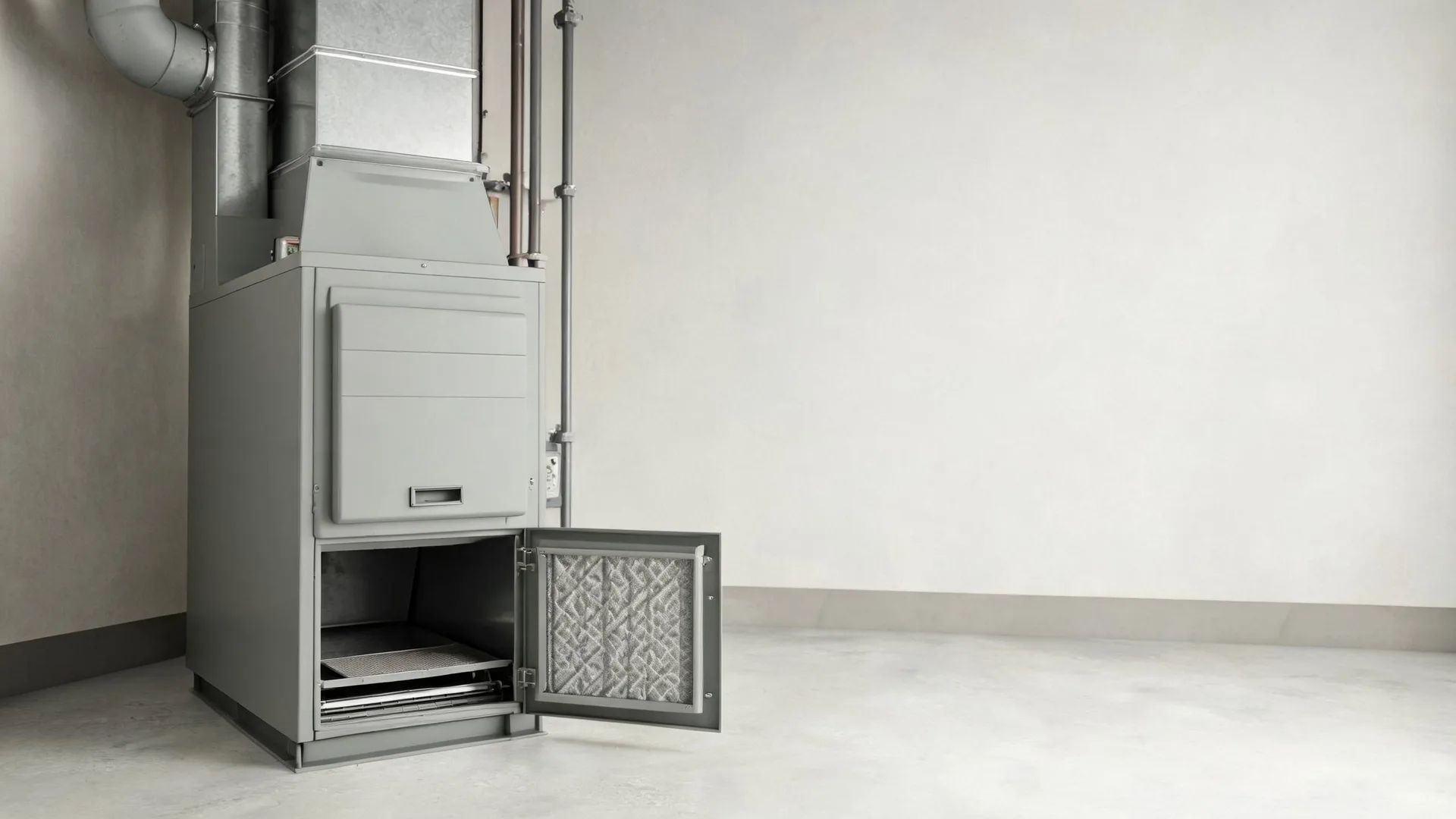
October starts the eight-month stretch
Furnaces in Wayne County run from October through May. That's most of the year riding on one machine.
Takes about a minute. No obligation.
Furnaces in Wayne County run from October through May. That's most of the year riding on one machine.
Get the furnace checked in September, before October puts it to work every day. Once the cold sets in, the furnace runs without a break until spring.
Heat here means eight months of the year, not a few cold snaps.
One check a year keeps the furnace ready for all of it.



A furnace running right burns gas clean, using only what it takes to heat the house. One that's drifted out of tune runs longer to hit the same temperature. That costs something. Gas ran $12.89 per million Btu in Ohio in 2024. A furnace working harder than it should burns through more of that every time it fires. A yearly check catches a dirty burner or a weak flame before the furnace has to make up for it all season. No need to look at it more than once a year. Get it done before the cold sets in, and that's enough.
Half the homes in Wayne County were built in 1975 or earlier, half in 1975 or later. Old or new, the furnace inside runs the same stretch of cold months, and one yearly check is what keeps it ready for that, whatever year the house went up.
Find a contractor
Running the furnace day after day wears certain parts in ways you can't see from the living room. The flame sensor picks up a coating that makes the furnace shut off early or refuse to stay lit, long before it looks dirty to the eye. The heat exchanger can crack, and that only happens after the metal's gone through enough heating and cooling cycles to flex. The blower wheel collects dust on its blades, which throws it off balance and makes the motor work harder to push the same air. None of that shows up as a smell or a sound at first. A tune-up puts a meter on the flame sensor, runs a camera or light down into the heat exchanger, and checks the blower wheel by hand. Those are the things a furnace can't tell you on its own.
Pulling the old filter in, listening for the burner to light, and calling it done tells you almost nothing about the furnace. A thorough check pulls the burners to look at the flame, tests the flue draft, checks the gas pressure against what the furnace calls for, and runs the blower long enough to watch whether the amp draw climbs.
A tech who never opens the heat exchanger panel or hooks up a combustion analyzer hasn't looked at the parts most likely to fail. A cracked exchanger or a burner pulling the wrong air mixture stays hidden until the furnace is working hard to keep the house warm.
Between visits, the filter is the thing worth checking. Look at it when you think of it, and swap it out once it's gray and matted instead of white. A clogged filter starves the furnace of airflow. The blower has to push harder to move air through it, and that wears on the motor over time. Keep the area around the furnace clear too. Nothing stacked against the cabinet. It needs open air to draw from and room to breathe. Past that, leave the burners, the flame sensor, and the heat exchanger alone. Those need a meter, a light, and a trained eye, not a homeowner with a screwdriver.
A proper tune-up starts with the burners. They get pulled and cleaned so the flame burns steady and blue, not yellow and lazy. Gas pressure gets checked against what the furnace calls for, because too much or too little throws off combustion. The flue gets tested for draft, to make sure exhaust actually leaves the house instead of lingering where it shouldn't. Electrical connections get tightened, since a loose wire causes nuisance shutdowns long before it causes real damage. The blower gets lubricated if it takes oil, and the amp draw gets checked while it runs, which shows whether the motor is straining. Last is the heat exchanger. A light or a camera checks for the kind of crack that only shows up after the metal has flexed through enough heating cycles. Every one of these checks is looking for the thing that fails quietly, not the thing that announces itself.