October starts the eight-month stretch
Furnaces in Martins Ferry go to work in October and don't let up until May. That's eight months of carrying the load, more than it spends sitting idle.
Takes about a minute. No obligation.
Furnaces in Martins Ferry go to work in October and don't let up until May. That's eight months of carrying the load, more than it spends sitting idle.
Get the furnace looked at in September, before the first cold morning asks it to run. A problem found while it's sitting idle is a lot easier to fix than one found at 6am in October.
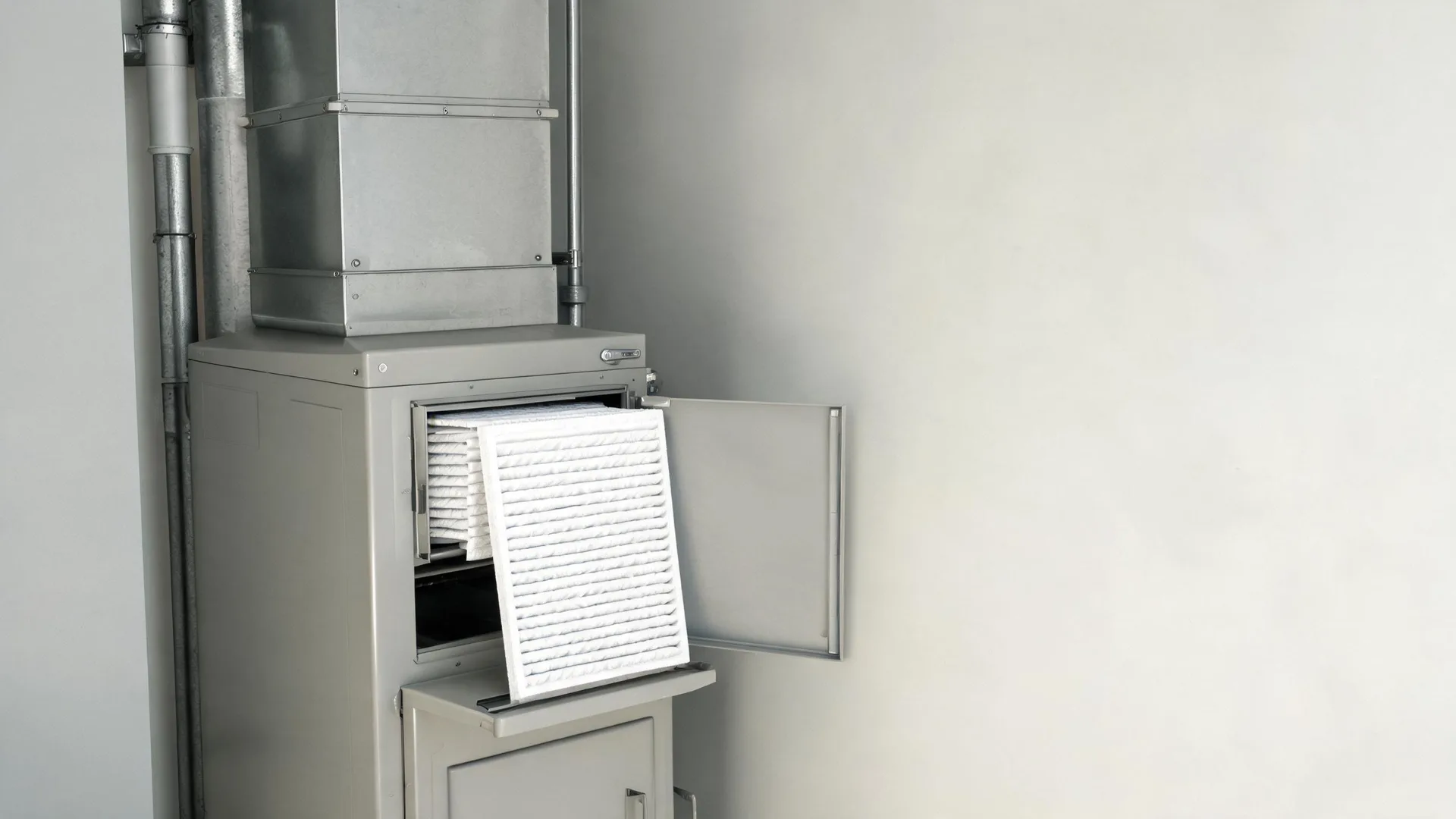
A dirty filter chokes off the air a furnace needs to run right.
When airflow drops, the heat exchanger runs hotter than it should. That shortens its life.



Close to half the homes in Belmont County heat with utility gas. Most of the rest run on bottled or LP gas, fuel oil, or electricity. That's not a furnace you tune up by swapping a filter and calling it done. A gas or oil furnace burns fuel to make heat. The burner, the flue that vents the exhaust, and the safety controls that shut things down when something's wrong all need a real check. A cracked heat exchanger or a venting problem doesn't always show itself before it matters. That's the part of the job a filter change never touches.
Natural gas in Ohio ran $12.89 per million Btu last year. That's what the furnace burns all winter, and the price is the same whether the burner's running clean or not. One check before the cold months hit covers it for the year.
Find a contractor
Skip a season on the furnace and nothing happens right away. Skip a few seasons and it starts carrying problems that never get fixed. A dirty burner keeps running dirty until someone cleans it. The heat exchanger behind it keeps taking more heat than it was built for. Small cracks in that exchanger don't close up on their own. Dust builds up on the blower wheel. The motor has to work harder to push the same air through the house, and the bearings wear out faster than they should. None of this looks like a breakdown at first. It just looks like a furnace working harder than it needs to. Then one morning it doesn't start at all.
A furnace that fires up, runs a couple minutes, then shuts off before the house warms up is tripping a safety switch somewhere. Could be a flame sensor coated in residue. Could be a flue that isn't drawing right. It won't fix itself by running more.
Open the access panel and the burner flame should be blue and steady. Yellow or flickering means it isn't getting enough air to burn clean. That same burner is what's feeding heat into the exchanger behind it.
A quick visit checks that the furnace runs and the filter is clean. That's worth something, but it isn't the job. A thorough tune-up opens the cabinet. It looks at the burner flame, checks the flue draft, tests the flame sensor and limit switches that are supposed to shut the furnace down if something goes wrong. It checks amp draw on the blower motor and inducer, not just whether they spin. The full job includes a reading on the heat exchanger, or at least a close inspection. That's the part a quick look skips, and it's the part that matters most. If the furnace gets wiped down, the filter gets swapped, and nothing else gets opened, that's a glance, not a tune-up.
A real tune-up means opening up the burner compartment and looking at the flame directly, not peeking through a port. Check ignition first. Does the igniter light the burner clean on the first try? A weak or delayed ignition stresses the heat exchanger every cycle. Static and operating gas pressure get tested at the manifold. Too much or too little pressure changes how the flame burns and how hot the exchanger runs. The blower gets pulled or checked for dust on the wheel. The motor's amp draw gets checked against spec, not just whether it turns on. Electrical connections get tightened too. A loose one makes its own heat, and that heat goes straight into the nearest wire insulation. Every safety control gets tested, the limit switch, the flame sensor, the pressure switch. Each one has to actually shut the furnace down when it's supposed to.