

A row of dark gray gabled houses behind a trimmed hedge and mowed lawn, framed by large leafy trees under an overcast sky.

Furnace Maintenance in Lancaster, OH

Tell us about the job

Takes about a minute. No obligation.

Tune-up, service, or cleaningFurnace or heatingFairfield County, OH
Step 1 of 2

What ZIP code is the job in?

The furnace sits idle all summer in Lancaster. October is when it starts back up. So September's the month to get it looked at, while it's still off and there's time to fix whatever comes up. Once October hits, it runs straight through May, eight months. Checking it before that stretch starts matters more than checking it halfway in.

Furnaces in Lancaster run eight months straight, October through May.

One visit before October covers the whole run through winter.

Fairfield County gets one furnace check a year, not two

131 severe weather events from 2015 to 2024
18% of homes statewide lost power a day or more in 2024
81 damaging wind events from 2015 to 2024

One visit a year is enough for a furnace that isn't under any unusual strain. A second visit mid-winter won't make the burner run cleaner or the heat exchanger last longer if nothing's wrong with either. What changes the bill is how efficiently the furnace burns. Natural gas in Ohio ran $12.89 per million Btu last year. Worth getting the burn right before the heating months start, not checking on it again once they're underway. One visit timed ahead of the season does that job. A second one later just repeats it.

Book it before the season

It starts running hard in the first month of the season here. Book the check the month before.

Find a contractor
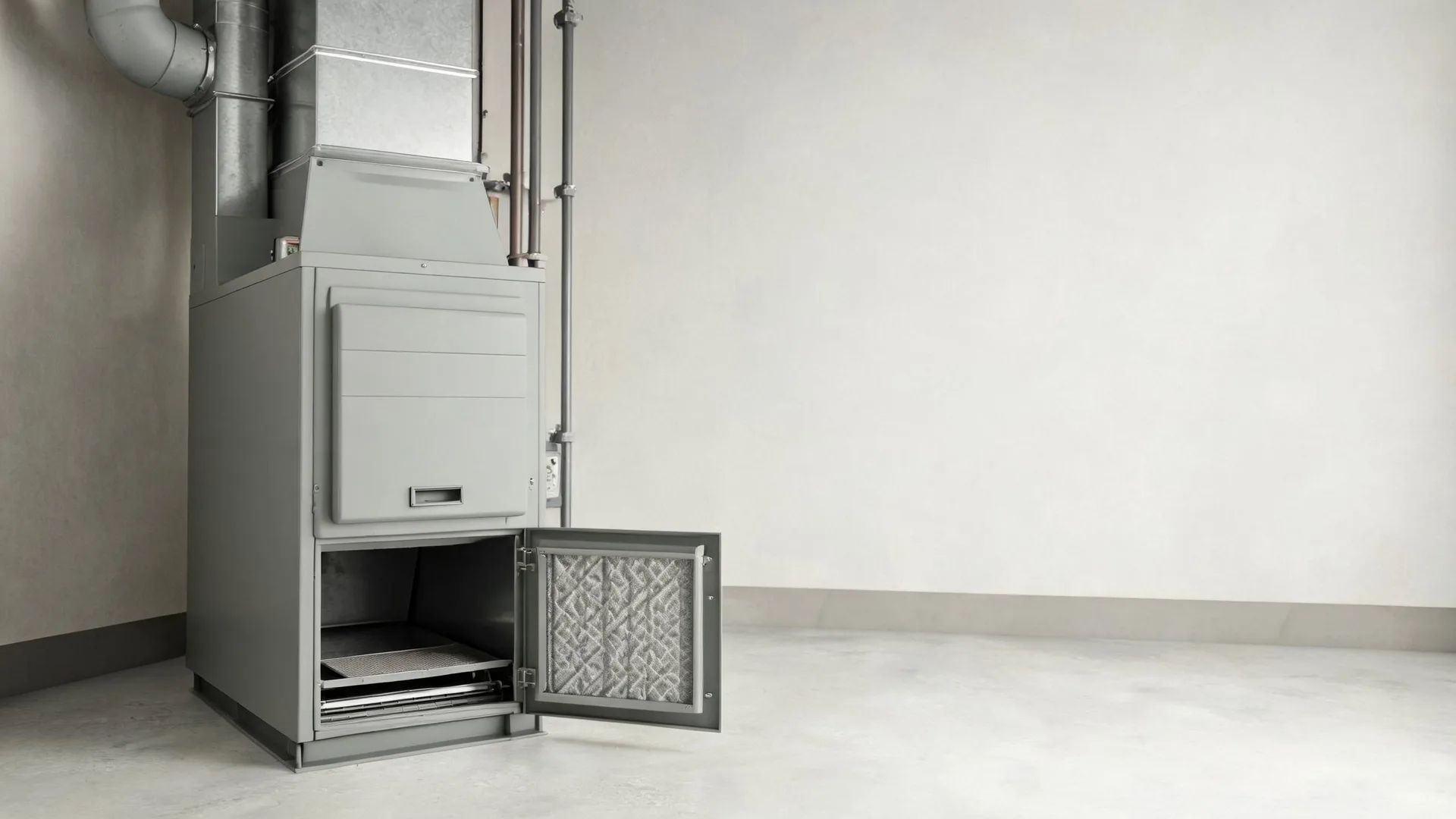
A gray gas furnace with attached ductwork and piping installed in an unfinished concrete basement.

Plenty of these furnaces still have years ahead of them

Half the homes in Fairfield County were built in 1984 or later. A furnace put in around the time a newer home was built still has years of running left in it. A yearly check is what gets that furnace through all of them in good shape. It catches the small things, a cracked igniter, a sensor reading off, while they're still small, before they turn into a reason to replace the furnace early.

Change the filter, nothing else

A dirty filter chokes airflow and makes the furnace work harder than it should. Swap it on a regular basis through the season. Past that, leave the cabinet closed. The burner, the igniter, the heat exchanger need someone who can test them, not someone opening it up to take a look.
Watch for signs, not schedules

Between visits, pay attention. A room that used to heat fine but now runs cold. The furnace short cycling on and off. A burning dust smell that isn't just the first run of the season. Any of that is worth a call right away. Don't wait for the next scheduled check.

A tune-up puts numbers on things you can only guess at from the living room. A tech checks the flame through the burner view port, looking for steady blue cones. Yellow tips or flames that lift off the burner mean the gas and air mix is off. The flue gets checked for solid draft, pulling exhaust up and out. A weak draft lets combustion gases linger where they shouldn't. The heat exchanger gets inspected for hairline cracks. Those cracks let flue gas mix into the air the furnace pushes through the house, and watching the thermostat will never show you that. Amp draw on the blower motor gets measured against what it should be. That catches a motor working harder than it used to, before it fails outright. None of this shows up as a symptom anyone would notice. It shows up as a reading that's off, and only if someone's looking for it.

That burner and flue check is most of the visit, but a proper tune-up covers a few more things while the furnace is apart. The igniter gets looked at directly. A hairline crack in it won't always stop it from glowing, just from holding up through the season. Gas pressure gets tested at the manifold and set to what the furnace calls for, not left at whatever it drifted to. The blower wheel gets checked for dust buildup on the blades. That throws air out of balance the same way a dirty fan does. Safety switches shut the furnace down if it overheats or the flame fails. Those get tested to confirm they'd actually trip if asked to. All of it gets written down, so next year's visit has something to compare against instead of starting cold.