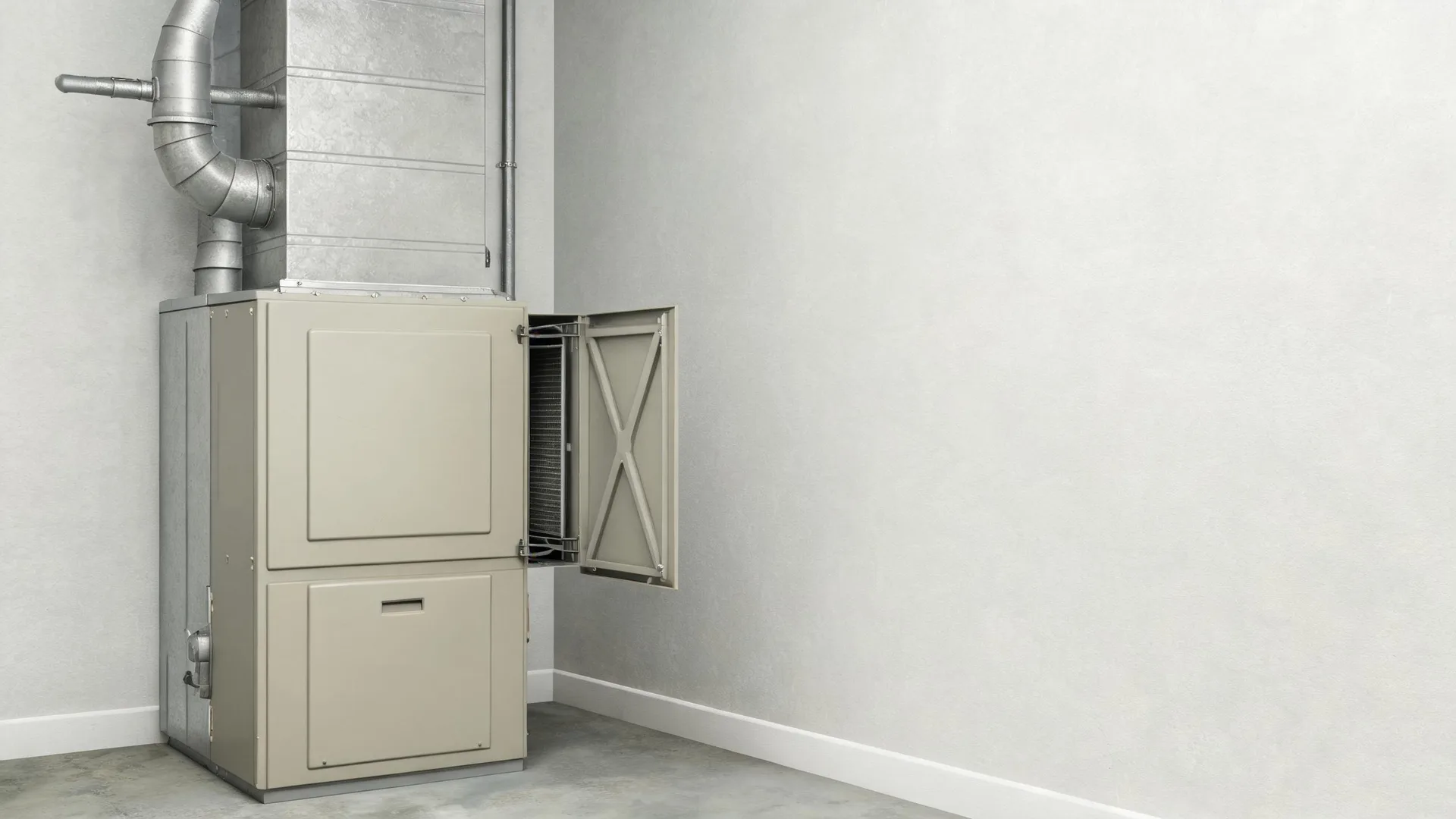
Eight months of work out of your furnace
From October through May, the furnace is what keeps the house livable. December, January and February average 23 degrees overnight. That means it's not just running often, it's running hard.
Takes about a minute. No obligation.
From October through May, the furnace is what keeps the house livable. December, January and February average 23 degrees overnight. That means it's not just running often, it's running hard.
Get it checked in late summer or early fall. That catches a weak igniter or a dirty flame sensor before the first cold night shows up and asks the furnace to run for hours instead of minutes.
Furnaces in Fremont start working in October.
Get it checked in September, before that first month puts any load on it.



Most houses in Sandusky County heat with gas, 59.4% of them. That changes what the maintenance check needs to cover. A gas furnace lights a burner, and the exhaust has to get out of the house safely. So the check covers the igniter, the flame sensor, and the venting, not just a new filter. Another 15.4% of homes run on LP gas, and those need the same look at the burner and the vent. Electric furnaces heat 21.6% of homes in the county. No flame to worry about there, but most homes here aren't heating that way.
A quick visit ends with a new filter and a glance at the thermostat. A real one ends with numbers written down. Gas pressure at the manifold gets checked, not assumed. The flame sensor gets pulled and cleaned, not just looked at. A thin film on that sensor can still read as working, right up until the furnace locks out on a cold morning. Amp draw on the blower motor gets checked too. A motor pulling more current than it should will burn out early. And the heat exchanger gets checked with a light or a camera, because a crack there is the one thing in the system that can actually hurt somebody. If nobody opens the cabinet to look inside, that's a filter change, not a tune-up.
A clogged filter starves the furnace of return air. The blower has to work harder to pull air through it. That strain shows up as a hot blower motor, or a heat exchanger that shuts off on its high limit switch before it should. Changing the filter regularly is the one maintenance job a homeowner can handle between visits.
A high-efficiency furnace condenses exhaust into water, and that water needs a clear drain line to get out. If the line clogs with algae or sediment, the furnace shuts itself down instead of letting water back up into the cabinet. A standard furnace that vents through a metal flue doesn't have this drain at all. So this check applies to one kind of system, not the other.
Changing the filter is the one job that stays on the homeowner between visits. Check it every month. Hold it up to a light if it's hard to tell. If light comes through evenly, it's fine. If no light gets through, the blower is already working too hard. Keep the area around the furnace clear so it can pull return air without a fight. Leave the cabinet closed otherwise. Opening it up to mess with the burner or the flame sensor causes more problems than it fixes.
A tune-up also covers where the furnace meets the rest of the house. The thermostat calibration gets checked. A stat reading a few degrees off makes the furnace run longer than the house needs. The safety controls get tested too, the limit switch and the flame rollout switch. That means making sure they actually shut the furnace down when they're supposed to, not just checking that they're wired in. The limit switch keeps the heat exchanger from overheating if airflow is restricted. A limit switch that doesn't trip means one less layer of protection. None of this replaces the work inside the cabinet on the burner and the heat exchanger. It just rounds it out.