




Dark-sided single-story buildings with gray shingled roofs behind trimmed hedges, a mown lawn, and large leafy trees overhead.

Furnace Maintenance in Findlay, OH

Tell us about the job

Takes about a minute. No obligation.

Tune-up, service, or cleaningFurnace or heatingHancock County, OH
Step 1 of 2

What ZIP code is the job in?

Furnaces in Hancock County go straight to work in October, with no mild weeks to ease into it. September is when a technician still has room to check the igniter, clean the flame sensor, and clear anything blocking the vent before the first cold morning asks the furnace to run. Wait until October and the same check happens while the furnace is already working through its heaviest stretch, eight months straight through May. A problem caught in September is a quiet repair. The same problem found once the furnace is already running every day is a wait for parts with the house cold in the meantime.

Hancock County gets eight months of heat, and overnight lows drop near 22°F. That's a lot of work for one furnace.

One checkup before October covers all of it.

Half the homes here were built in 1973 or earlier

Half the homes here were built by 1973
Climate zone 5A
Heat runs October through May
Most homes here run on gas58.8% of occupied homes in Hancock County heat with utility gas. A gas furnace needs the burner and venting checked every year.

A furnace only needs one visit a year. The igniter and the flame sensor wear out from use, not from how cold it gets, so a check before the cold sets in catches them whether the furnace runs a few months or most of the year. Gas in Ohio cost $12.89 per million Btu last year, so a furnace that's cleaned and firing right is worth something beyond comfort. This furnace doesn't ask for more than once a year. It just needs that once to happen before the cold does.

Book it before the season

It starts running hard in the first month of the season here. Book the check the month before.

Find a contractor
A gas furnace with attached ductwork, gas piping, and condensate lines installed in a concrete-block basement.

What's yours to do, and what isn't

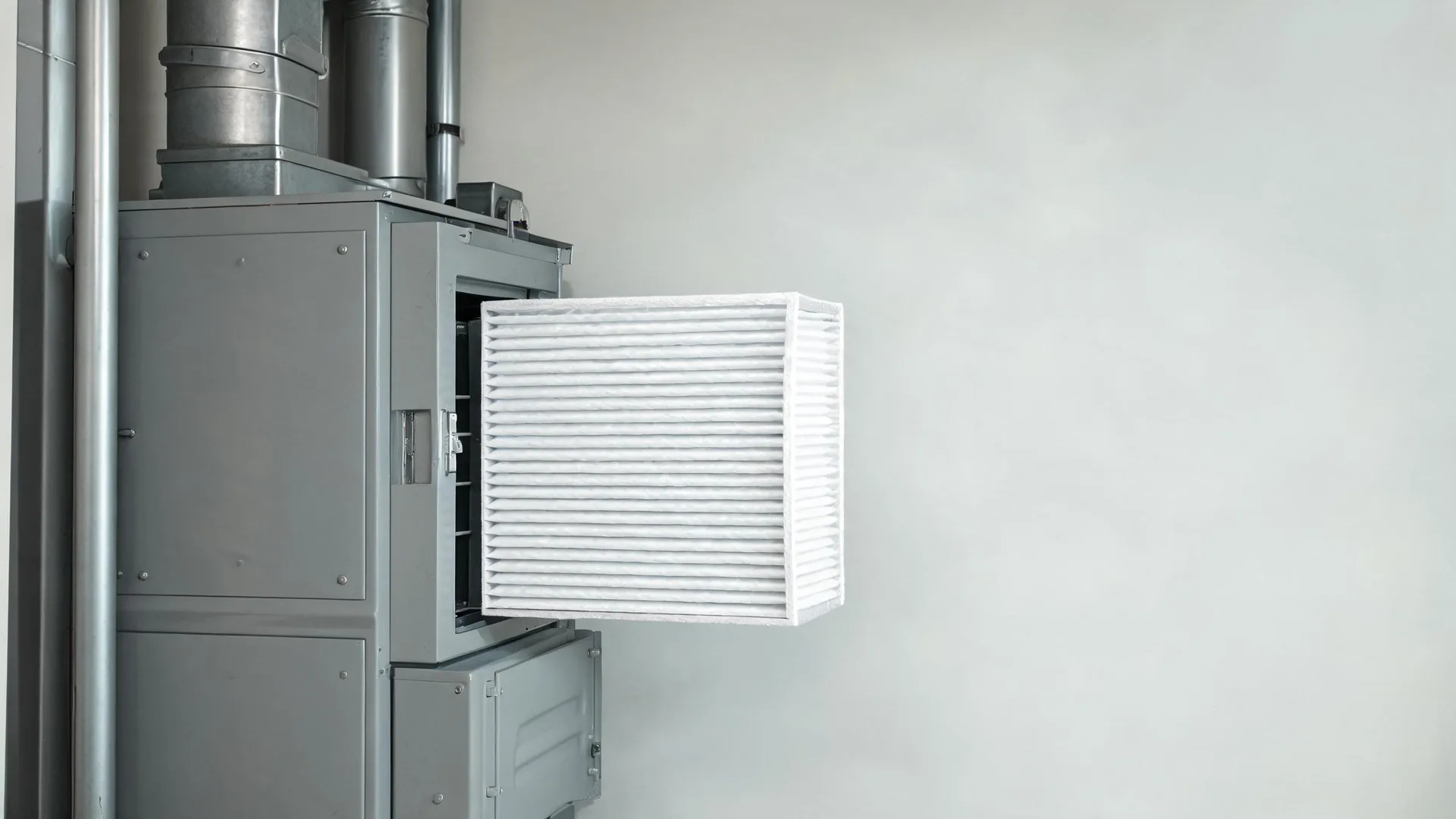
The filter is the one thing worth checking between visits. A dirty filter chokes airflow, and the furnace has to run longer to push the same heat through the house. Pull it out and hold it up to a light. Can't see through it? Change it. Keep the area around the furnace clear too. Nothing stacked against the cabinet, nothing blocking the return air grille. Past the filter, leave it alone. The igniter, the flame sensor, the pressure switch, none of that is something to open up or clean. A furnace running steady and quiet between checkups just needs a clean filter and clear space around it. That's it.

A furnace has no coil or drain to worry about

Cooling systems have a coil that collects dust and a drain that can clog and back up. A furnace doesn't have either one. Gas heat moves through a heat exchanger and out the vent. No condensate line, no coil to turn green and choke off airflow.
The filter is still doing the same job

No coil behind it, but the filter is still protecting the blower motor and the heat exchanger from the dust pulled in through the return air. A clogged filter chokes airflow the same way it does on the cooling side. The furnace just runs longer trying to push enough heat through the house.

Opening the cabinet shows things no homeowner ever sees from the vent in the floor. The flame color tells a story. A steady blue flame means clean combustion. A yellow or flickering flame means the burner isn't getting enough air. The pressure switch gets checked too. That's what stops the furnace from running if the vent is blocked. A stuck switch can shut the furnace down for no reason, or fail to shut it down when it should. The heat exchanger gets checked for cracks. A cracked exchanger can let combustion gases into the air the blower pushes through the house. None of this shows up as a strange noise or a smell beforehand. The furnace runs fine right up until the part that was already failing finally gives out.

A tune-up covers the parts that don't fail quietly, too. The blower motor gets checked for amp draw. A motor pulling more current than it should is working harder than it needs to, and it won't last as long doing it. The burners come out and get brushed clean. Dust and rust on a burner change how the flame sits and how evenly the heat exchanger warms up. Gas pressure gets checked at the manifold. Too low and the furnace runs weak. Too high and it runs hotter than the exchanger was built for. The wiring and connections at the control board get checked too. A loose connection is what turns into a furnace that won't start on the coldest morning of the year. All of this gets checked while the furnace is sitting still and cold. That's the only time most of it can be checked right.