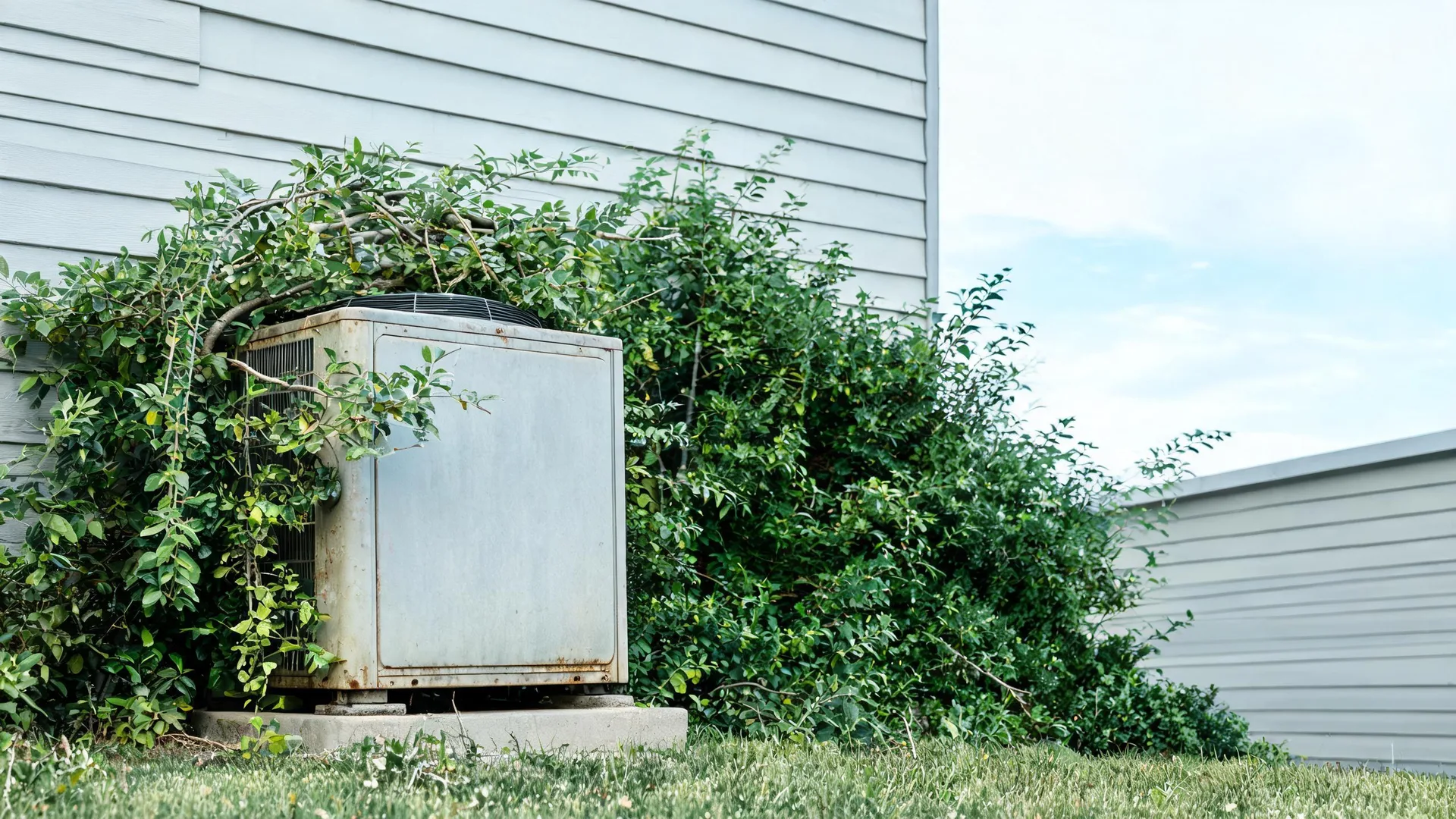
An outdoor HVAC condensing unit on a concrete pad next to a beige single-story house with a dark shingle roof.

Heat Pump Repair in Wooster, OH

Tell us about the job

Takes about a minute. No obligation.

RepairHeat PumpWayne County, OH
Step 1 of 2

What ZIP code is the job in?

October is when a weak part finally gives out

Heat pumps switch over to heat in October, after sitting idle since May. Whatever was already marginal, a weak capacitor, a low refrigerant charge, a worn contactor, tends to fail once the system has to run hard for heat instead of coasting through the mild months before it.

A no-heat call now is not sudden damage

A part doesn't fail because October asked something new of it. It failed because it was already close to the end, and the switch to heat is what caught it. Finding that part is most of the job. Replacing it correctly is the rest.

8 months
October through May, your system heats
3 months
June through August, it cools
22°F
the average winter night it heats against
81°F
the average summer afternoon it cools against
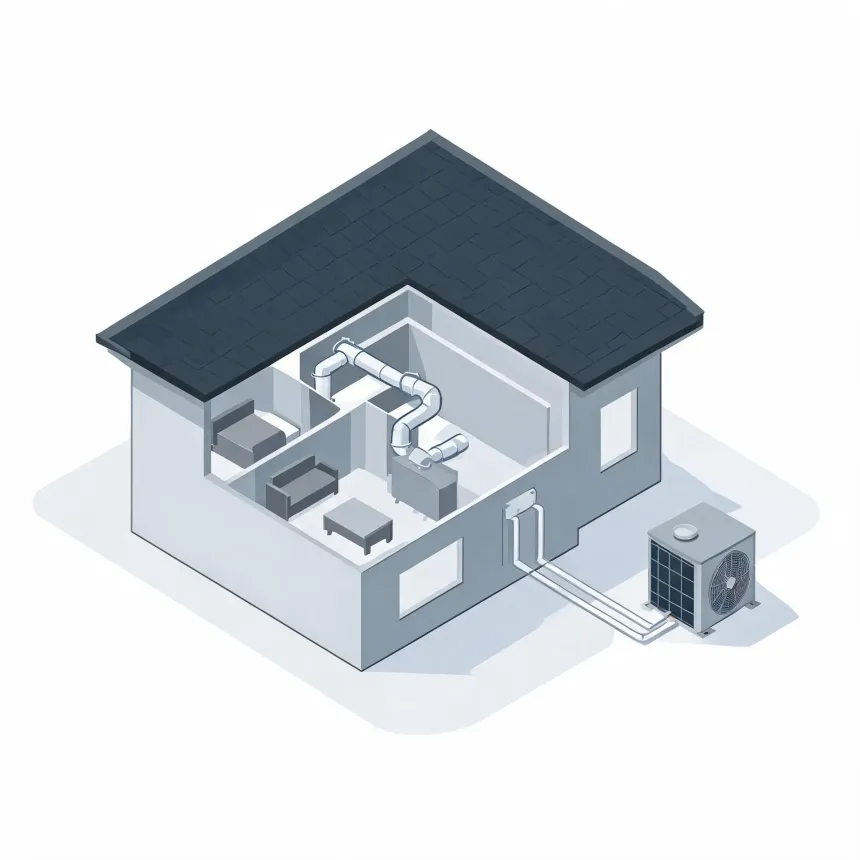
Isometric illustration of a cutaway single-story house showing interior ductwork, an indoor air handler and simple furniture, connected by lines to an outdoor condenser unit beside the building.
Your system heats October through May and cools June through August.

NOAA nClimDiv, 1991–2020 normals

Wayne County winters average 22°F overnight in December, January and February. That's cold, but a heat pump handles it fine.

The heat pump isn't fighting the weather in Wooster. So if it needs a repair call, it's usually just a worn part. Not a lost cause.

Older homes, some wind, a little hail, nothing this heat pump hasn't handled

Half the homes here were built by 1975
76 damaging wind events from 2015 to 2024
9 hail events from 2015 to 2024
A struggling heat pump costs money every month it runs that wayOhio electricity ran 15.99 cents per kilowatthour in 2024. A heat pump that's working harder than it should just means a bigger bill at that rate.

So when a contractor comes out for a repair, they're not hunting for damage from a system pushed too hard. They're looking for the one part that wore out on its own schedule. A contactor with pitted contacts. A capacitor that's been reading low for a season or two. A low-voltage wire chewed loose at a terminal. None of that comes from Wooster winters asking too much of the unit. It comes from age, same as it would anywhere else this machine runs mild winters. That's worth knowing before deciding whether to fix it or replace it. A heat pump that's been coasting through easy conditions for years usually has plenty of life left once the worn part gets swapped out.

A struggling heat pump keeps costing you until it's fixed

Electricity runs 15.99 cents per kilowatthour. A worn part makes the heat pump run longer and work harder to keep up. That shows up on every bill until the part gets replaced. Get it found and swapped out now, before it keeps running that way the rest of winter.

Find a contractor
A man in a cap, dark jacket and tan work pants walks up concrete steps toward a dark blue front door, carrying a canvas tool bag at his side.
A residential heat pump outdoor unit mounted on a concrete pad next to a house with gray vinyl siding.

Some parts wear out quietly, others take the compressor with them

A heat pump that's struggling doesn't fail faster just by running, but a few problems do compound the longer you let them go. Low refrigerant charge is the clearest case. Run it low and the compressor works harder to move the same amount of heat, pulling more current and running hotter than it's built for. Keep that up long enough and the compressor itself takes the wear, and that's the one part in the system not worth replacing on its own. A failing capacitor works the same way. It can limp along underpowering the motor for weeks, and that extra strain on the windings is what eventually takes the motor out too. Iced-over coils are the other one worth watching. Some frost during a defrost cycle is normal, but a coil that stays iced because of a stuck reversing valve or a failed defrost sensor blocks airflow, and the system keeps trying to push heat through it anyway. Not every delay turns into a bigger repair. A pitted contactor or a loose low-voltage wire will keep causing the same symptom, short cycling or no heat, without anything getting worse underneath. The difference is whether the failing part protects the compressor or just controls it.

Warm air that isn't warm enough

A heat pump in trouble rarely stops outright. More often the air coming out of the vents feels lukewarm instead of warm, and the thermostat sits a few degrees short of where it's set. That gap is usually the first thing a homeowner notices, well before the system trips off or quits running altogether.

What that first sign means for the call

Tell the contractor what got noticed and when it started. Lukewarm air that's been creeping for weeks points toward low refrigerant charge or a coil that's losing its ability to transfer heat. Air that went from warm to cool in a day points toward something electrical, a capacitor or contactor giving out. Either way, that detail narrows down the diagnosis before the contractor opens the cabinet.

Most heat pump failures trace back to the electrical side, the refrigerant side, or the defrost system. Capacitors and contactors are built to handle a set number of on-off cycles before they wear down, so a system that's been cycling for years will eventually lose one. Refrigerant fails differently, usually a slow leak at a fitting or coil joint that lets charge drop gradually rather than all at once, which is why the air gets a little less warm over weeks instead of stopping cold. The defrost system is the other common path. When the sensor or the reversing valve that controls it sticks, the outdoor coil ices over and stays that way instead of clearing itself every couple hours like it should. Motors wear out too, but usually because something else failed first, a dying capacitor or a bearing that had been loud for months before it finally quit. Which of these it is matters more to the contractor than to you. What matters to you is that it's rarely more than one at a time.

A diagnostic visit starts outside, at the outdoor unit, before anyone touches the thermostat. The contractor checks the readings that tell the real story, line pressures, temperature split between the air going in and the air coming out, amp draw on the compressor and the fan motor. Those numbers point at one system or another fast. Low pressure says refrigerant. High amp draw on a motor that should be drawing less says a capacitor giving out. Then it's the electrical panel inside the unit, checking the contactor for pitting and the capacitor against what it's rated to hold, because a reading a little low tells a different story than a reading nowhere close. Only after that does the conversation turn to what you noticed and when, because what you felt at the vents is what sent the contractor looking in the right place to begin with.