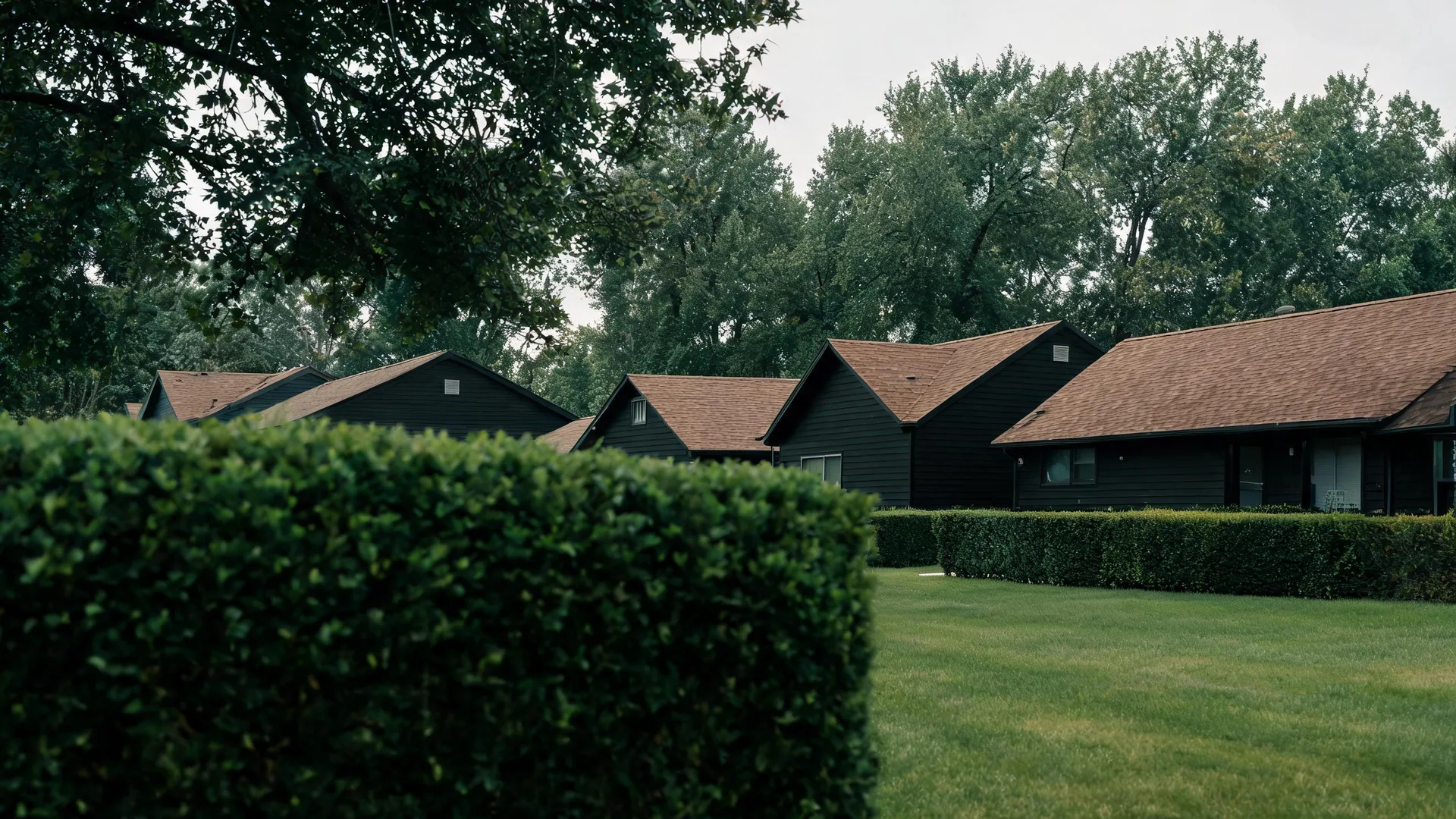
A row of dark-sided buildings with brown shingled gable roofs behind trimmed hedges, with a mown lawn in the foreground and leafy trees under an overcast sky.

Heat Pump Repair in Warren, OH

Tell us about the job

Takes about a minute. No obligation.

RepairHeat PumpTrumbull County, OH
Step 1 of 2

What ZIP code is the job in?

Trumbull County sees damaging wind and hail

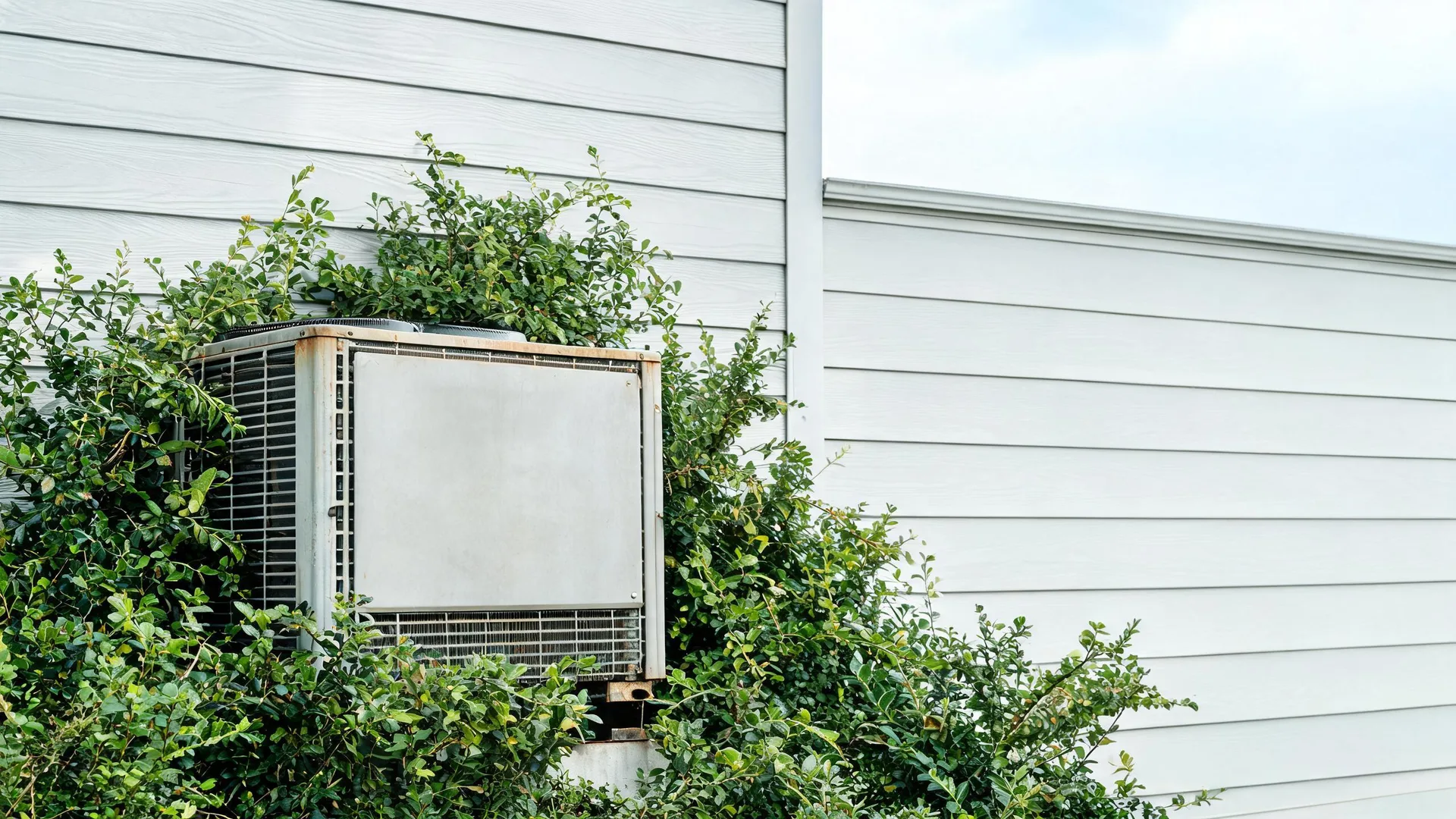
Damaging wind has hit this county 143 times between 2015 and 2024. Hail and tornadoes have touched down in that same stretch. The outdoor unit of a heat pump sits through all of it. Hail dents the fins. Wind-blown debris can bend the cabinet or jam up the fan.


A quiet unit is not the same as a sound one

A heat pump that took a hit from hail or debris can keep running for a while before it fails outright. If a storm has come through, get the coil and fan checked, even if the system is still blowing air fine.

8 months
October through May, your system heats
3 months
June through August, it cools
21°F
the average winter night it heats against
81°F
the average summer afternoon it cools against
Isometric cutaway illustration of a small house showing interior rooms with furniture, an indoor air handler with ductwork, and lines running to an outdoor condenser unit beside the building.
Your system heats October through May and cools June through August.

NOAA nClimDiv, 1991–2020 normals

Most heat pump problems start at the outdoor coil or the reversing valve. It's rarely the thermostat.

A dirty coil or a stuck reversing valve means weak heat, or a system stuck heating or cooling only. That's the first place to check.

A heat pump struggling in September is the one that fails in October

Cooling runs June through August
Heat runs October through May
143 damaging wind events from 2015 to 2024

Ohio homes paid 15.99 cents per kilowatthour in 2024. A heat pump that's struggling still has to make the same amount of heat. A dirty coil or a reversing valve stuck halfway means the compressor runs longer and pulls more power to get there. That extra power gets paid for whether or not the house ends up warm. Left to limp along, it costs more every month than the repair would have.

Your heat pump's biggest job here is heat, not cooling, so it's had an easier life than most

Winter is the long season here. A heat pump built for 21-degree overnight lows isn't straining against extreme heat most of the year. Cooling is what wears a compressor down fastest, and that's the smaller job in this county. So a unit acting up now is more likely dealing with age, a dirty coil, or storm damage, not a system run into the ground. That's usually worth fixing.

Find a contractor
A gray outdoor HVAC unit mounted on a concrete pad beside a house with gray lap siding and a stone foundation.

A good repair history is worth something

A heat pump that's run for years without trouble is usually worth repairing. The parts most likely to fail, the reversing valve, the defrost control board, a capacitor, can be swapped out on their own. The compressor doesn't have to be touched if it's still sound. The compressor is really what decides this, not how old the unit is. Once it starts going bad, usually making noise it didn't used to make, or tripping the safety controls, there's no fixing it. It has to be replaced. That's when a tech will look at the rest of the system and ask if it's old enough to make a new compressor a bad bet. Short of that problem, a heat pump with a clean history is worth fixing almost every time something else on it fails.

A compressor that's short on refrigerant still tries to hit the setpoint

Low refrigerant means less heat moved per cycle. So the compressor runs longer to make up for it. It ends up pulling back liquid refrigerant instead of the vapor it's built for, and that washes the oil off the parts that need it. A compressor can run like that for a while before it seizes up.

A reversing valve stuck halfway strains the compressor every time it fires

When the valve won't seat all the way, some refrigerant flows the wrong direction while the compressor tries to push it the right way. That fight happens every single cycle. Shutting the system down stops the fight. Leave it running and a valve replacement turns into a compressor replacement.

A heat pump usually gives warning before it quits for good. Weak air at the vents is the first sign. Air is running but not warm enough to keep up on a cold morning. Short cycling is another. The system kicks on, runs a few minutes, shuts off before the house catches up. Listen for anything new too. A hard clunk when it switches between heating and cooling. A hiss that wasn't there before. Grinding or rattling from the outdoor unit. Ice on the outdoor coil in weather that isn't especially cold is worth a call as well. That unit should defrost itself on a cycle, not stay frozen over. None of this means the system is done for. It means one specific part is failing, and that's easier to fix before it takes other parts down with it.

A diagnostic visit starts outside, at the unit itself. The tech checks the refrigerant charge first, since low refrigerant causes a lot of weak heat complaints and it won't show up just by looking at the coil. Next comes the reversing valve, tested in both directions to see if it's switching clean or hanging up partway. The compressor gets checked while it's running, not just sitting at rest, because some faults only show up under load. Electrical connections and the capacitor get checked too. A weak capacitor can make a compressor strain to start even when everything else is fine. By the end, there's no guessing. The tech knows which part is failing and what it takes to fix it.