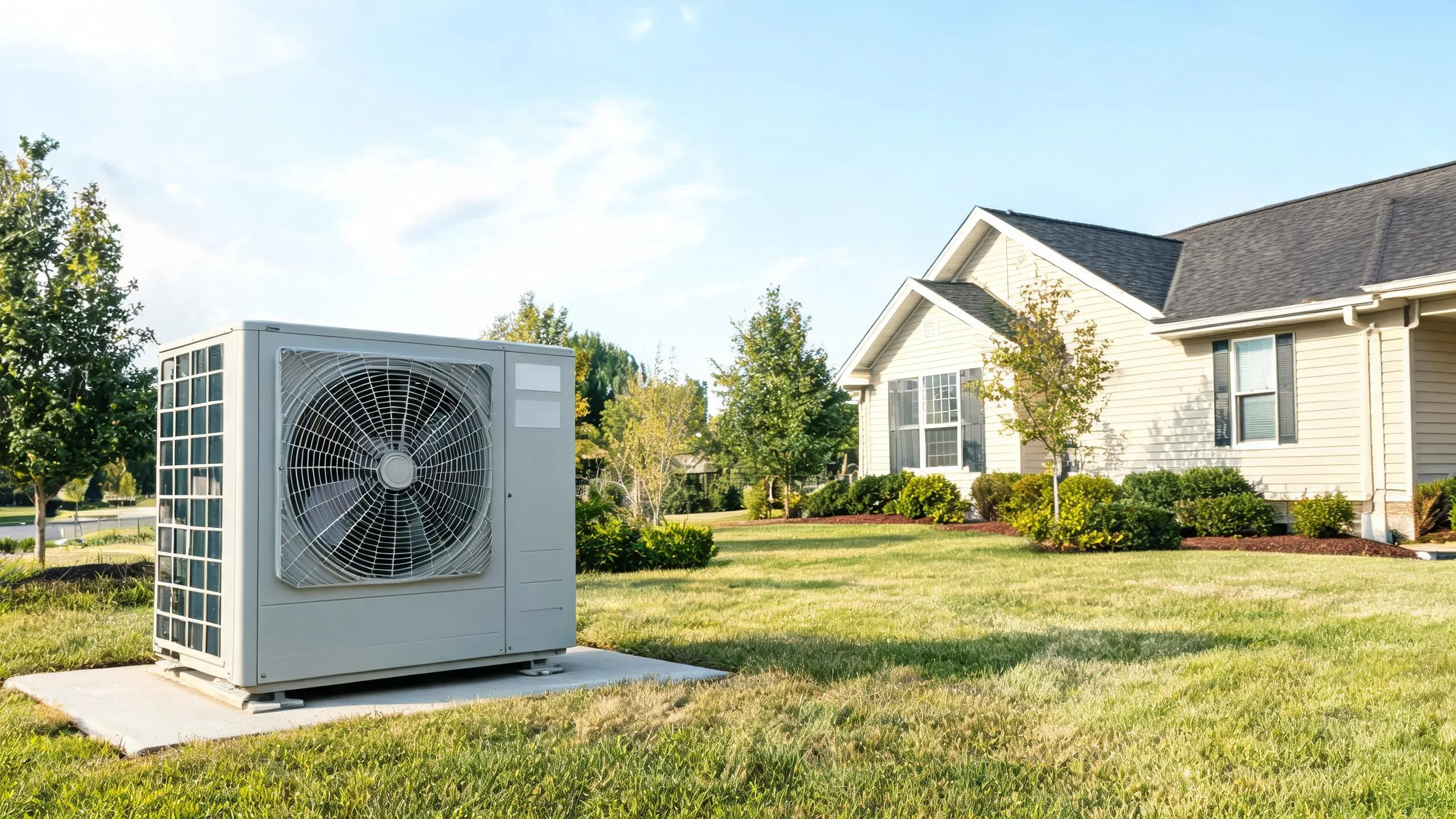




A grey heat pump outdoor unit mounted on a concrete pad in a suburban backyard, with a single-storey house visible behind it.

Heat Pump Repair in Steubenville, OH

Tell us about the job

Takes about a minute. No obligation.

RepairHeat PumpJefferson County, OH
Step 1 of 2

What ZIP code is the job in?

Your heat pump runs about eight months a year for heat, October through May, then three more for cooling in June through August. That long a run time means a weak part usually waits for a hard push before it gives out. September is one month to watch, since the system has to switch over and start pulling heat from outside air it hasn't touched since spring. May works the same way in reverse, right before cooling starts up. If your heat pump is acting up now, it's worth having someone look at it before the next changeover asks more of it.

8 months
October through May, your system heats
3 months
June through August, it cools
23°F
the average winter night it heats against
82°F
the average summer afternoon it cools against
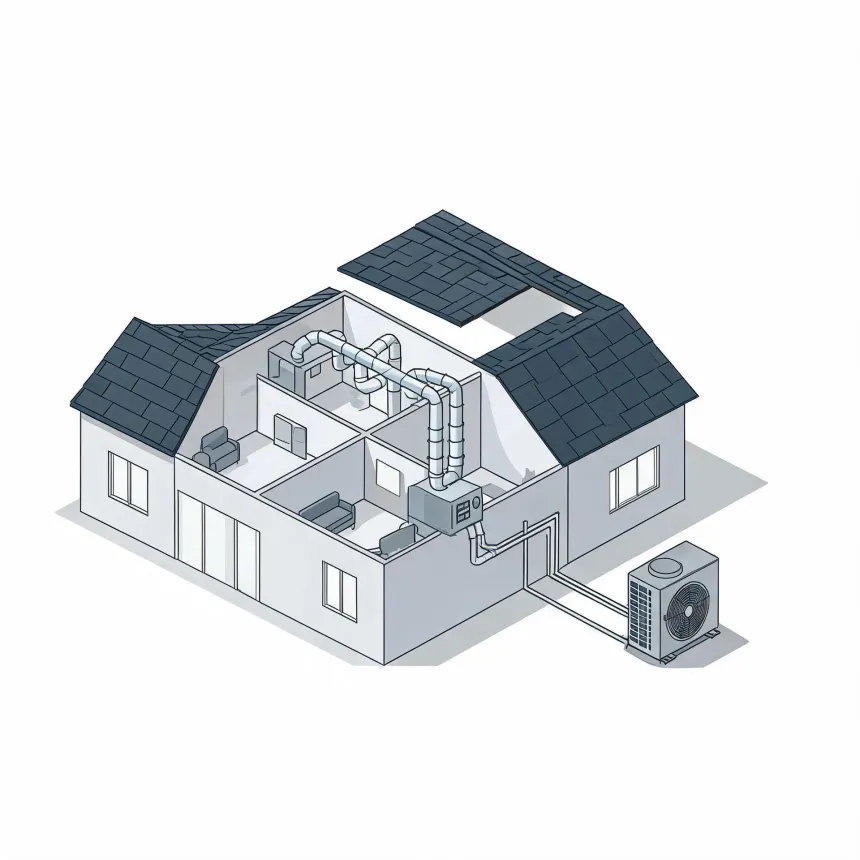
Isometric line illustration of a cutaway single-story house showing interior rooms, ceiling ductwork connected to an indoor air handler, and refrigerant lines running to an outdoor condenser unit on a pad.
Your system heats October through May and cools June through August.

NOAA nClimDiv, 1991–2020 normals

Steubenville winters sit around 23°F at night. That's not far below freezing, so your heat pump isn't fighting extreme cold to pull heat from the outside air.

A compressor that hasn't been worked hard for years is usually still sound underneath. A repair now is likely to hold.

Power here runs 15.99 cents a kilowatt-hour. A heat pump that's struggling costs more every month it keeps running that way.

Power costs 15.99 cents a kWh statewide
73 damaging wind events from 2015 to 2024
16 hail events from 2015 to 2024

Most heat pump failures start with the reversing valve or the defrost control, since those are the parts working hardest switching the system between heating and cooling. A reversing valve that's stuck will leave you with heat when you want cooling or the other way around. The defrost board tells the outdoor unit when to melt off frost that builds up on the coil, and if that sensor or board fails, ice keeps building until the unit can't pull heat from the air at all. Capacitors wear out too, usually the one that starts the compressor or the one that keeps the fan motor running steady. A low refrigerant charge from a slow leak shows up as weak heat and ice on the outdoor coil even when the compressor sounds fine. Any of these can look like the whole unit is dying when it's really one part asking to be replaced.

Your heat pump's trouble is most likely one part, not the whole system

Jefferson County gets wind and the occasional winter storm, same as most of Ohio. Nothing here runs a heat pump harder than normal. So when one starts acting up, the cause is almost always one part. A reversing valve, a defrost control, a worn capacitor, a slow refrigerant leak. Worth finding out which one now, before the next seasonal changeover pushes the system hard again.

Find a contractor
A gray heat pump outdoor unit mounted on a concrete pad next to a residential house with lap siding and stone accents.

An easier life, year after year

That 23°F average holds for the whole winter, not just the coldest nights, so the compressor has been living an easier life for as long as this system has been in the ground. A repair on a unit with that kind of history is a good bet. The parts most likely at fault, the reversing valve, the defrost control, a capacitor, wear out from age and cycling, not from being pushed past what they were built for. Fixing one of those on a compressor that's had an easy run is usually money well spent.

Warm air that isn't warm enough

A heat pump in heating mode should put out air that feels warm at the vent, not just lukewarm. If the air moving feels barely above room temperature, the system may be stuck in a low-output mode or losing refrigerant. Don't wait for the house to feel cold before calling, since a weak system can still limp along for weeks while costing more to run.
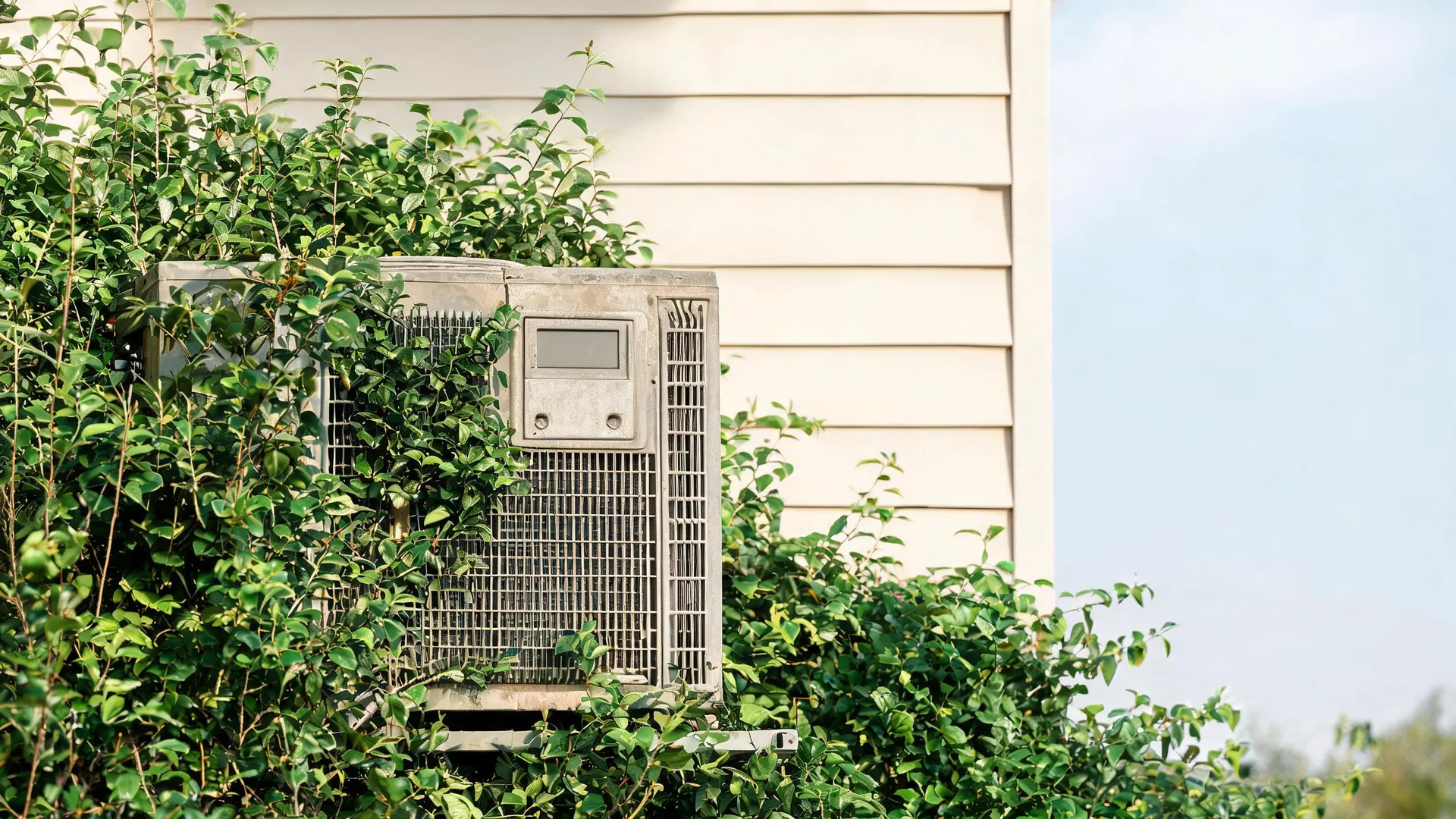
Ice on the outdoor unit that won't clear

Some frost on the outdoor coil during a defrost cycle is normal. Ice that stays on the coil for hours, or builds up on the lines and cabinet, means the defrost cycle isn't kicking in when it should. Left alone, that ice blocks airflow across the coil entirely, and the unit stops pulling heat no matter how hard the compressor works.

A low refrigerant charge is a good example of how this works. The charge drops, but the compressor keeps running. It's just pumping less refrigerant through the same cycle, so it works harder to move the same heat. That extra work turns into heat, and the oil that lubricates the compressor stops circulating the way it should. Run it like that for a few more weeks, and it's not a leak repair anymore. It's a new compressor. A failing capacitor causes the same kind of trouble. A weak capacitor makes the compressor or fan motor pull more current just to start up, and that extra draw is what burns out the motor windings. The part that was struggling in the first place usually isn't the part that ends up failing.

A diagnostic visit starts outside, at the unit itself. Suction and discharge pressures get checked with gauges first, since that shows whether the charge is right before anything else gets ruled out. Capacitors get checked with a meter, not guessed at from how the unit sounds, because a capacitor can go weak well before it fails outright. The reversing valve gets tested by feel, tracking which lines are hot and which are cold, to see if it's actually switching when it's told to. If the outdoor coil has ice on it, a defrost cycle needs to be watched happening, not just the ice looked at, since that's the only way to tell if the board is calling for defrost at the right time. Most of this gets answered in one visit, and it usually points to a single part instead of a guess at several.