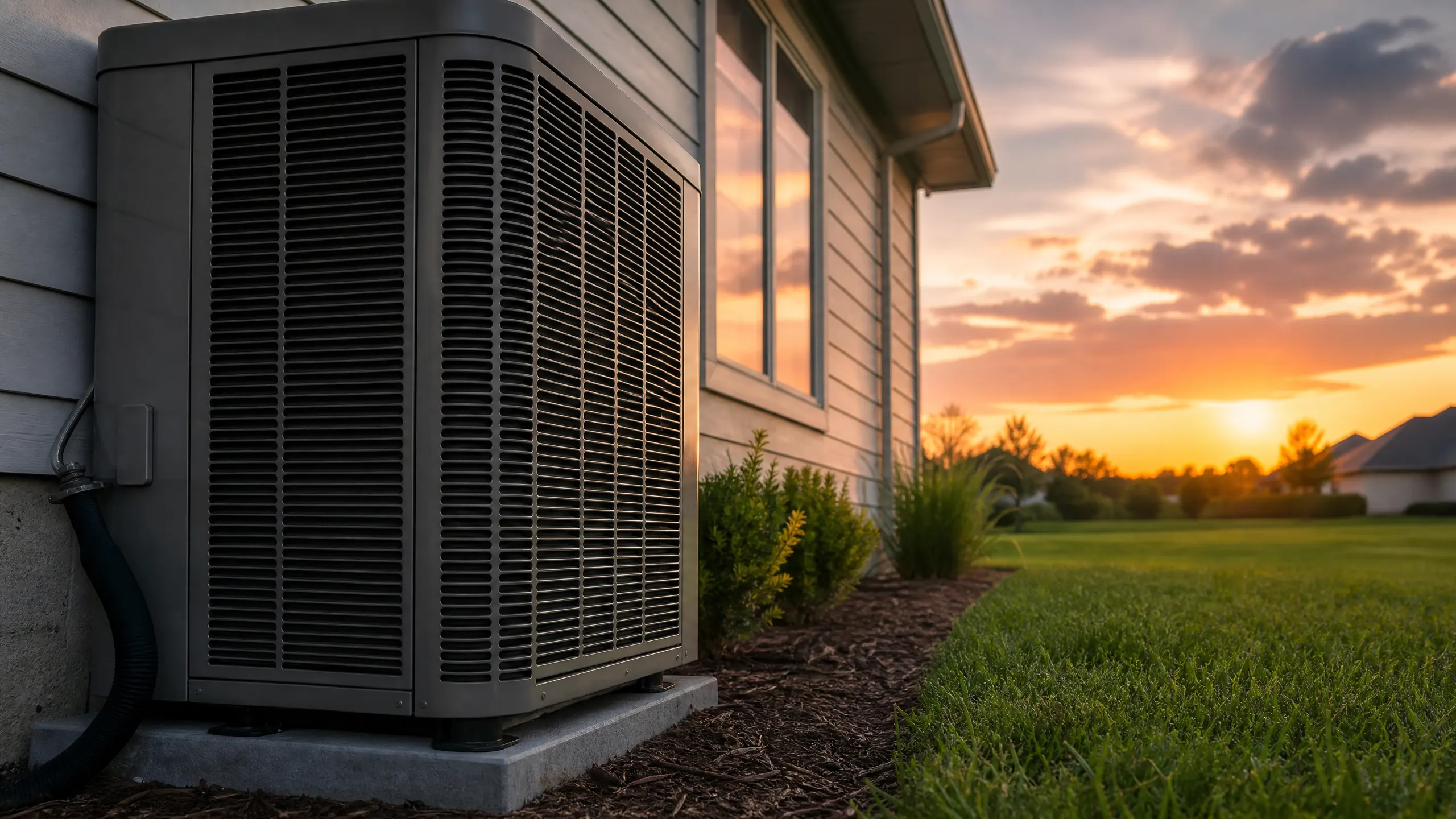



An outdoor air conditioning condenser unit mounted on a concrete pad beside a house at sunset.

Heat Pump Repair in Milford, OH

Tell us about the job

Takes about a minute. No obligation.

RepairHeat PumpClermont County, OH
Step 1 of 2

What ZIP code is the job in?

Clermont County sees real weather. Between 2015 and 2024, the county logged 143 damaging wind events, 29 hail events, and 8 tornadoes. Thirteen more rounds of winter storms brought heavy snow and ice in that same stretch. Your heat pump's outdoor unit sits outside through all of it, exposed to whatever hail or flying debris comes with a storm. A unit can take a hit and keep running for a while before the damage shows up as a real problem. If a storm has come through and rattled or pelted that outdoor unit, it's worth having someone look it over even if it still seems to be working fine.

7 months
October through April, your system heats
4 months
June through September, it cools
25°F
the average winter night it heats against
85°F
the average summer afternoon it cools against
Isometric cutaway illustration of a small house showing interior ductwork and an air handler connected by lines to an outdoor condenser unit on a pad beside the building.
Your system heats October through April and cools June through September.

NOAA nClimDiv, 1991–2020 normals

Electricity in Clermont County runs 16.64 cents per kilowatt-hour, more than most US counties pay.

A heat pump that's struggling pulls more power to do the same job, and that shows up on every bill until it's fixed.

Your Heat Pump Just Started Its Heating RunHeat starts in October here, and a weak unit usually shows it in the first cold snap.

A heat pump that's icing up, short cycling, or running nonstop to hit the thermostat setting is pulling more power the whole time it does it. That difference doesn't wait for a convenient time to show up. It's on the next bill, and the one after that if nothing changes. Waiting a few weeks to get it looked at usually just means a few weeks of paying more for less heat or less cooling. If the unit's running rough, get a technician out before it fails outright or quietly costs you another month.

Had the Outdoor Unit Looked At Since the Last Storm

If the outdoor unit took a hit from the last storm, get it checked before it's the reason your heat quits on a cold night. A technician can tell you whether it's fine or whether something's bent, cracked, or working loose.

Find a contractor
A gray heat pump outdoor unit mounted on a concrete pad next to a residential house with lap siding and stone accents.

A Newer Home Usually Means a Younger System

Half the homes in Clermont County were built in 1987 or later. If yours is one of them, the heat pump itself may still be fairly young even if nobody's swapped it out, especially if it came with the house. A repair is usually worth making on a unit that's got years left in it, and that's the more common case here than in older counties nearby. A technician can tell you fast whether what's wrong is a minor fix or a sign the unit's actually at the end of its life.

Running Rough Doesn't Mean Running Safe

A heat pump that's iced up or straining to hit the set temperature isn't just working harder. The compressor is the heart of the system, and it's built to move refrigerant under a specific pressure range. Ice on the coil, a dirty filter, or low refrigerant all push that pressure out of range, and the compressor has to force its way through it. Keep that up long enough and the compressor itself can fail, which turns a repair into a full replacement.
Small Noises Are Early Warnings

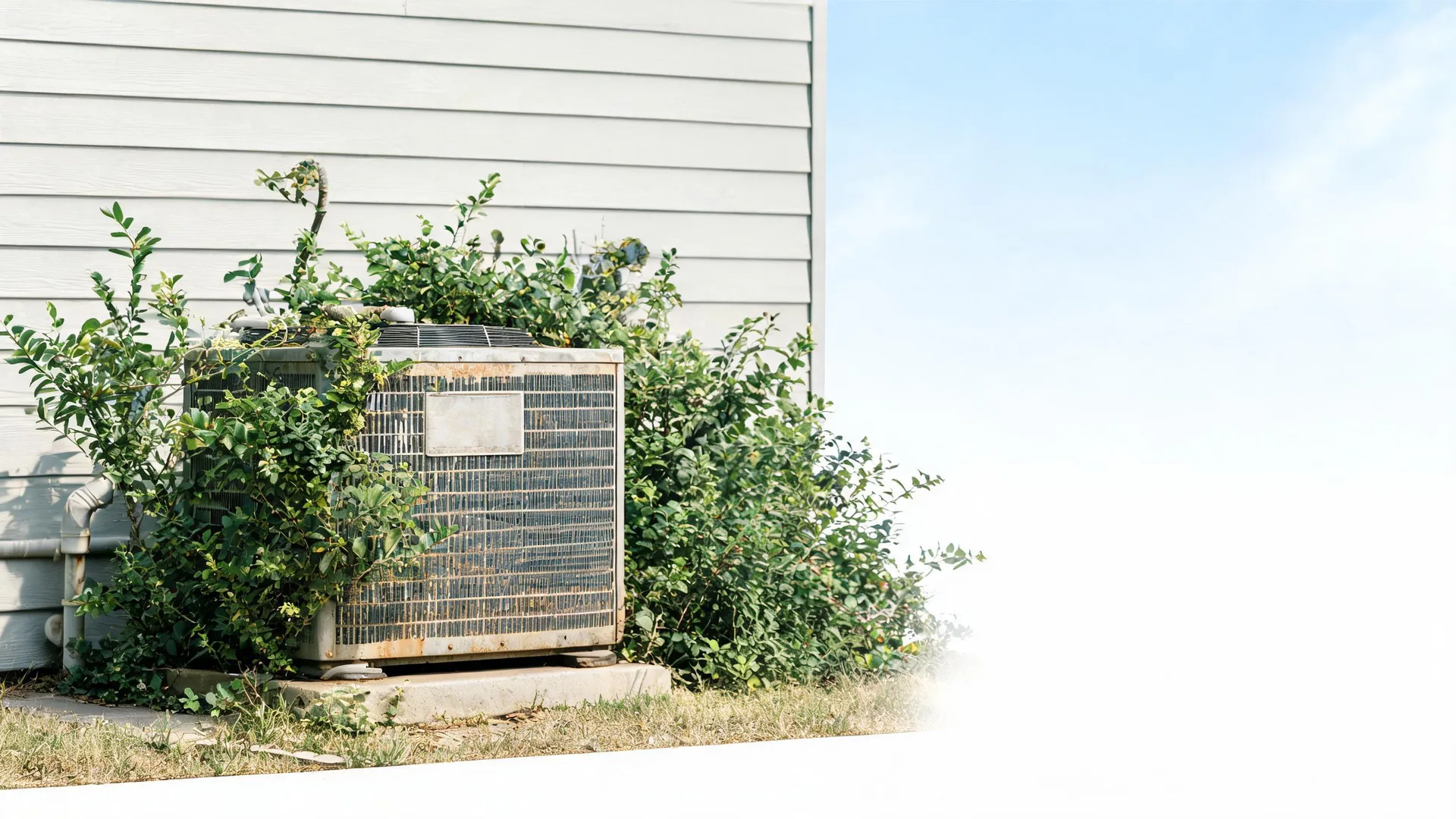
A rattle, a hum that wasn't there before, or a click that repeats are the machine telling you a part is loose, worn, or about to let go. None of those get quieter on their own. A loose fan blade can eventually hit the housing. A failing contactor can weld itself shut. Shutting the system off and calling for a look costs you less than running it until the part fails outright.

Before calling anyone, a few things are worth checking yourself. Go to the thermostat first and make sure it's set to heat and the set point is actually above room temperature, since a setting bumped by accident looks exactly like a dead system. Check your breaker panel for a tripped breaker on the heat pump circuit. Look at the air filter, because one that's clogged with dust chokes off airflow and can make the whole system struggle or ice up. Walk outside and look at the outdoor unit for ice coating the coil or debris, leaves, anything packed against it blocking airflow. If the indoor vents are blowing air that feels cold when the system should be heating, that's worth noting too, since it points to something specific going on with the cycle. None of this tells you what's actually broken, but it rules out the simple stuff before someone drives out to look at it.

A diagnostic visit starts with the thermostat and the电 panel, same as the checks you'd do yourself, then moves to actually running the system. A technician will usually set it to call for heat and watch what happens at the outdoor unit and the air handler, since a lot of problems only show up once the system's cycling. They'll check refrigerant pressure with gauges, because that number tells them whether the charge is right, whether the compressor is working the way it should, and whether the reversing valve is switching properly. They'll pull the cover off the air handler and look at the coil, the blower wheel, and the wiring for anything scorched, loose, or corroded. Outside, they'll check the compressor, the fan motor, and the defrost control board, since a heat pump that won't defrost properly will ice up again no matter what else gets fixed. By the end of it you should have a straight answer on what's actually wrong and what it'll take to fix it, not just a guess.