A row of dark-sided single-story houses with gabled shingle roofs behind a long trimmed hedge, with mown lawn in the foreground and large leafy trees overhead under an overcast sky.

Heat Pump Repair in Martins Ferry, OH

Tell us about the job

Takes about a minute. No obligation.

RepairHeat PumpBelmont County, OH
Step 1 of 2

What ZIP code is the job in?

September is when a weak heat pump shows itself

Heat pumps in Martins Ferry switch over to heat in October, so September is the month before that demand hits. A contactor, a capacitor, or a low charge that was already marginal tends to fail once the system starts working harder, not before.

The same goes for June

Cooling starts in June here and runs through August, just three months a year. A heat pump that sat idle since spring can reveal a weak part the first hot week it runs, so trouble right at the start of either season usually means something needed attention already.

8 months
October through May, your system heats
3 months
June through August, it cools
23°F
the average winter night it heats against
82°F
the average summer afternoon it cools against
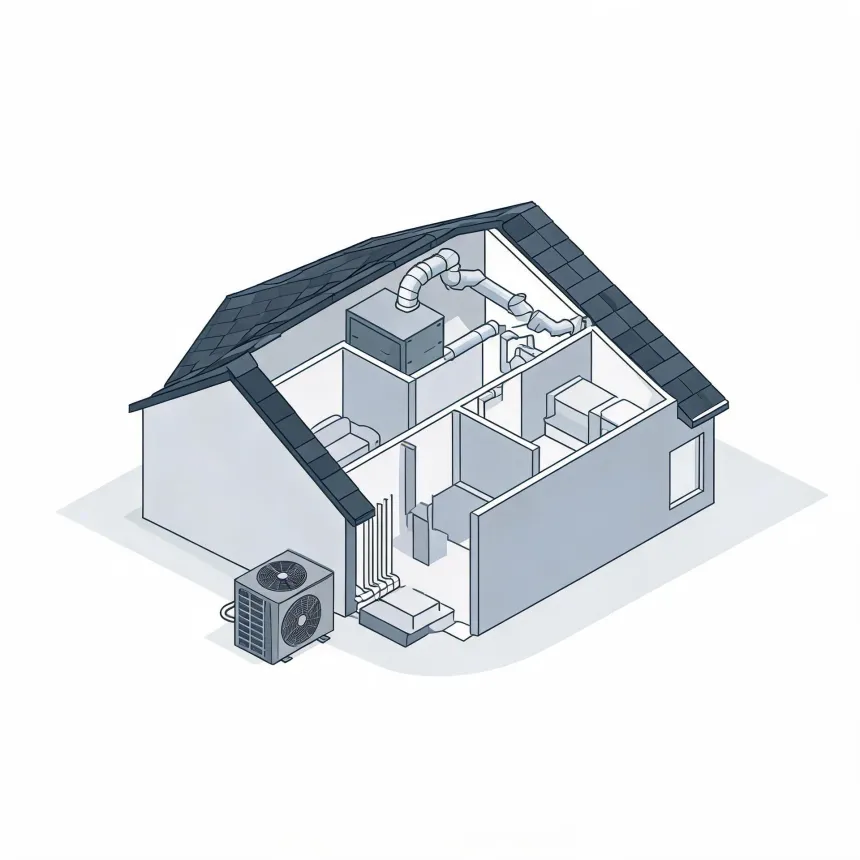
Isometric line illustration of a cutaway house showing interior rooms, an air handler with ductwork in the attic space, and an outdoor condenser unit beside the exterior wall.
Your system heats October through May and cools June through August.

NOAA nClimDiv, 1991–2020 normals

Belmont County winters average 23°F overnight, not far below freezing, and summers here are short.

A heat pump in Martins Ferry isn't fighting extreme heat or deep cold most of the year, so a repair is usually worth making rather than a sign the unit is done.

Belmont County sees its share of weather, but none of it is aimed at the heat pump

100 severe weather events from 2015 to 2024
18% of homes statewide lost power a day or more in 2024
70 damaging wind events from 2015 to 2024

A struggling heat pump doesn't idle quietly while you wait to schedule a repair. It runs longer to hit the same temperature, cycling more to make up the difference. Ohio electricity ran 15.99 cents per kilowatt-hour in 2024. A system working harder than it should pulls more of that every day. A bad capacitor or a low charge doesn't fix itself, and it doesn't use less power while it waits. The longer that problem sits, the more it costs to run the unit.

Get it looked at early

Problems tend to show up in the first weeks of the season, when the load hits a part that was already weak.

Find a contractor
A man in a dark T-shirt, brown work pants, boots and a cap, seen from behind, climbs concrete steps toward a dark blue front door while carrying a worn canvas tool bag, with a potted shrub beside the entry.
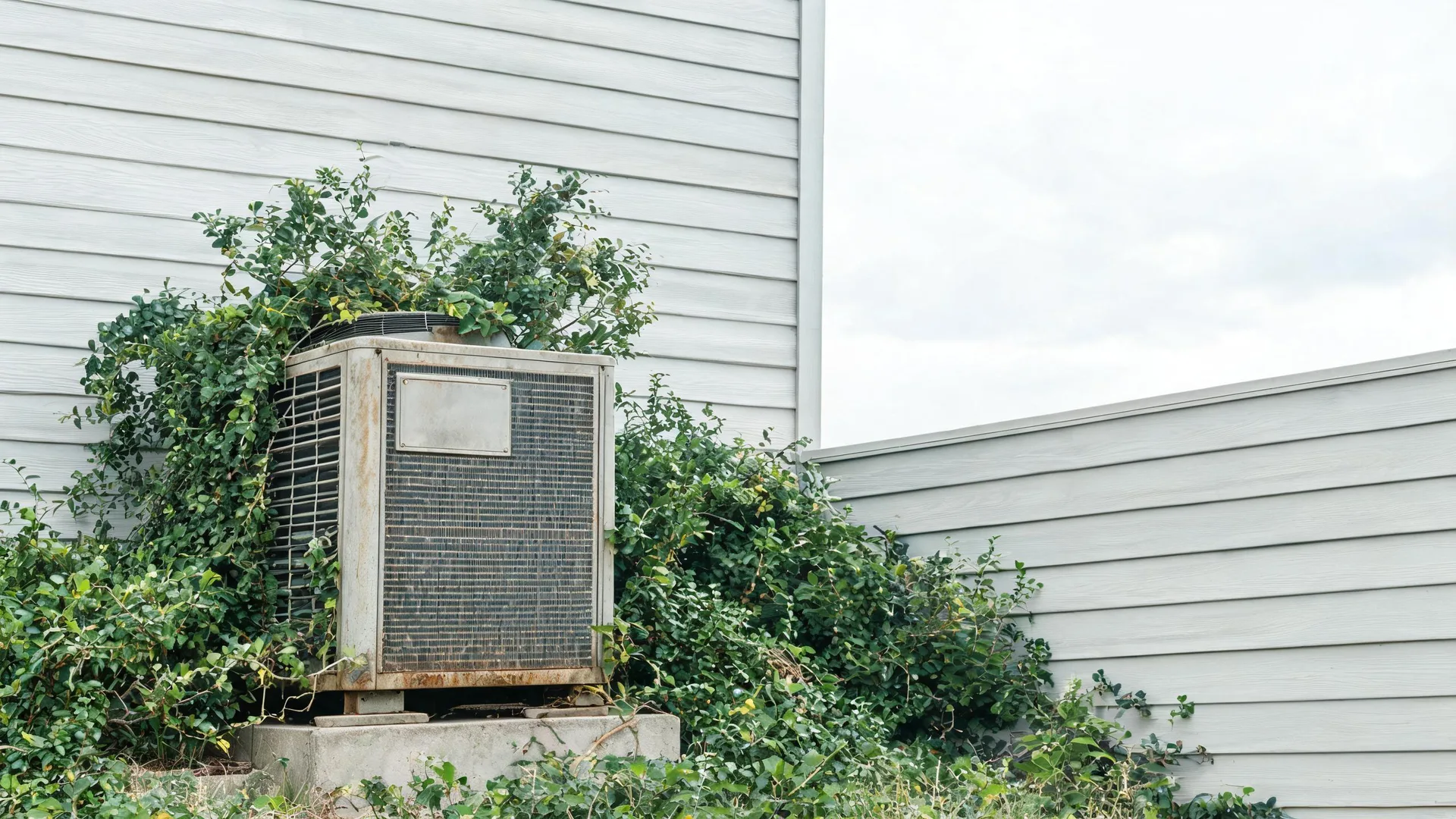
A gray heat pump outdoor unit mounted on a concrete pad next to a residential house with lap siding and stone accents.

One bad part doesn't mean a bad system

Fixing it usually beats replacing it. If the diagnosis turns up one failed part, a contactor, a capacitor, a reversing valve, that part gets replaced. The system doesn't. A heat pump working this kind of duty here doesn't wear out a compressor the way it does in harsher climates. So a repair on an otherwise sound unit holds up over time. Ask the contractor what failed and whether anything else is showing age before deciding the whole unit needs to go.

Most failures are electrical, not refrigerant

A contactor pits and sticks from the arcing that happens every time it opens and closes. A capacitor weakens the same way a battery does. It holds less charge each season until the compressor or fan motor can't start on it. Both are common points of failure. Neither one means the compressor itself is bad.

A reversing valve stuck in one position explains a lot

When a heat pump blows cold air in heating mode, or won't switch over at all, the reversing valve is often the cause. It can stick from a weak solenoid or from debris that keeps it from sliding fully one way or the other. That's a valve replacement. It's not a sign the whole system is failing.

A weak contactor or a failing capacitor won't take the system down right away. That's the problem. The compressor keeps starting on a capacitor that's losing its charge, pulling harder each time, until the start winding takes the damage instead. A contactor left to arc and pit can stick closed, and now the outdoor unit won't shut off when it's supposed to. A reversing valve that's sticking will keep sticking, and every cycle it fails to complete adds wear to the same spot. Waiting doesn't make these parts fail less. It just means they fail worse, and sometimes they take another part down with them.

A diagnostic visit starts with the thermostat and the readings at the unit, not with guessing. The contractor checks what the system is actually doing, whether the compressor is running, whether the reversing valve is switching when it should, what the refrigerant pressures look like against what that unit should hold. Electrical parts get tested directly. A capacitor gets checked against its rated capacitance, not just glanced at, since a weak one can still let the compressor limp along for a while. A contactor gets pulled and looked at for pitting on the contacts. That testing is what tells the difference between a part that's failing and one that's already failed, and it's why the visit ends with a specific part named rather than a guess.