A tall trimmed hedge runs along a mown lawn in front of a row of dark-sided townhouses with brown shingled roofs, framed by leafy tree branches under an overcast sky.

Heat Pump Repair in Lima, OH

Tell us about the job

Takes about a minute. No obligation.

RepairHeat PumpAllen County, OH
Step 1 of 2

What ZIP code is the job in?

Lima winters don't push a heat pump hard

Allen County is in zone 5A, so heating does most of the work here. Overnight averages through December, January and February only drop to 22°F. That's cold enough for a heat pump to call on backup heat some nights. But it's not the kind of deep, sustained freeze that wears a system down early.


So a repair is usually the right call

A heat pump that's had a decent run here is more likely dealing with a worn part or a missed service than real damage from years of hard running. So most of the time a repair is worth doing. It's not a sign the whole system is done.

8 months
October through May, your system heats
3 months
June through August, it cools
22°F
the average winter night it heats against
82°F
the average summer afternoon it cools against
Isometric cutaway illustration of a house showing interior ductwork, an indoor air handler, and beds, with an outdoor condenser unit connected by lines outside the wall.
Your system heats October through May and cools June through August.

NOAA nClimDiv, 1991–2020 normals

Lima heat pumps sit idle from May to October. Come October, they start back up.

A weak capacitor or low refrigerant can coast through summer without trouble. First cold morning, it won't.

At 15.99 cents a kWh, a heat pump that's running wrong shows up on every bill until it's fixed

Power costs 15.99 cents a kWh statewide
39 damaging wind events from 2015 to 2024
15 hail events from 2015 to 2024
Don't let it run wrong through winterA heat pump that's short-cycling or icing up still pulls power every hour it's on.

If a repair tech says a heat pump here is worth fixing, that's usually true, not a sales pitch. Get the outdoor unit checked before writing it off, especially if it's still running but not keeping up. Allen County's weather doesn't put the kind of strain on a heat pump that cracks a compressor or burns out a motor years early. So when something fails, it's usually one part. A capacitor, a contactor, a low refrigerant charge. Not the whole system at once. Allen County has also seen plenty of wind and hail over the past decade, and a unit sitting outside can take a hit from debris or a branch without the rest of the system being touched. A tech can tell quickly whether it's one bad part or something bigger.

It's usually worth repairing

It has an easier job here than in most places, so your heat pump is often in decent shape. Repair is usually worth it.

Find a contractor
A man in a cap, dark T-shirt and brown work pants walks up porch steps toward a navy front door, carrying a canvas tool bag.
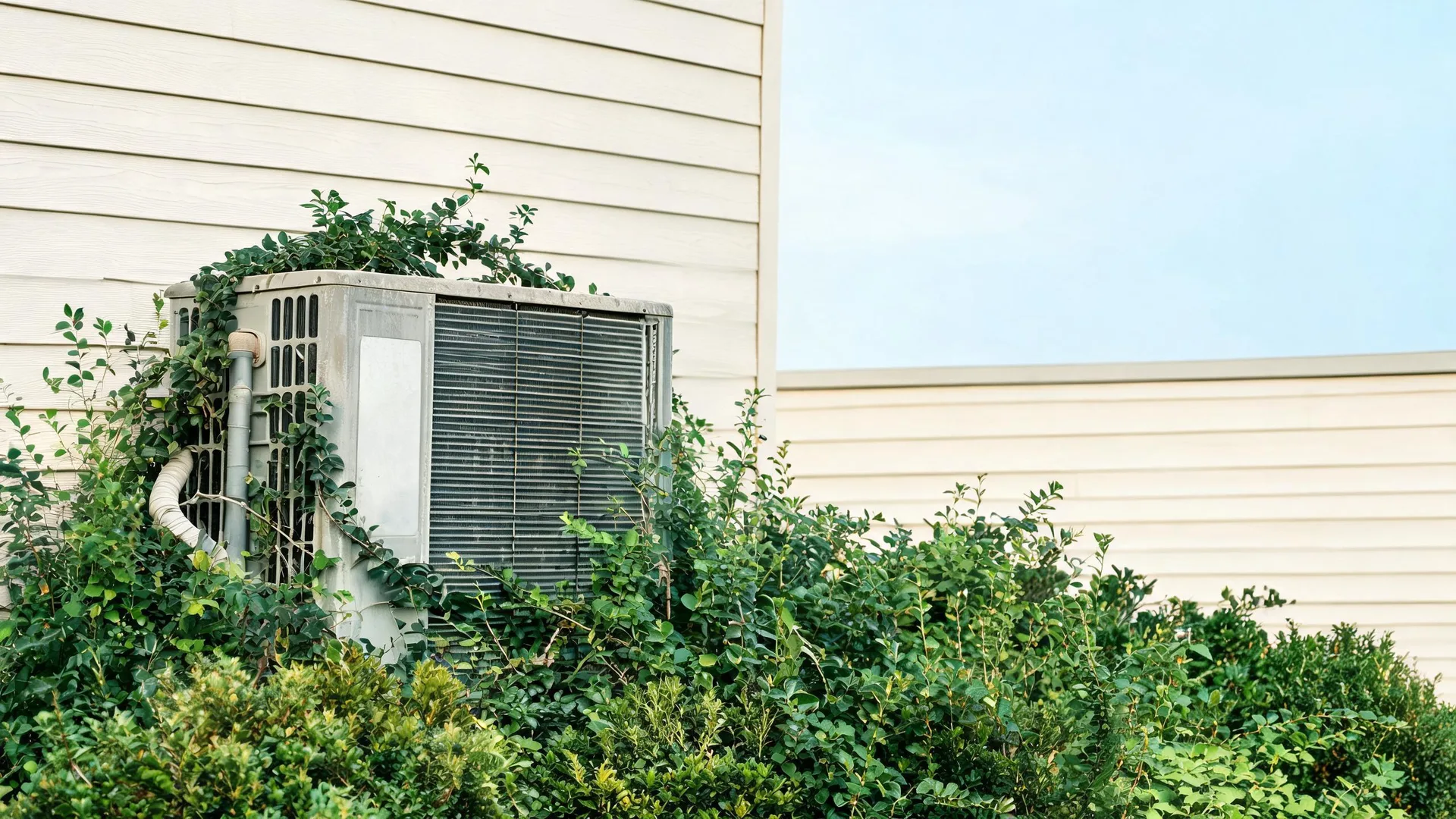
A residential heat pump outdoor unit mounted on a concrete pad next to a house with gray vinyl siding.

Running it through the problem doesn't fix it

A heat pump that's icing up or can't hit temperature isn't resting between cycles. It's running longer to make up the difference. That extra runtime puts more hours on the compressor and fan motor than the job should take. It also pushes more refrigerant through a system that may already be low or losing pressure. Ice on the outdoor coil blocks airflow, so the unit works harder and still falls short. That's what leads to a frozen coil, or a compressor pushing against more pressure than it was built for. A part that would've been a simple swap gets a few more weeks of strain on it instead. Most of the wear that ends a compressor's life happens during that stretch of running wrong, not all at once.

The reversing valve is a common point of failure

A heat pump switches between heating and cooling by reversing the flow of refrigerant, and a solenoid coil on the valve controls that switch. When the coil weakens or the valve sticks, the system can get stuck blowing cold air when it should be warm, or stop responding to the thermostat's calls to switch modes at all.

A failed defrost control leaves ice to build on its own

Outdoor coils pick up frost in cold weather, and a sensor and timer are supposed to catch that and briefly reverse the cycle to melt it off. When the sensor misreads the coil or the board that times the cycle fails, the ice keeps building instead of clearing, and it blocks enough airflow that the unit can't pull in the heat it needs.

A few things are worth checking before calling anyone out. Look at the outdoor unit. Clear away any ice, snow, or leaves built up against the coil. Blocked airflow there is enough to stop the system from heating right. Check the thermostat batteries, and make sure it's set to heat, not auto. A dead display won't call for heat at all. Walk through the house and check that supply vents aren't blocked by furniture or closed all the way. A heat pump already works harder than a furnace to raise the temperature, and restricted airflow makes that worse. Check the breaker panel too. Sometimes a heat pump that won't start just needs a tripped breaker reset. If it trips again right after, mention that to the tech before they even arrive.

A check starts outside, at the unit itself, before anyone touches the thermostat. Gauges go on to check the refrigerant charge. The reversing valve and defrost board get a look. The compressor and fan motor run to see if either is drawing more current than it should. Inside, the air handler gets checked too, for a dirty coil or a blower that's not moving enough air. That alone can look like a refrigerant problem when it isn't. Most of this takes less than an hour. By the end, it's clear which part failed, and whether it's a quick swap or a sign of something bigger. Gauges on the unit tell that story a lot better than a guess from the thermostat inside.