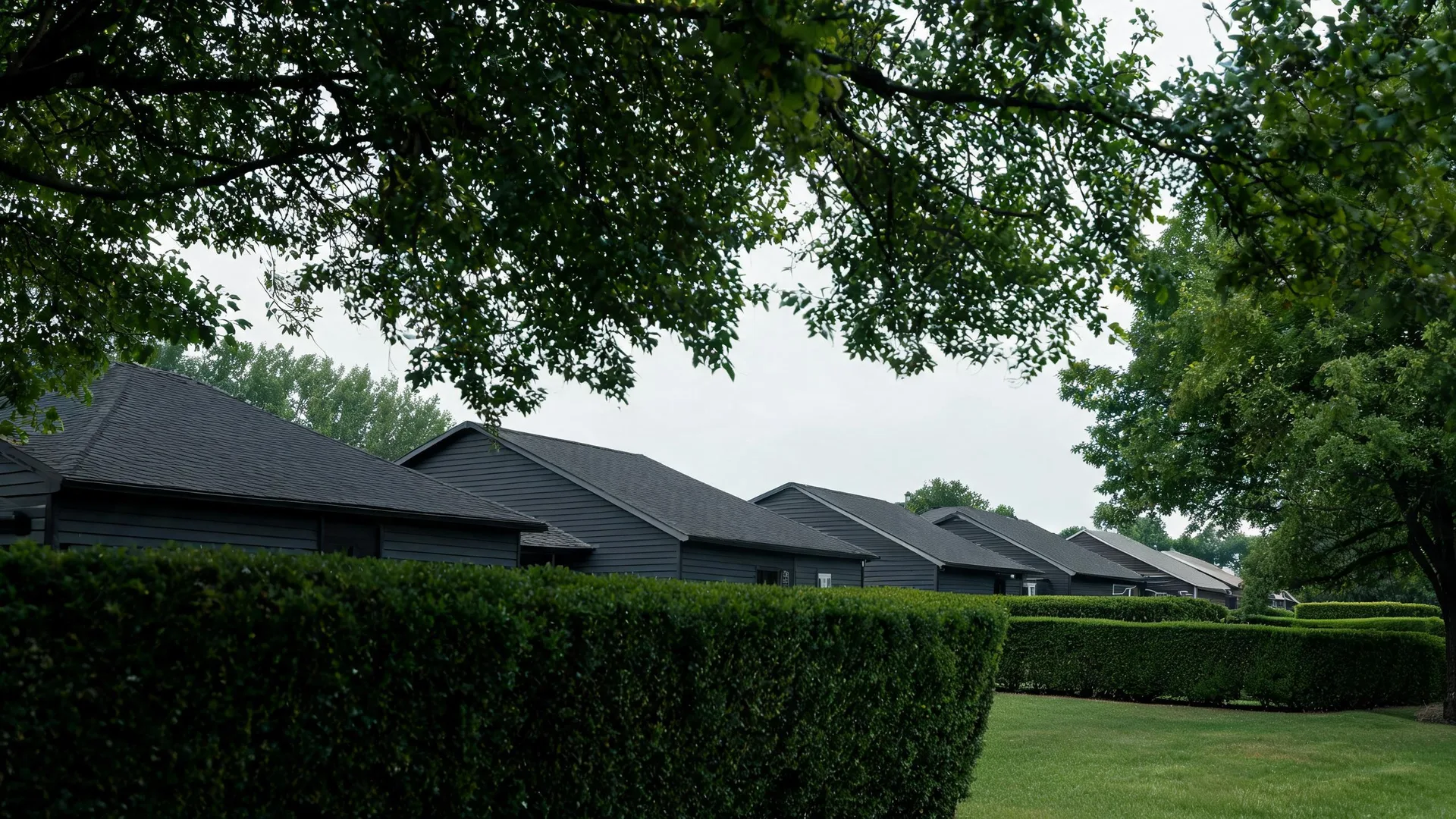





A row of dark-sided single-story buildings with gabled shingle roofs behind a tall trimmed hedge, with lawn, leafy trees and an overcast sky.

Heat Pump Repair in Lancaster, OH

Tell us about the job

Takes about a minute. No obligation.

RepairHeat PumpFairfield County, OH
Step 1 of 2

What ZIP code is the job in?

A heat pump here isn't working against much. Fairfield County sits in zone 5A, where heating is the bigger job and summers are the milder half of the year's work. The air feels heavy in summer, with dew points averaging 62°F in June, July and August, but that's not the same as sustained extreme heat hammering a compressor for months. So when a heat pump breaks down here, it's rarely because the machine has been run into the ground. More often one part has worn out or failed on its own, and that's usually worth fixing rather than replacing.

8 months
October through May, your system heats
3 months
June through August, it cools
24°F
the average winter night it heats against
83°F
the average summer afternoon it cools against
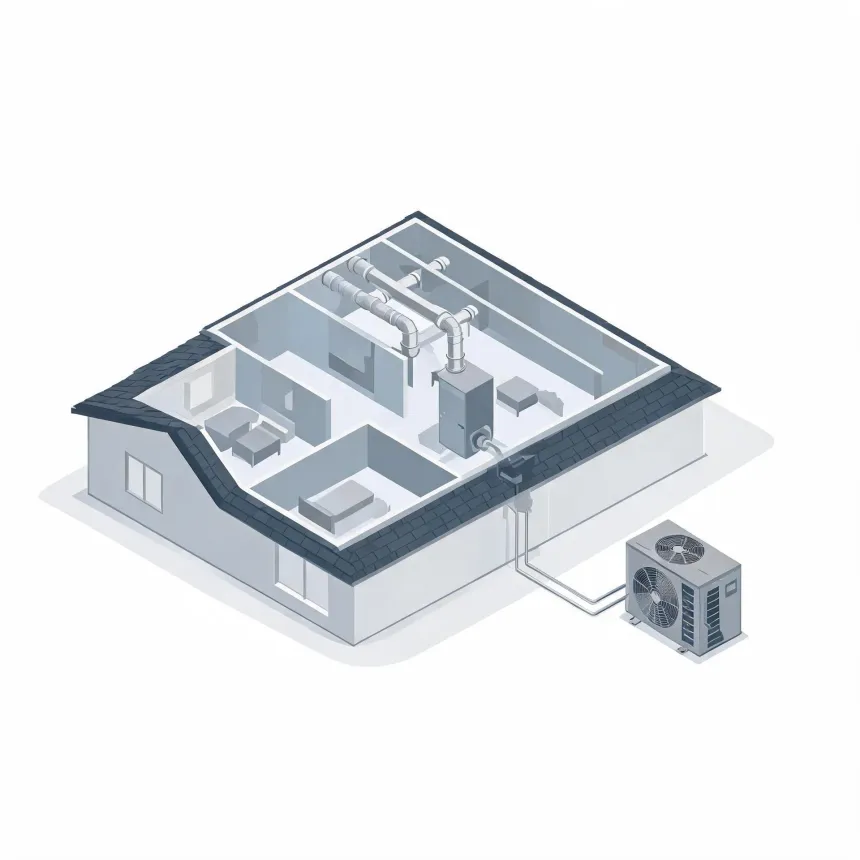
Isometric cutaway illustration of a single-story house showing interior rooms with ductwork, a furnace or air handler, and refrigerant lines running outside to a condenser unit on a pad.
Your system heats October through May and cools June through August.

NOAA nClimDiv, 1991–2020 normals

Half the homes in Fairfield County were built in 1984 or later.

A heat pump installed with a newer house usually still has years left in it, and that makes repair the better call.

Power here runs 18.48 cents a kilowatt-hour, so a heat pump limping along is costing you right now

Power here costs 18.48 cents per kilowatt-hour
Climate zone 5A
Cooling runs June through August
The First Cold Snap Finds the Weak SpotHeat pumps here run October through May, and trouble usually shows up early, in that first hard push once the weather turns.

A heat pump that's short cycling, running constantly, or blowing lukewarm air is still pulling power the whole time it does it. Power here isn't cheap, so that's not a cost worth sitting on while you decide whether to call someone. Most failures at this stage come down to one worn part, not the whole system, so the fix is usually faster than people expect once it's looked at. Waiting doesn't make the part less broken. It just means paying more to run it broken.

It's Probably One Part, Not the Whole System

One worn part doesn't mean a worn out system. A heat pump here hasn't been fighting the kind of heat that wears a compressor down fast, so when something fails, fixing that one part is usually the right call. Get it looked at and find out what actually broke.

Find a contractor
A dark gray heat pump unit mounted on a concrete pad next to a house with gray siding and a stone veneer wall.

How Old Is the System You're Fixing

If your heat pump came with the house, check when that was. A system installed new in a house built in the last decade or two still has plenty of working life in it, which is one more reason a repair now makes more sense than a replacement. Ask whoever comes out to look at it how old the unit actually is before you decide anything.

Running a Bad Part Breaks the Next One

A heat pump with a failing part doesn't fail quietly. A bad capacitor makes the compressor pull harder to start, which wears the compressor itself. A dirty coil makes the system run longer to hit the same temperature, which stresses the fan motor. Low refrigerant makes the compressor run hot, and heat is what kills compressors. The part that failed first is rarely the only part under strain once the system keeps running with it broken.
What to Shut Off and What to Leave On

If the outdoor unit is making a grinding or screeching noise, or if you smell something burning, shut the system off at the thermostat and don't run it again until someone looks at it. If it's just blowing lukewarm air or short cycling, it's fine to leave it on until a tech gets there. Running it that way won't fix anything, but it won't turn a small problem into a bigger one either.

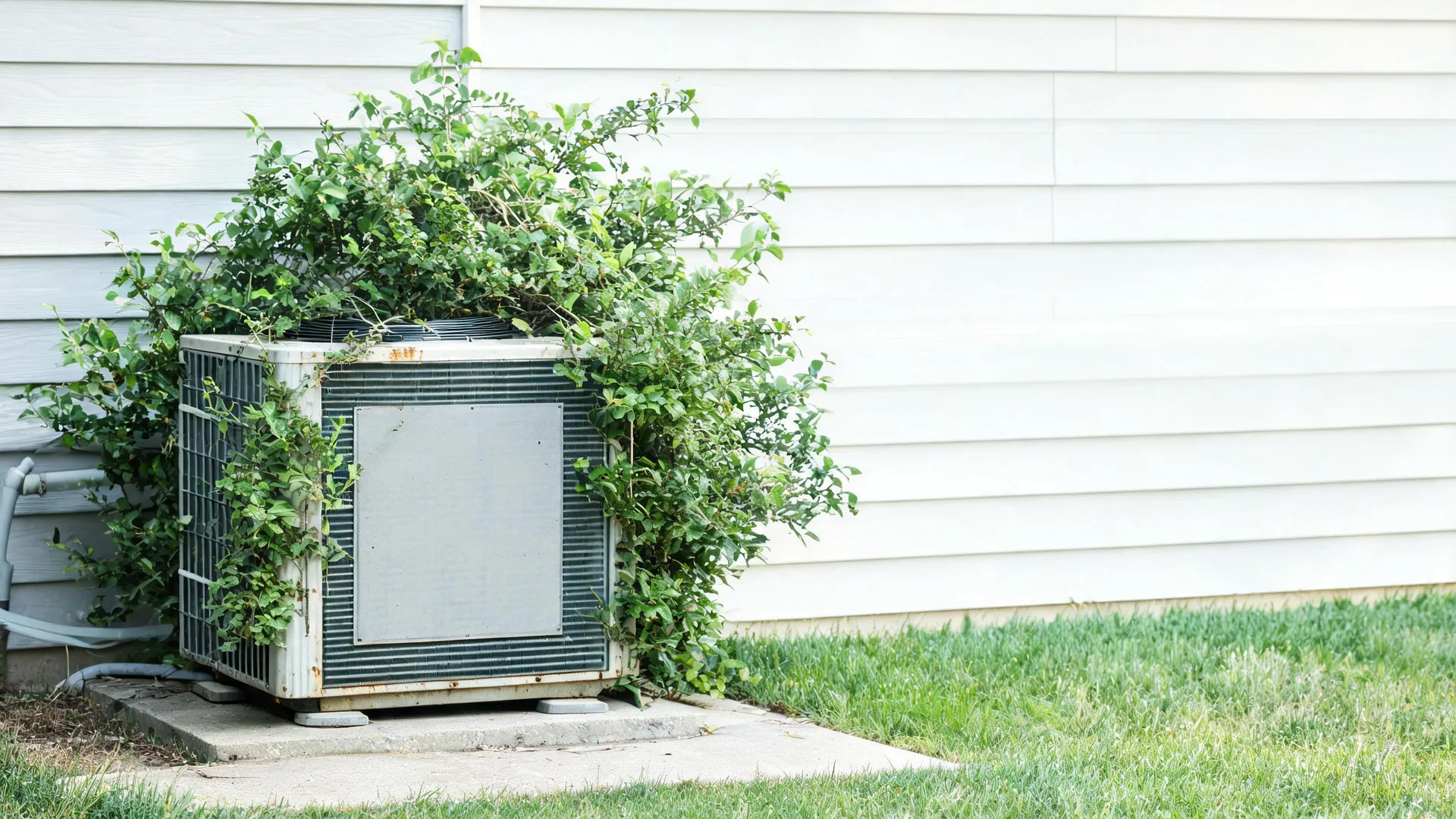
A heat pump usually tells you something is wrong before it quits outright. Warm air blowing when it should feel cool, or the reverse in winter, often means a stuck reversing valve or a refrigerant charge that's gotten low. Ice building up on the outdoor unit outside of a normal defrost cycle points to a fan motor that isn't pulling air across the coil the way it should. A unit that clicks on and off in short bursts instead of completing a full cycle is usually fighting a failing capacitor or a filter so clogged it's choking airflow. Hissing, clanking or a hard grinding sound from the outdoor cabinet means a part inside is wearing against something it shouldn't, and that one is worth shutting off until someone looks at it. The rest can usually keep running while you wait for a tech, but none of them get better on their own.

A diagnostic visit starts outside, at the unit itself. A tech will check the refrigerant pressure, look at the condition of the coil, and listen to how the compressor sounds when it kicks on. Inside, they'll check the air handler, the filter, and the thermostat signal, since a heat pump problem can start at either end of the line. Electrical readings come next: the capacitor gets tested under load, not just looked at, because a capacitor can look fine and still be failing. If the system has been icing up or short cycling, they'll run it through a full cycle to watch where it struggles rather than guessing from a single reading. By the end, the point isn't just naming the broken part. It's knowing why that part failed, so the fix holds instead of breaking again in a month.