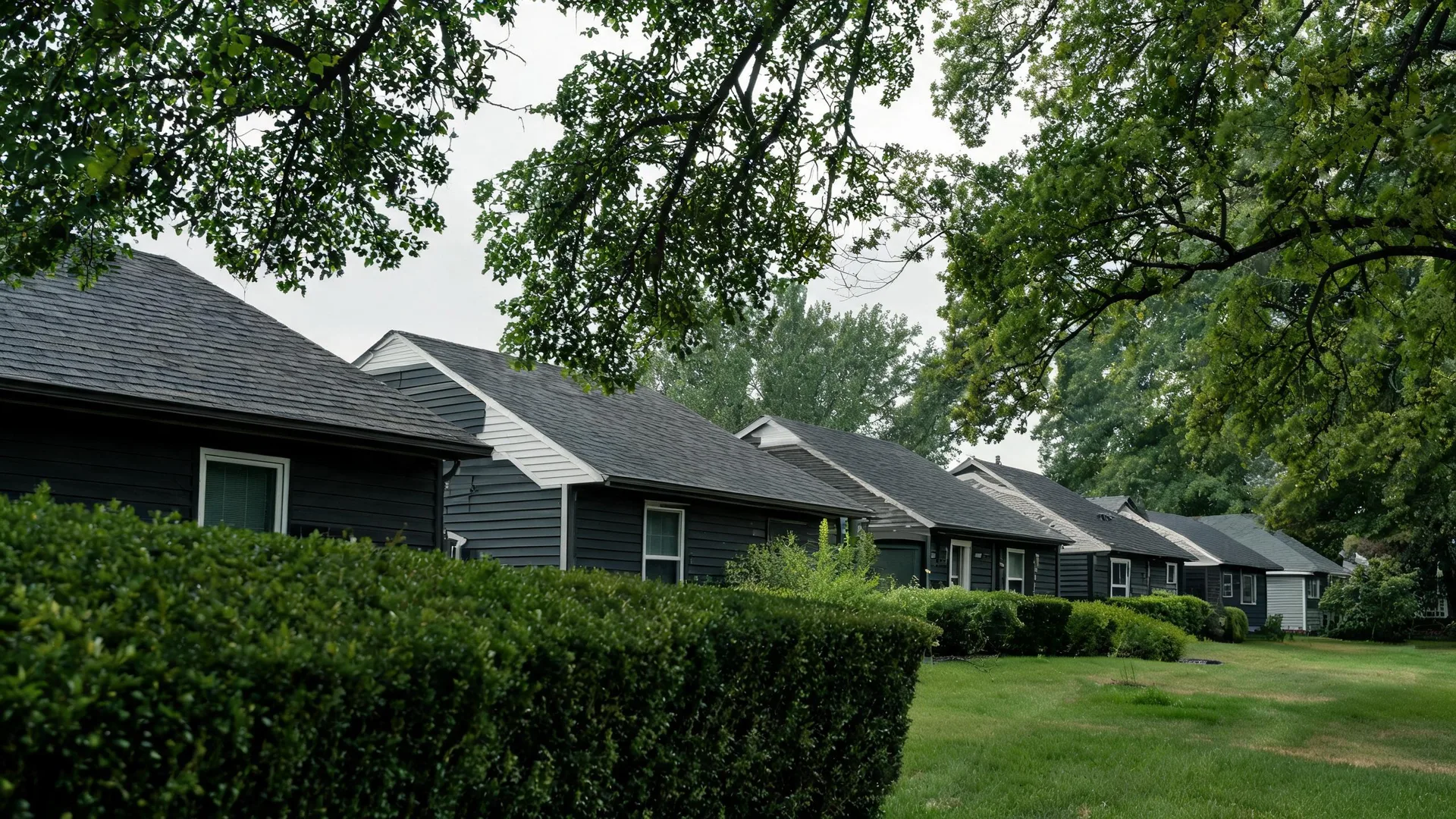





A row of dark gray single-story houses with asphalt shingle roofs behind trimmed hedges and a mown lawn, framed by overhanging tree branches under an overcast sky.

Heat Pump Repair in Kent, OH

Tell us about the job

Takes about a minute. No obligation.

RepairHeat PumpPortage County, OH
Step 1 of 2

What ZIP code is the job in?

A heat pump in Kent switches over to heat in October and stays on it through May, so September is worth paying attention to. That's the month before the real demand hits, when a weak capacitor or a low refrigerant charge can still limp through a mild afternoon without anyone noticing. Once the temperature drops for good in October, that same part gets asked to run for hours at a stretch, and that's when it quits. Most October repair calls trace back to something that was already failing in September, just not loud enough to notice yet.

8 months
October through May, your system heats
3 months
June through August, it cools
21°F
the average winter night it heats against
81°F
the average summer afternoon it cools against
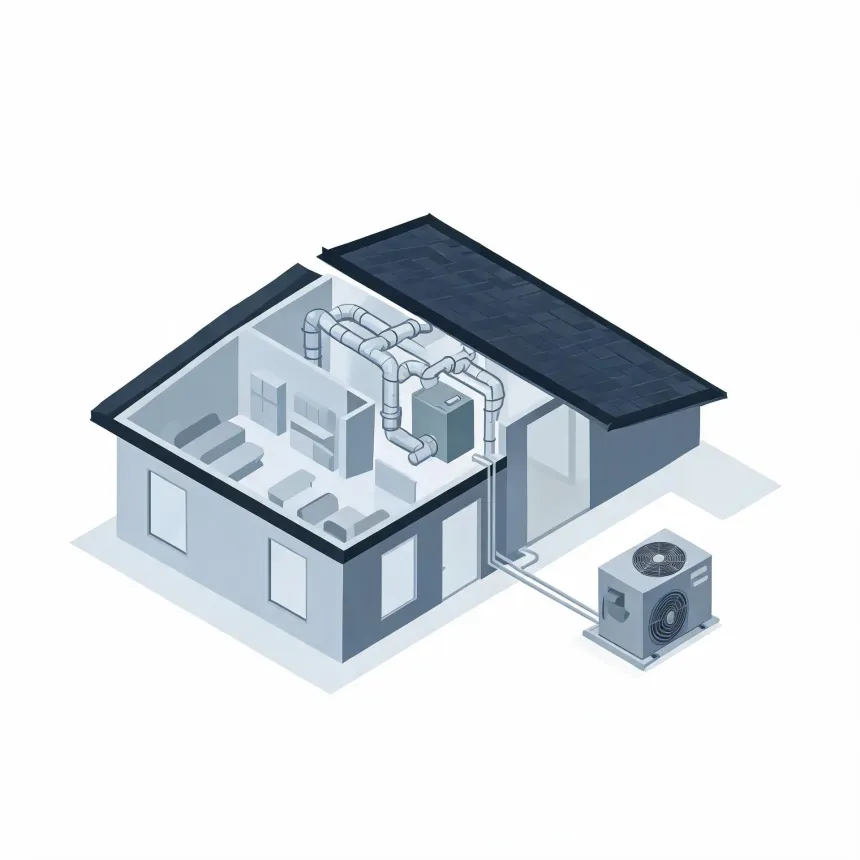
Isometric illustration of a cutaway single-story house showing interior ductwork and an air handler connected by lines to an outdoor condenser unit on a pad beside the building.
Your system heats October through May and cools June through August.

NOAA nClimDiv, 1991–2020 normals

Kent winters push a heat pump hard, but they don't beat it up the way wind and hail do.

A unit here is more likely worn by age than damaged by the weather it's run through, so fixing it usually makes sense.

Portage County gets its share of storms, but that's not what's wearing out the heat pump

121 severe weather events from 2015 to 2024
18% of homes statewide lost power a day or more in 2024
93 damaging wind events from 2015 to 2024

Half the homes in Portage County were built in 1977 or earlier. That tells you about the house, not about the heat pump sitting next to it. The unit outside has its own age and its own repair history, separate from the house. A system put in five years ago wears the same whether the house is old or new. So don't ask how old the house is. Ask how old the equipment is and what it's been asked to do since it went in.

A struggling heat pump costs more to ignore in Ohio

Ohio electricity runs 15.99 cents per kilowatt-hour in 2024. A heat pump working harder than it should pulls more power every hour it runs, all winter long. Find the real cause now and that cost stops building month after month.

Find a contractor
A man in a dark cap, navy T-shirt and tan work pants, seen from behind, carries a canvas tool bag up porch steps toward a dark blue front door, with a potted shrub in a blue planter to the right.
A gray heat pump outdoor unit mounted on a concrete pad next to the stone-accented exterior wall of a house.

Fix the part, not the weather

That's worth knowing before paying for a repair. The compressor outside is running against an average overnight low of 21°F through December, January and February. It's not fighting wind damage or hail dents. So when a tech traces the problem to a failing capacitor or a low charge, that's usually the whole story. Fix the part that's actually failing, and the unit goes back to doing its job, with nothing else working against it.

Capacitors and contactors wear out on a schedule

The run capacitor gives the compressor and fan motors the push they need to start, and it loses strength gradually, not all at once. The contactor's contacts pit and burn a little every time they close. Both parts are rated for a certain number of cycles, and a heat pump that's been running for years has put a lot of cycles on them. Neither failure has much to do with the weather that week. It's just the part reaching the end of what it was built to do.
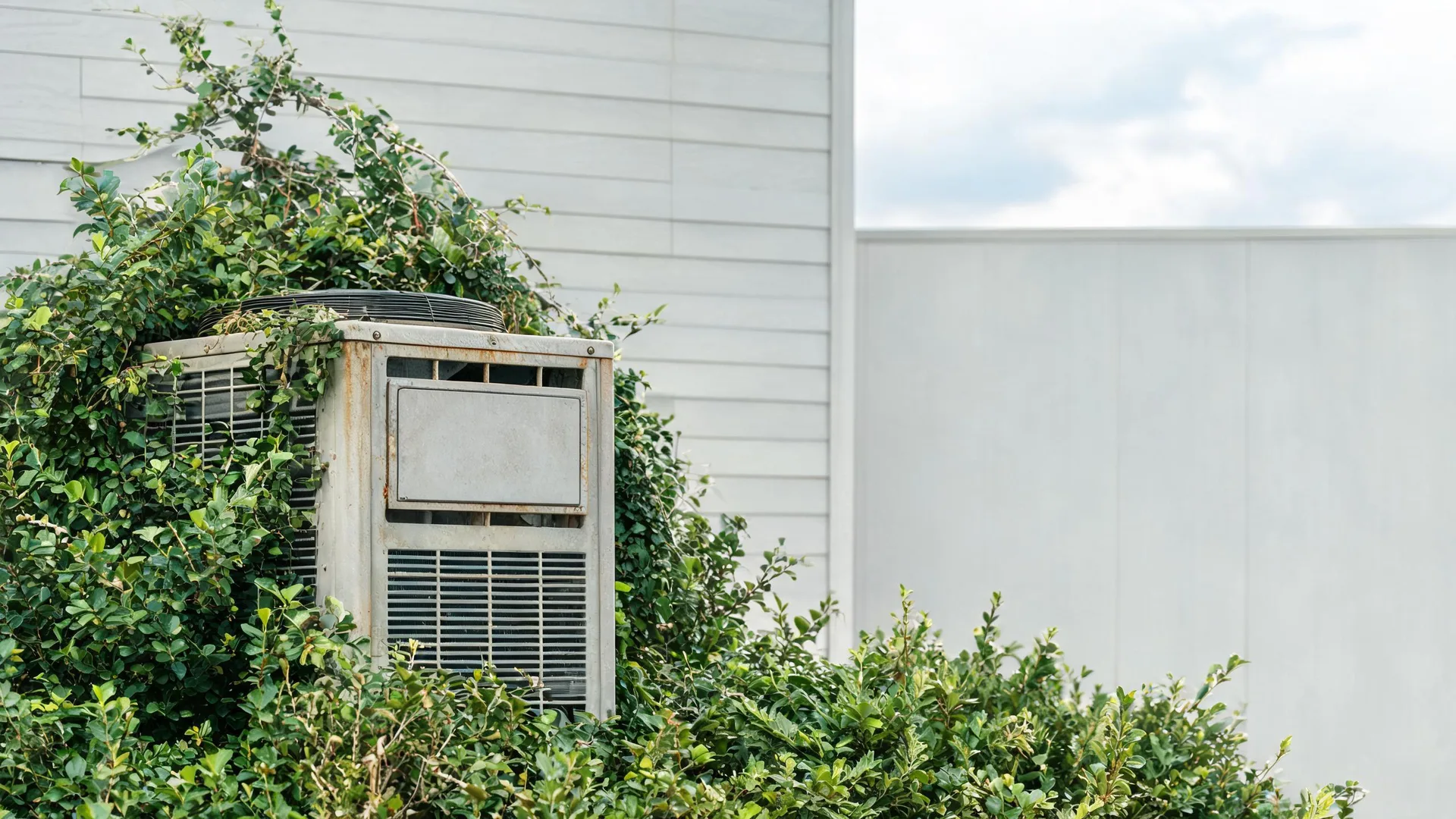
A low charge rarely means a sudden leak

Refrigerant doesn't get used up, so a system low on charge has a leak somewhere, usually at a fitting, a coil joint, or where the line set connects to the indoor and outdoor units. These leaks are often small and slow, so the system keeps working, just with less capacity, for a long stretch before anyone notices. The reversing valve is the other common failure point, since it's the part switching the unit between heating and cooling every time the thermostat calls for a different mode, and that wear adds up over seasons, not days.

The air coming out doesn't feel warm, or it blows warm for a while then switches to cool. That means the reversing valve is stuck between modes. Ice on the outdoor coil that doesn't clear during the defrost cycle points to the same problem. Short cycling, when it kicks on and off every few minutes instead of running a steady stretch, usually means the capacitor is too weak to hold the motor started. A unit that runs non-stop without catching up to the thermostat is often low on refrigerant, working harder to move less heat. Any grinding, clicking, or buzzing from the outdoor unit that wasn't there before is worth a call. By the time a failing part makes noise, it's usually close to done.

The question isn't just what broke. It's what else is about to. A heat pump that's needed several repairs in the last few years is telling you something. A single capacitor failure doesn't say the same thing. Weigh the repair against what the unit has left, not just the bill sitting in front of you. A compressor failure on a unit already past its working life is a different call than the same failure on a young unit. A tech worth trusting will say when a repair makes sense and when it's just putting off a bigger one.