




A row of dark-painted single-story houses with gabled shingle roofs behind a trimmed hedge and mown lawn, surrounded by large leafy trees under an overcast sky.

Heat Pump Repair in Fremont, OH

Tell us about the job

Takes about a minute. No obligation.

RepairHeat PumpSandusky County, OH
Step 1 of 2

What ZIP code is the job in?

Your heat pump works hardest right at the start of a season, when it first has to carry a load it hasn't faced in months. In Fremont that means October, the first real push of heat after sitting idle most of the summer, and June, the first hot stretch after months of barely running. A weak capacitor or a low refrigerant charge can sit quiet for weeks and then fail the moment the system has to work for real. If yours is struggling now, it's worth finding out why rather than just resetting it and hoping. The part that gave out had probably been close to failing for a while.

8 months
October through May, your system heats
3 months
June through August, it cools
23°F
the average winter night it heats against
82°F
the average summer afternoon it cools against
Isometric grayscale illustration of a cutaway single-story house showing interior rooms, ductwork and an air handler, an exterior condenser unit connected by lines, and dark solar panels on the roof.
Your system heats October through May and cools June through August.

NOAA nClimDiv, 1991–2020 normals

Fremont winters don't ask much of a heat pump. Overnight lows average 23°F through December, January and February. That's steady cold, not extreme cold.

A heat pump running out here hasn't been pushed hard. If it's failing, it's probably age or neglect, not strain. That's usually worth fixing.

Power here costs 15.99 cents a kWh. A heat pump running wrong keeps costing money every day it's not fixed.

Power costs 15.99 cents a kWh statewide
47 damaging wind events from 2015 to 2024
18 hail events from 2015 to 2024

A technician starts by asking what's been noticed, when it started, and whether it's happening all the time or just sometimes. That matters. A heat pump stuck in defrost points to a different problem than one that runs constantly without warming the house. From there, check the refrigerant pressures. Test the capacitor and contactor in the outdoor unit. Look at the reversing valve, the part that lets the system switch between heating and cooling. The indoor unit gets a look too, the panel off, checking the blower motor and the coil for ice or dirt buildup. Most of this is gauges and a multimeter, not guesswork. By the end there should be a straight answer on what failed and why, not just a part swapped and a hope it works.

Worn from age, not overworked, is usually worth fixing

A heat pump that's spent years doing steady, moderate work is usually a good candidate for repair rather than replacement. Age and neglect leave specific marks, a worn capacitor, a dirty coil, low refrigerant, and those are the kinds of things a technician can find and fix. Get the real cause in front of someone before deciding it's past saving.

Find a contractor
A dark gray heat pump unit mounted on a concrete pad next to a house with gray siding and a stone veneer wall.

What you notice before it quits

A heat pump rarely quits all at once. It starts with small things, easy to explain away. The outdoor unit runs longer than it used to before shutting off. Air from the vents feels cooler than it should for heating mode. It switches into defrost and stays there, or comes out and cycles back in a few minutes later. Ice builds up on the outdoor coil and doesn't clear on its own. Indoors, the blower runs but the house doesn't catch up, or the system short cycles, kicking on and off instead of running a steady stretch. Any one of these alone might be nothing. A few of these at the same time usually mean something inside has already started to fail.

Ice on the coil spreads if the system keeps running

A heat pump icing up outdoors can't pull heat from the air anymore. Keep running it like that instead of shutting it down, and the compressor is working against a coil that can't do its job. Refrigerant pressures get pushed further out of range the longer it runs.
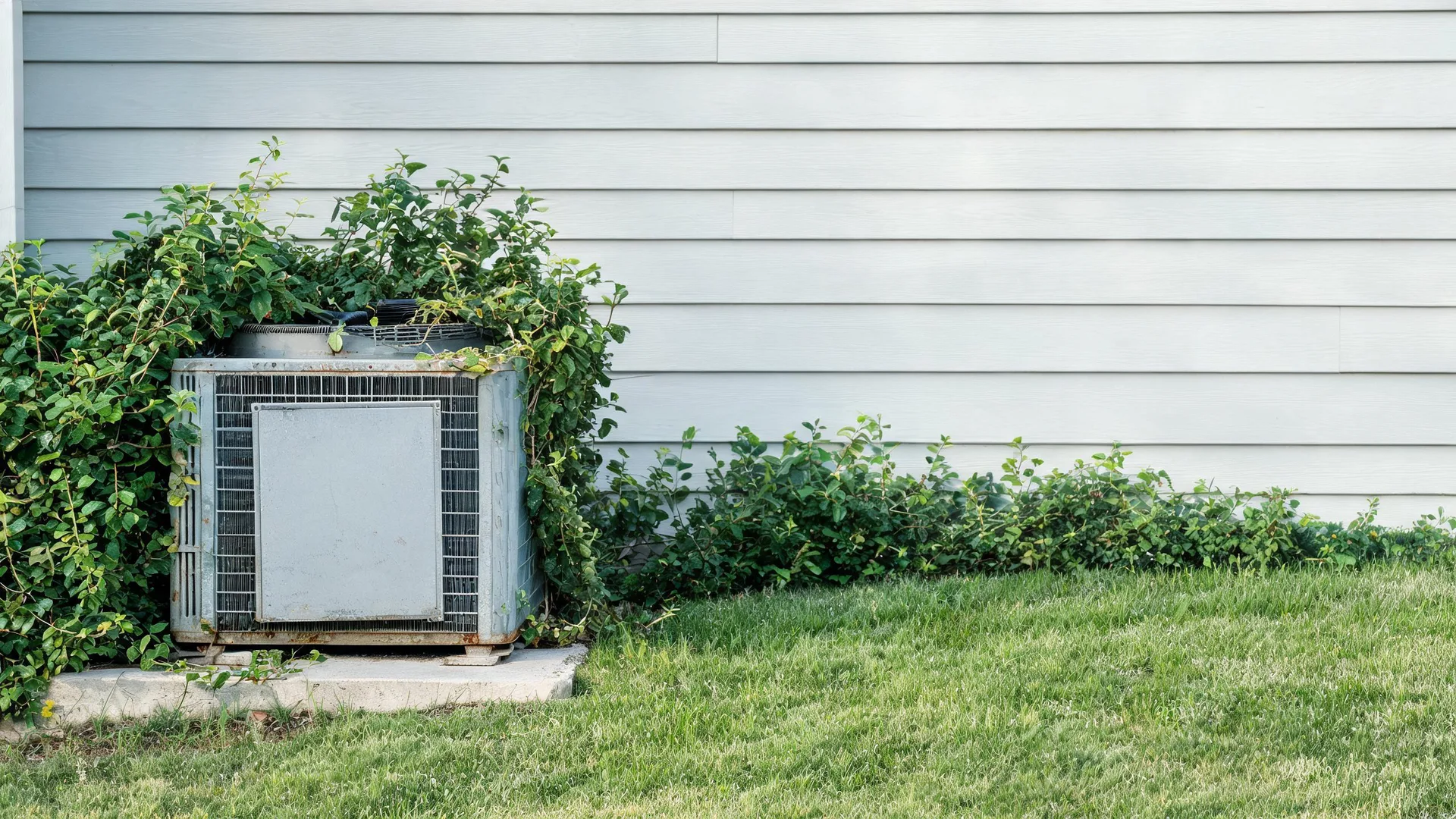
A failing part rarely fails alone

A weak capacitor makes the compressor draw more current every time it starts. Keep cycling it that way and the compressor windings take extra heat each time. A part that would've been a simple swap can turn into a full compressor replacement.

Most heat pump failures come down to a handful of parts, not some mystery. The capacitor gives the compressor and fan motor their starting kick. It weakens with age and heat cycling until it can't deliver that push anymore. The contactor is the switch that sends power to the outdoor unit. It pits and burns a little from arcing every time it closes, until one day it just doesn't make contact. Refrigerant doesn't get used up. So if the charge is low, it's leaking out somewhere, and that leak only gets worse if it's left alone. The reversing valve switches the system between heating and cooling. It can stick from a bad coil or crud built up inside, and then the system's stuck in one mode no matter what the thermostat says. And a dirty outdoor coil, caked with debris or matted down, forces the whole system to work harder to move the same amount of heat. That strain carries through to everything downstream of it.

Repair versus replace really comes down to one question. Is this one part failing, or is the whole system on its way out. A bad capacitor or a stuck reversing valve is a single point of failure. Swap that part and the unit runs fine again. It's a different story when the compressor is failing, or when the refrigerant leak is in the coil instead of a fitting that can be resealed. Those parts don't get replaced on their own. The labor and refrigerant cost start to rival what the rest of the system is worth. Age matters too. Not because a heat pump has an expiration date, but because a unit old enough to need one major part is usually close behind on the next one. A straight answer looks at what actually failed, what else is showing wear, and whether the repair solves it or just pushes the problem down the road a few months.