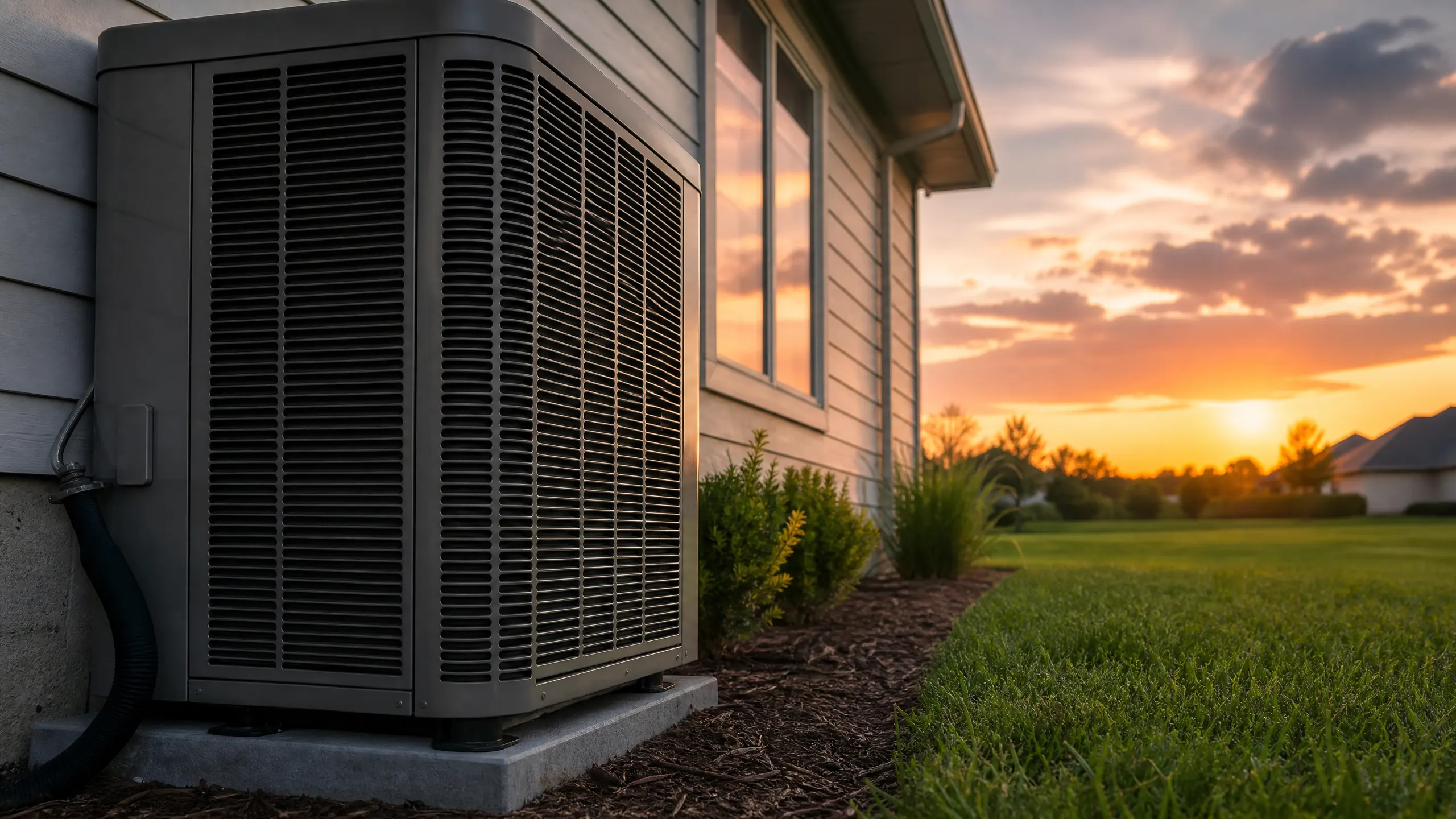





An outdoor air conditioning condenser unit mounted on a concrete pad beside a house at sunset.

Heat Pump Repair in Dayton, OH

Tell us about the job

Takes about a minute. No obligation.

RepairHeat PumpMontgomery County, OH
Step 1 of 2

What ZIP code is the job in?

Montgomery County saw 267 severe weather events between 2015 and 2024. Most of that was damaging wind, 188 times in that span, with 60 hail events and 10 tornadoes mixed in. The outdoor unit sits outside year round, and that's exactly what takes the hit when wind drives debris into it or hail dents the housing and bends the fins. A heat pump can keep running after that kind of damage and still lose efficiency, or fail a few months later from a problem that started with the storm. If your area took a direct hit from any of these, the unit outside is worth a look even if you haven't noticed a problem yet.

8 months
October through May, your system heats
4 months
June through September, it cools
24°F
the average winter night it heats against
84°F
the average summer afternoon it cools against
Isometric cutaway illustration of a small house showing interior ductwork and an air handler connected by lines to an outdoor condenser unit on a pad beside the building.
Your system heats October through May and cools June through September.

NOAA nClimDiv, 1991–2020 normals

Electricity here runs 15.91 cents per kilowatt-hour.

A heat pump that's struggling pulls more power at that rate every single day it goes unfixed.

Half these homes are older than their heat pump's second repair bill

Half the homes here were built by 1966
Climate zone 5A
Power here costs 15.91 cents per kilowatt-hour

October is when heat pumps here earn their keep, and it's also when a weak one shows itself. A heat pump that limped through a mild September can stall out fast once it has to pull heat from cold air instead of just moving warm air around. Nights get hard here too. Overnight lows average 24°F across December, January and February, and that's a different load than the unit saw all summer. If a part was already wearing thin, the first real cold snap is what finds it. Getting a heat pump looked at in September, before the switch to heat, catches a weak part before it has to carry the whole winter.

If the storm got your unit, don't wait for it to fail

Hail and wind don't always stop a heat pump on the spot. It can run for months on a dented cabinet or bent fins before it quits, usually in weather you don't want to be without it. If your unit took a hit this year, get it checked before that happens.

Find a contractor
A man in a cap, navy long-sleeve shirt and tan work pants carries a canvas tool bag up steps toward a dark front door, with a potted shrub beside the porch.
A gray heat pump outdoor unit mounted on a concrete pad next to a residential house with lap siding and stone accents.

This unit doesn't get an easy season

A heat pump here runs double duty. It pulls heat out of the air all winter, then switches around and pulls heat out of your house all summer, and the air it's working with is rarely easy. Summer air in Dayton sits heavy, averaging a 64°F dew point across June, July and August, which means the system is wringing moisture out of the air on top of cooling it. That's more load on the compressor than dry heat would be. Add in the wind and hail that come through here, and the outdoor unit is getting hit from two directions: worked hard most of the year, and exposed to damage on top of that. A part that's already strained from normal running wears out faster once it's been through a storm. That combination is usually what's behind a repair call here, not one single cause.

What a failing heat pump sounds and feels like

Warm air blowing in winter instead of hot, or a system that runs long stretches without the house ever feeling done. Ice building up on the outdoor unit and not clearing during the defrost cycle. A clicking reversing valve that won't throw, so the system stays stuck in one mode. Short cycling, where it kicks on and off every few minutes instead of running a full cycle. Any grinding or screeching from the outdoor fan motor. These are the signs that show up before a full breakdown, and each one points to a different part.
Why it's worth fixing instead of waiting

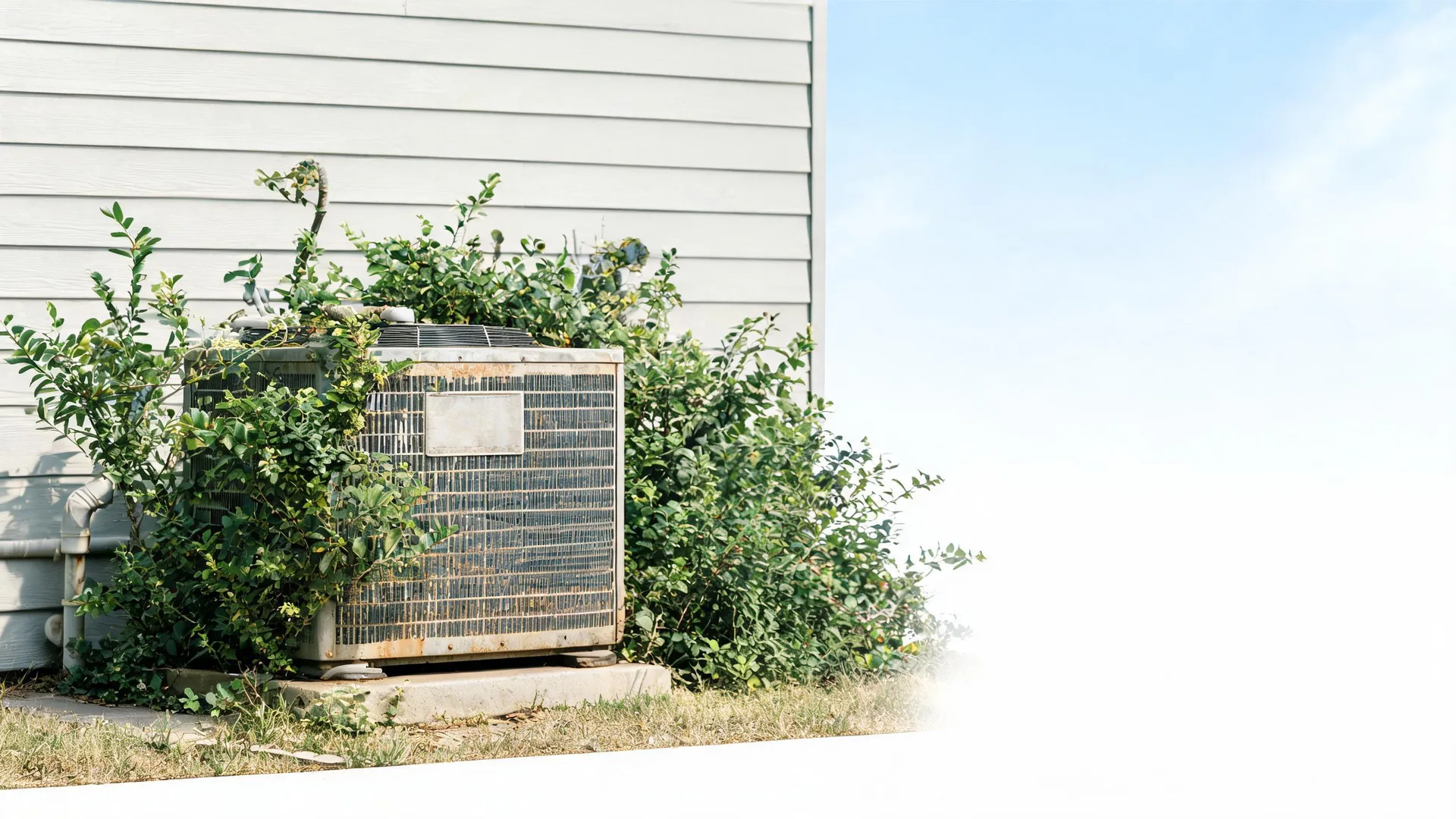
A heat pump that's struggling doesn't usually fail all at once. A failing capacitor, a low refrigerant charge, or a dirty coil all make the compressor work harder to do the same job, and a compressor that runs strained for months is a compressor that fails for good. Catching the weak part means a repair. Waiting it out usually means a compressor replacement, which costs a lot more than the part that started the problem.

A heat pump rarely fails clean. Most of the time it starts with one weak part, and the system keeps running anyway because it can still move some air. That's the problem. A low refrigerant charge makes the compressor work harder to move the same heat, and it stays that hot every minute the system runs. A dirty coil does the same thing from a different angle, trapping heat that should be releasing and forcing the compressor to push longer to finish the cycle. None of that shows up as a shutdown. It shows up as a system that runs longer, pulls more, and quietly wears down the one part that's expensive to replace. The parts that signal trouble early, a capacitor, a contactor, a sensor, are also the cheapest to fix. Left alone, they don't stay small problems. They just pass the strain along until the compressor is the one absorbing it, and a compressor doesn't get repaired. It gets replaced.

Half the homes in Montgomery County were built in 1966 or earlier. A heat pump doesn't last as long as the house around it, so if yours came with an older place, it's probably not the original unit, and it may not be far from needing one. That matters when a repair bill shows up. A compressor replacement on an old unit is money going into a machine that was going to need replacing soon anyway. Before paying for a big repair, ask whoever comes out how much life is actually left in it. That answer should decide whether you fix it or start pricing a new one.