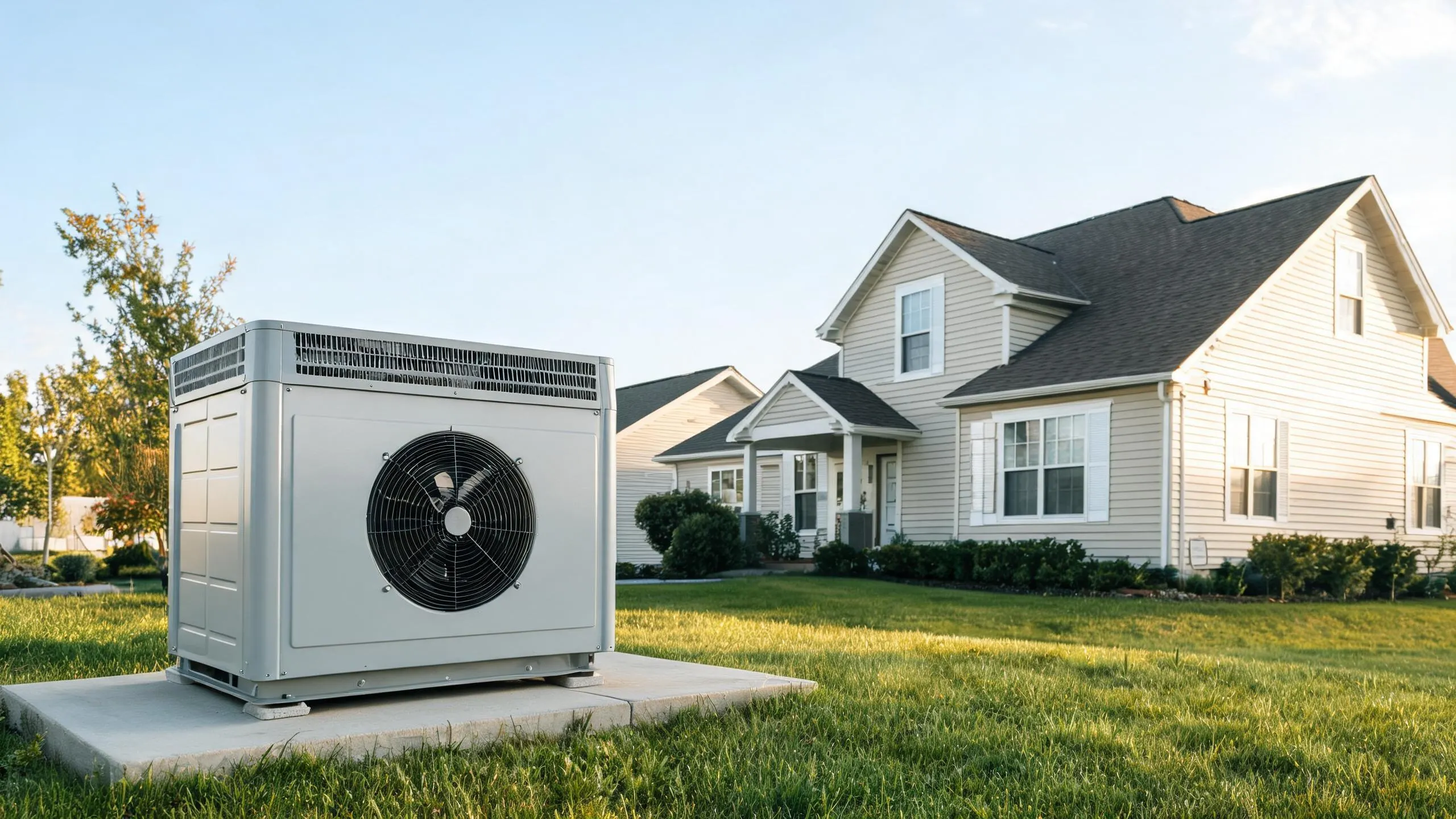







An outdoor heat pump unit mounted on a concrete pad in the front yard of a gray suburban house.

Heat Pump Repair in Cincinnati, OH

Tell us about the job

Takes about a minute. No obligation.

RepairHeat PumpHamilton County, OH
Step 1 of 2

What ZIP code is the job in?

Hamilton County saw 271 severe weather events between 2015 and 2024. Most of that was wind, 169 events, and hail came in at 79. Your outdoor unit sits outside through all of it, with its coil and fan exposed to whatever blows through. Hail dents the fins and bends the housing, and debris can nick the coil or jam the fan without stopping the system right away. A unit that took a hit can keep running for weeks before it shows a problem, so it still running is not proof it came through fine.

7 months
October through April, your system heats
4 months
June through September, it cools
25°F
the average winter night it heats against
85°F
the average summer afternoon it cools against
Isometric grey-toned illustration of a cutaway house showing interior rooms, ceiling ductwork and an air handler, connected by lines to an outdoor condenser unit beside the building.
Your system heats October through April and cools June through September.

NOAA nClimDiv, 1991–2020 normals

Electricity here runs 16.82 cents per kilowatt-hour, above most of the country.

A heat pump struggling to heat or cool burns through more of it every day you leave the repair for later.

Half the homes here were built before your heat pump's time

Half the homes here were built by 1963
Climate zone 4A
Power here costs 16.82 cents per kilowatt-hour
Built for Weather That Doesn't Let UpHamilton County averages a 64°F dew point all summer, and outdoor units run in that heat for months at a time.

Your heat pump switches over twice a year, to cooling in June and to heat in October. The first cold stretch in October is when a weak part usually gives out, because the system is suddenly running longer and harder than it has in months. Nights get down to 25°F on average through December, January and February, and a heat pump under strain in that cold has to work harder to keep up. If something was already marginal, starting in October is when it shows. The same thing happens in reverse come June, when the compressor has sat idle and gets asked to run for the first time in months.

If it took a hit, don't wait for it to fail

If your outdoor unit took a hit this year, get it looked at before the next one. A bent fin or a nicked coil does not always stop the system right away, and the first hard freeze or the first long run in summer heat is when a weak spot tends to show itself. Checking it now costs you less than finding out in the middle of a storm.

Find a contractor
A man in a dark cap, navy T-shirt and tan work pants, seen from behind, carries a canvas tool bag up porch steps toward a dark blue front door, with a potted shrub in a blue planter to the right.
A residential heat pump outdoor unit mounted on a concrete pad next to a house with gray vinyl siding.

Running Through Every Storm That Comes

Winter storms hit the county 16 times between 2015 and 2024, on top of the wind and hail already covered. An outdoor unit left running through that gets asked to keep heating through ice and snow load on top of the cold itself. If yours is already short cycling or struggling to keep up, that's the kind of stretch that turns a small problem into a system that won't come back on. Get it checked before the next one comes through, not after.

Where the wear actually happens

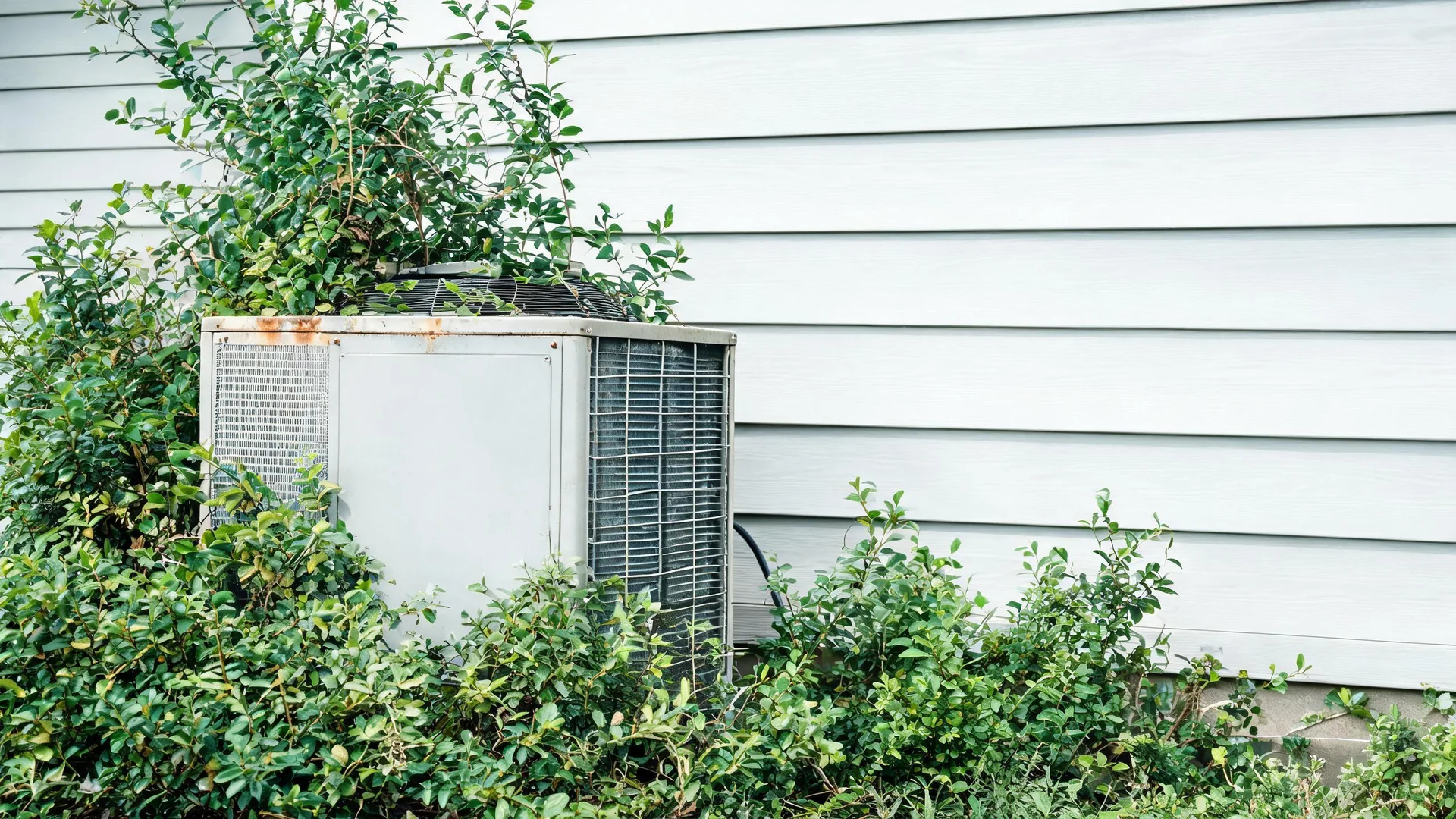
The compressor, the reversing valve and the outdoor fan motor do the hardest work in a heat pump, and they're what gives out first. The compressor can fail from running low on refrigerant for too long, which happens slowly after a slow leak nobody caught. The reversing valve sticks when it doesn't get used enough, so a unit that sat on heat all winter can balk when you ask it to cool. A fan motor wears out on its bearings the same way any motor does, and you'll usually hear it before it quits.
What a bad sign actually means

Ice on the outdoor coil during a heating run usually means the defrost cycle isn't kicking in, not that something is broken outright. A system that runs constantly without reaching the set temperature is often low on charge or losing airflow across a dirty coil. Short cycling, where it kicks on and off in quick bursts, points to a failing capacitor or a control board misreading the thermostat signal. None of these stop the system cold right away, which is exactly why they get worse the longer they run unchecked.

Before you call anyone, there are a few things worth a look. Check the thermostat is set to the right mode and the batteries aren't dead, since a heat pump stuck on the wrong setting looks like a failure but isn't one. Go outside and look at the unit itself. Clear away leaves, mulch or anything piled against it, because the outdoor coil needs open air moving through it to work at all. Check the air filter inside, since a clogged one starves the system of airflow and can make it run constantly without catching up. Look at the outdoor unit for ice building up on the coil during a heating run, and if you see it, don't knock it off or hose it down, just note it for whoever comes out. Check the circuit breaker if the system won't start at all. None of this fixes a bad compressor or a stuck reversing valve, but it rules out the simple stuff before anyone takes a service call.

Half the homes here were built in 1963 or earlier. If your heat pump came with a house that old, it was likely put in well after the house was built, and you may not know its age at all. An old unit that's starting to act up is a different call than a new one doing the same thing. A repair on a system already near the end of its run can turn into a second repair a year later, and then a third. Ask whoever comes out how much life is left in it before you pay for the fix, not just what the fix costs.