







A illuminated two-story red brick house on a quiet residential street at dusk, flanked by mature trees under a deep blue evening sky.

Heat Pump Repair in Canton, OH

Tell us about the job

Takes about a minute. No obligation.

RepairHeat PumpStark County, OH
Step 1 of 2

What ZIP code is the job in?

A heat pump here runs eight months, October through May, so most of the year's load lands in that stretch. Breakdowns tend to show up right when it starts, when the system has to switch over and hold a house warm for the first time since spring. September is a good time to have one looked at, before the first cold mornings hit a part that was already weak. The same thing happens in reverse before summer, with May being the month before cooling starts in June. If yours is acting up now, there's usually one real cause behind it, not a handful of small things.

8 months
October through May, your system heats
3 months
June through August, it cools
22°F
the average winter night it heats against
81°F
the average summer afternoon it cools against
Isometric cutaway illustration of a two-room house showing an indoor air handler with ductwork connected by lines to an outdoor condenser unit on a pad.
Your system heats October through May and cools June through August.

NOAA nClimDiv, 1991–2020 normals

Winter nights in Stark County average 22°F, not the deep cold some places see.

A heat pump acting up here usually has one specific problem, not a system worn down by strain.

Stark County doesn't put unusual strain on a heat pump

131 severe weather events from 2015 to 2024
18% of homes statewide lost power a day or more in 2024
93 damaging wind events from 2015 to 2024
Houses here are olderHalf the homes in Stark County were built in 1966 or earlier.

Ohio electricity ran 15.99 cents a kilowatt-hour in 2024, higher than a lot of states pay. A heat pump that's low on charge or struggling to defrost runs longer to hold the same temperature, and every extra hour shows up on the bill at that rate. You won't see the breakdown on your statement, just a higher number than last month for the same weather. That's worth paying attention to on its own, separate from whether the house feels warm enough. If something's off with yours, the cost of waiting isn't just comfort. It's every cycle it runs between now and when it gets looked at.

A heat pump problem here is usually worth fixing, not replacing

A heat pump that isn't worn down by the climate is usually fixable rather than at the end of its life. If yours is acting up this time of year, worth having someone find the actual cause and repair it.

Find a contractor
A man in a gray shirt and tan work pants, seen from behind, climbs porch steps toward a dark blue front door while carrying a canvas tool bag, with a potted shrub to the right.
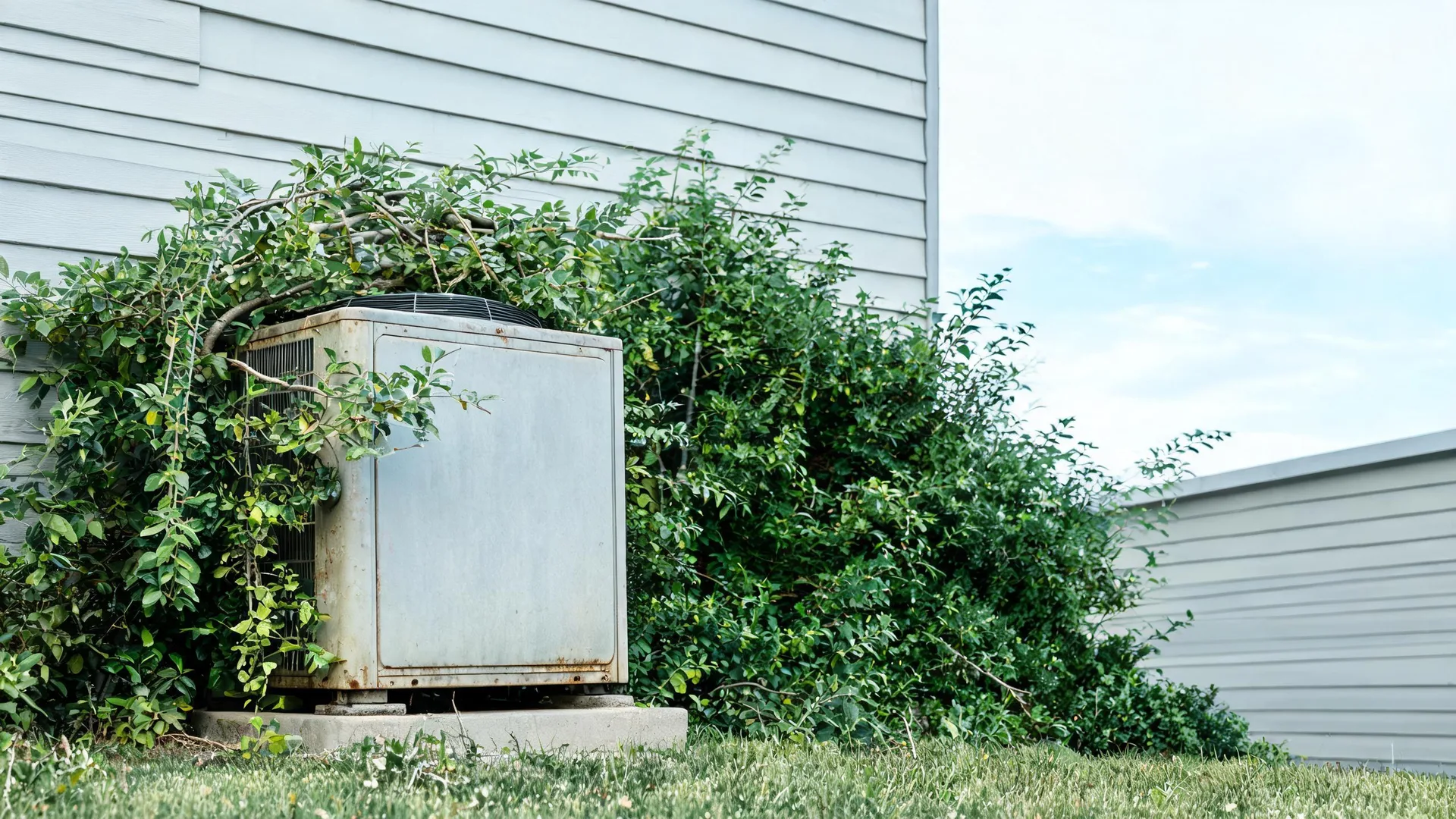
A residential heat pump outdoor unit mounted on a concrete pad next to a house with gray vinyl siding.

Running it while something's wrong wears out the part faster

A heat pump that's struggling doesn't fail all at once. It fails a little more every cycle it runs. A low refrigerant charge makes the compressor work harder to move the same amount of heat, and that extra load is what shortens a compressor's life. A failing defrost control can let frost build on the outdoor coil run after run, until the coil is blocked enough that the system can't pull heat from the air at all. A weak capacitor makes the fan or compressor draw more current to start each cycle, and each hard start wears it down a little further. None of this is about how hard the system has to work outside. It's about a part that's already failing being asked to keep starting and running anyway. The part doesn't get a chance to recover between cycles. It just keeps going on less until it can't.

Check the thermostat and the power first

Make sure the thermostat is set to heat or cool as needed and the setting is actually above or below room temperature. Check the breaker for the indoor air handler and the one for the outdoor unit, since either tripping on its own will stop the system cold. Look at the outdoor unit itself for a solid sheet of ice or a fan that isn't turning. These take a minute to rule out before anything else.
What you find tells you how urgent it is

A tripped breaker or a thermostat set wrong is a fix you just made. A coil covered in ice, a fan that won't spin, or air coming out the vents that isn't warm or cool at all means something inside the system needs a tech, not a reset. Keep running a heat pump in that state and the part that's already struggling keeps working against the fault, which is how a small problem turns into a failed compressor.

Most heat pump failures trace back to a handful of parts. The reversing valve is one, since it's what switches the system between heating and cooling, and a valve that sticks can leave the system blowing cold air when it should be heating or stuck in one mode entirely. The defrost control is another. It's supposed to clear frost off the outdoor coil on a schedule, and when the sensor or the board behind it fails, frost builds up until the coil can't pull heat from the air. Capacitors wear out from ordinary use, and a weak one makes the compressor or fan motor struggle to start, which shows up as a system that hums but doesn't kick on. Refrigerant doesn't get used up, so a low charge almost always means a leak somewhere in the line, and that leak gets worse, not better, left alone. The compressor itself rarely fails on its own. It's usually the last part to go after something else forced it to work harder than it should have for a while.

A heat pump is worth repairing when the cabinet, the coil and the compressor are sound and the problem is one part failing inside a system that's otherwise fine. That covers most calls. Replacement makes sense when the compressor itself is the part that failed, since that's the heart of the system and the most expensive piece by far, and a tech will tell you plainly when that's what's going on. It also makes sense when the same fault keeps coming back after being fixed, which usually means something is wearing on the part that replaces it too. Age matters less than people think. A heat pump that's been maintained and is only now seeing its first real failure is a different situation than one that's had a string of them. One repair is just a repair. A pattern is the system telling you it's done.