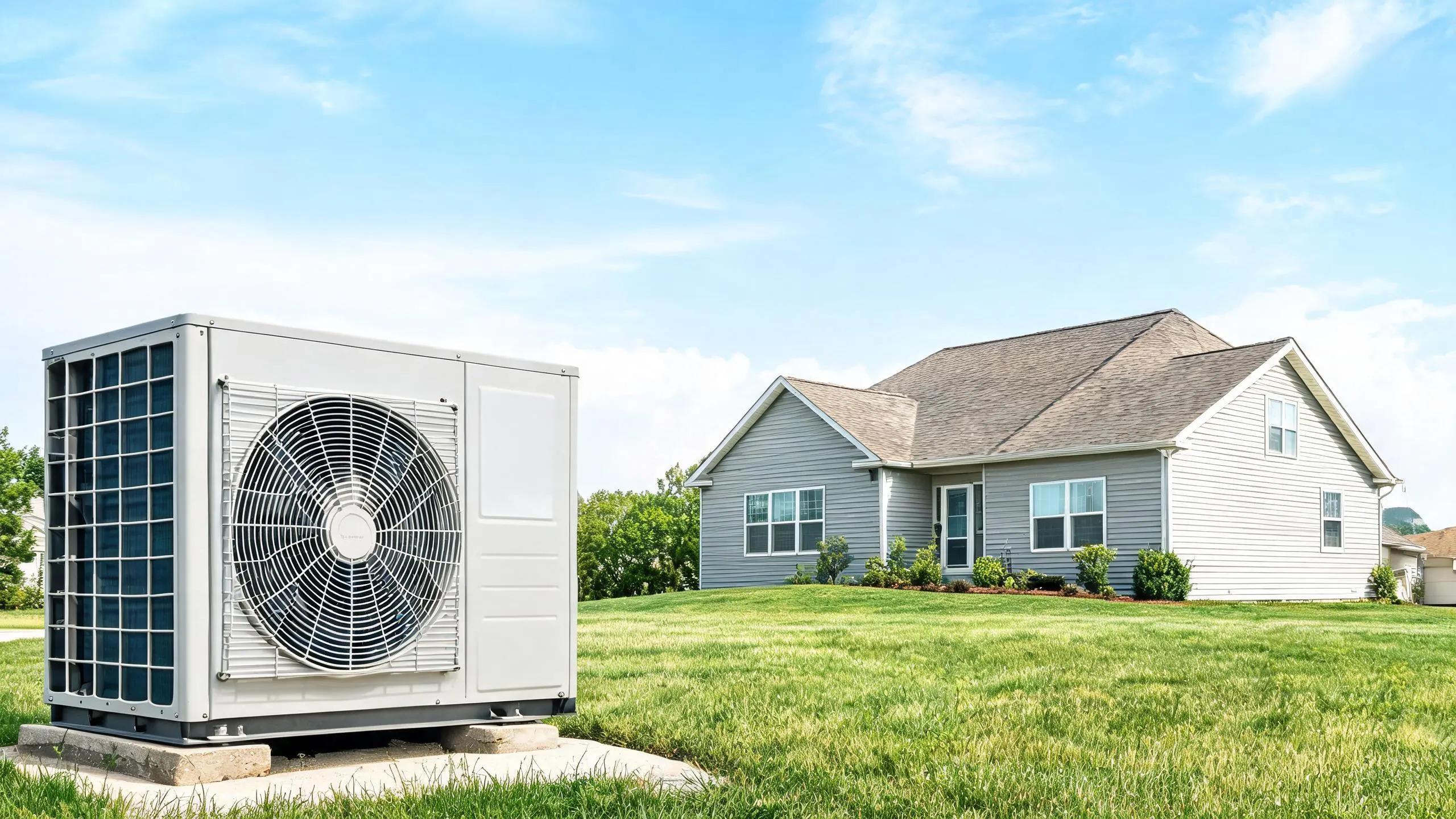
An outdoor HVAC condenser unit on a concrete pad in front of a single-story house with gray siding and a shingle roof.

Heat Pump Repair in Brunswick, OH

Tell us about the job

Takes about a minute. No obligation.

RepairHeat PumpMedina County, OH
Step 1 of 2

What ZIP code is the job in?

Zone 5A asks more of the furnace side than the heat pump side

Medina County sits in zone 5A. Winter nights average 22°F there, and heating carries the bigger load. A heat pump in this area spends a lot of time on defrost cycles and backup heat. But it's not fighting the kind of extreme cold units face in colder zones.


A heat pump that's breaking down is usually worth fixing

Winters here aren't brutal enough to run a heat pump into the ground. So when one breaks down, it's usually something like a bad capacitor, a failed sensor, or a reversing valve stuck in one position. Not a sign the whole unit is shot. That's why repair is the right first call in most cases.

8 months
October through May, your system heats
3 months
June through August, it cools
22°F
the average winter night it heats against
81°F
the average summer afternoon it cools against
Isometric cutaway illustration of a house showing interior ductwork, an indoor air handler, and beds, with an outdoor condenser unit connected by lines outside the wall.
Your system heats October through May and cools June through August.

NOAA nClimDiv, 1991–2020 normals

Half the homes in Medina County went up in 1985 or later.

A heat pump that came with a newer house still has working years left. That's reason enough to fix it instead of replacing it.

Ohio power costs 15.99 cents a kilowatt-hour. A heat pump that's struggling runs up that bill fast.

Power costs 15.99 cents a kWh statewide
64 damaging wind events from 2015 to 2024
13 hail events from 2015 to 2024
September is when it shows upHeat pumps in Medina County start carrying the full heating load come October. September is when a weak part gives out.

Heat pump down right now? Get the capacitor or the sensor checked before anyone brings up replacing the whole unit. Wind and hail show up plenty in Medina County, but neither one touches what's inside the cabinet. Winter storms are the real test there. The county's seen 15 of them between 2015 and 2024. That's weather the outdoor unit sits through, not the kind of strain that builds up inside it over a hard winter further north. A cabinet that's weathered some wind and hail but never fought sustained deep cold is a decent bet to repair, not replace.

Get it repaired, not replaced

Get the broken part found and fixed before anyone talks about a new unit. A heat pump that came with a newer house still has working life in it, and that's reason enough to repair it.

Find a contractor
A man in a cap, dark T-shirt and brown work pants walks up porch steps toward a navy front door, carrying a canvas tool bag.
A residential heat pump outdoor unit mounted on a concrete pad next to a house with gray vinyl siding.

One visit, working part by part

The tech starts outside at the unit, checking the reversing valve, the contactor, and the capacitor before touching anything inside. Low refrigerant shows up as frost on the coil, or a line sweating when it shouldn't be. That gets checked with gauges, not a guess. Inside, the air handler gets opened up to look at the blower motor and the circuit board. A board with a blown fuse or a failed relay can shut the whole system down and look like something worse. The thermostat gets tested too. A bad sensor there can mimic a dead unit. Most of this gets sorted out in one visit. By the end, you know which part failed and why, not just that something did.

It's blowing air that isn't warm or cool enough

A heat pump in heating mode should feel warm at the vent, not room temperature. Air that feels lukewarm points to a reversing valve stuck between modes, a failing compressor, or refrigerant that's low. The longer it runs this way, the harder the compressor works to make up the difference.

It won't stop running, or won't start at all

A heat pump that cycles on and off every few minutes, or runs nonstop without catching up to the thermostat, usually has a failing capacitor or a sensor feeding it bad information. One that won't start at all is often down to the contactor or a tripped safety switch. Either way, the unit needs eyes on it before the compressor takes the damage.

A reversing valve stuck halfway, or a capacitor that's failing but not dead yet, won't stop a heat pump from running. It just makes the compressor work harder to get the job done. And the compressor is the one part in the whole system that's not simple to replace. Low refrigerant does the same kind of damage. The compressor keeps pulling in refrigerant that's meant to cool it. Run low on refrigerant, and it runs hotter than it was built to. A unit cycling oddly, or blowing lukewarm air, is already telling you something's wrong. Shut it off and get the actual part checked. That's what keeps the wear off the compressor.

The age that matters is the compressor's age, not the cabinet's. A reversing valve, a capacitor, a contactor, those get swapped out without touching the compressor underneath. A heat pump can go through a few of those repairs over its life and still be worth fixing every time. What changes things is a compressor failing on its own, a bearing going or windings breaking down. That's the one part nobody can just swap out and move on. So the real question isn't how long the unit's been running. It's which part quit. If it's anything other than the compressor, fixing it is the straightforward call.