A row of dark-painted single-story houses with gray shingled roofs behind a tall trimmed hedge, with mown lawn, a walkway, and leafy trees under an overcast sky.

Heat Pump Repair in Bowling Green, OH

Tell us about the job

Takes about a minute. No obligation.

RepairHeat PumpWood County, OH
Step 1 of 2

What ZIP code is the job in?

Zone 5A, heating-heavy winters

Wood County falls under zone 5A, a cool climate where the furnace side of your heat pump does more work than the air conditioning side. Winters here average 22°F overnight across December, January and February, so a heat pump in Bowling Green spends a lot of its year in heating mode, sometimes leaning on its backup heat strips.


Ordinary wear, not storm damage

A heat pump acting up in Bowling Green is almost always the same handful of things that go wrong with this equipment anywhere, a failing capacitor, a dirty coil, a low charge, a bad defrost sensor. Wind and hail do hit this county, but a system that worked fine last week and is struggling now usually points to a part wearing out, not weather.

8 months
October through May, your system heats
3 months
June through August, it cools
22°F
the average winter night it heats against
83°F
the average summer afternoon it cools against
Isometric cutaway illustration of a house showing interior ductwork, an indoor air handler unit, and an outdoor condenser unit beside the building.
Your system heats October through May and cools June through August.

NOAA nClimDiv, 1991–2020 normals

A thermostat set to heat and a few degrees above room temperature rules out a settings problem before anything else gets checked.

Breakers trip quietly, so check the one for the outdoor unit and the one for the air handler before assuming the worst.

At 15.99 cents a kWh, a heat pump running wrong shows up on the bill fast

Power costs 15.99 cents a kWh statewide
79 damaging wind events from 2015 to 2024
23 hail events from 2015 to 2024

Wood County gets rough weather, 79 damaging wind events and 23 hail events over the past decade. But that's not why a heat pump is struggling right now. Winter storms bad enough to knock out a unit only hit the county 6 times in that span. So if the system was fine last week and isn't now, weather almost certainly isn't the reason. Something inside it wore out. A capacitor, a sensor, a low charge. That's a part a contractor can find and replace.

Your home's age isn't why your heat pump is struggling

Half the homes in Wood County were built in 1978 or earlier, half in 1978 or later. A heat pump doesn't know which kind of house it's in. The capacitor, the sensor, the charge level, these wear out on their own schedule, not the house's. Whatever's causing yours to struggle is something a contractor sees regularly and can fix.

Find a contractor
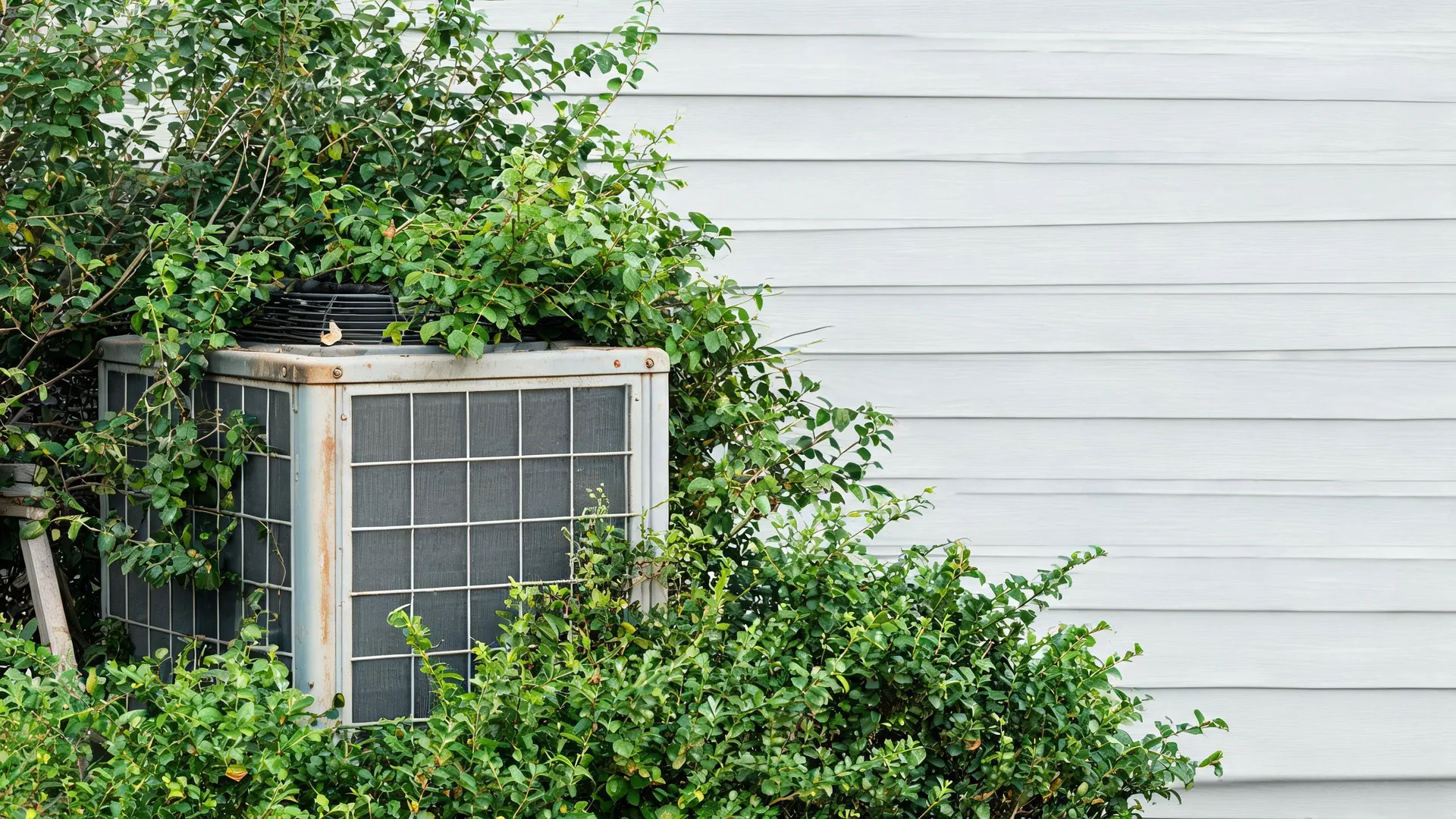
A gray heat pump condenser unit mounted on a concrete pad against the gray lap-siding exterior wall of a house.

Letting it run while it struggles can turn a small repair into a bigger one

A heat pump that's struggling doesn't fix itself by staying on. A capacitor that's starting to go puts more strain on the compressor every time it cycles. Strain like that shortens the compressor's life. A system low on charge keeps running the compressor against pressures it wasn't built for. That's how a small repair turns into a compressor replacement. Ice on the outdoor coil is the clearest case. Once frost builds up, the coil can't pull heat from the air like it should. So the unit runs longer to make less heat, and that extra runtime just feeds the ice instead of melting it. Shut it off and call someone. That stops the problem before it reaches the compressor.

Short cycles and warm-not-hot air

A heat pump that shuts off a few minutes after starting is tripping on something. Often it's high pressure from a dirty outdoor coil, or a failing compressor contactor. If air from the vents feels room temperature instead of warm, that usually means the system is stuck in fan mode, or it's lost refrigerant charge. That's not a thermostat problem.

What these signs tell a contractor

Short cycling points to the electrical side, the capacitor or contactor. Catch it early and that's usually a quick fix. Weak airflow or lukewarm air points to charge or coil problems. Those take gauges and a trained eye to track down. Either way, tell the contractor exactly what was noticed and when. That's what lets them narrow down which part is failing, faster.

Most heat pump failures come down to a handful of parts that wear out from cycling on and off thousands of times a year. The capacitor goes first, most often. That's what kicks the compressor and fan motor into motion. A weak capacitor makes the unit strain to start, or it just won't start. The reversing valve is next. That's what switches the system between heating and cooling. If it sticks, the system can end up blowing cold air when it should be heating. Defrost sensors and control boards fail too. When they do, the outdoor coil ices over, because the system never gets the signal to run its defrost cycle. A low refrigerant charge, usually from a slow leak at a fitting or coil, makes the compressor work harder for less heat. Over time, that shortens its life. None of this is weather damage. These are just ordinary parts reaching the end of what they can do.

A diagnostic visit starts outside, at the outdoor unit, because that's where most heat pump trouble shows up first. A contractor checks the refrigerant pressures with gauges, since that number tells them right away if the charge is low and by how much. They'll pull the capacitor and test it, because a weak one often looks fine sitting there but fails the moment it's asked to start the compressor. Inside, they check the air handler for the same things, airflow across the coil, voltage to the motor, whether the defrost board is actually sending a signal when it should. If the system is short cycling or icing over, they're watching it run through a full cycle if they can, because some failures only show up once the unit has been going for a few minutes. By the end they can usually point to the one part causing the trouble, not just the symptom you called in about.