







A nighttime view of a tree-lined residential street with illuminated two-story brick houses and street lamps.

Heat Pump Repair in Ashtabula, OH

Tell us about the job

Takes about a minute. No obligation.

RepairHeat PumpAshtabula County, OH
Step 1 of 2

What ZIP code is the job in?

A heat pump in Ashtabula usually shows trouble when the load changes. October is when heating kicks back on after sitting idle since spring, and that first real cold snap finds whatever was already weak. Same with June, when the switch to cooling happens after months of sitting idle. If it's short cycling, running constantly, or not keeping up, get it looked at now. Don't wait to see if it sorts itself out. By the time a system is eight months into a heating run that started in October, a small issue has had plenty of time to turn into a bigger one.

8 months
October through May, your system heats
3 months
June through August, it cools
21°F
the average winter night it heats against
80°F
the average summer afternoon it cools against
Isometric cutaway illustration of a gray house showing interior rooms, a central air handler with ducts in the attic, and refrigerant lines running to an outdoor condenser unit beside the building.
Your system heats October through May and cools June through August.

NOAA nClimDiv, 1991–2020 normals

Ashtabula winters are cold, so heating does most of the work here. But the heat pump isn't fighting extreme swings all year round.

A unit that hasn't been run ragged usually stays sound underneath. So when something goes wrong, it's more often one bad part than a system that's worn out.

Half the homes in Ashtabula County were standing before the heat pump was common equipment

Half the homes here were built by 1962
83 damaging wind events from 2015 to 2024
5 hail events from 2015 to 2024
Ohio power isn't cheap to wasteElectricity in Ohio ran 15.99 cents per kilowatt-hour in 2024. A heat pump that's struggling burns through that every single day it's left alone.

Ashtabula County saw 115 severe weather events between 2015 and 2024. Most of that was wind and winter storms, not anything more violent. That kind of weather doesn't wear out a heat pump from the inside. Wind and snow can knock out power or pile up against the outdoor unit, but they don't damage a compressor or a reversing valve just by blowing through. If the power's been out, most heat pumps come back on by themselves once it's restored. So a unit that stays dark after that, something else is going on. Otherwise a heat pump here fails the same way it fails anywhere. A part wears out, a control fails, something was off from the start. The weather's not the culprit.

A unit this sound is worth repairing

A heat pump that hasn't been run into the ground is worth fixing, not replacing. If the unit is down, odds are it's one failed part on a system that's otherwise fine. Not the start of a bigger problem.

Find a contractor
A man in a cap, dark T-shirt and brown work pants walks up porch steps toward a navy front door, carrying a canvas tool bag.
A gray air-source heat pump mounted on a concrete pad next to a house with gray vinyl siding, surrounded by gravel and flanked by green shrubs and white hydrangea flowers.

Running it while it struggles spreads the damage

A heat pump that's struggling doesn't stay broken in just one spot. Low charge makes the compressor work harder, and that means it runs hotter than it should. Heat is what wears a compressor down over time. A dirty coil makes the blower strain, and that pulls more current through a motor that wasn't built to handle it. Short cycling wears out the parts made for a handful of starts an hour, not dozens. That includes the contactor and the start components. None of this fixes itself by waiting. The unit keeps meeting the same load with the same bad part, so the strain repeats every time it runs. One worn part can take others down with it if the system keeps running under that kind of stress.

The outdoor unit is usually the tell

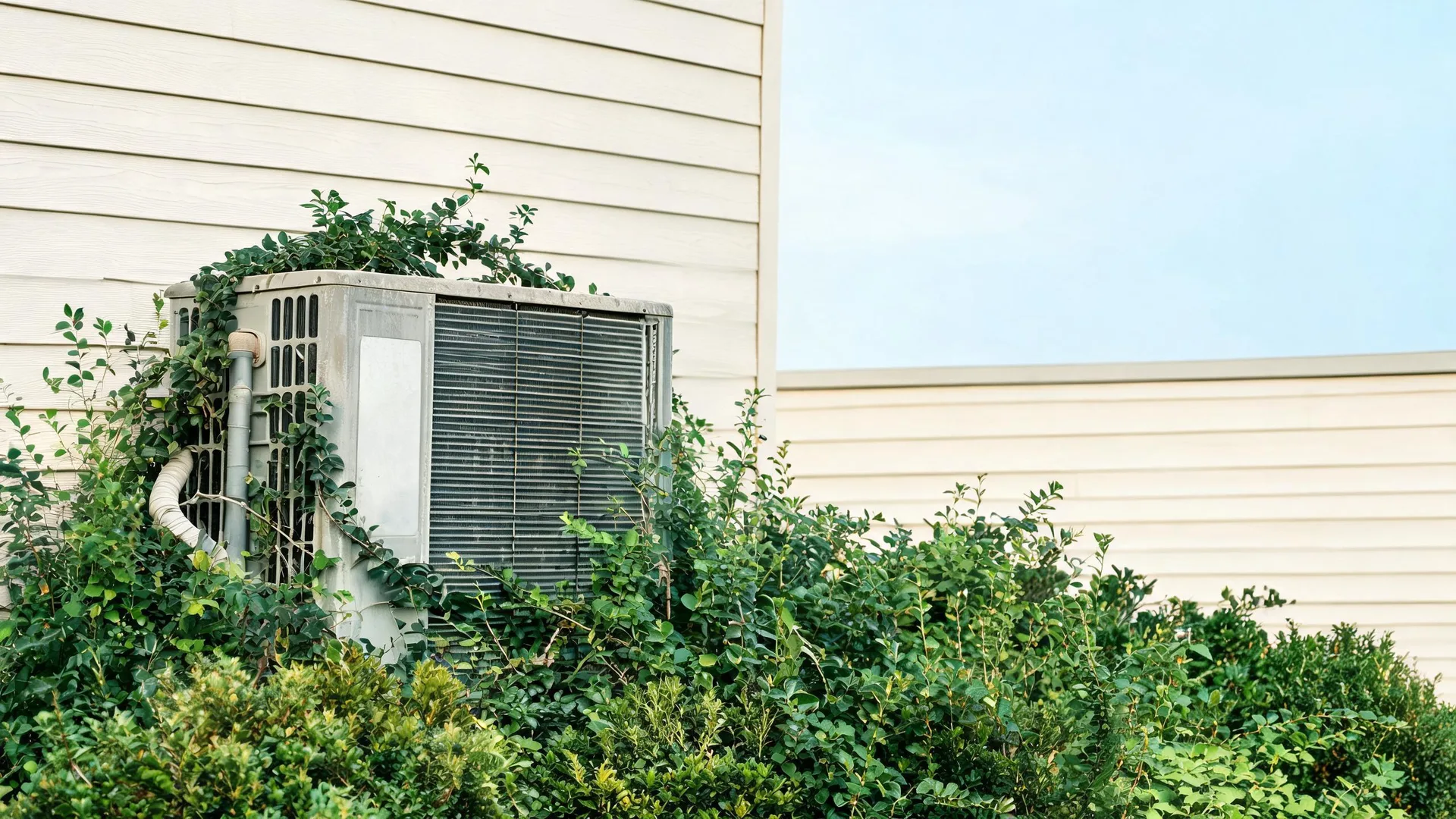
A heat pump in trouble often shows it outside first. Ice on the outdoor coil when it shouldn't be there. The outdoor fan not turning while the system is calling for heat or cool. The unit running nonstop without ever satisfying the thermostat. Inside, warm air blowing cooler than it used to, or the system switching between heating and cooling on its own. Both point to a reversing valve or a sensor that's lost its way.
Noise and smell tell you where to look

A new sound is worth paying attention to. Clicking that repeats without the system starting. A hard bang when it kicks on. A grinding that wasn't there before. A burning smell from the vents means an electrical problem. Don't just run another cycle and wait to see. Any of these means the problem is down to one part, and that's the kind of repair worth calling in before it spreads.

A few things are worth checking before anyone comes out. Start with the thermostat. Make sure it's set to heat or cool as needed, and check the batteries. A blank or frozen display can look exactly like a dead system. Check the air filter next. A filter packed with dust chokes airflow across the indoor coil, and that alone can cause icing or weak output. Walk outside and look at the unit itself. Clear away leaves, snow, or anything piled against the cabinet. The outdoor coil needs open air moving through it to work at all. Check the breaker panel for a tripped switch. Flip it back once. If it trips again, leave it alone. None of this fixes a failed part. But it rules out the simple stuff before paying someone to find it.

A diagnostic visit starts outside, watching the unit run a full cycle instead of just glancing at it. That means checking refrigerant pressures, measuring the temperature difference between the air going in and the air coming out, and watching how the compressor and fan behave under an actual call for heat or cool. Electrical readings come next. A contactor or capacitor can look fine sitting still and still be the part failing under load. The reversing valve gets tested directly too, because a valve stuck partway is easy to miss unless it's actually commanded to switch. All of this points to one specific part instead of a guess. That's what makes the repair worth doing.