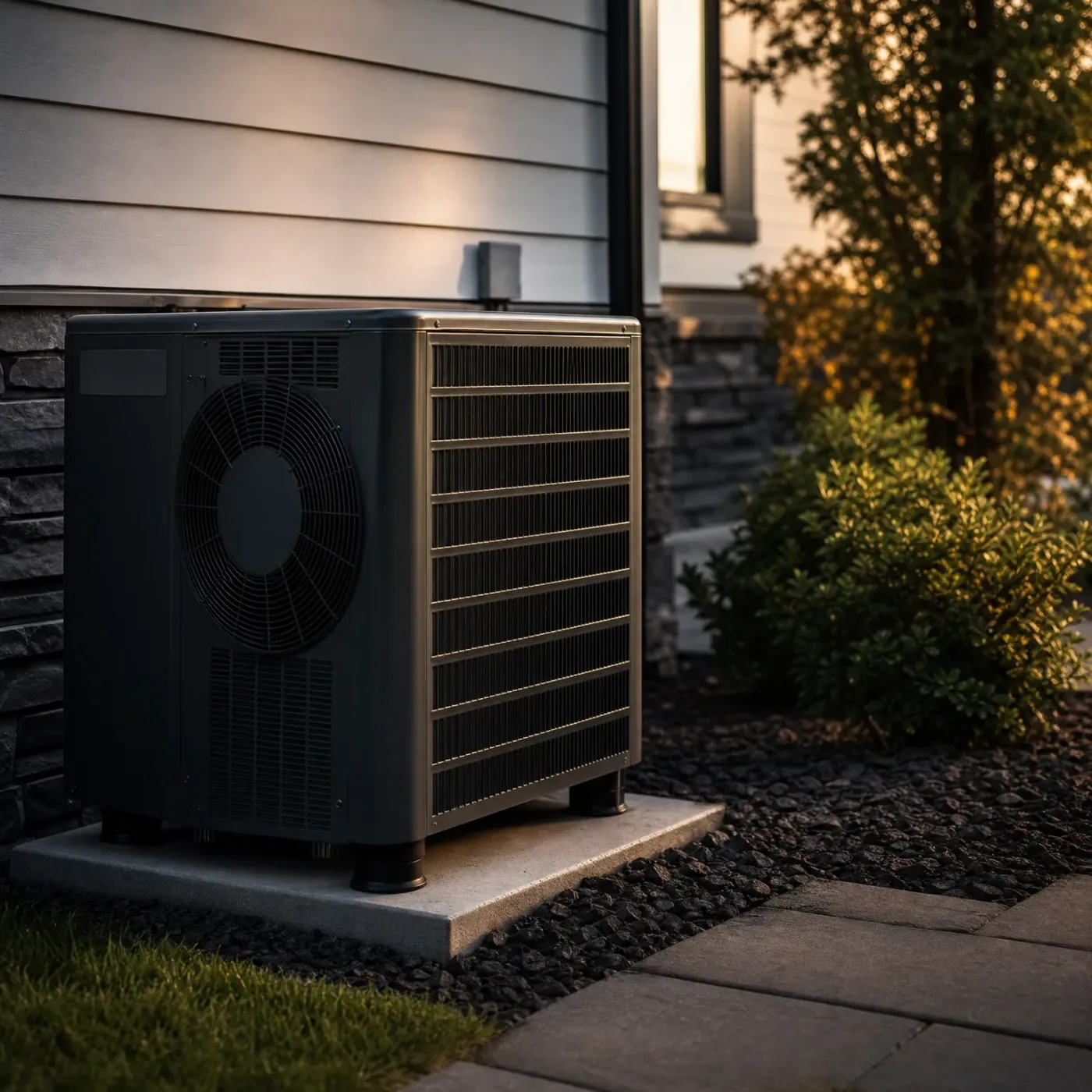

A dark outdoor heat pump unit with a round fan grille and finned coil sits on a concrete pad beside a house with horizontal siding and stone veneer, next to gravel, a paver walkway, grass and shrubs in warm low light.

The right pro for this job

Heat pump not cooling in Zanesville, OH

A heat pump blowing air that isn't cold usually comes down to a handful of causes, and some of them you can rule out before anyone comes out. This page walks through what to check first and what points to a bigger problem. If it still isn't cooling, you can get matched with a local contractor who works on heat pumps around Zanesville and the rest of Muskingum County.

Connect with a pro

A heat pump that runs but doesn't cool is usually stuck in heat mode, low on refrigerant, or blocked by a dirty filter or a coil that's iced over. The reversing valve is what switches the system between heating and cooling, and when it sticks, the unit keeps acting like it's January even if you've got the thermostat set to cool. A dirty outdoor coil or a clogged filter cuts off the airflow the system needs to pull heat out of your house, and once airflow drops enough, the indoor coil can ice over and shut down cooling entirely. Low refrigerant does the same thing from a different angle: there's not enough of it moving through the lines to absorb heat the way the system is built to. Muskingum County summers get sticky enough that a heat pump working at half capacity still feels like it's doing something, which is why this often gets ignored until the house won't cool down at all.

An outdoor condenser unit on a concrete pad beside a gray lap-sided house, with an electrical disconnect box and conduit on the wall and shrubs with mulch to the right.

Outdoor unit running clean

This is what a heat pump should look like outside: clear of debris, coils open to the air, lines running clean to the disconnect box. Air moves through it the way it was designed to. If yours looks like this and still isn't cooling, the problem is inside the system, not around it.


An outdoor air conditioner condenser unit on a gray composite pad beside a house with horizontal lap siding, with refrigerant lines and a conduit running to a wall-mounted disconnect box, and a shrub at left.

Outdoor unit caked in grime

A coil this dirty can't move enough heat to cool your house. Dirt and grass clippings build up on the fins and block airflow, so the system runs without doing its job. A heat pump in this shape in Zanesville will struggle long before a clean one shows any strain.

Is your house just not cooling down anymore

You've probably noticed the air coming out of the vents feels room temperature, or close to it, even with the thermostat set low and the outdoor unit clearly running. Some rooms might feel worse than others. The system may run longer than it used to, cycling on and off more often, or just running and running without the house ever catching up. You might hear the outdoor unit humming along fine while the indoor air stays flat. If this has been going on for a while, check the outdoor coil for ice, since a heat pump that keeps running iced up can end up costing more to operate and, left alone, can put strain on the compressor itself.

A gray-haired bearded man in a dark green sweater sits on a light sofa indoors, looking to the side, with a houseplant, framed picture, table lamp and sunlit window behind him.
A middle-aged man in a dark denim shirt sits on a light beige sofa in a living room with wooden shelving and a potted plant, looking off to the side.
A gray-haired man in a dark navy sweater sits on a light sofa in a living room, looking toward a sunlit window with a houseplant and wooden cabinet behind him.
A man with greying hair in a dark green sweater sits on a light sofa in a sunlit living room, looking off to the side, with a large window, table lamp, framed art and white built-in shelves behind him.

Fix It Yourself or Call for Help

Call a contractor now

  • A sticking reversing valve or a refrigerant leak isn't something you can fix by cleaning a filter or hosing off the coil.
  • Low refrigerant means a leak somewhere in the line, and running the system low that way can damage the compressor.
  • A contractor who works on heat pumps all season already knows which failures show up most in Muskingum County summers.
  • With power costs what they are here, a system struggling to cool and running constantly is costing you more every day it goes unfixed.
  • Getting matched with one local, licensed contractor means one company calling you back, not a string of quotes from strangers.

Check it yourself first

  • Look at the thermostat and confirm it's set to cool, not heat or auto, since a heat pump stuck in the wrong mode won't cool no matter what else is right.
  • Pull the filter and hold it up to light; if you can't see through it, that alone can choke airflow enough to stop cooling.
  • Walk outside and look at the coil for ice. If it's frozen over, shut the system off and let it thaw before doing anything else.
  • Check that the outdoor unit has clear space around it. Leaves, mulch, or anything packed against the coil blocks the airflow it needs.
  • If the breaker tripped or a disconnect is pulled, that explains a unit that won't run at all, separate from one that runs but doesn't cool.
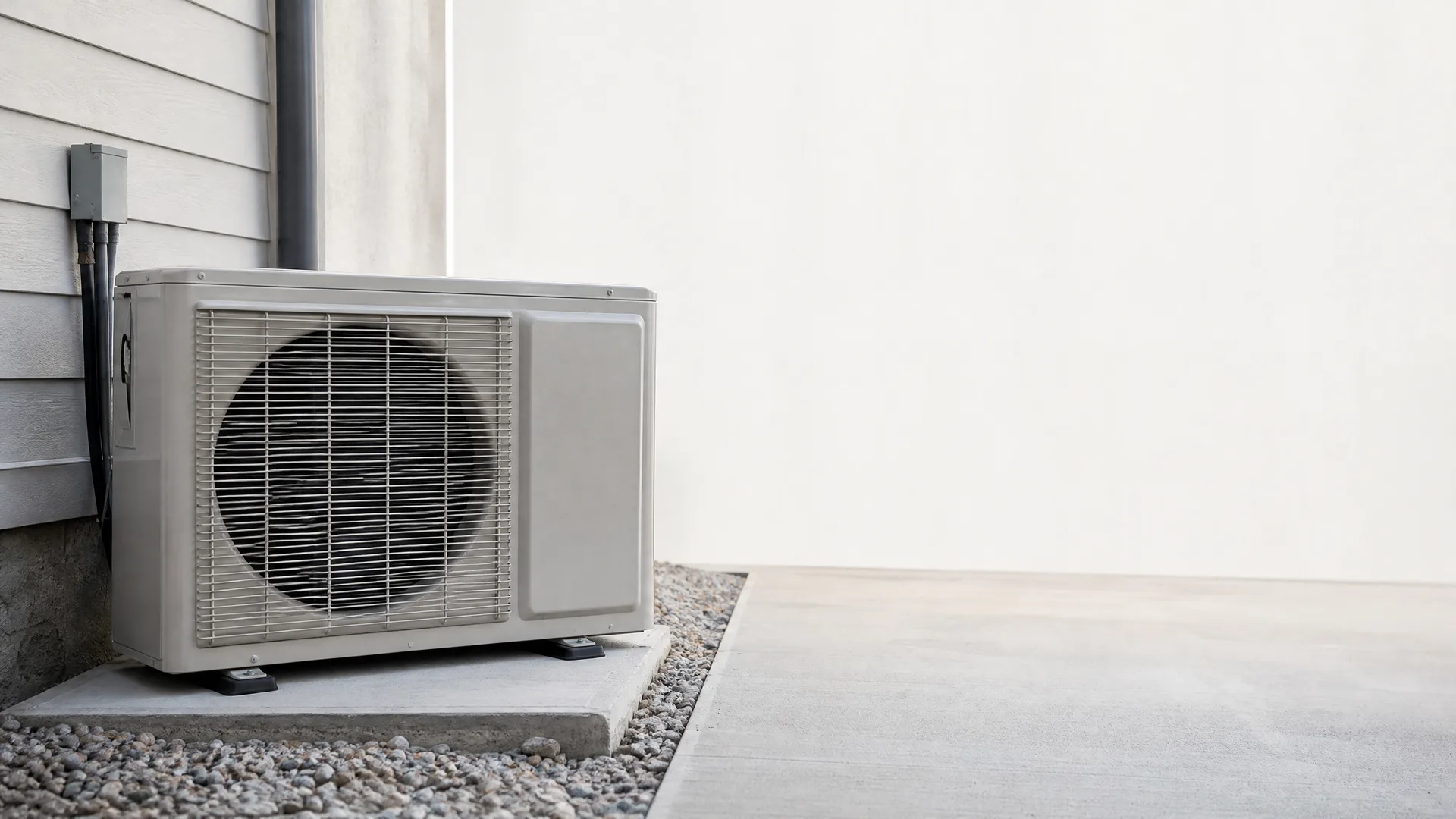
An outdoor heat pump condenser unit on a concrete pad beside a light-colored lap-sided wall, with an electrical disconnect box and conduit above it and gravel next to a concrete walkway.

Why the reversing valve sticks

The reversing valve switches the flow of refrigerant so the same outdoor unit can heat your house in January and cool it in July. It only moves when it gets a signal from the thermostat and enough pressure behind it to slide. If it sits unused for months at a time, the slide can bind, and when summer hits, the valve stays in heating position no matter what the thermostat calls for. That's why this failure shows up right when you switch the system over for the muggy months.

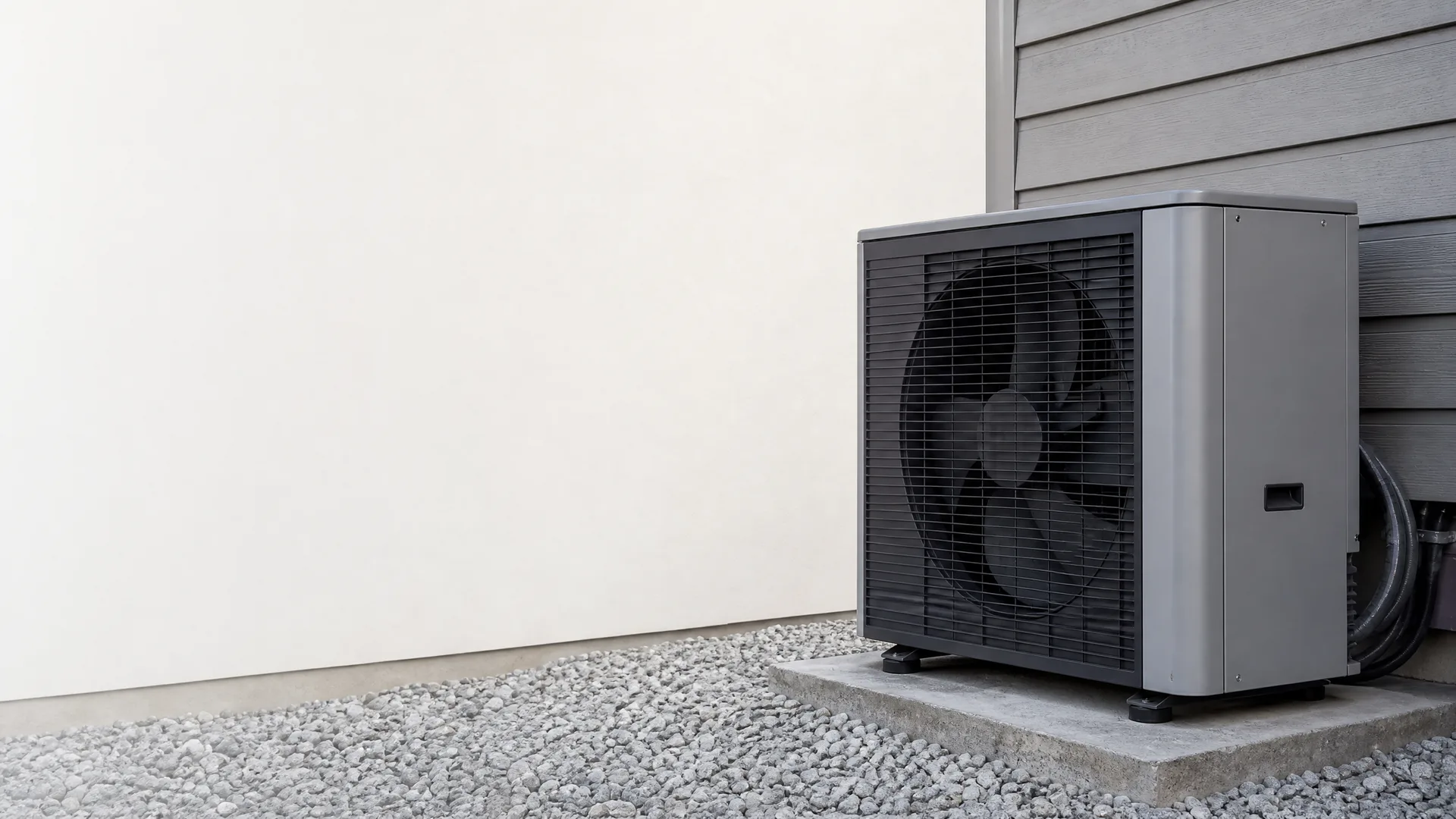
A gray outdoor heat pump unit with a large fan grille sits on a concrete pad beside a house with horizontal siding, surrounded by gravel and next to a plain light-colored wall.

What low refrigerant actually does

Refrigerant doesn't get used up the way gas in a tank does. A heat pump is sealed, so if the charge is low, it's because refrigerant is leaking out somewhere along the lines or at a fitting. Low charge means the coil can't absorb heat the way it's supposed to, and the pressures inside the system drop out of range. Run it long enough in that state and the compressor, the most expensive part in the unit, takes the damage.

So why does your heat pump need to cool at all

  • Winter nights average 23°F

    Heat here runs eight months, October through May, which means the reversing valve sits in heating mode most of the year and only has to switch over for summer.

  • Heat runs October through May

    Summer only lasts June through August here, but that's still three months of a system that has to switch modes and hold up to muggy heat and humidity.

  • Cooling runs June through August

    Overnight lows average 23°F in December, January and February, so the valve spends most of its life parked in heating mode before it's asked to switch back.

NOAA nClimDiv 1991-2020

You can wait and see if it's just a one-off, especially if the outdoor unit looks clean and the filter was changed recently. Some calls turn out to be a stuck valve that frees up or a breaker that needs resetting.

But a heat pump that won't switch to cooling in July weather isn't something that fixes itself overnight, and running it broken for long stretches risks the compressor. A local contractor can tell you in one visit which one you're dealing with.

A woman with shoulder-length graying brown hair, wearing a beige cardigan over a white top, sits in a light upholstered armchair and looks off to the side, with a curtained window, bookshelf, and lamp shade behind her.
A woman with dark hair in a bun holds a sleeping child wrapped in a knitted beige blanket on a sofa, with a lit lamp and a window behind them.

Matched to your heat pump job

A valve that won't switch or a refrigerant leak won't fix itself, and a heat pump run that way through a Muskingum County summer puts strain on a compressor that's expensive to replace. The reversing valve sits in heating mode eight months of the year here, so when it finally has to move for summer and won't, that's wear built up over a long Zanesville winter showing itself at the worst time. Someone who works on these systems every season around here has seen that valve stick before and knows what else to check when it does, from the low-voltage signal at the thermostat to the charge in the lines. Getting matched with a local contractor who already knows this equipment means you're not explaining your system from scratch or waiting on someone guessing at what's wrong. With a sticky house and no cool air coming through the vents, that's worth setting up now rather than letting it ride another week.

A gray outdoor condenser unit on a concrete pad beside a light-green sided house, surrounded by mulch, ornamental grasses and a shrub, with mowed lawn in the foreground.

Outdoor unit in good shape

The condenser sits clear on its pad, mulch and grass trimmed back from the cabinet, nothing blocking the sides. The disconnect box is mounted close by on the siding. Air can move through the coil the way the unit needs to cool your house.

A weathered outdoor condenser unit on a concrete pad beside a house with white horizontal vinyl siding, with refrigerant lines and conduit running to a wall-mounted electrical box.

Outdoor unit showing its age

Grime has built up across the grilles and the metal looks weathered from years outside against the siding. The refrigerant lines still run into the wall, but a coil caked like this can't shed heat the way it did when it was new.

An outdoor air conditioning condenser unit on a concrete pad beside a house with light horizontal siding and a concrete block foundation, with bare soil and small green plants around it.
Before you get your heat pump repair
A gray outdoor heat pump unit on a concrete pad beside a house with horizontal lap siding, connected by conduit and a flexible line to a wall-mounted disconnect box, with low shrubs and mulch nearby.
After you get your heat pump repair

Wait and check it yourself first

If the filter is clean, the outdoor unit is clear of leaves and grass, and the thermostat is set to cool and a few degrees below room temperature, give it twenty minutes and see if the air coming out of the vents changes. A breaker that tripped or a thermostat set wrong can look exactly like a bigger problem and costs you nothing to rule out. If the coil outside has ice on it, turn the system off and let it thaw before you touch anything or call anyone.

Get a contractor out now

If you've checked the filter and the outdoor unit and the air still isn't cold, or the coil keeps icing back up once it thaws, you're looking at a stuck reversing valve or a refrigerant leak, and neither gets better on its own. A contractor who works on heat pumps around Muskingum County through the summer sees this every season and knows which of the two it usually is before they open the cabinet. Running it longer this way risks the compressor, which costs far more than the valve or the leak.

Power here costs 18.72 cents per kilowatt-hour

At 18.72 cents per kilowatt-hour, a heat pump stuck running the wrong way doesn't just leave you warm, it adds to the bill while doing it. A unit cycling on a stuck valve or low charge still draws power the whole time it runs.

EIA-861 2025

Where this leaves you

  • A heat pump blowing warm air almost always traces back to a stuck reversing valve, a low refrigerant charge, or a blocked coil or filter.
  • The valve spends most of the year in heating mode here, so the moment it has to switch for summer is when a weak one tends to fail.
  • A dirty filter or a frozen coil you can check and clear yourself before assuming the problem is bigger.
  • A refrigerant leak or a valve that won't shift needs a licensed contractor with gauges and the parts to fix it right.
  • Matching you with one local contractor who works on heat pumps all summer means someone who already knows what tends to fail on these units.
  • One contractor means one call back, not a string of companies competing for the job.

You've gone through what makes a heat pump quit cooling: a reversing valve that won't switch, refrigerant running low, a coil or filter blocking the air. Some of that you can check yourself in twenty minutes. A clean filter and a clear outdoor unit rule out the easy answers fast. If the air still isn't cold after that, what's left isn't a cleaning job. A stuck valve or a leak needs gauges, refrigerant, and someone who knows how to find where it's getting out.

That's a licensed contractor's work, not a weekend project, and in Muskingum County it's worth getting to someone who already knows these units. The valve sits in heating mode eight months of the year here and only has to earn its keep in summer, which is exactly when a weak one tends to give out. A contractor who services heat pumps through the summer months here has likely already seen that failure a few times this season alone. That's who gets matched to your call, one contractor, local, not a handful of companies all chasing the same lead. You get one call back from someone who already has a sense of what's probably wrong before they pull into your driveway.

The air coming out of your vents should feel noticeably colder than the room. If it doesn't, and you've ruled out the filter and the outdoor unit, the next step is getting someone out who can actually open up the system and find out why.

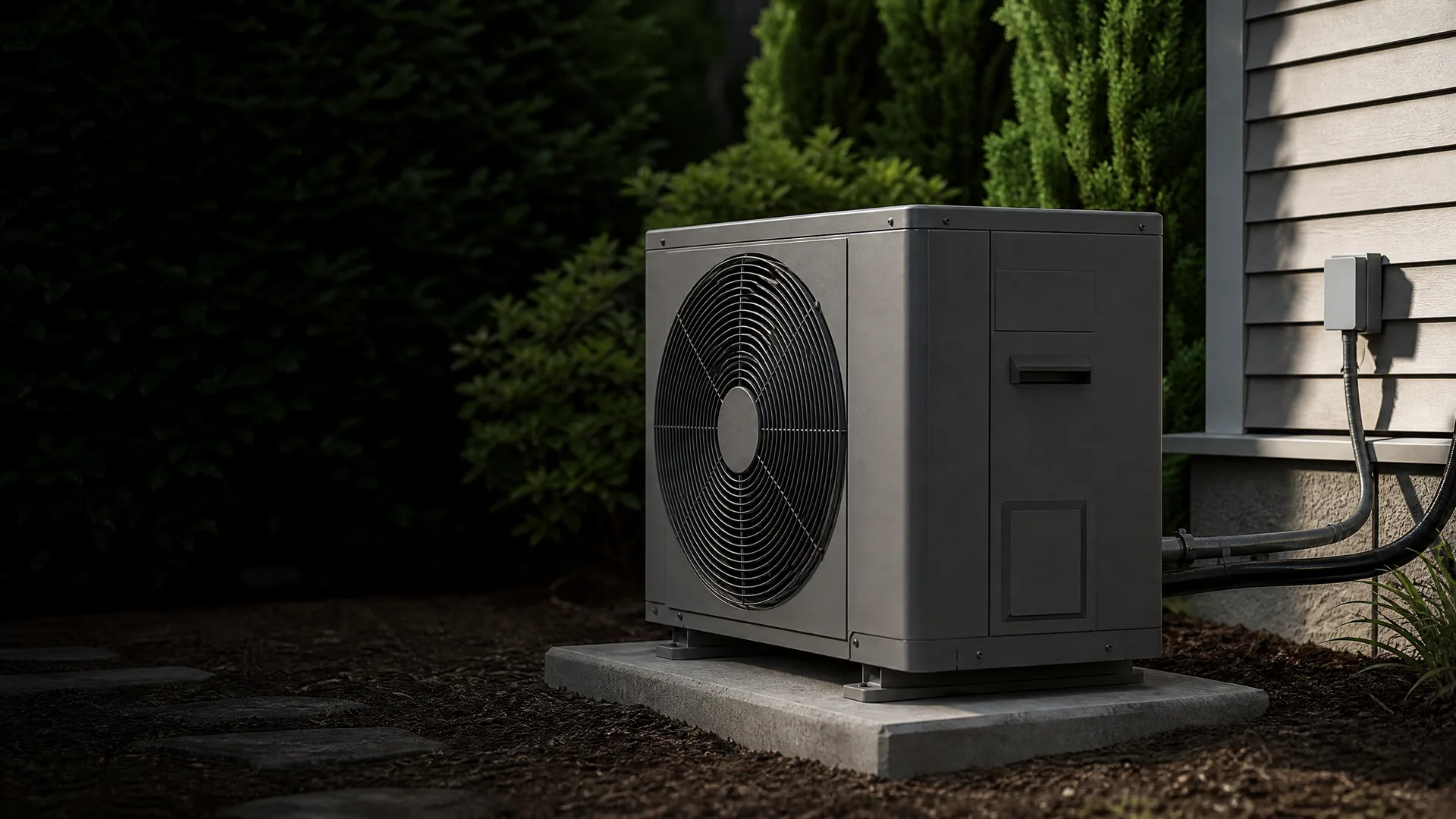
A gray outdoor heat pump unit with a large circular fan grille sits on a concrete pad beside a house with lap siding, with refrigerant lines running to an exterior electrical box and dark shrubs behind.

A heat pump pro near you

RepairHeat PumpMuskingum County, OH
Step 1 of 2

What ZIP code is the job in?