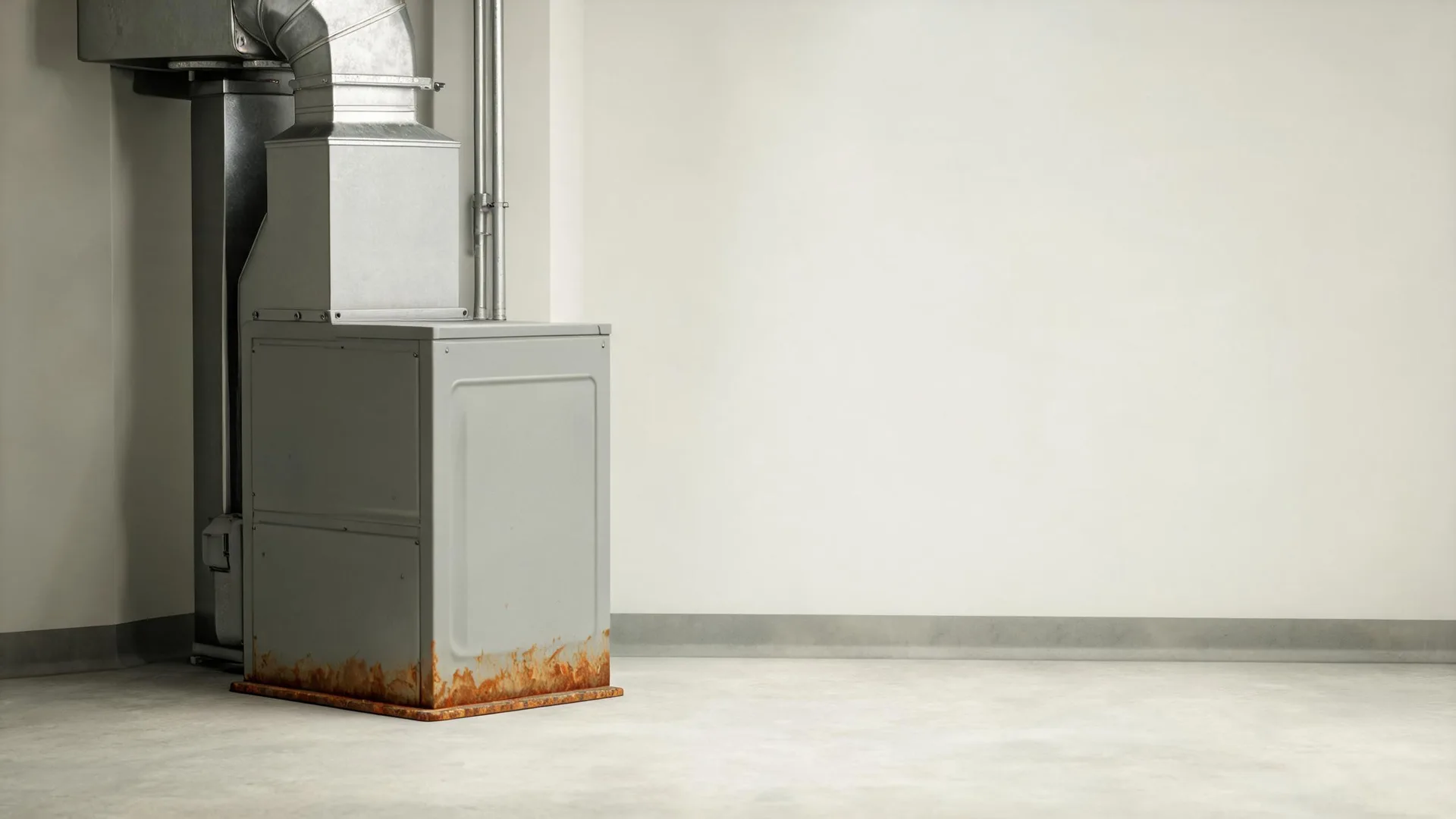
An unfinished basement featuring exposed ceiling joists, a metal HVAC unit with round ductwork, a hanging light bulb, and scattered boxes and debris along the left wall.

Furnace Repair in Troy, OH

Tell us about the job

Takes about a minute. No obligation.

RepairFurnace or heatingMiami County, OH
Step 1 of 2

What ZIP code is the job in?

September is the month to catch a weak furnace

Furnaces in Troy sit unused from spring until October. A part that's already failing, a cracked igniter or a worn capacitor, often doesn't show it until the furnace has to run for hours instead of minutes.

The first cold snap finds the weak spot

Heat season runs October through May. If the furnace struggles to light or keeps short cycling in the first weeks, there's usually one real cause behind it. Find that cause now and it gets fixed once, instead of patched every few weeks all winter.

8 months
October through May, your furnace is on duty
23°F
the average winter night it heats against
58%
of homes here heat with gas, so most furnaces here burn gas
8 winter storms
in ten years, the nights a failure hurts most
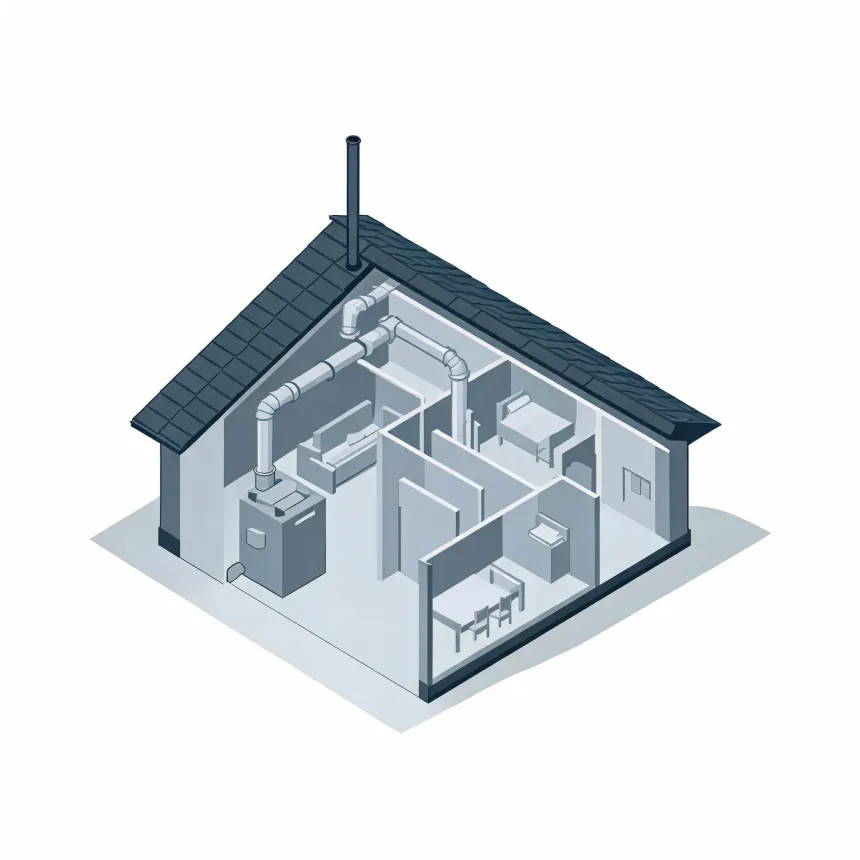
Isometric cutaway illustration of a small single-story house showing interior rooms with furniture, a furnace unit with attached ductwork running to a roof flue, and a dark shingled roof.
Your furnace works hardest from November through March.

NOAA nClimDiv, 1991–2020 normals

A Troy furnace runs about eight months a year, October through May.

Nights here average 23°F, so the furnace is working hard for a long stretch. The usual failures have the usual fixes.

Nothing about Troy makes this harderGas in Ohio runs $12.89 per million Btu. The furnace problems here are the usual ones, and they've got the usual fixes.

Miami County gets its share of severe weather, mostly wind. None of it does anything strange to a furnace in Troy. A power blip during a storm doesn't damage the furnace. It just shuts it off, and most furnaces relight on their own once the power's back. If yours didn't, the storm isn't why. Something in it was already due for a look.

Get it looked at early

Problems tend to show up in the first weeks of the season, when the load hits a part that was already weak.

Find a contractor
A man in a cap, gray jacket and tan cargo pants, seen from behind, carries a worn canvas duffel bag up steps toward a dark navy front door, with a potted shrub beside the entry.
A gray gas furnace with attached ductwork and piping installed in an unfinished concrete basement.

Running it through the problem makes the problem bigger

A furnace that's short cycling or struggling to light is already telling you something is wrong. Running it anyway just asks a weak part to keep working past the point it failed. A cracked heat exchanger gets worse under heat, not better. A failing igniter that's glowing dim or cracked keeps drawing current until it breaks clean. After that it won't light at all. A clogged flame sensor forces the furnace to shut down early, over and over. Each short cycle adds wear to the igniter and the blower motor that wouldn't happen if the furnace just ran normally. None of this fixes itself with more run time. It just turns from an annoyance into a furnace that won't start.

Short cycling has a cause, not a cure

A furnace that fires up and shuts off within a few minutes, over and over, is usually tripping a limit switch because airflow is restricted or a flame sensor isn't reading the flame right. It's not warming itself up or working through something. Each cycle is the furnace protecting itself from the same problem happening again.

A yellow flame or a burning smell means stop and call

A gas flame should burn blue and steady. Yellow or flickering flame, soot near the burners, or a smell like something hot and metallic are signs of incomplete combustion, and that can mean carbon monoxide isn't venting the way it should. This isn't a wait and watch situation.

An unfinished basement featuring concrete block walls, exposed floor joists, and a metal forced-air furnace with ductwork near a central pillar.

A new furnace would cut about $150 a year off heating for a typical Miami County home.

  • A new high-efficiency furnace$640 a year
  • An older furnace$790 a year

Estimates for a typical Miami County home, compared with an older unit built to the previous federal minimum, from EIA household energy data, Ohio fuel prices and NOAA climate normals. Your home will differ.

Repair makes sense when one part has failed and the heat exchanger is sound.

Replacement makes sense when the heat exchanger is cracked or the furnace keeps needing parts.

A diagnostic visit starts before any panel comes off. A tech asks what the furnace was doing, when it started, and whether it's happened once or kept happening, because that pattern points at a cause faster than guessing does. Then the panels come off and the tech watches it run through a full cycle, since a lot of these faults only show up partway through, like a flame sensor reading weak or a pressure switch that won't hold once the blower spins up. Readings get taken with meters, actual voltage at the igniter, actual resistance across a switch, not a guess based on how old the part looks. By the time the furnace is back together, the tech should be able to say which part failed and why, not just which part looked tired.