

A row of dark-clad houses with gray gabled roofs behind trimmed hedges and a lawn, framed by overhanging tree branches under an overcast sky.

Furnace Repair in Sandusky, OH

Tell us about the job

Takes about a minute. No obligation.

RepairFurnace or heatingErie County, OH
Step 1 of 2

What ZIP code is the job in?

Check the furnace in September, before the first cold snap hits in October. Most furnace trouble in Sandusky shows up right at the start. A part that was already worn out gets asked to run for the first time in months, and that's when it quits. The igniter or the flame sensor can sit fine all summer, then fail the moment it's actually called on. If the furnace struggled last spring when it got shut off, that same weak spot is still there waiting this fall. Heat runs here from October through May. A furnace that won't start in week one has about eight months of work ahead of it.

8 months
October through May, your furnace is on duty
23°F
the average winter night it heats against
64%
of homes here heat with gas, so most furnaces here burn gas
8 winter storms
in ten years, the nights a failure hurts most
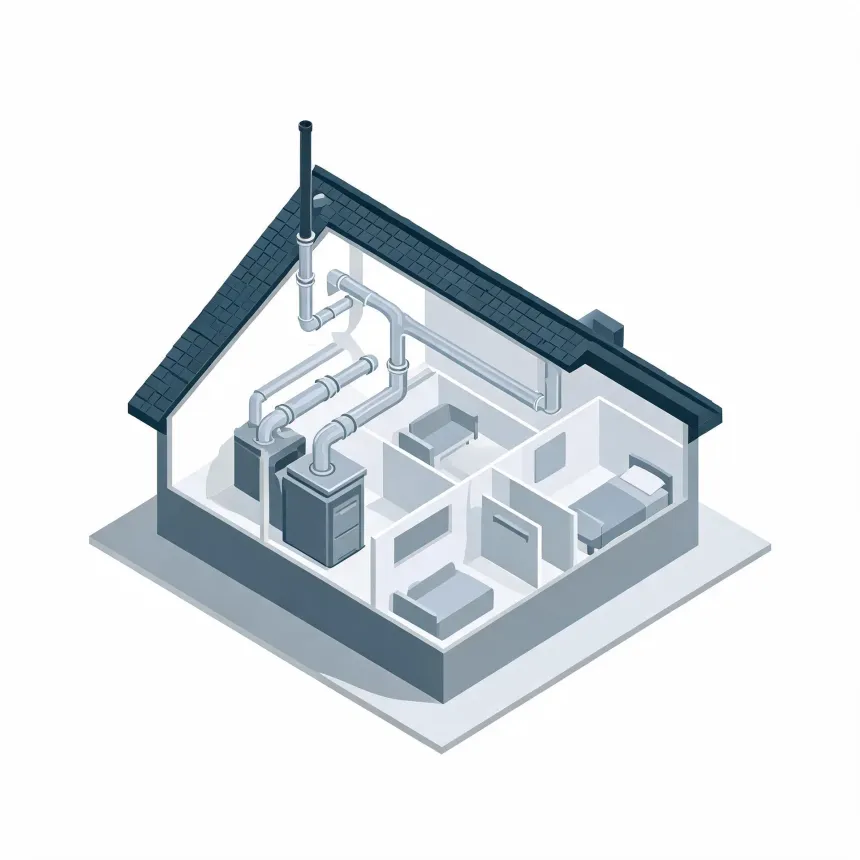
Isometric illustration of a cutaway house showing a furnace unit with ductwork and a flue pipe running through the interior rooms, which contain simple furniture.
Your furnace works hardest from November through March.

NOAA nClimDiv, 1991–2020 normals

A furnace in Sandusky runs eight months straight, October through May.

A worn igniter or flame sensor gets fixed the same way it would anywhere else.

Natural gas ran Ohio homes $12.89 per million Btu in 2024. That's the fuel cost behind every therm your furnace burns, and it's set by the state, not by anything particular to your house. A furnace that's cycling on and off too much, or short-cycling because of a cracked heat exchanger or a dirty flame sensor, burns more of that gas to put out less heat. Fixing the actual fault matters more than the price of gas itself, since the repair cost is the same whether gas is cheap or not. What changes is how much a broken furnace costs you to run while it's broken.

Get it looked at early

Problems tend to show up in the first weeks of the season, when the load hits a part that was already weak.

Find a contractor
A man seen from behind in a dark shirt and tan pants climbs concrete steps toward a navy blue front door, carrying a canvas tool tote in his right hand, with a large blue planter and shrub to the left.
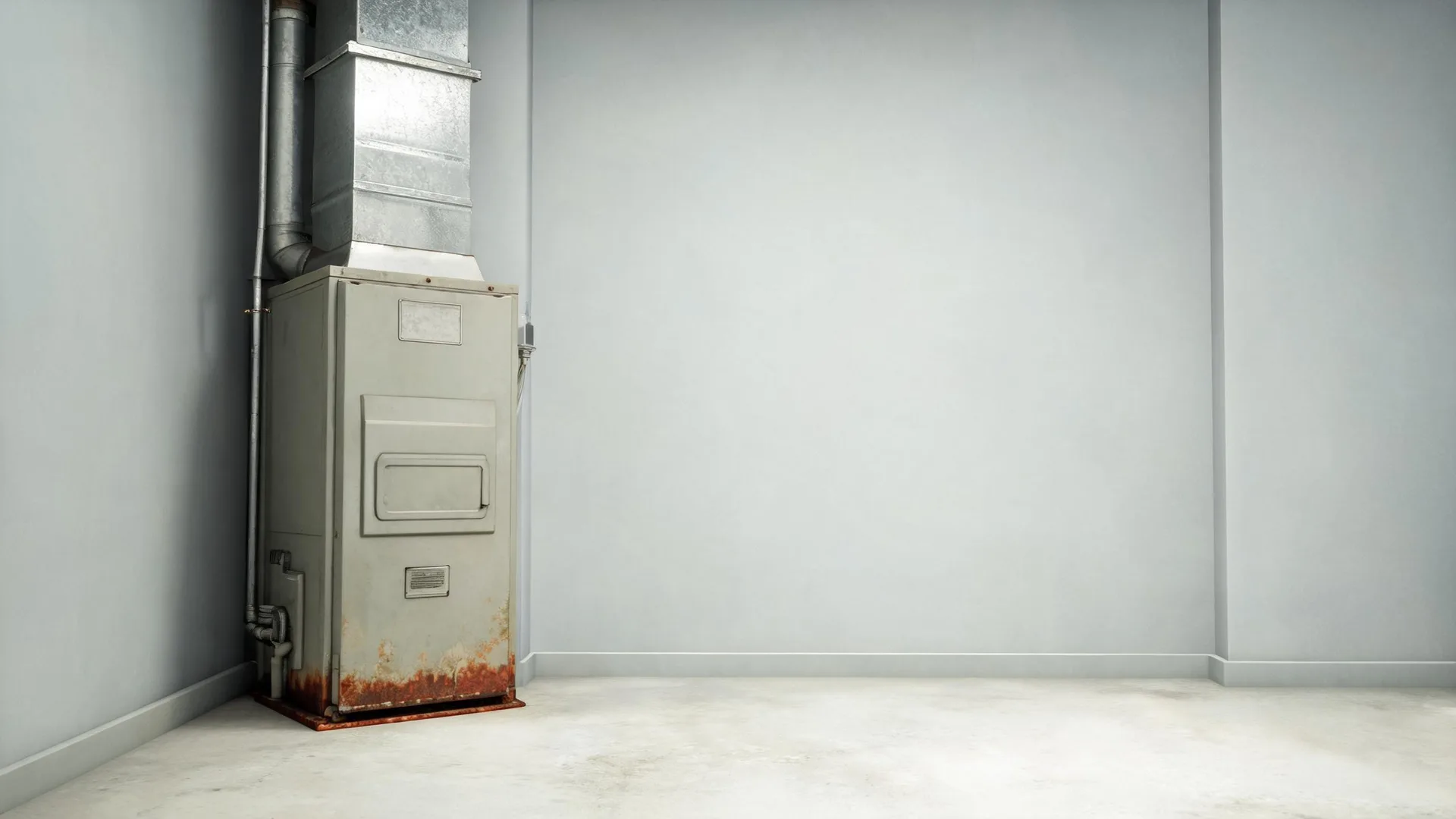
A gray residential gas furnace installed in an unfinished basement, surrounded by ductwork, a metal flue pipe, and a gas supply line.

What actually wears out, and why

An igniter doesn't fail all at once. Every cycle it heats up to light the burners, then cools back down. That swing in temperature is what cracks it over time. The flame sensor fails slower. It gets coated cycle after cycle with a thin layer of oxidation, until it can't sense the flame anymore. Then the furnace shuts the gas off as a safety move. Belts aren't part of this. The blower motor drives the fan directly, so what wears out is the motor bearing itself, not a belt. The inducer motor runs every single cycle, clearing the exhaust before the burners even light. That makes it one of the most-used parts in the whole furnace, and one of the first to show wear. None of this comes from one bad night. It's the sum of every cycle the furnace has run since the last time someone looked at it.

What you can check yourself

Check the thermostat first. Make sure it's set to heat, and set above room temperature. Then find the furnace switch, it looks like a regular light switch, on or near the unit, and make sure it's on. Next, pull the filter. If it's gray and packed with dust, swap it out. A blocked filter chokes airflow, and that can trip the furnace's limit switch and shut the whole thing down. Last, check the breaker. If it's tripped, reset it once. If it trips again, stop there. That one's for a contractor.

Where to stop and call someone

If the furnace tries to light and then shuts off, over and over, that's the flame sensor or the igniter going bad. Resetting the breaker won't touch that. Same goes for a gas smell, soot around the burner compartment, or a furnace that won't stay lit even after the filter and switch check out fine. That means the problem is inside the unit, and that's past the point of testing things yourself.

An unfinished basement containing a metal furnace with ductwork, exposed wooden joists on the ceiling, cardboard boxes, a coiled cable, and a single hanging incandescent bulb.

A new furnace would cut about $170 a year off heating for a typical Erie County home.

  • A new high-efficiency furnace$670 a year
  • An older furnace$840 a year

Estimates for a typical Erie County home, compared with an older unit built to the previous federal minimum, from EIA household energy data, Ohio fuel prices and NOAA climate normals. Your home will differ.

Repair makes sense when one part has failed and the heat exchanger is sound.

Replacement makes sense when the heat exchanger is cracked or the furnace keeps needing parts.

A diagnostic visit starts before any panel comes off. A contractor will ask what the furnace was doing right before it quit, whether it tried to light and failed or never tried at all, and whether there's been clicking or a light blinking on the control board. That blink pattern tells what the furnace saw last, and a trained eye reads it like a code. From there the panel comes off and the igniter, flame sensor and inducer motor get checked in turn. The symptoms often overlap even though the parts fail for different reasons. A multimeter tells the real story on the igniter and the sensor, since both can look fine and still be bad. The visit ends with the actual part named, not just the box it came from, and what it takes to put it right.