





A nighttime view of a tree-lined residential street with illuminated two-story brick houses and street lamps.

Furnace Repair in Portsmouth, OH

Tell us about the job

Takes about a minute. No obligation.

RepairFurnace or heatingScioto County, OH
Step 1 of 2

What ZIP code is the job in?

September is when a furnace that's been sitting idle all summer gets asked to work for the first time. Homes here start running heat in October, and whatever was already worn tends to show up in those first weeks, not months later. A cracked heat exchanger, a weak igniter, a draft inducer on its way out, none of these fail from the cold itself. They fail because the furnace is finally running again after months of doing nothing. If yours is acting up now, with October through April still ahead, that's not bad luck. That's just when a weak part tends to show itself.

7 months
October through April, your furnace is on duty
26°F
the average winter night it heats against
13 winter storms
in ten years, the nights a failure hurts most
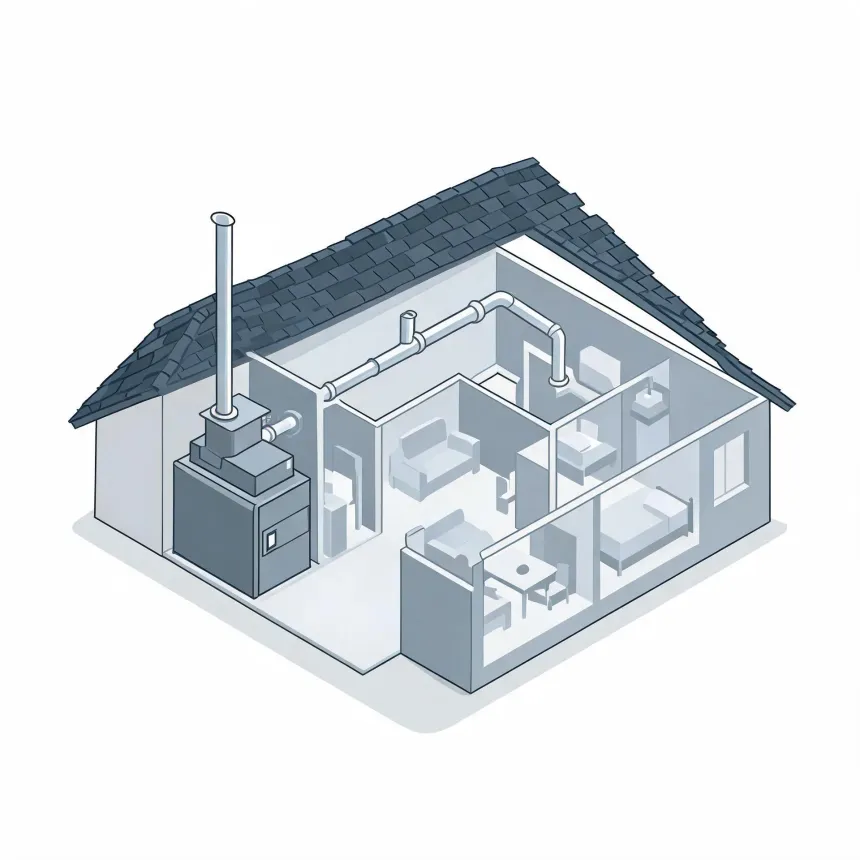
Isometric cutaway illustration of a single-story house showing interior rooms with furniture, ceiling ductwork, and a large furnace unit with a tall flue pipe in a corner room.
Your furnace works hardest from November through March.

NOAA nClimDiv, 1991–2020 normals

Portsmouth furnaces run about seven months straight, October through April.

A furnace that holds up through a Scioto County winter is built to last, so trouble now usually points to one worn part, not a furnace on its way out.

Half the homes here were built in 1968 or earlier

Half the homes here were built by 1968
Heat runs October through April
Winter nights average 26°F

A furnace that's struggling now will cost you every month it runs that way

Electricity in Ohio ran $46.85 per million Btu last year. A furnace with a worn igniter or a failing inducer motor doesn't get cheaper to ignore. It keeps drawing power the whole time it's struggling, for as long as it sits unfixed.

Find a contractor
A man seen from behind in a dark shirt and tan pants climbs concrete steps toward a navy blue front door, carrying a canvas tool tote in his right hand, with a large blue planter and shrub to the left.
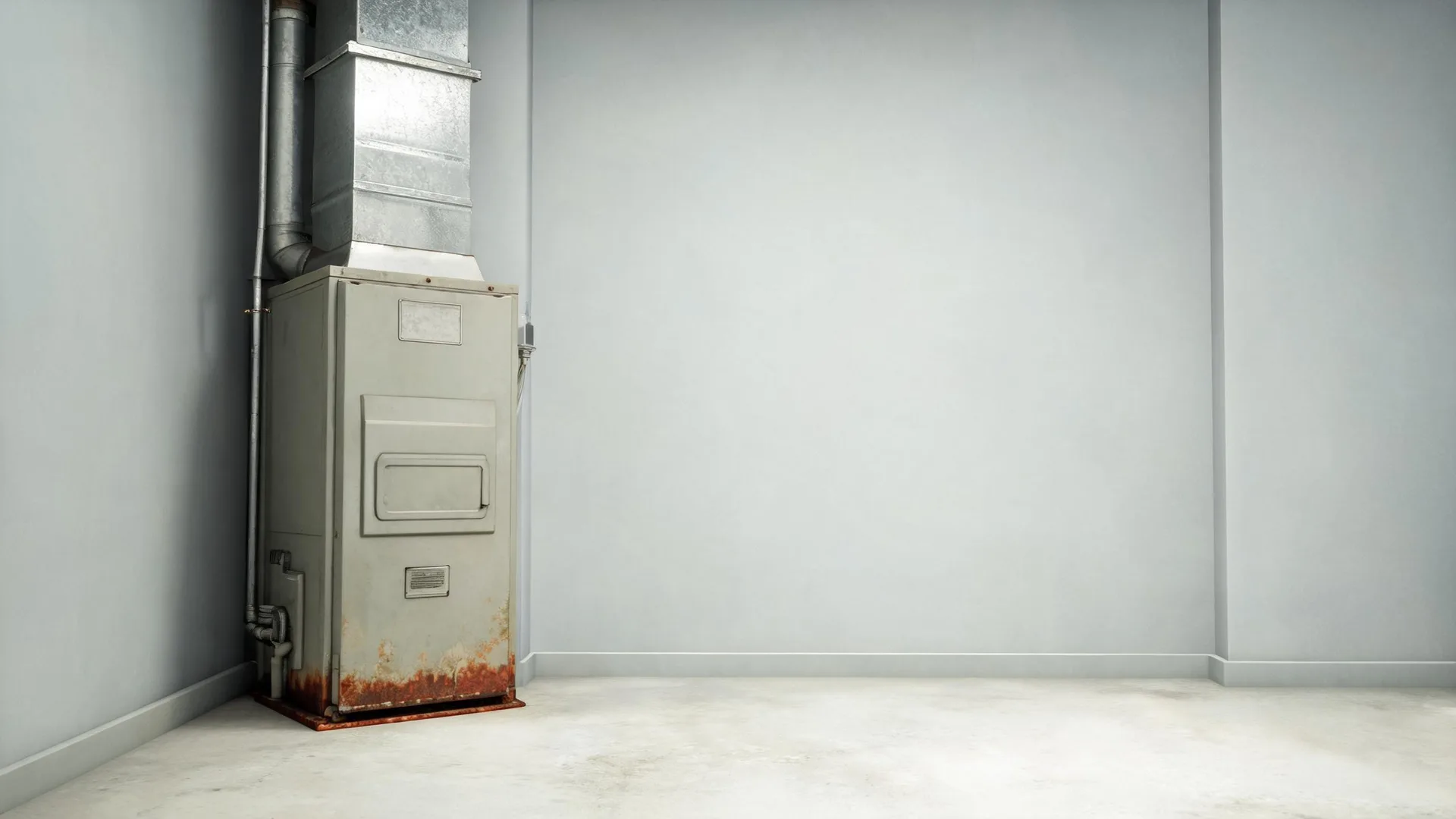
A gray residential gas furnace installed in an unfinished basement, connected to sheet-metal ductwork and PVC pipes.

Ask what's left in it, not just what's wrong

A furnace that's made it through enough Scioto County winters has earned some trust. But if it was already in the house when it changed hands, or nobody remembers it being installed, that's worth looking into before spending money on a repair. A contractor can check the whole unit, not just the part that's acting up, and give an honest read on how much life is left. If the furnace is old enough that this won't be the last repair, better to find that out now than right after paying to fix one part.

Check the thermostat and the switch first

Make sure the thermostat is set to heat and set a few degrees above room temperature, not just holding steady. Then find the furnace's power switch. It looks like a light switch, usually on or near the unit itself. Make sure no one bumped it off. Both take a minute to check. Both get ruled out before a contractor even picks up the phone.
Look at the filter and the flame

Pull the filter and hold it up to a light. If light doesn't come through, that's airflow the furnace is fighting against. Worth replacing before anyone comes out. If the furnace has a viewing window, a steady blue flame is normal. Yellow or flickering means something's off with the burners. That one gets described to the contractor, not fixed on your own.

Most calls come down to the same few parts. The igniter draws current every time the furnace starts up, and that wears on it until it cracks or just won't light the gas anymore. The flame sensor picks up a thin layer of carbon over a season of use. Once it can't sense the flame, the furnace shuts itself down. That's by design. The draft inducer motor spins on every single cycle to clear the exhaust before gas even flows. Run a motor that much and the bearings wear out eventually. A dirty flame sensor is an easy fix, usually cleaned up in one visit. A cracked heat exchanger is a different story. That one gets the furnace shut down, not patched.

A repair is worth doing when it fixes one part and the rest of the furnace keeps doing what it's been doing for years. That's true for an igniter, a flame sensor, a capacitor, most things that fail on their own while the rest of the unit is sound. It stops being worth doing when that one part failing is really the whole unit wearing out at once. Rust through the cabinet. A heat exchanger cracked from years of heating and cooling. A blower motor that's the second or third thing to go this year. A contractor can usually tell which situation it is by what else turns up when the panel comes off, not just the part that got called in. If a contractor hesitates to say the repair will hold, that hesitation means something. Listen to it.