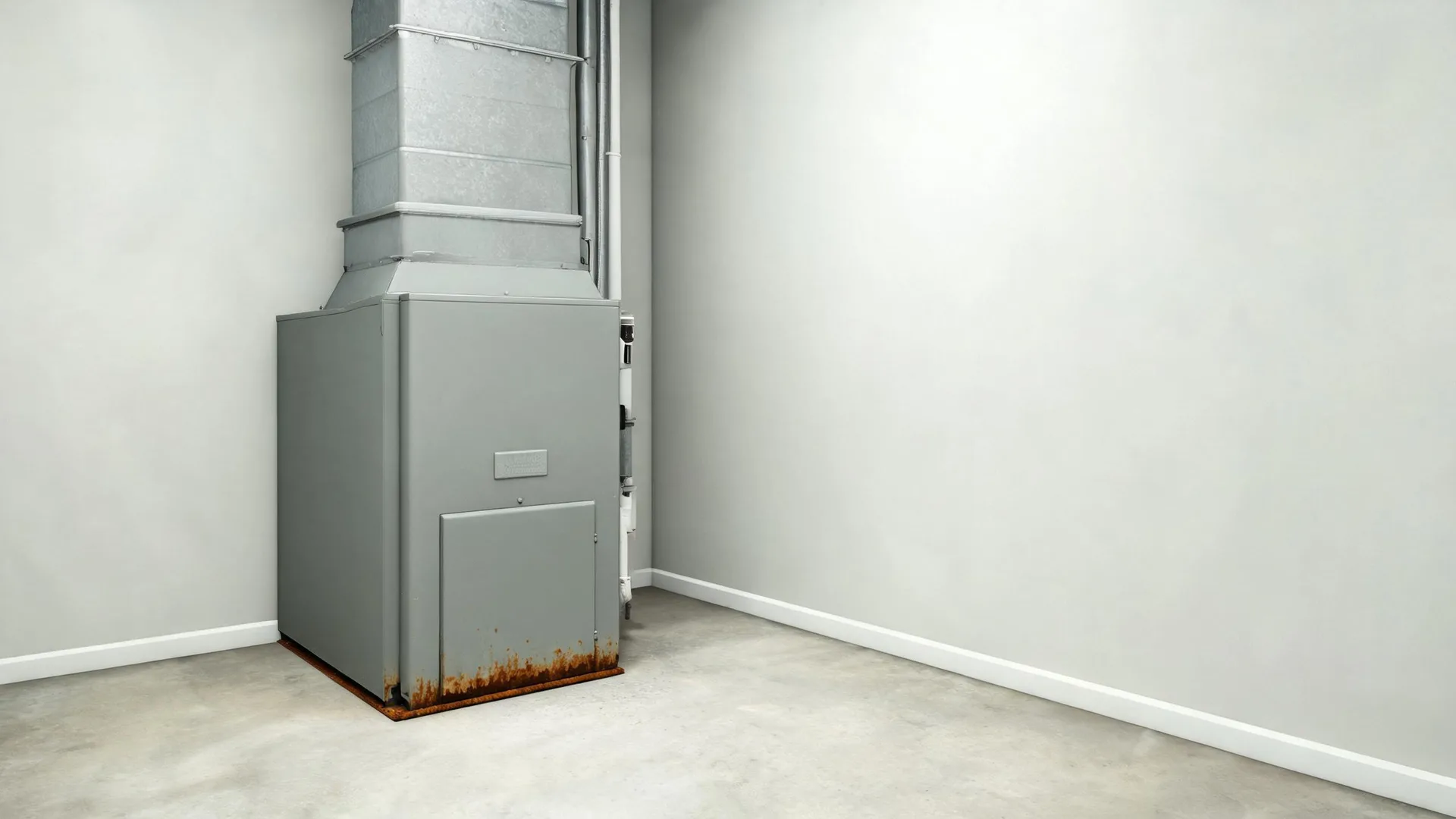
September is when a weak furnace shows its hand
Furnaces in Marion County sit idle all summer, then get asked to run every day once October starts. A part that was marginal in the spring is the part that fails in the first cold week.
Takes about a minute. No obligation.
Furnaces in Marion County sit idle all summer, then get asked to run every day once October starts. A part that was marginal in the spring is the part that fails in the first cold week.
If your furnace struggled at the end of last winter or has been acting up in early tests this fall, get it checked before October rather than during the first cold snap, when it's working hardest and everyone else is calling too.
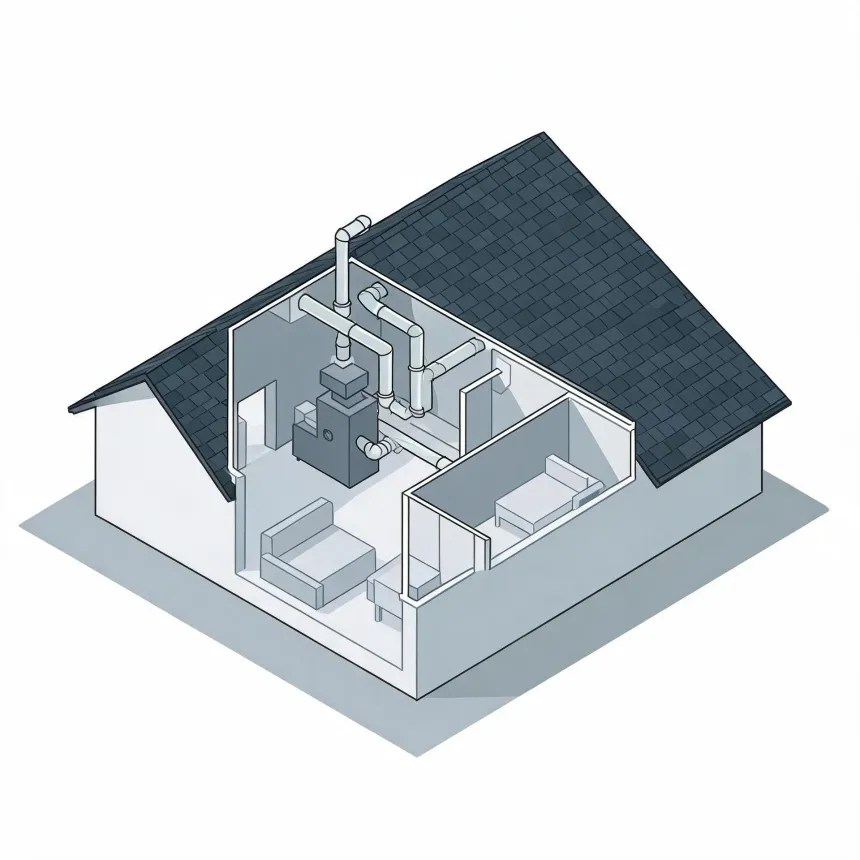
NOAA nClimDiv, 1991–2020 normals
Marion County furnaces run about eight months a year, October through May.
A long season like that is still ordinary wear, not a reason to expect trouble.




What matters isn't how old the furnace is. It's what's actually failing on it. A cracked heat exchanger means replace it, no question. That part keeps carbon monoxide out of the air, and it can't be patched. A bad igniter or a failed inducer motor is different. Those are wear parts. Swapping one out doesn't say anything about the rest of the furnace. The question to ask is whether this is the first repair or another one in a string of them. One repair on an old furnace is still just a repair. A pattern of repairs means the furnace is done being reliable.
Problems tend to show up in the first weeks of the season, when the load hits a part that was already weak.
Find a contractor
Most furnace failures come down to the same few parts, worn out from doing the same job over and over. The igniter heats up and cools down every cycle. That repeated stress is what cracks it eventually. The flame sensor sits right in the burner flame, so it builds up a thin coat of oxidation over time, and stops sensing the flame it's supposed to confirm. The inducer motor spins up before every cycle to clear the exhaust path. A motor that starts and stops that often wears its bearings faster than one that just runs straight through. None of this means anything was built wrong. It's just what happens to moving parts and electrical components that fire on and off all season.
Heat makes metal expand. A hairline crack opens a little wider every time the furnace fires and cools back down. A crack that starts small, leaking a trace of exhaust into the airflow, leaks more as it spreads. Shut the furnace down and get it looked at. That stops it from getting worse.
When an igniter is failing, the furnace tries again and again to get a flame going. Each failed attempt puts a demand on the control board it wasn't built to handle that often. Leave a bad igniter running long enough, and it can take the board down with it.
Estimates for a typical Marion County home, compared with an older unit built to the previous federal minimum, from EIA household energy data, Ohio fuel prices and NOAA climate normals. Your home will differ.
Repair makes sense when one part has failed and the heat exchanger is sound.
Replacement makes sense when the heat exchanger is cracked or the furnace keeps needing parts.
The check starts with questions. What's the furnace doing, or not doing, and when did it start. Then the cover comes off and the burners get watched through a full cycle, ignition to steady flame to shutdown. A furnace can sit there looking fine and still show you what's wrong the moment it fires. The igniter gets checked for resistance. A cracked igniter can still glow sometimes, but it won't hold up to repeated cycling. The flame sensor gets pulled and looked at. A coated sensor reads different than a clean one, and that difference tells most of the story. If the furnace is short cycling or tripping its limit switch, that points at the heat exchanger. That's the one check that doesn't get skipped or guessed at. By the end, expect to hear what's failing and why, not just a part name.