A row of dark-sided single-story houses behind a long trimmed hedge, with mown lawn, a paved path and large leafy trees under an overcast sky.

Furnace Repair in Marietta, OH

Tell us about the job

Takes about a minute. No obligation.

RepairFurnace or heatingWashington County, OH
Step 1 of 2

What ZIP code is the job in?

Eight months of real work

A furnace in Marietta runs from October through May. Overnight lows average 25°F in January. That's a long, steady season of use, not occasional bursts. It wears on a furnace the way any machine wears from regular hours. Nothing more unusual than that.

The cause is still the usual one

Long winters don't create new kinds of problems. A furnace that won't light, short cycles, or blows cold air almost always traces back to the same handful of causes seen everywhere. The job is finding which one it is here, and fixing that part correctly.

8 months
October through May, your furnace is on duty
25°F
the average winter night it heats against
68%
of homes here heat with gas, so most furnaces here burn gas
15 winter storms
in ten years, the nights a failure hurts most
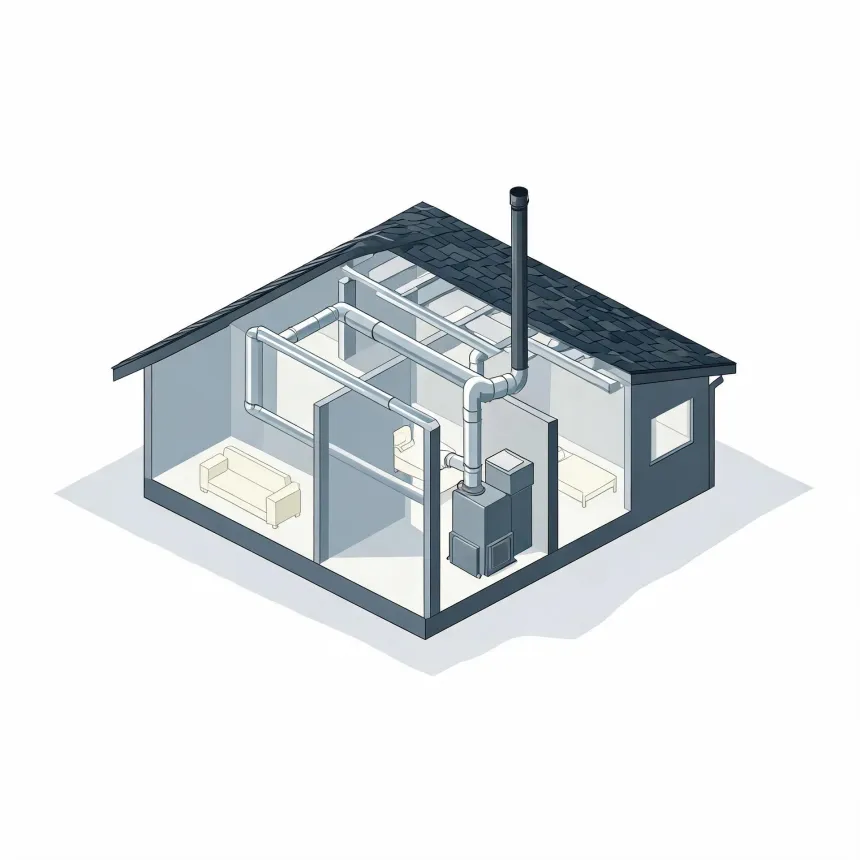
Isometric cutaway illustration of a small single-story house showing a furnace with a flue pipe through the roof and ducting running to rooms containing a sofa, chair and bed.
Your furnace works hardest from November through March.

NOAA nClimDiv, 1991–2020 normals

Furnaces in Marietta sit idle all summer. October is when they go back to work.

A weak igniter or a dirty flame sensor can sit there unnoticed the whole time. First cold week the furnace has to run, it fails.

Nothing unusual here, just winter doing its workWashington County had 61 damaging wind events between 2015 and 2024. That's normal wear and tear for a furnace that runs every winter.

What matters isn't how old the furnace is. It's what's actually failing. A cracked heat exchanger means replacement, no question. That part can't be repaired, and it affects whether combustion gases stay where they belong. A bad igniter or a failed blower motor is a different story. That's a straightforward swap, and age has nothing to do with it. The real question is whether the furnace is failing in more than one place at once. One repair in a winter is normal wear. Several unrelated breakdowns in the same season means the whole system is near the end of its life. That's worth hearing straight, instead of paying for one more part.

Get the usual fix

Nothing about this area is especially hard on it. It's most likely the usual problem with the usual fix.

Find a contractor
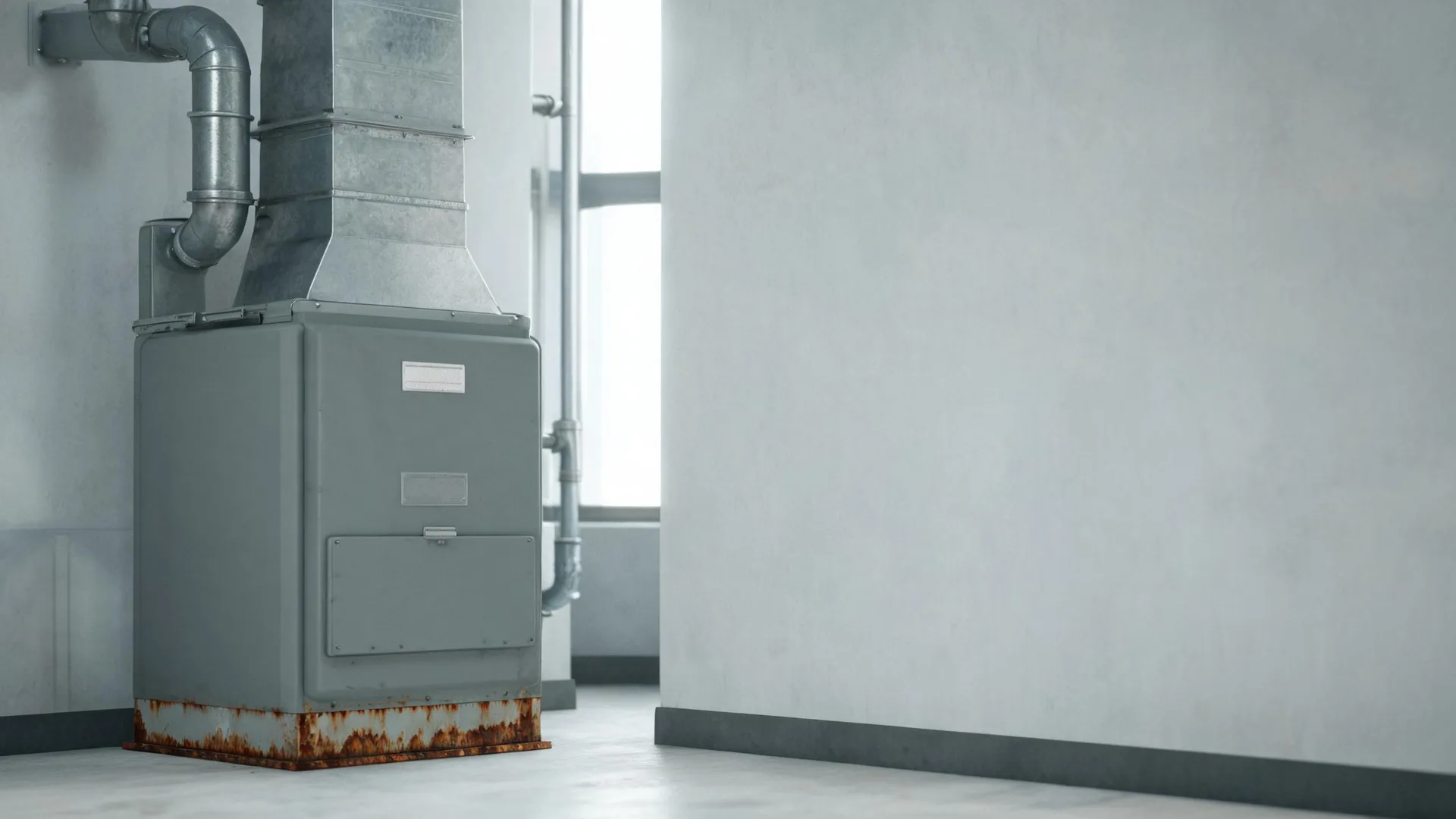
A gray residential gas furnace installed in an unfinished basement, surrounded by ductwork, a metal flue pipe, and a gas supply line.

What to check before the call

Check the thermostat first. Set to heat, not cool, and the set temperature above room temperature. Then check the breaker and the furnace's own power switch, the one that looks like a light switch on or near the unit. A furnace can trip its breaker without tripping anything else in the house. Pull the filter out and hold it up to a light. If light doesn't come through, that alone can cause short cycling or weak airflow that looks like a bigger problem. Check the vent hood outside too. Make sure nothing's blocking it, because some furnaces shut themselves down rather than vent improperly. None of this means opening up the furnace. If it still won't run after all that, that's the point to call someone.

A cracked heat exchanger gets worse with every cycle

A furnace with a cracked heat exchanger that keeps running pushes combustion gas past that crack every time it fires. The crack doesn't heal between cycles. It opens a little more each time the metal heats and cools. Eventually the exchanger has to come out of service entirely.

A limit switch tripping is the furnace protecting itself, not the problem itself

When a furnace shuts off on a high limit switch, that's the furnace doing what it's built to do. Something downstream, like a dirty filter or a weak blower, is keeping the heat from moving. Forcing it to keep running past that point puts stress right on the heat exchanger.

A gray forced-air furnace with sheet-metal ductwork stands in an unfinished basement with exposed wooden joists, concrete walls, and a hanging incandescent bulb.

A new furnace would cut about $150 a year off heating for a typical Washington County home.

  • A new high-efficiency furnace$580 a year
  • An older furnace$730 a year

Estimates for a typical Washington County home, compared with an older unit built to the previous federal minimum, from EIA household energy data, Ohio fuel prices and NOAA climate normals. Your home will differ.

Repair makes sense when one part has failed and the heat exchanger is sound.

Replacement makes sense when the heat exchanger is cracked or the furnace keeps needing parts.

A diagnostic visit starts before any panel comes off. The tech asks what the furnace was doing, whether it quit all at once or got worse over time, and what the thermostat shows now. Then it's a normal call for heat, step by step. Does the inducer motor start. Does the igniter glow. Does the flame sensor pick up a flame and hold it. Each step either works or it doesn't, and wherever it stops is where the problem is. The tech also pulls the filter and checks static pressure, because bad airflow can look like other problems, and that needs ruling out first. The part only gets replaced after it's been watched failing.