




A gray forced-air furnace with ductwork stands in an unfinished concrete basement surrounded by storage items and clutter.

Furnace Repair in Mansfield, OH

Tell us about the job

Takes about a minute. No obligation.

RepairFurnace or heatingRichland County, OH
Step 1 of 2

What ZIP code is the job in?

Half the homes in Richland County were built in 1965 or earlier. If yours is one of them, the furnace inside it may not be original, but whatever is in there has likely been replaced at least once already and could be on its second or third unit. An older house also means the furnace has had more years to work against drafts and dated ductwork. None of that tells you to replace it today. It does mean a repair bill is worth weighing against how much life is realistically left in the unit, not just whether the part can be fixed.

8 months
October through May, your furnace is on duty
20°F
the average winter night it heats against
62%
of homes here heat with gas, so most furnaces here burn gas
7 winter storms
in ten years, the nights a failure hurts most
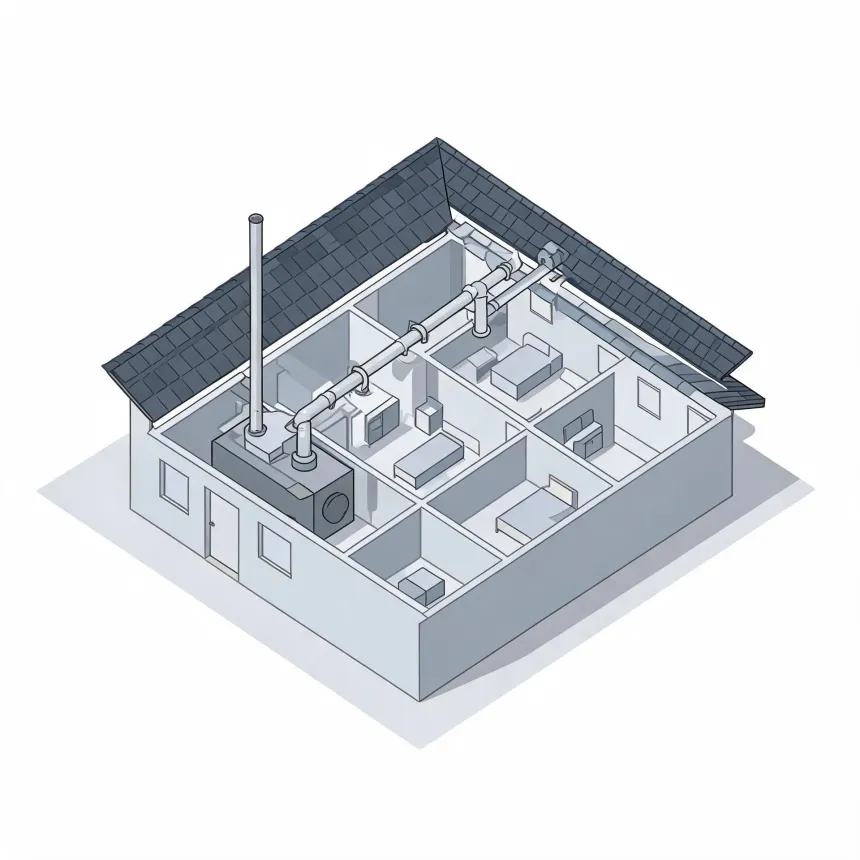
Isometric cutaway illustration of a single-story house showing interior rooms, furniture, a dark furnace unit with a tall vertical flue pipe, and ductwork running under the pitched shingle roof.
Your furnace works hardest from November through March.

NOAA nClimDiv, 1991–2020 normals

A furnace that short cycles, turning on and off every few minutes, is losing the fight against something blocking its airflow or sensing heat that isn't there.

Short cycling wears the ignition system and the blower motor faster than normal use, and it's worth a look before either one fails outright.

Eight months of heat a year wears a furnace down early

Heat runs October through May
Winter nights average 20°F
Climate zone 5A

September is worth paying attention to, because October is when furnaces here get switched back on after sitting idle since spring. A weak igniter or a cracked heat exchanger often doesn't show itself until that first real call for heat, when the system has to carry a full load instead of easing into it. If a furnace is going to fail, it tends to do it in those first few weeks, not in the middle of January. Getting a repair looked at before October gives a contractor a chance to catch the problem on a mild day instead of during a cold snap. Overnight lows here average 20°F in December and January, and the same repair only gets harder to diagnose once the cold settles in.

Eight months of heat a year means a repair now is worth getting right

A furnace running this many months out of the year doesn't have much slack in it. When something's off, it's worth having a contractor look past the symptom and check whether the fix will actually hold. Get a diagnosis before guessing at the repair.

Find a contractor
A gray high-efficiency gas furnace installed in an unfinished basement, surrounded by gas lines, a condensate drain, and sheet-metal ductwork.

Years on the job add up before you notice

A furnace that's already on its second or third unit doesn't owe you an explanation for failing, and it doesn't owe you a big repair bill either. Before paying for one, ask the contractor what's actually left in the unit. a new blower motor or control board means less if the heat exchanger is near the end of its run. That's the number worth getting straight, not just what today's part costs to fix.

What you can check before you call

Start with the filter. Pull it out and hold it up to a light. If you can't see through it, swap it or clean it, then see if the problem clears up on its own. Next check the thermostat. Make sure it's set to heat and the temperature you want is actually above room temperature, and change the batteries if it takes them. Walk around the house and check that supply vents and return grilles aren't blocked by furniture or rugs. Last, find the furnace switch, it looks like a light switch near the unit, and make sure nobody bumped it off.

What to leave for a contractor

If the furnace won't light at all, or it lights and then shuts off, that's a job for someone with a meter and a parts list, not a screwdriver. The same goes for a burner flame that looks yellow or orange instead of blue, a smell like rotten eggs, or soot around the access panel. Those point to a gas or combustion problem, and opening up the cabinet to chase it yourself risks a lot more than the repair bill. Flip the breaker back on once if it tripped, but if it trips again, stop and call.

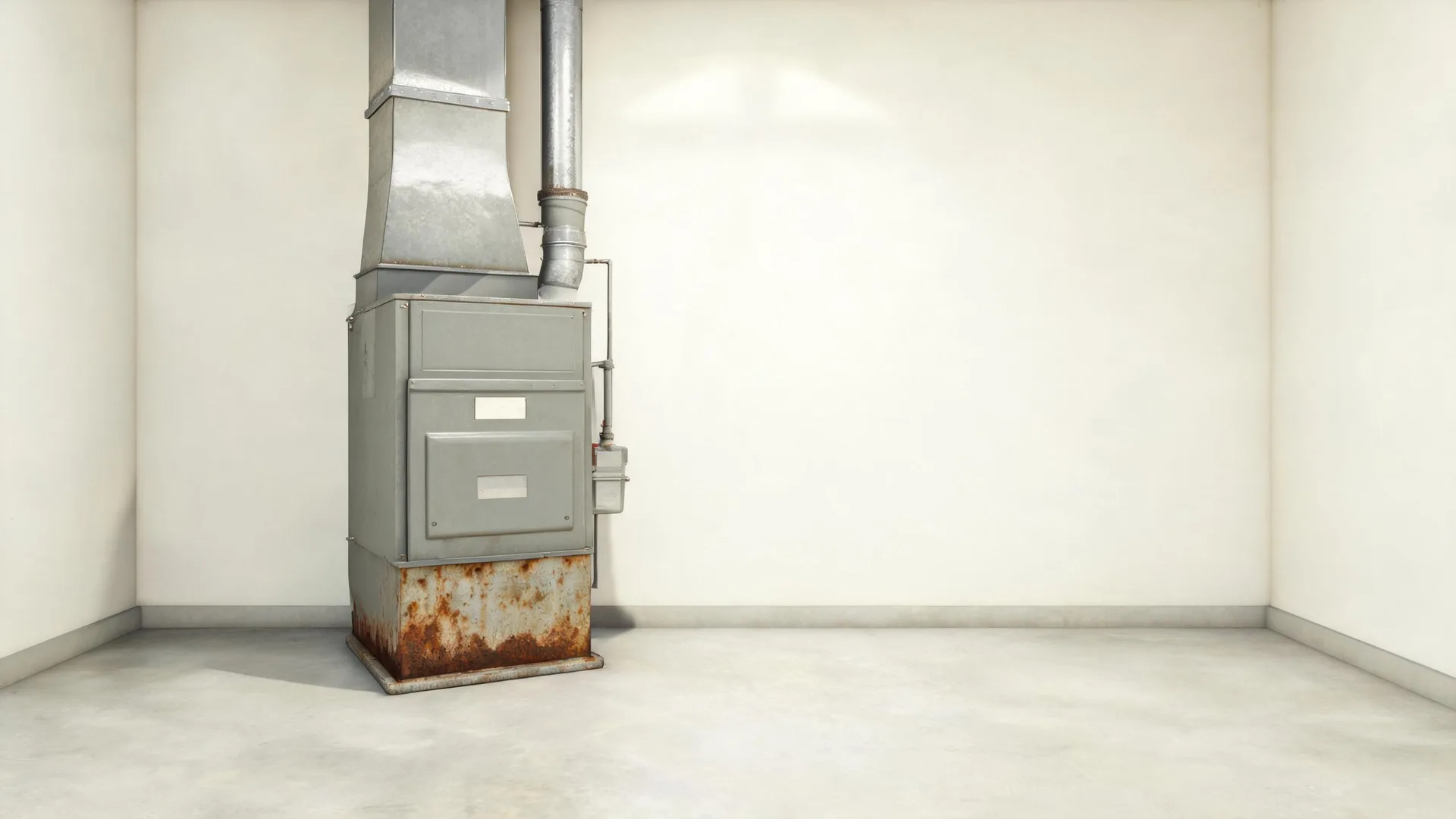
An empty unfinished basement containing a forced-air furnace with overhead ductwork, exposed ceiling joists, and a single hanging light bulb.

A new furnace would cut about $170 a year off heating for a typical Richland County home.

  • A new high-efficiency furnace$710 a year
  • An older furnace$880 a year

Estimates for a typical Richland County home, compared with an older unit built to the previous federal minimum, from EIA household energy data, Ohio fuel prices and NOAA climate normals. Your home will differ.

Repair makes sense when one part has failed and the heat exchanger is sound.

Replacement makes sense when the heat exchanger is cracked or the furnace keeps needing parts.

A furnace doesn't fail all at once. Parts wear on their own schedule, and most of them give some warning before they quit for good. A blower motor that's losing its bearings will whine or rattle before it seizes. A cracked heat exchanger usually shows up as a change in smell or a flame that won't sit still, long before it cracks enough to shut the system down on safety. The question worth asking isn't just what broke, it's why. A part that failed from simple age is a different situation than one that failed because something else in the system has been straining it for months. If the second part fails a year later from the same cause, the repair didn't fix anything, it just delayed the bill.